
 Anna Louise
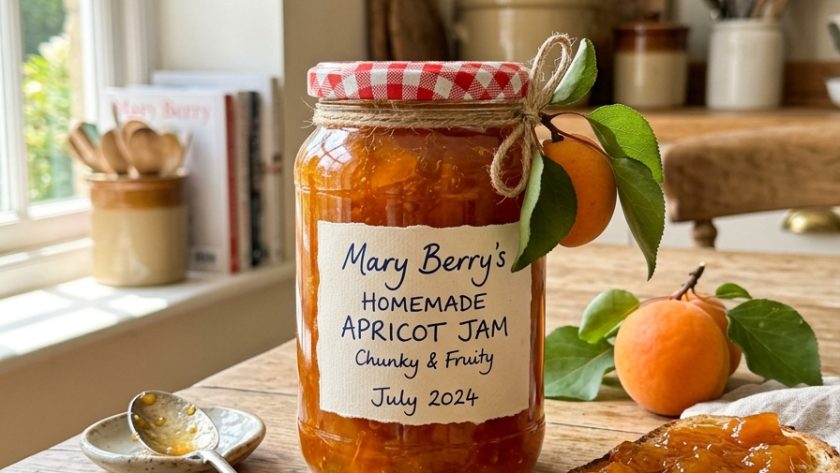
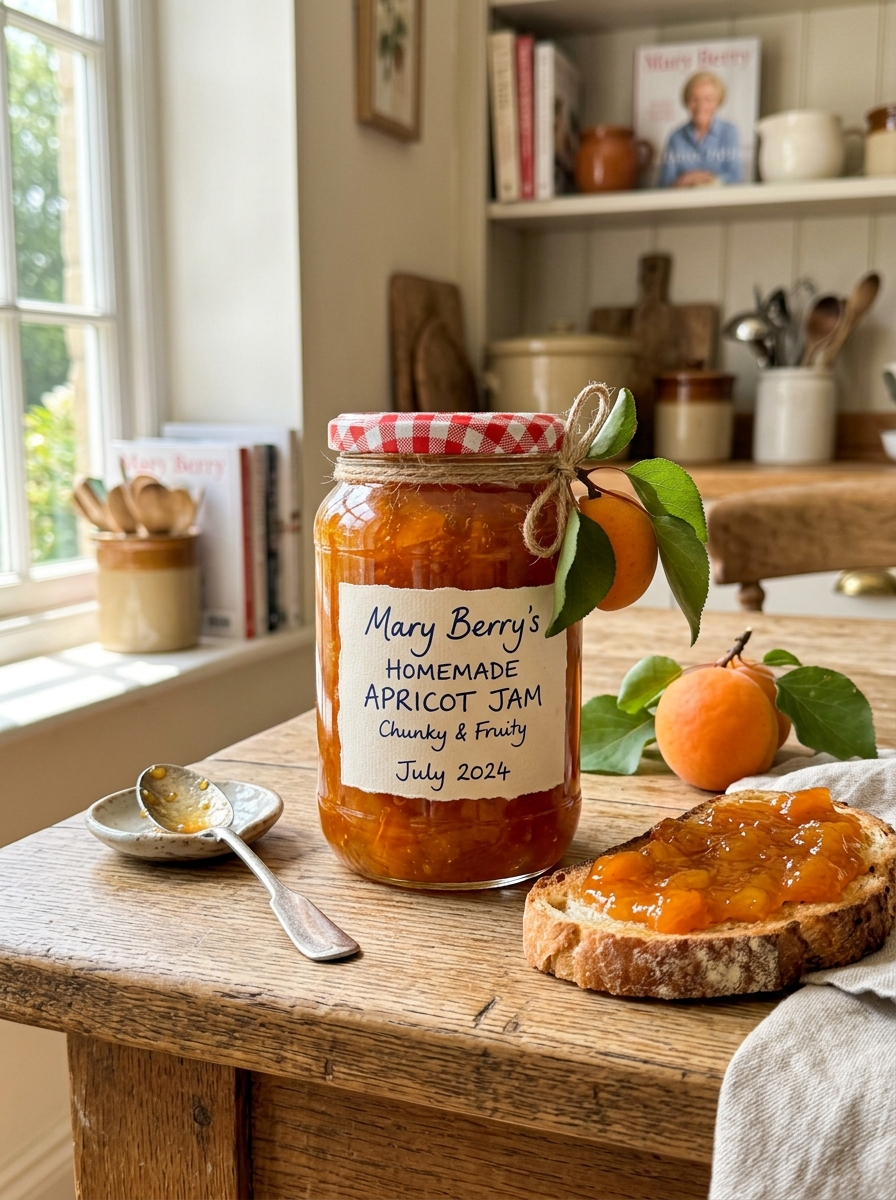
 Apricot jam is my favourite jam to make and, I think, the most beautiful preserve in this entire collection. The colour — a vivid, deep orange-gold that glows in the jar like something specifically luminous — is one of the most attractive things I can put on a kitchen shelf.
The fragrance, when the jam is cooking, fills the kitchen with something warm and slightly tropical that is completely unlike any other jam-making smell. And the flavour — slightly sharp, deeply fruity, fragrant in a way that strawberry and raspberry are not — is one of the specific pleasures of late summer.
Fresh apricots for jam-making are available for a very short window — late June through to August — and I make as much apricot jam as I can in that time. Out of season, good quality tinned apricots in juice give a result that is genuinely excellent and that I am not remotely embarrassed to give as a gift or serve from the shelf throughout the year.
The challenge with apricot jam is the setting. Apricots are moderately low in pectin and need the juice of a lemon to help the set. This recipe uses lemon juice and a careful approach to the setting test to give a jam that sets properly — not too firm, not too loose — with a clean, clear gel and the vivid apricot character completely intact.
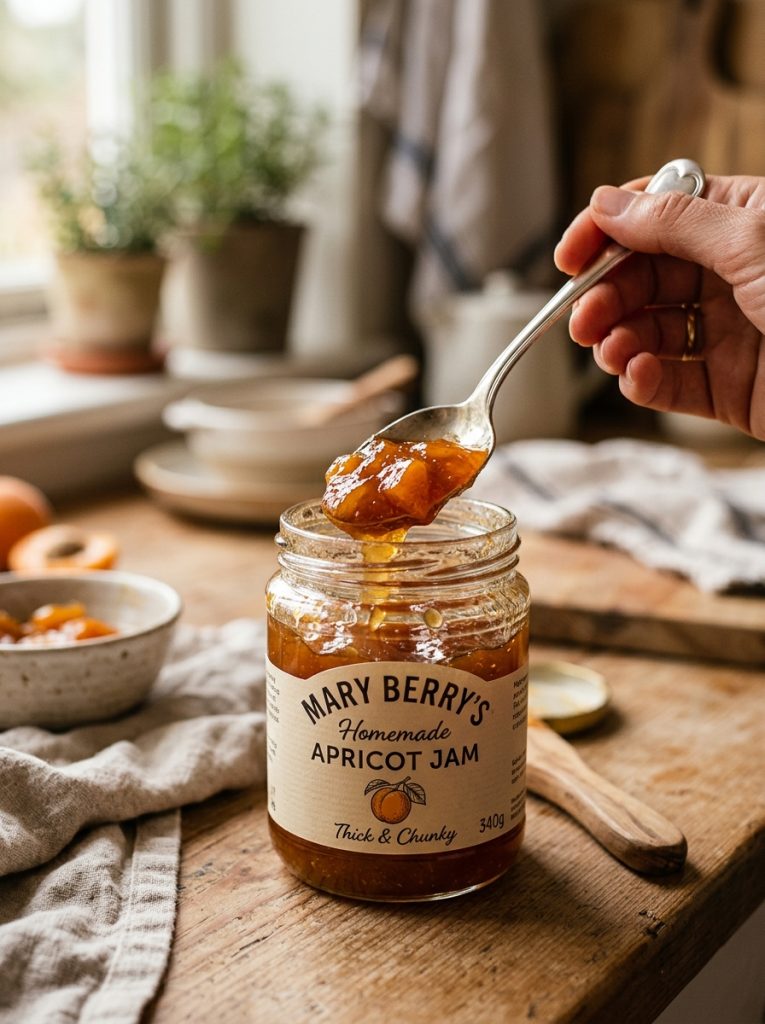
Ingredients for Mary Berry Apricot Jam
For the Apricot Jam (Makes approximately 4 x 450g jars)
- 1.2kg fresh apricots — halved, stoned, and roughly chopped (or 2 x 400g tins apricot halves in juice, drained weight approximately 900g, roughly chopped)
- 1kg granulated sugar — warmed in a low oven for fifteen minutes before adding
- Juice of 2 large unwaxed lemons — essential for the set
- 4 tablespoons water — if using fresh apricots (not needed if using tinned, which already carry moisture)
How to Make Mary Berry Apricot Jam
Step 1 — Prepare the Apricots
If using fresh apricots — halve, stone, and roughly chop into 2cm pieces. Place in the preserving pan with the water and the lemon juice.
If using tinned apricots — drain thoroughly. Roughly chop. Place in the preserving pan with the lemon juice. No additional water is needed.
I always crack three or four of the apricot stones with a rolling pin or a hammer and extract the kernels inside. These tiny, almond-like kernels — stirred into the jam at the very end — give an additional, slightly bitter almond fragrance that is a traditional addition to apricot jam and that gives a subtly more complex result. Optional, but worth doing.
Step 2 — Initial Cook
Heat the apricots and lemon juice over a medium heat, stirring occasionally, until the apricots begin to soften and release their juice — about ten minutes for fresh, five minutes for tinned. The pan should be gently simmering and the apricots beginning to break down slightly.
Step 3 — Add the Warm Sugar
Add the warm granulated sugar. Stir continuously over a medium heat until every grain has completely dissolved — test by running a spoon along the base of the pan. The liquid should feel completely smooth with no graininess whatsoever.
Step 4 — Boil to Setting Point
Once the sugar is completely dissolved, increase the heat to high and bring to a vigorous, rolling boil — a boil that cannot be stirred down. Boil for 10 to 18 minutes. Begin testing for setting point at 10 minutes.
The wrinkle test: Place a teaspoon of jam on a cold plate from the freezer. Leave for one minute. Push with your finger — if the surface wrinkles and the jam does not flood back immediately, setting point is reached. If it floods back, boil for another five minutes and test again.
Sugar thermometer test: 104–105°C is setting point for apricot jam.
Step 5 — Skim and Pot
Remove from the heat when setting point is reached. Skim any foam from the surface with a large spoon.
If using the apricot kernels — stir them in now.
Leave to stand for five minutes — this prevents the apricot pieces from floating to the top of the jars.
Stir gently and ladle into warm sterilised jars. Seal immediately with wax discs and cellophane covers, or sterilised lids. Label with the date and store in a cool, dark place.
My Top Tips For Perfect Mary Berry Apricot Jam
Warm the sugar before adding. Sugar added cold to the jam drops the temperature significantly and slows the dissolving process. Sugar warmed in a low oven for fifteen minutes — stirred once — dissolves in a fraction of the time and gets the jam to the boil more quickly.
The lemon juice is essential for setting — do not reduce it. Apricots are moderately low in natural pectin. The lemon juice provides additional pectin and acidity that are both needed for a reliable set. Reducing the lemon juice gives a jam that sets too loosely or does not set at all.
Use the cold plate wrinkle test rather than relying on time. Apricot jam can reach setting point anywhere between ten and twenty minutes of hard boiling, depending on the water content of the apricots. The wrinkle test is the reliable indicator — time is only a guide.
The apricot kernels are a wonderful addition. This is a traditional European apricot jam technique — adding a few cracked, extracted kernels from inside the stones. They have a mild, slightly bitter almond flavour and fragrance that gives the jam a complexity and depth beyond straight apricot. I never skip them.
Do not skip the five-minute stand before potting. Apricot pieces are light and float to the surface of the jam if it is poured into jars immediately at the boiling point. Five minutes of standing allows the jam to thicken very slightly and the fruit to distribute evenly through the jars.
Serving Suggestions
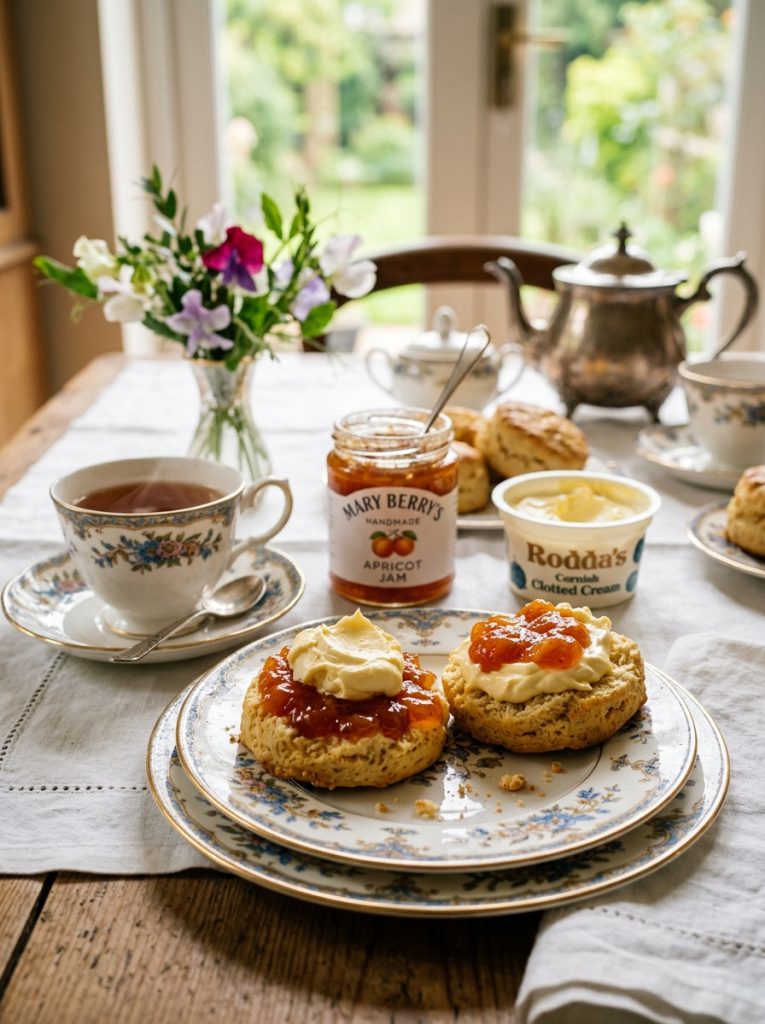
Spread on warm toast — the simplest and the best application. As a filling in a Victoria sponge alongside whipped cream. As a glaze on fruit tarts and almond cakes — apricot jam is the standard professional glaze for patisserie finishes. As a gift — two or three jars with a handwritten label and a ribbon is one of the most generous homemade gifts possible.
How to Store Mary Berry Apricot Jam
Sealed, unopened jars: Store in a cool, dark place for up to 12 months.
Opened jar: Refrigerate and use within 4 to 6 weeks.
Mary Berry Apricot Jam Recipe
Ingredients
Method
- Place chopped apricots and lemon juice in preserving pan. Add water if using fresh apricots. Heat over medium heat 5–10 minutes until apricots begin to soften and release juice.
- Add warm granulated sugar. Stir continuously over medium heat until every grain has dissolved completely — no graininess on the base.
- Increase heat — bring to vigorous rolling boil. Boil hard 10–18 minutes. Test for set at 10 minutes using wrinkle test on a cold plate — or 104–105°C on a thermometer. Continue boiling and testing until setting point is reached.
- Remove from heat. Skim foam from surface. Stir in apricot kernels if using. Stand 5 minutes — stir gently to distribute fruit.
- Ladle into warm sterilised jars. Seal immediately. Cool completely. Label and store in cool, dark place.
Notes
Frequently Asked Questions
Can I use frozen apricots?
Yes — frozen apricots work very well. Defrost completely and drain any excess liquid before using. Reduce the water quantity to two tablespoons if using defrosted frozen apricots.
My apricot jam has not set — what should I do?
Return the jam to the pan, add the juice of one more lemon, and boil hard again for five to eight minutes. Test again. The extra lemon provides additional pectin and acidity that often rescues a loose set.
Can I make apricot jam with jam sugar instead of granulated?
Yes — jam sugar (sugar with added pectin) gives a more reliable, firmer set with apricots. Reduce the boiling time to five to eight minutes and test the set carefully. The result can be very firm if overboiled.
Do I have to add the apricot kernels?
No — the kernels are an optional addition that gives additional complexity but the jam is completely excellent without them.














Leave a Reply