
 Anna Louise
 Sloe gin is the preserve I look forward to making with the most specific anticipation of any in this collection — not because it is difficult, which it is not, but because the process from picking to drinking spans exactly the right amount of time.
The sloes are picked in October when they are dark, ripe, and properly frost-nipped. They go into jars with gin and sugar in October. They are ready to drink in time for Christmas.
The whole process takes fifteen minutes of active work and three months of patient waiting, and the result — a deep, jewel-dark, richly flavoured, slightly sweet, slightly bitter liqueur that tastes specifically of winter — is one of the finest things I make all year.
The sloe berry is the fruit of the blackthorn bush — small, intensely blue-black, astringent when eaten raw, and completely transformed by three months in gin with sugar into something fragrant, complex, and deeply delicious.
The traditional instruction is to pick sloes after the first frost, which softens them and reduces their astringency. The modern shortcut — equally effective — is to freeze the picked sloes before using, which replicates the effect of frost.
This recipe gives approximately 1.5 litres of sloe gin — three 500ml bottles — which is enough to give as Christmas gifts, to keep for Christmas drinks, and to pour over vanilla ice cream in January, which is one of the most specific pleasures of having made this in October.

Ingredients for Mary Berry Sloe Gin
For the Sloe Gin (Makes approximately 1.5 litres)
- 500g ripe sloe berries — picked in October after the first frost, or picked and frozen for 24 hours before using
- 250g golden caster sugar — or white granulated; the sugar is a matter of preference
- 1 litre good quality gin — a standard London dry gin gives the most neutral base for the sloe flavour; choose one you would drink, not the cheapest available
- 1 tsp almond extract (optional — gives a slight marzipan note that traditionally comes from the sloe stones, which contain amygdalin)
How to Make Mary Berry Sloe Gin
Step 1 — Prepare the Sloes
If the sloes have been freshly picked and not yet frosted — freeze them for 24 hours. Transfer from the freezer directly to the jar — do not defrost. The freezing and slight defrosting as they go into the gin replicates the effect of frost on the berries.
If the sloes have been properly frost-nipped on the bush — use them fresh. Rinse and dry them. Pick off any stems or leaves.
Prick each sloe berry several times with a clean needle or skewer — this allows the gin to penetrate the skin and extract the colour and flavour more efficiently. This step is traditional and is not strictly necessary if the sloes are well frozen (the freezing ruptures the cell walls), but it is quick and it does help.
Step 2 — Fill the Jars
Divide the pricked sloes between two clean, sterilised wide-mouthed jars (approximately 750ml to 1 litre capacity each). Add half the sugar to each jar.
Pour gin over the sloes and sugar in each jar — filling to the top. The gin should completely submerge the sloes. Seal tightly.
Step 3 — Shake and Wait
Shake the jars gently to begin dissolving the sugar. Place in a cool, dark cupboard.
For the first two weeks — shake the jars every day. The sugar will gradually dissolve, the gin will turn from clear to a pale pink and then progressively deeper until, after three to four weeks, it is a vivid, jewel-dark purple-red that is one of the most beautiful things in the kitchen.
After the first two weeks — shake every two to three days for the remainder of the steeping period.
Leave to steep for a minimum of three months. Four months gives a noticeably better result. Six months gives the finest sloe gin I have made.
Step 4 — Strain and Bottle
After the steeping period, strain the sloe gin through a muslin-lined sieve or a jelly bag into a large measuring jug. This may take thirty to forty minutes as the sloe gin is thick and slightly syrupy.
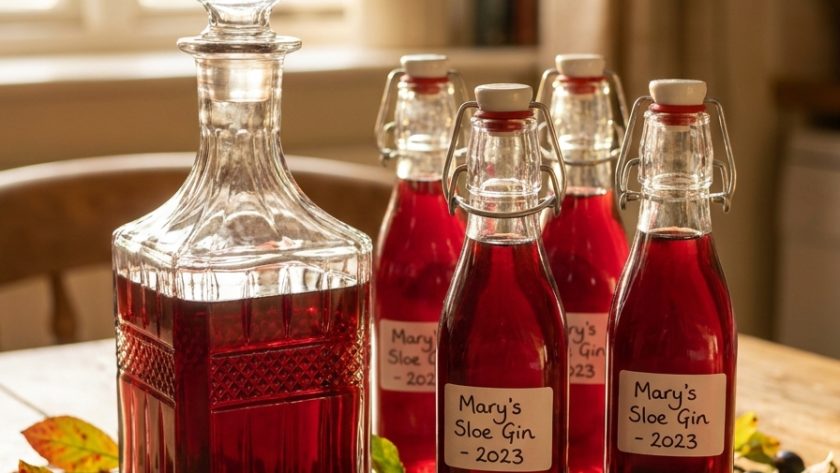
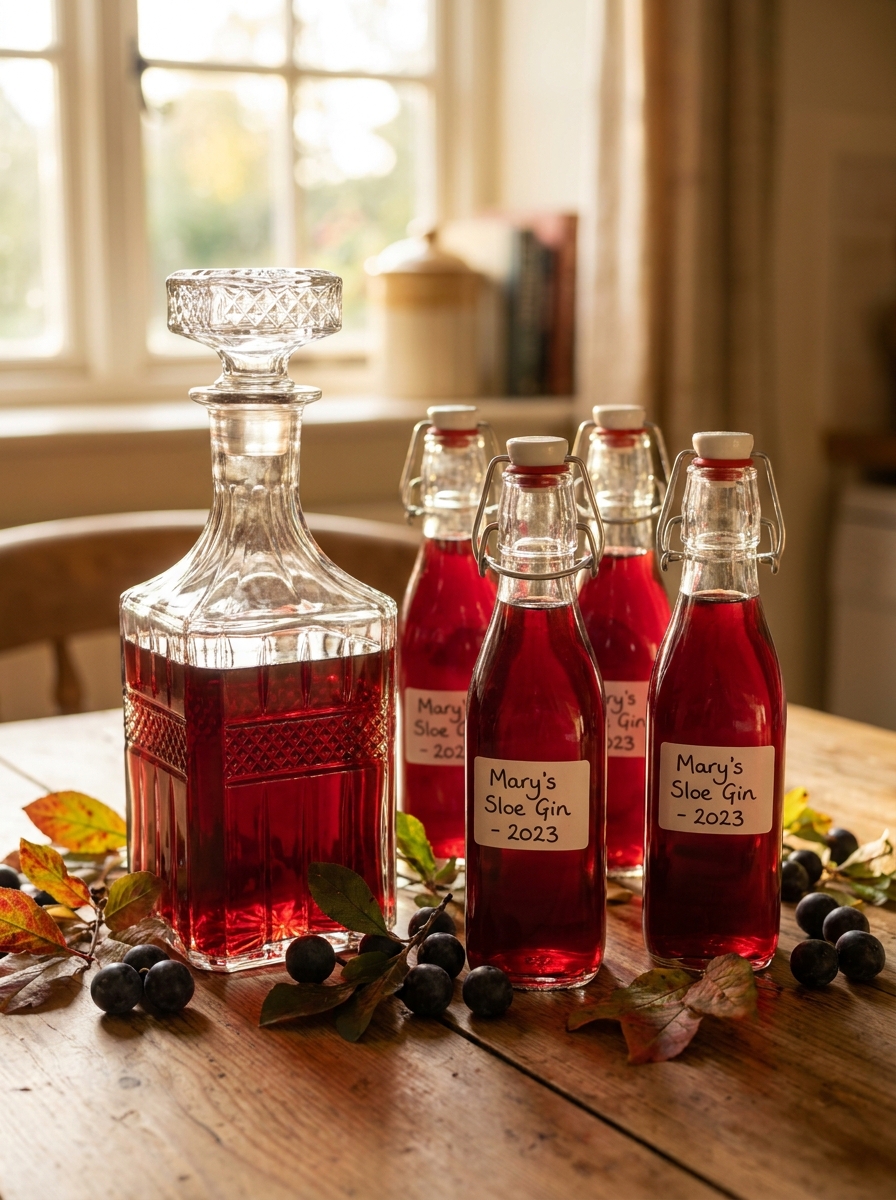
Pour into clean, sterilised bottles. Seal tightly. Label with the date and the year.
The sloe gin is ready to drink immediately after straining — but improves with a further month in the bottle if patience allows.
Serving Suggestions
Neat over ice — the most traditional and most satisfying way to drink sloe gin. With prosecco or champagne for a pink, fragrant sloe gin royale. Drizzled over vanilla ice cream. As a Christmas gift — a bottle of homemade sloe gin with a handwritten label and a ribbon is one of the finest gifts a home cook can give.
How to Store Mary Berry Sloe Gin
Sealed bottles: Store in a cool, dark place for up to 2 years. The flavour continues to develop and improve throughout.
Opened bottles: Keep in a cool, dark place and use within 6 months for the best flavour.
Mary Berry Sloe Gin Recipe
Ingredients
Method
- Freeze sloes 24 hours if not already frost-nipped. Rinse and dry. Prick each berry several times with a clean needle or skewer.
- Divide sloes between two large sterilised jars. Add half the sugar to each. Pour gin over to completely submerge. Add almond extract if using. Seal tightly.
- Shake gently to begin dissolving sugar. Place in cool, dark cupboard. Shake every day for the first 2 weeks — then every 2–3 days for the remaining steeping period.
- Leave to steep minimum 3 months — 4 to 6 months is better.
- Strain through muslin-lined sieve or jelly bag into a large jug — 30–40 minutes. Pour into clean sterilised bottles. Seal and label. Drink immediately or allow a further month to mature.
Notes
Frequently Asked Questions
Can I use vodka instead of gin?
Yes — sloe vodka gives a cleaner, less juniper-flavoured result where the sloe flavour is more dominant. The same method applies. Very good and slightly less traditional.
Can I use less sugar for a less sweet result?
Yes — reduce the sugar to 175g for a drier, more specifically bitter result. The sugar can also be adjusted after straining by tasting and stirring in a little more sugar dissolved in a small amount of warm gin if needed.
When is the best time to pick sloes?
Mid-October to mid-November in Britain, after the first hard frost. Look for blackthorn bushes — they have small white blossom in early spring and the dark berries in autumn. Hedgerows, woodland edges, and scrubland are the most productive places.
What do I do with the leftover sloes?
Fold them into chocolate brownies, use them as a filling in chocolates, or serve them over ice cream. The gin-soaked sloes are intensely flavoured and completely wonderful used in any of these ways.
















Leave a Reply