
 Anna Louise
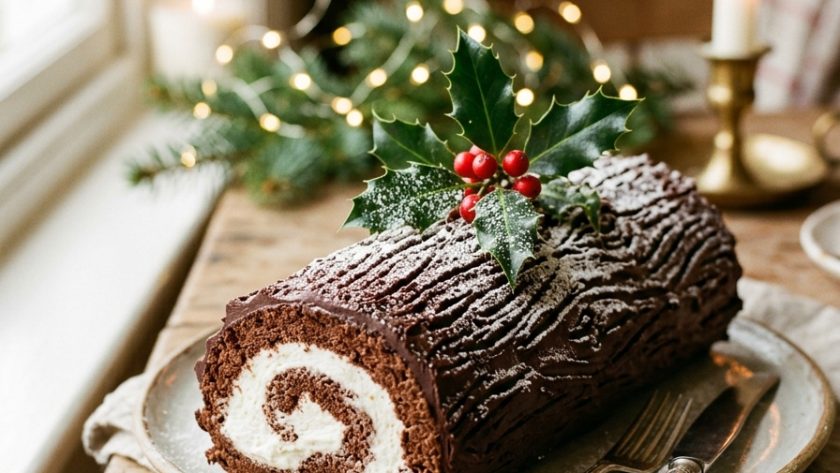
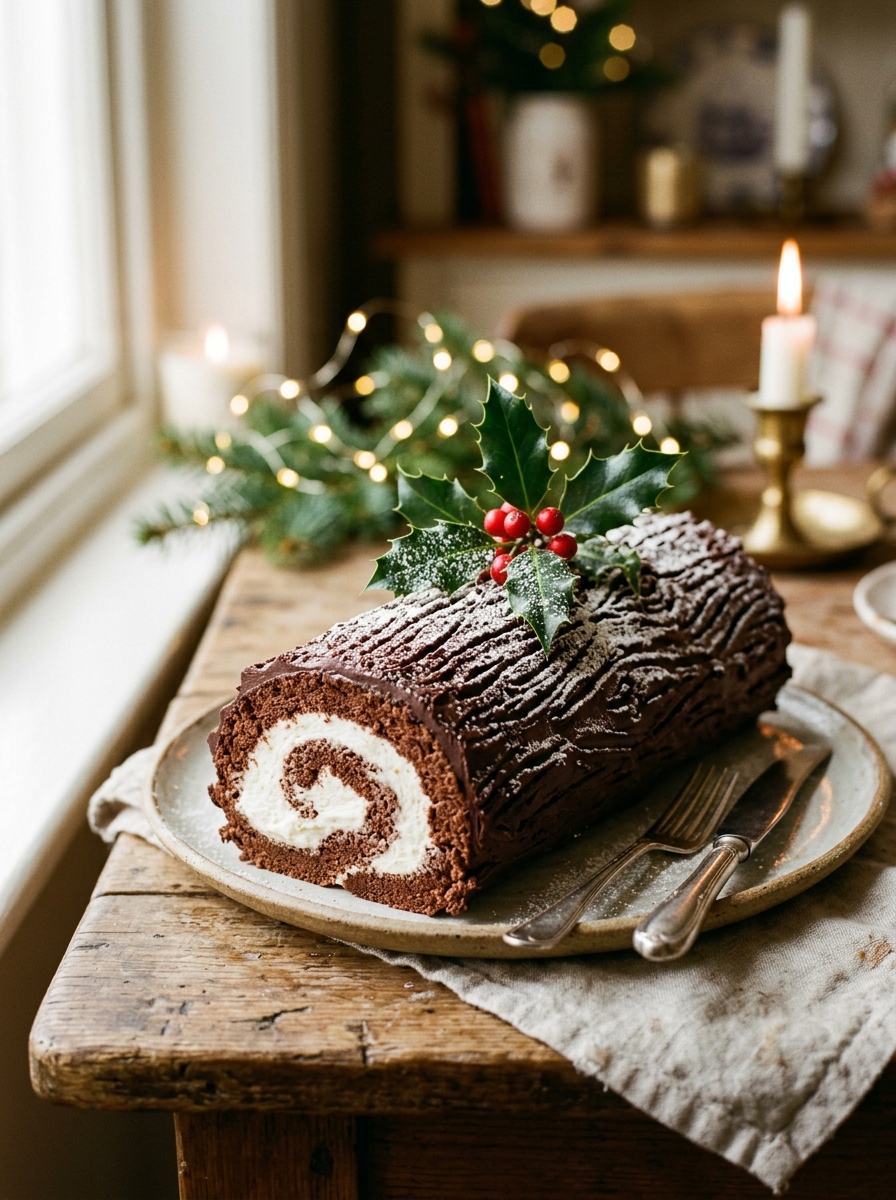
 There are few things that say Christmas quite as clearly as a chocolate yule log arriving at the table — that magnificent dark, textured roll of chocolate sponge, dusted with icing sugar to look like snow-covered bark, decorated with holly and perhaps a robin or two, carrying all the warmth and festivity of the season in one spectacular dessert.
Mary Berry’s chocolate yule log cake is the version I make every Christmas without exception. The sponge is light and springy — a proper Swiss roll base with no flour, just eggs, sugar, and cocoa, giving it an extraordinary lightness that contrasts beautifully with the rich ganache coating.
The filling is whipped cream, perhaps spiked with a little brandy or vanilla, and the coating is a chocolate ganache that is applied while still slightly warm and then forked into the bark-like texture that gives the yule log its characteristic appearance.
It is not difficult. It does look impressive. And it tastes genuinely wonderful — the kind of dessert that makes Christmas dinner feel complete.
What Makes Mary Berry’s Yule Log So Good?
A flour-free sponge. The chocolate roulade base contains no flour — just eggs, sugar, and cocoa powder, with a little espresso powder to deepen the chocolate flavour.
This gives a sponge that is lighter, more tender, and more intensely chocolatey than a flour-based alternative, and one that rolls without cracking — which is the crucial technical requirement of a yule log.
Rolling while warm. The sponge must be rolled while it is still warm from the oven — rolled up inside a sheet of baking parchment before it cools. This trains the sponge into the rolled shape so that when it is unrolled, filled, and re-rolled, it does not crack.
A proper ganache coating. The ganache — dark chocolate and double cream — is the coating that transforms the filled roll into a yule log. Applied while still warm and spreadable, then forked into a bark texture, it sets to a beautiful, glossy finish that looks spectacular.
Ingredients for Mary Berry Chocolate Yule Log
For the Chocolate Roulade Sponge
- 5 large eggs, separated
- 150g caster sugar
- 50g good quality cocoa powder, sifted
- 1 tsp instant espresso powder (dissolved in 1 tsp hot water — optional but deepens the chocolate)
- Pinch of salt
- Icing sugar, for dusting
For the Cream Filling
- 400ml double cream, cold
- 2 tbsp icing sugar, sifted
- 1 tsp vanilla extract
- 1 tbsp brandy (optional)
For the Chocolate Ganache Coating
- 200g dark chocolate (70% cocoa solids), finely chopped
- 200ml double cream
- 25g unsalted butter
- 1 tbsp golden syrup (for extra gloss)
To Decorate
- Icing sugar, for dusting (to look like snow)
- Holly sprigs (non-toxic decorative — do not eat)
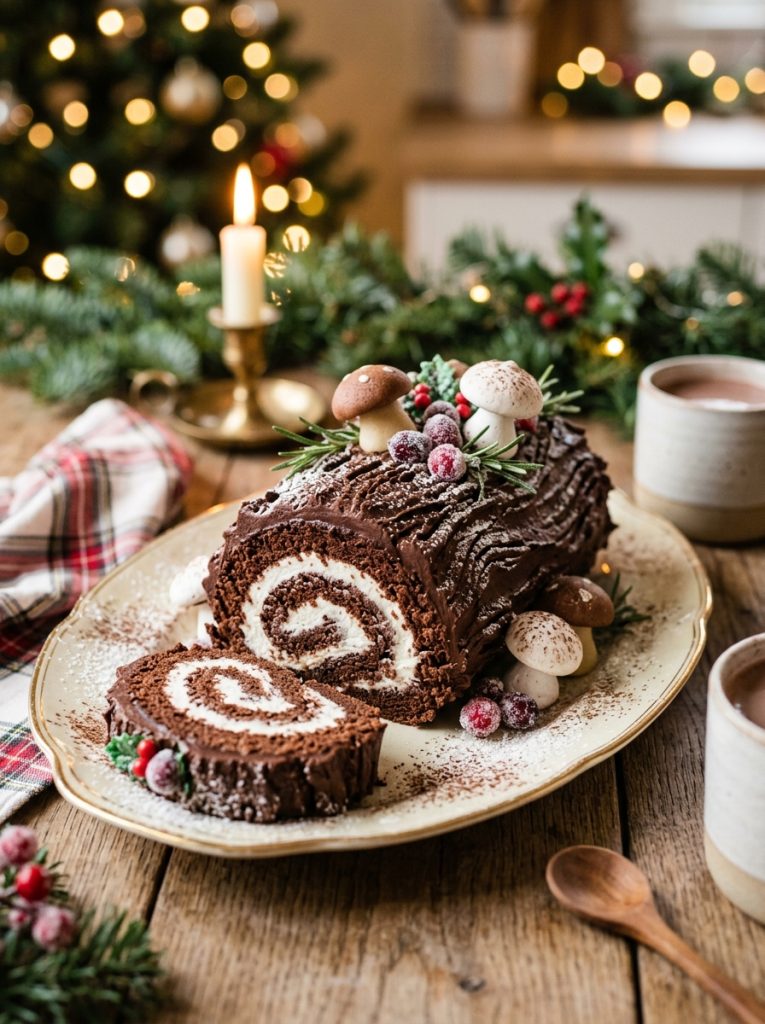
- Meringue mushrooms (optional — see FAQs)
- Chocolate shavings or gold leaf for a special finish
How to Make Mary Berry Chocolate Yule Log — Step by Step
Step 1 — Preheat and Prepare
Preheat your oven to 180°C / 160°C fan / Gas 4. Grease a 33x23cm Swiss roll tin and line with baking parchment — let the parchment overhang the sides slightly for easy removal.
Step 2 — Make the Roulade Sponge
Whisk the egg yolks and caster sugar together with an electric hand whisk for 4 to 5 minutes until the mixture is very pale, thick, and leaves a ribbon trail when the whisk is lifted. Whisk in the sifted cocoa powder and espresso mixture until combined.
In a separate, completely clean bowl, whisk the egg whites and salt to stiff peaks — they should hold their shape when the whisk is lifted and the bowl can be held upside down without them moving.
Fold one-third of the egg whites into the chocolate mixture using a large metal spoon — cutting and turning gently. This first addition loosens the chocolate mixture. Fold in the remaining egg whites in two additions, folding as gently as possible to preserve all the air. The mixture will look very airy and slightly streaky — this is correct. A few white streaks are fine; overmixing is not.
Step 3 — Bake
Pour the mixture into the prepared tin and gently spread to the corners and edges. Bake for 20 to 25 minutes until the sponge is risen, set, and just beginning to come away from the edges. It will feel slightly firm to a gentle touch.
Step 4 — Roll Immediately While Warm
This step must be done the moment the sponge comes out of the oven. Dust a large sheet of baking parchment generously with sifted icing sugar.
Turn the warm sponge out directly onto the icing-sugar-dusted parchment. Carefully peel off the lining paper from the base of the sponge. Trim the edges of the sponge very slightly with a sharp knife — about 5mm — to give you clean, even edges that roll more easily.
Score a shallow line across the sponge about 2cm from one of the short edges — this helps initiate the roll without cracking. Roll the sponge up from this short edge, rolling the icing-sugar-dusted parchment inside as you go. Leave to cool completely, rolled up, on a wire rack — at least 45 minutes.
Step 5 — Make the Cream Filling
Whip the cold double cream, icing sugar, vanilla extract, and brandy (if using) together until the cream holds firm peaks — firm enough to spread without sliding, but not so stiff it loses its lightness.
Step 6 — Fill and Re-Roll
Carefully unroll the cooled sponge. Spread the whipped cream evenly over the surface, leaving a 2cm border at the far edge — this prevents the cream squeezing out when you roll.
Re-roll the sponge firmly but gently — without the parchment this time. Place seam-side down on your serving board or plate. Refrigerate for 30 minutes to firm up before coating with ganache.
Step 7 — Make the Chocolate Ganache
Place the finely chopped dark chocolate in a heatproof bowl. Heat the double cream until just simmering and pour over the chocolate. Add the butter and golden syrup. Leave for two minutes, then stir from the centre outwards until completely smooth and glossy. Leave to cool until thick and spreadable — about 20 to 30 minutes.
Step 8 — Coat and Decorate
Cut a diagonal slice from one end of the roll — about 5cm — and place it on top of or alongside the main roll to create the classic branch effect of a yule log.
Spread the ganache all over the log and branch using a palette knife, covering completely. Use a fork to drag through the ganache in long strokes from one end to the other, creating a bark-like texture. Work confidently and quickly before the ganache sets.
Dust generously with icing sugar to create a snowy effect. Add holly sprigs, chocolate shavings, or any other Christmas decorations. Refrigerate until serving.
My Top Tips for a Perfect Yule Log
Roll the sponge while it is still warm — not hot, not cool. The moment it comes out of the oven is the moment to roll it. A warm sponge is pliable and rolls without cracking. A cool sponge is brittle and will crack when you try to roll it. This is the single most important technique in the entire recipe.
Be very gentle when folding in the egg whites. The air you have whisked into the egg whites is what gives the sponge its lightness. A heavy hand when folding knocks it out and you end up with a dense, flat sponge that cracks when rolled. Use a large metal spoon and the lightest folding motion possible.
Score before rolling. A shallow score across the sponge 2cm from the short edge gives the roll a starting point that makes the first turn much smoother and significantly reduces the risk of cracking.
Chill before coating. Thirty minutes in the fridge after filling and rolling firms everything up and makes the coating process much easier — the ganache sits on a stable, cold surface rather than a warm, yielding one.
Create the bark texture quickly. Once the ganache is applied, drag a fork through it in long strokes before it begins to set. Work in one direction from one end to the other. If the ganache sets before you have finished, warm it very briefly with a hair dryer or in a warm kitchen and continue.
Make it the day before. A yule log actually improves overnight in the fridge — the ganache sets beautifully, the cream filling firms up, and the flavours meld. Make it on Christmas Eve and take it out of the fridge 30 minutes before serving on Christmas Day.
Serving Suggestions
Carried to the table whole and sliced there for maximum impact — this is a centrepiece dessert and deserves to be treated as one. A small pool of pouring cream or crème fraîche on the side. For a more indulgent serving, a scoop of good vanilla ice cream alongside is wonderful.
How to Store Mary Berry Chocolate Yule Log Cake
In the fridge: Store covered with cling film for up to 3 days. The cream filling means it must be refrigerated. Bring to room temperature for 20 minutes before serving.
In the freezer: The assembled, decorated yule log freezes well for up to 1 month. Freeze uncovered until the ganache is solid, then wrap carefully in cling film and foil. Defrost overnight in the fridge.
Try These Recipes
- Mary Berry Three Fruit Marmalade
- Mary Berry Plum Chutney
- Mary Berry Piccalilli
- Mary Berry Seville Orange Marmalade
Mary Berry Chocolate Yule Log Recipe
Ingredients
Method
- Preheat oven to 180°C / 160°C fan / Gas 4. Grease and line a 33x23cm Swiss roll tin.
- Whisk egg yolks and caster sugar for 4–5 minutes until very pale and thick. Whisk in cocoa and espresso mixture.
- In a clean bowl, whisk egg whites and salt to stiff peaks. Fold one-third into the chocolate mixture to loosen. Fold in remaining whites in two additions — gently, preserving all the air.
- Pour into tin, spread to edges. Bake 20–25 minutes until set and just pulling from the edges.
- Immediately turn out onto icing-sugar-dusted parchment. Peel off lining paper. Trim edges. Score 2cm from short edge. Roll up with parchment inside. Cool completely on a wire rack — at least 45 minutes.
- Whip cream, icing sugar, vanilla, and brandy to firm peaks.
- Unroll cooled sponge. Spread cream to within 2cm of far edge. Re-roll firmly without parchment. Place seam-side down. Refrigerate 30 minutes.
- Make ganache: pour hot cream over chopped chocolate. Add butter and golden syrup. Leave 2 minutes. Stir until smooth. Cool until spreadable.
- Cut a diagonal slice from one end. Place on or alongside main roll as a branch. Coat entire log with ganache. Fork into bark texture. Dust with icing sugar. Decorate. Refrigerate until serving.
Notes
Frequently Asked Questions
Why did my roulade crack when I rolled it?
Almost always because it was allowed to cool before rolling. The sponge must be rolled while still warm — the moment it comes out of the oven. Once cracked, the sponge cannot be fully repaired, but the ganache coating hides a great deal — a crack or two is not the end of the world and is completely traditional for a rustic yule log.
Can I make the roulade the day before and fill it the next day?
Yes — roll the sponge in the parchment while warm and leave rolled up overnight. Unroll the next day, fill, re-roll, and coat as directed. The rolled, unfilled sponge keeps well overnight at room temperature.
How do I make meringue mushrooms for decoration?
Pipe small rounds of meringue onto a baking tray and tall stalks separately. Bake at 100°C for 1 to 1.5 hours until completely dry. Dust the caps with cocoa powder and attach the stalks with melted chocolate. They look wonderful alongside a yule log.
Can I use milk chocolate for the ganache?
Yes — milk chocolate gives a sweeter, less intense ganache. Use the same quantities and method. If using milk chocolate, omit the golden syrup as milk chocolate is already sweeter. A mix of milk and dark chocolate — 100g each — is a good middle ground.
What if I do not have a Swiss roll tin?
A large baking tray of similar dimensions works — you want a shallow, rimmed tray approximately 33x23cm. A deeper tin will produce a thicker sponge that is harder to roll without cracking.
Can I make this yule log gluten-free?
Yes — this sponge already contains no flour. Make sure your cocoa powder and all other ingredients are certified gluten-free, and this recipe is naturally suitable for those avoiding gluten.














Leave a Reply