
 Anna Louise
 There are few things more satisfying than a well-stocked larder shelf, and a row of jars of homemade tomato chutney is one of the finest things to have on it.
Rich, deeply coloured, sweet and tangy in equal measure, with a depth of spiced flavour that develops and improves over weeks — homemade tomato chutney is one of those preserves that transforms everything it accompanies.
Mary Berry’s tomato chutney recipe is the version I make every August and September when tomatoes are at their most plentiful and flavourful.
It uses ripe tomatoes — fresh from the garden or the market at the height of summer — cooked down slowly with onions, vinegar, sugar, and warm spices until everything has reduced and concentrated into a thick, glossy chutney that is completely unlike anything you can buy in a jar.
This chutney is wonderful with a cheese board. It is magnificent in a cold meat sandwich. It transforms a simple ploughman’s lunch into something worth talking about.
And made now, it will be at its absolute best by Christmas — the flavours deepening and mellowing over the weeks in the jar in a way that makes every batch better than the one before it.
What Makes a Great Tomato Chutney?
Ripe, flavourful tomatoes. The tomatoes are the foundation of this chutney and their quality determines the quality of the finished preserve. Watery, flavourless tomatoes produce a thin, disappointing chutney. Ripe, deeply flavoured tomatoes — grown in proper summer sunshine — produce something extraordinary. Use the ripest, most flavourful tomatoes you can find.
Slow, patient cooking. Chutney is not a quick recipe. The long, slow cooking — an hour or more at a gentle simmer — is what reduces the liquid, concentrates the flavours, and develops the deep, complex character that makes a great chutney. Rushing it produces something watery and under-developed.
A good balance of sweet and sour. Chutney needs both sugar and vinegar in the right proportions. Too much sugar gives a sweet, jammy result. Too much vinegar gives something sharp and thin. The balance in this recipe gives you a chutney that is sweet enough to be pleasant on its own and tangy enough to cut through rich cheeses and cold meats.
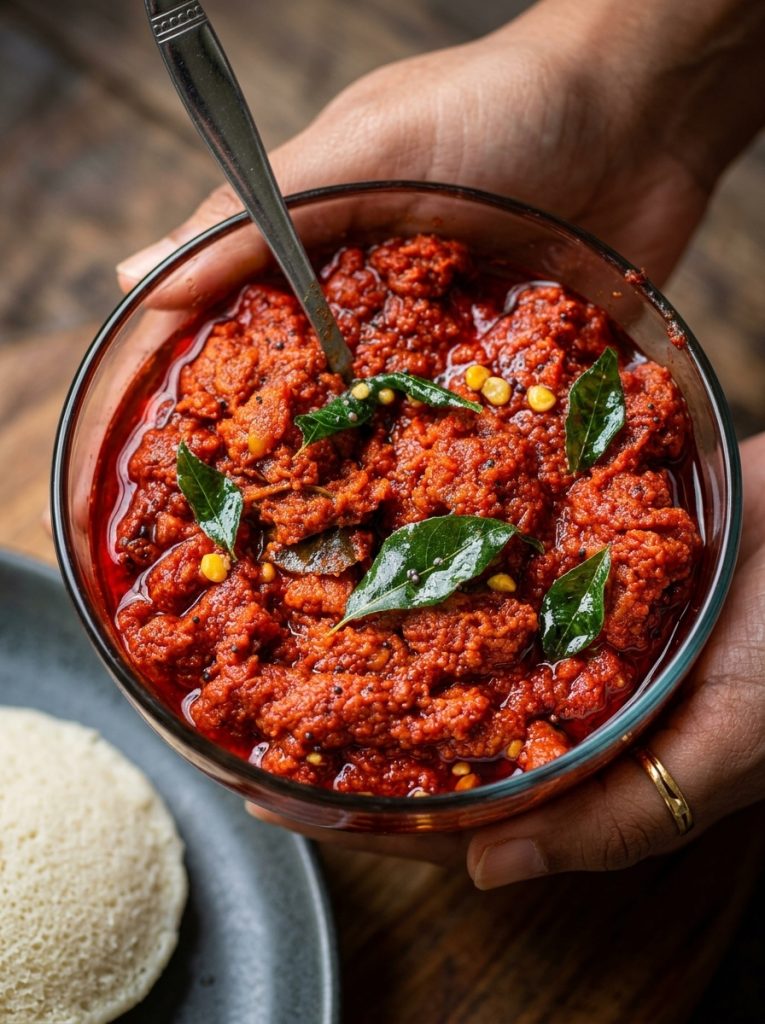
Ingredients for Mary Berry Tomato Chutney
- 1.5kg ripe tomatoes, roughly chopped (no need to skin them — the skins dissolve during cooking)
- 500g onions, finely chopped
- 2 garlic cloves, crushed
- 1 red pepper, deseeded and finely chopped
- 300g soft light brown sugar
- 300ml malt vinegar or red wine vinegar
- 1 tsp fine salt
- 1 tsp ground ginger
- 1 tsp ground cinnamon
- ½ tsp ground allspice
- ½ tsp ground cloves
- ½ tsp cayenne pepper (optional — adjust to taste)
- 1 tsp mustard seeds
- 2 bay leaves
Equipment
- A large, heavy-based preserving pan or very large saucepan
- 3 to 4 clean glass jars with lids, sterilised
- A jam funnel
How to Make Mary Berry Tomato Chutney — Step by Step
Step 1 — Sterilise the Jars
Wash the jars in hot, soapy water and rinse well. Place upside down in an oven at 140°C for 15 minutes. Leave in the oven until needed.
Step 2 — Combine Everything in the Pan
Place the chopped tomatoes, onions, garlic, and red pepper into the preserving pan. Add the vinegar, sugar, salt, all the spices, mustard seeds, and bay leaves.
Stir well to combine. The mixture will look very liquid at this stage — do not worry. The long cooking time will reduce it dramatically.
Step 3 — Dissolve the Sugar
Heat gently over a low to medium heat, stirring occasionally, until the sugar has completely dissolved — about 10 minutes. You will know it has dissolved when the liquid looks clear rather than grainy when you lift the spoon.
Step 4 — Simmer Low and Slow
Bring to a gentle simmer and cook uncovered over a low to medium heat for 1 hour 15 minutes to 1 hour 45 minutes, stirring regularly — particularly towards the end of the cooking time when the mixture thickens and is more prone to catching on the bottom of the pan.
The chutney is ready when it has reduced significantly in volume, is thick and glossy, and a wooden spoon drawn across the base of the pan leaves a clear channel that does not immediately fill back with liquid. This is the equivalent of the jam wrinkle test — your signal that the chutney has reached the right consistency.
At the end of cooking, remove the bay leaves.
Step 5 — Pot and Seal
Leave the chutney to cool for five minutes — not too long, as hot chutney is easier to ladle cleanly than cooled chutney.
Ladle into the hot sterilised jars using a jam funnel, filling to within 1cm of the top. The jars must be sealed with vinegar-proof lids — standard metal lids can corrode from contact with vinegar. If your lids are not vinegar-proof, place a square of baking parchment between the jar and the lid.
Seal immediately and label with the contents and date.
My Top Tips for the Best Tomato Chutney
Use the ripest, most flavourful tomatoes you can find. Late summer tomatoes — grown outdoors in real sunshine — have a concentrated sweetness and acidity that gives this chutney its character. Pale, watery winter tomatoes make a pale, watery chutney.
If you are making this outside tomato season, use tinned whole plum tomatoes instead — a good quality tin of plum tomatoes produces a much better chutney than flavourless fresh ones.
Do not rush the cooking. The long simmer is where the magic happens. An hour and a quarter to an hour and three quarters of gentle, uncovered simmering reduces the liquid, concentrates the flavour, and develops the deep, complex, slightly caramelised character that makes this chutney so good.
A rushed chutney — cooked on too high a heat for less time — will be watery, raw-tasting, and will not keep as well.
Stir more frequently towards the end. As the chutney thickens, it becomes increasingly prone to catching on the bottom and burning. Give it a thorough stir every few minutes in the final 20 to 30 minutes of cooking, making sure to scrape the base of the pan.
Use vinegar-proof lids. The vinegar in chutney will corrode standard metal lids, causing rust to form inside the jar. Use lids that are specifically vinegar-proof, or place a square of baking parchment between the jar and the lid as a barrier.
Leave it for at least four weeks before opening. Freshly made chutney is good. Chutney that has had four weeks to mature in the jar is extraordinary. The flavours mellow, deepen, and integrate over time in a way that makes the patience completely worthwhile. Make this chutney in late summer and open it at Christmas.
Make a big batch. Chutney keeps for a year unopened and makes a wonderful gift. If you are going to spend the time making it, double the recipe and fill eight jars instead of four.
Serving Suggestions
With a proper cheese board — mature Cheddar, Stilton, Brie — this chutney is in its element. In a ploughman’s lunch with good bread, cold ham, and pickled onions.
In a cheese and chutney sandwich on crusty white bread. Alongside cold roast meats on Boxing Day. As a gift, tied with a ribbon and given to someone who appreciates good food.
How to Store Mary Berry Tomato Chutney
Unopened: Store in a cool, dark place for up to 1 year. The flavour improves significantly over the first 4 to 6 weeks.
Once opened: Refrigerate and use within 4 to 6 weeks.
Try These Recipes
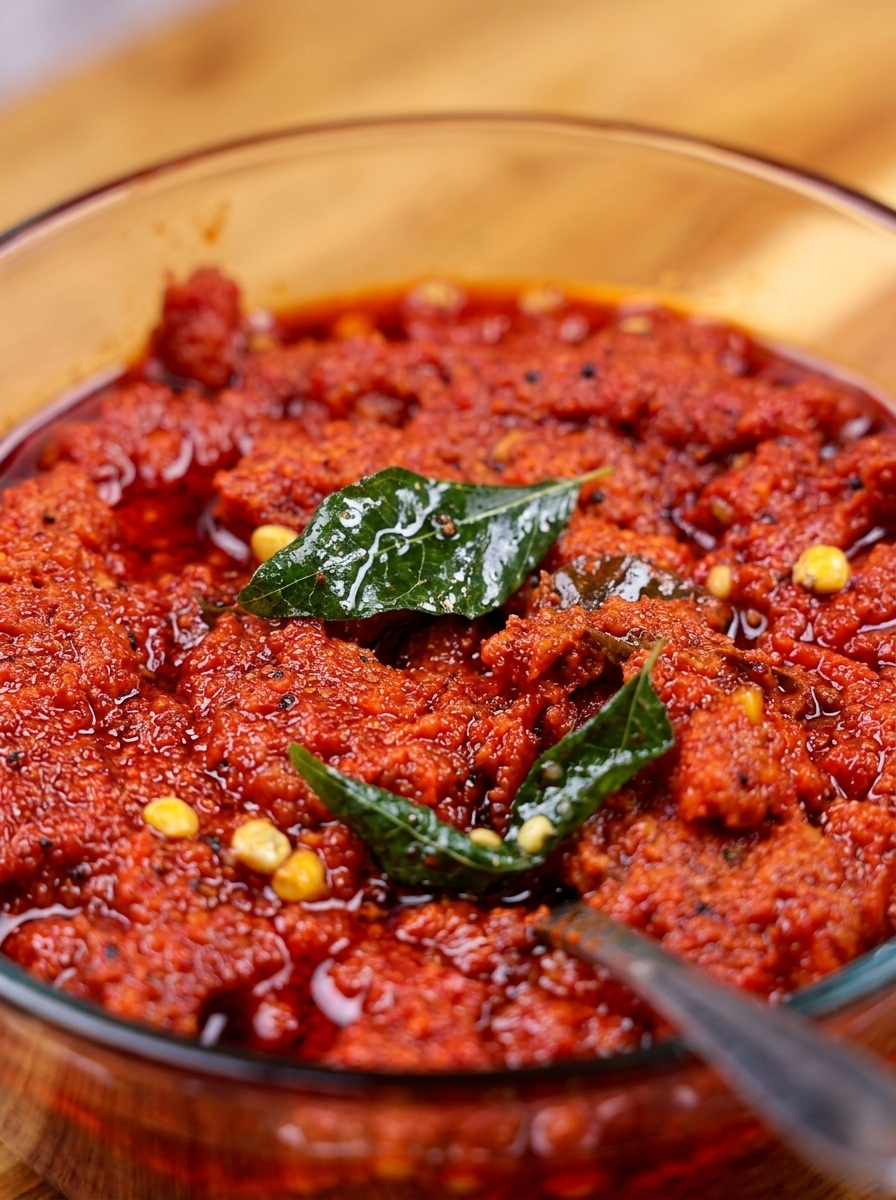
Mary Berry Tomato Chutney Recipe
Ingredients
Method
- Sterilise jars in a 140°C oven for 15 minutes.
- Place all ingredients into a large preserving pan. Stir to combine.
- Heat gently, stirring, until sugar has completely dissolved — about 10 minutes.
- Bring to a gentle simmer. Cook uncovered over low-medium heat for 1 hour 15 minutes to 1 hour 45 minutes, stirring regularly and more frequently towards the end, until thick and glossy. A spoon drawn across the base should leave a clear channel that does not fill back.
- Remove bay leaves. Leave to cool 5 minutes.
- Ladle into hot sterilised jars using a jam funnel. Fill to within 1cm of the top. Seal immediately with vinegar-proof lids. Label with contents and date.
- Leave for at least 4 weeks before opening for the best flavour.
Notes
Frequently Asked Questions About Mary Berry Tomato Chutney
Do I need to skin the tomatoes first?
No — the tomato skins dissolve completely during the long cooking time and do not affect the texture of the finished chutney. Simply chop the tomatoes roughly and put them in the pan with everything else.
Can I use tinned tomatoes?
Yes — and for out-of-season cooking, tinned plum tomatoes are actually a better choice than poor quality fresh tomatoes. Use 2 x 400g tins of whole plum tomatoes in place of the fresh tomatoes. The chutney will be slightly darker in colour but equally delicious.
Can I make this chutney without sugar?
Sugar is essential for both the preservation and the flavour balance of chutney — it counteracts the sharpness of the vinegar and contributes to the keeping quality. Significantly reducing the sugar produces a very sharp, sour chutney that also does not keep as well. The sugar quantity in this recipe is calibrated for the right balance and keeping quality.
Why is my chutney too runny?
It needed longer cooking. Return the chutney to the pan and simmer uncovered for a further 20 to 30 minutes, stirring regularly, until it reaches the right consistency — a clear channel left by the spoon that does not immediately fill back. Every batch is slightly different depending on the water content of the tomatoes.
Can I add other vegetables?
Yes — courgette, aubergine, or green tomatoes can all be added or substituted for some of the red tomatoes. Green tomato chutney is a particularly wonderful British preserve that uses the same method. Keep the total weight of vegetables at approximately 2kg.
How do I know the chutney has kept properly?
A properly sealed jar of chutney should have a lid that does not flex when pressed in the centre — this indicates a vacuum seal has formed. If the lid flexes or pops up and down, the jar has not sealed properly and the chutney should be refrigerated and used within a few weeks.















I love this recipe