
 Anna Louise
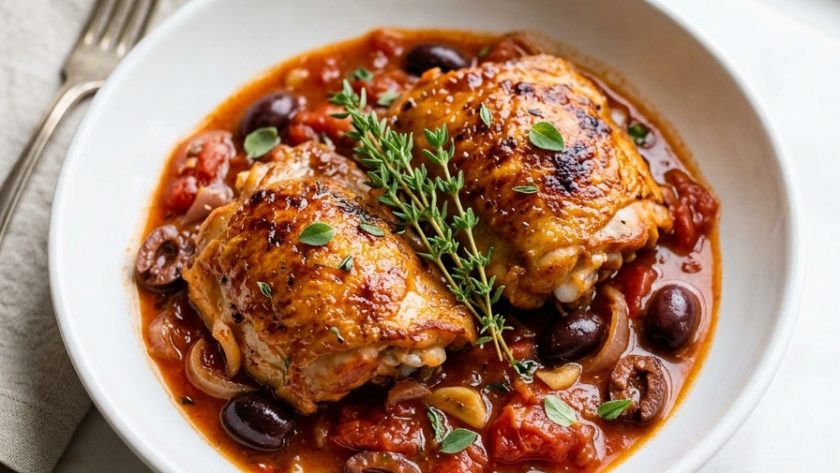
 Chicken Provençal is the dish that most completely captures the flavour of southern France in a single pot. Tomatoes, garlic, olives, capers, anchovies, herbes de Provence, and a generous pour of white wine — every element is a hallmark of Provençal cooking, and together they give a braise that is simultaneously vibrant and deeply comforting.
The anchovy is the detail that separates a great Provençal sauce from a merely good tomato braise. It does not make the dish taste of fish — cooked into the sauce at the beginning, anchovy dissolves completely and gives an extraordinary savoury depth that is hard to identify but immediately missed when absent.
It is the same principle as adding anchovy to a lamb shoulder — it deepens and enriches the background flavour without declaring itself. This is a casserole that is best made the day before. Like all the braises on this site, it improves overnight the tomatoes meld into the sauce, the herbs deepen, the olives and capers integrate.
Made ahead, reheated gently, and served with crusty bread or polenta, it is genuinely one of the finest things in this repertoire.
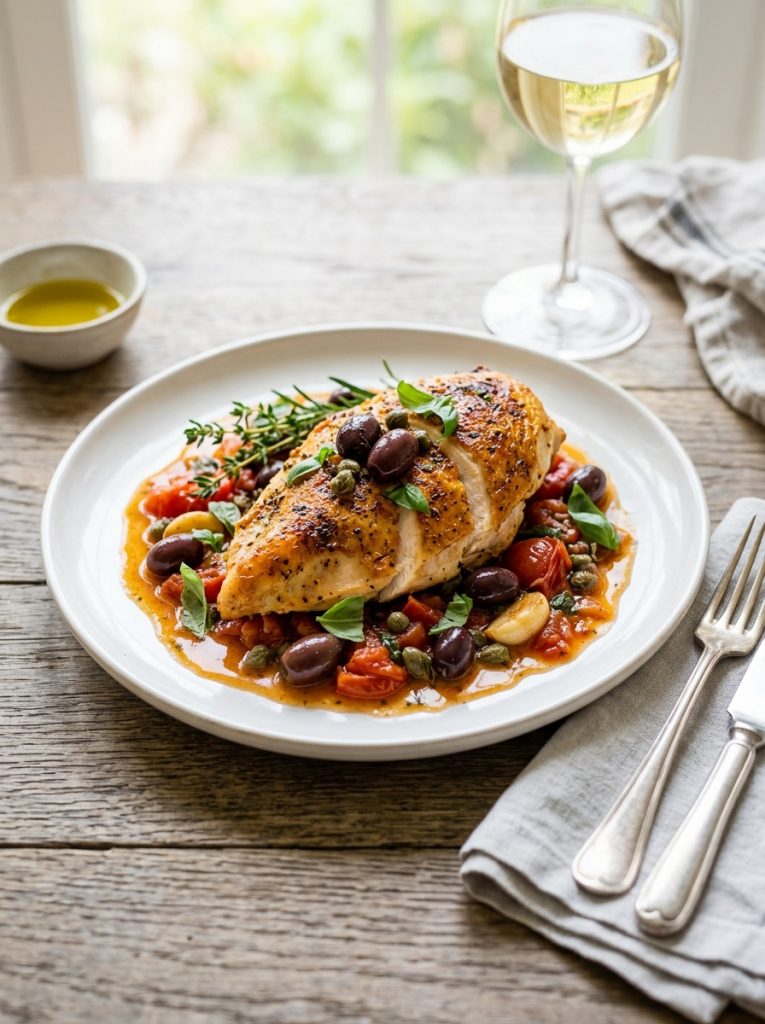
Ingredients for Mary Berry Chicken Provençal
For the Casserole
- 8 bone-in skin-on chicken thighs and drumsticks
- 3 tbsp olive oil
- 1 large onion, finely chopped
- 4 garlic cloves, finely sliced
- 4 anchovy fillets in oil, roughly chopped
- 1 tsp herbes de Provence
- 1 tsp fresh thyme leaves
- 200ml dry white wine or dry rosé
- 400g tin chopped tomatoes
- 2 tbsp tomato purée
- 150ml good quality chicken stock
- 1 tsp caster sugar
- 100g pitted black olives — Niçoise if available
- 2 tbsp capers, rinsed
- 1 tbsp red wine vinegar — added at the very end
- Salt and freshly ground black pepper
To Finish
- Fresh flat-leaf parsley, roughly torn
- Fresh basil leaves, torn
- Extra virgin olive oil for drizzling
- Zest of ½ unwaxed lemon
How to Make Mary Berry Chicken Provençal
Step 1 — Brown the Chicken
Season the chicken pieces generously. Heat two tablespoons of the olive oil in a large, deep ovenproof casserole over a medium-high heat. Brown in batches — skin-side down first — four to five minutes until deeply golden. Turn and cook two minutes on the other side. Remove and set aside.
Step 2 — Build the Provençal Base
Reduce the heat to medium. Add the remaining tablespoon of olive oil. Cook the onion for eight minutes until completely soft. Add the finely sliced garlic, anchovy fillets, herbes de Provence, and fresh thyme. Stir for two to three minutes — the anchovies will dissolve into the oil completely, leaving no trace of fish flavour, only depth.
Step 3 — Add Wine and Tomatoes
Add the white wine or rosé. Increase the heat and let it bubble for three to four minutes, scraping up the base, until reduced by half. Add the chopped tomatoes, tomato purée, stock, and sugar. Season generously — remembering the olives and capers will add saltiness later. Bring to a simmer and cook for five minutes.
Step 4 — Braise the Chicken
Return the browned chicken skin-side up to the casserole — skin above the sauce. Cover partially. Cook over the lowest possible heat — or in a preheated 160°C / 140°C fan / Gas 3 oven — for 35 to 40 minutes until completely tender.
Step 5 — Add Olives and Capers
In the final ten minutes of cooking, add the olives and capers. They need only a brief warming to release their flavour.
Step 6 — Finish and Serve
Remove from the heat. Stir in the red wine vinegar — this single tablespoon brightens and focuses the entire sauce. Scatter fresh parsley, basil, and lemon zest over the top. Drizzle with extra virgin olive oil. Serve from the casserole.
My Top Tips For Perfect Chicken Provençal
Do not skip the anchovy. This is the most common modification people make to Provençal recipes and it consistently gives a flatter, less interesting result. The anchovy is invisible in the finished dish — it has completely dissolved — but its contribution to the depth of flavour is irreplaceable.
Use dry rosé if you have it. A good dry Provençal rosé — the region’s most characteristic wine — in the sauce gives an authenticity and a specific character that white wine does not quite replicate. Either works but rosé is the regional choice.
Olives and capers in the final ten minutes only. Both lose their pleasant character if braised for the full cooking time — the olives become soft and slightly bitter, the capers lose their snap. Ten minutes of gentle warmth is enough.
Red wine vinegar at the very end. One tablespoon only — added off the heat or just before serving. It brightens and sharpens every flavour in the sauce in a way that no amount of additional seasoning achieves.
Make the day before. Chicken Provençal improves more dramatically overnight than almost any other casserole on this site. The tomatoes, herbs, olives, and capers need time to integrate into a coherent, deeply flavoured sauce. Make it the evening before, refrigerate, and reheat gently before serving.
Serving Suggestions
With crusty bread for mopping — the sauce demands it. With soft polenta — the classic Provençal pairing. With buttered pasta. With simple boiled rice. With a bottle of chilled Provençal rosé alongside.
How to Store Chicken Provençal
In the fridge: Store for up to 3 days. Flavour improves significantly overnight.
In the freezer: Freeze in portions for up to 3 months. Defrost overnight in the fridge and reheat gently, adding a splash of stock if needed.
Try These Recipes
- Mary Berry Chicken Leek And Mushroom Pie
- Mary Berry Creamy Chicken Casserole With White Wine
- Mary Berry Mediterranean Chicken Thighs With Chorizo
- Mary Berry Malaysian Chicken Curry
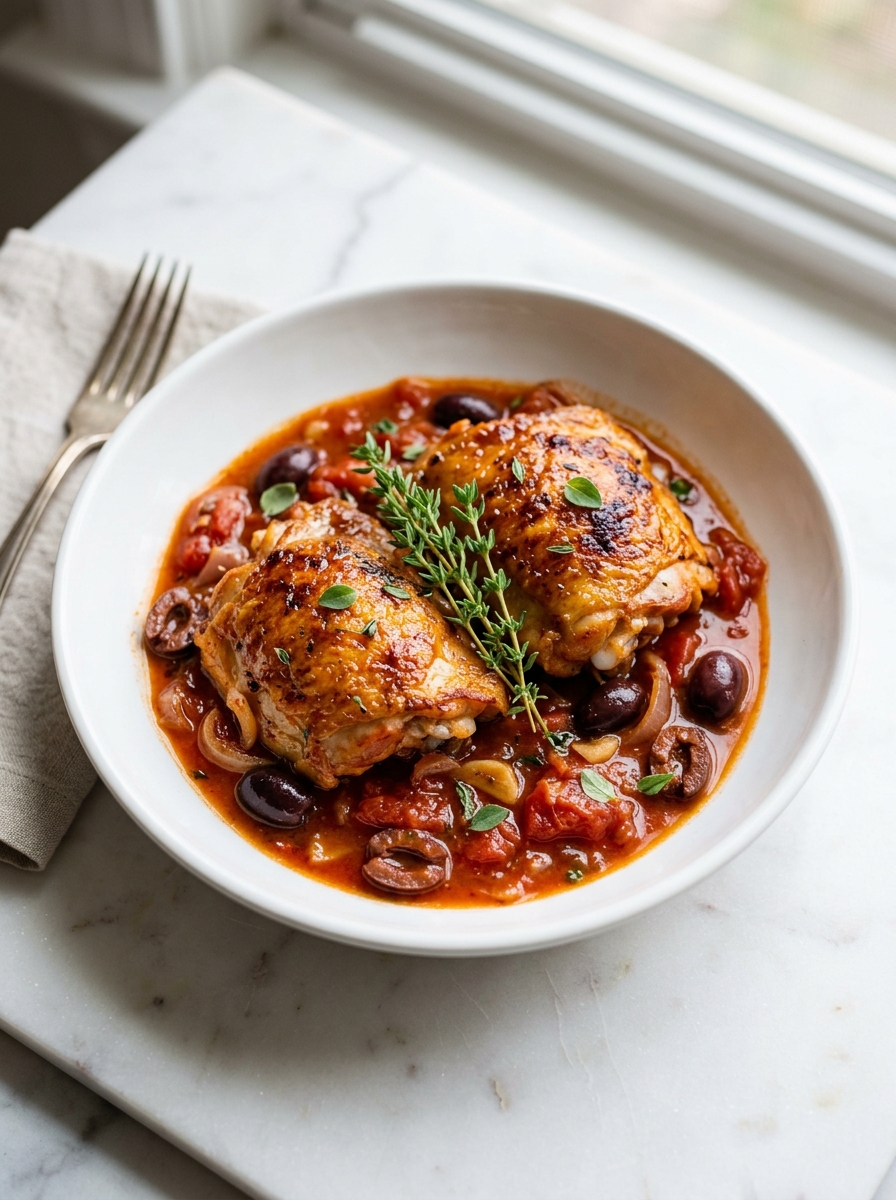
Mary Berry Chicken Provençal Recipe
Ingredients
Method
- Season chicken. Brown skin-side down in batches in hot oil — 4–5 minutes until deeply golden. Turn — 2 minutes. Remove.
- Reduce heat. Add remaining oil. Cook onion 8 minutes. Add garlic, anchovies, herbes de Provence, and thyme — stir 2–3 minutes until anchovies have dissolved.
- Add wine — bubble 3–4 minutes until reduced by half, scraping the base. Add tomatoes, purée, stock, and sugar. Season. Simmer 5 minutes.
- Return chicken skin-side up. Cover partially. Cook over lowest heat or in 160°C oven 35–40 minutes until completely tender.
- Add olives and capers — final 10 minutes. Stir in red wine vinegar off the heat.
- Scatter parsley, basil, and lemon zest. Drizzle olive oil. Serve from the casserole.
Notes
Frequently Asked Questions
Can I use tinned anchovies in brine instead of oil?
Yes — rinse them thoroughly first. Anchovies in oil give a slightly richer flavour but those in brine work well.
Can I use red wine instead of white or rosé?
You can — red wine gives a darker, more robust sauce. Traditional Provençal cooking uses white or rosé for chicken — the lighter wine suits the Mediterranean character better.
Can I add courgette or aubergine?
Yes — diced courgette or aubergine, roasted separately until golden and added with the olives in the final ten minutes, gives a more substantial, more vegetable-forward Provençal dish.
Can I make this without the wine?
Replace with an extra 100ml of chicken stock and a tablespoon of white wine vinegar. The depth will be slightly less but the character is similar.














Leave a Reply