
 Anna Louise
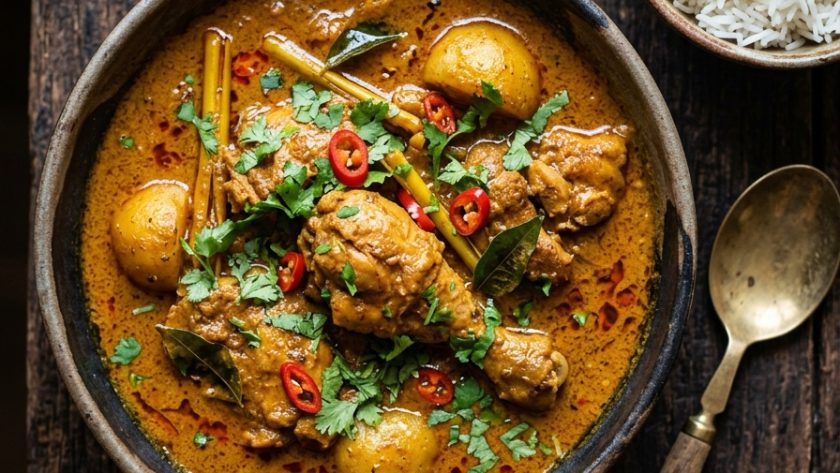
 Malaysian chicken curry sits in a completely different flavour world from the Indian curries elsewhere on this site. Where an Indian curry builds its character from cumin, coriander, and garam masala, a Malaysian curry gets its identity from lemongrass, galangal, kaffir lime leaves, and coconut milk — a combination that gives something lighter, more fragrant, and more specifically tropical in character.
The rempah — the Malaysian spice paste ground and fried before any liquid goes in — is the foundation of everything. It takes ten minutes to make and thirty seconds in a hot pan to develop from a collection of raw aromatics into something deeply fragrant and complex.
From that point the curry builds quickly — coconut milk, stock, chicken, and a little fish sauce for the essential Southeast Asian salinity.
This is a curry that smells extraordinary from the first moment the rempah hits the hot oil and does not disappoint when it arrives at the table.
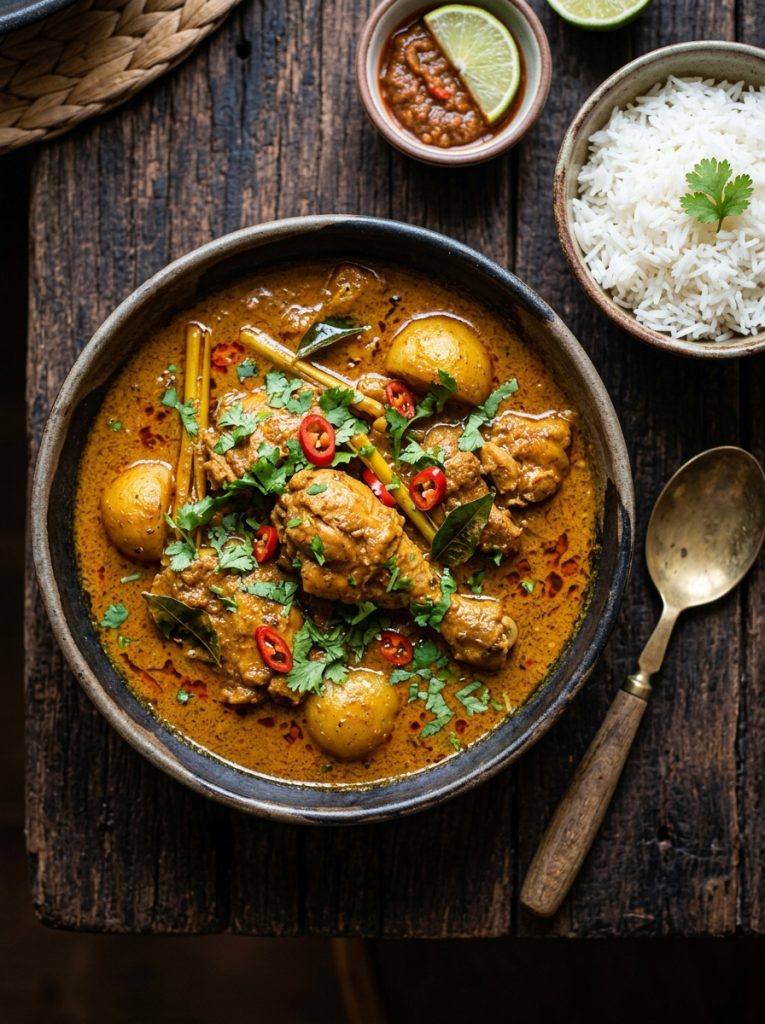
Ingredients for Mary Berry Malaysian Chicken Curry
For the Rempah (Spice Paste)
- 4 shallots, roughly chopped
- 4 garlic cloves, roughly chopped
- 3cm fresh galangal or ginger, roughly chopped
- 2 stalks lemongrass, white part only, roughly sliced
- 3 dried red chillies, soaked in hot water 10 minutes — or 2 fresh red chillies
- 1 tsp ground turmeric
- 1 tsp ground coriander
- ½ tsp ground cumin
- 2 tbsp sunflower oil — to help blend
For the Curry
- 800g boneless skinless chicken thighs, cut into generous chunks
- 3 tbsp sunflower oil
- 400ml tin full-fat coconut milk
- 200ml good quality chicken stock
- 2 tbsp fish sauce
- 1 tbsp palm sugar or soft light brown sugar
- 4 kaffir lime leaves — whole
- 1 lemongrass stalk, bruised and bent in half
- 200g baby potatoes, halved (optional — gives body)
- Salt to taste
- Fresh coriander and sliced red chilli to finish
To Serve
- Jasmine rice
- Roti or flatbreads
- Cucumber slices and sliced spring onions
How to Make Mary Berry Malaysian Chicken Curry
Step 1 — Make the Rempah
Place all the rempah ingredients into a small food processor or blender — shallots, garlic, galangal, lemongrass, soaked chillies, turmeric, coriander, cumin, and oil. Blend to a smooth, thick paste. Add a splash more oil if needed to help it blend. Set aside.
If you do not have a blender, chop everything as finely as possible by hand and combine — the paste will be coarser but the flavour will be the same.
Step 2 — Fry the Rempah
Heat three tablespoons of sunflower oil in a large, deep pan or wok over a medium heat. Add the rempah paste. Fry for eight to ten minutes, stirring frequently, until the paste has darkened significantly, the raw smell has transformed into something deeply fragrant, and the oil begins to separate and pool around the edges of the paste. This step — called tumis — is the most important step in Malaysian cooking. Do not rush it.
Step 3 — Add the Chicken
Increase the heat to medium-high. Add the chicken pieces to the fried rempah. Stir to coat every piece in the paste. Cook for three to four minutes, stirring, until the chicken is sealed and beginning to colour.
Step 4 — Add the Liquids and Aromatics
Pour in the coconut milk and chicken stock. Add the fish sauce, palm sugar, kaffir lime leaves, and bruised lemongrass stalk. Add the halved baby potatoes if using. Stir to combine.
Bring to a gentle simmer. Cook uncovered over a low heat for 25 to 30 minutes until the chicken is completely tender and the sauce has reduced to a rich, slightly thickened consistency. Stir occasionally.
Step 5 — Taste and Finish
Remove the kaffir lime leaves and lemongrass stalk. Taste the curry — it should be fragrant, slightly sweet, slightly salty from the fish sauce, and gently spiced. Adjust with more fish sauce for saltiness, more sugar for sweetness, or more chilli for heat.
Scatter fresh coriander and sliced red chilli over the top. Serve immediately over jasmine rice with roti or flatbreads and cucumber alongside.
My Top Tips For Perfect Malaysian Chicken Curry
Fry the rempah for the full eight to ten minutes. The tumis step is not something to rush. The paste must darken, the raw aromatics must cook through, and the oil must separate before the liquid goes in. Under-fried rempah gives a curry that tastes raw and flat. Properly fried rempah gives something deeply fragrant and complex.
Galangal is different from ginger and worth finding. Galangal has a more piney, more medicinal, more specifically Southeast Asian flavour than ginger. Most large supermarkets now stock it in the fresh herb section. If you genuinely cannot find it, ginger is a reasonable substitute but the flavour is different.
Use full-fat coconut milk. Low-fat coconut milk gives a thin, slightly watery curry. Full-fat gives the rich, creamy consistency that defines a Malaysian curry.
Fish sauce is not optional. It provides the essential Southeast Asian salinity that soy sauce cannot replicate. Two tablespoons gives a balanced, well-seasoned curry rather than one that needs a lot of salt.
Taste at the end and balance the four flavours. A Malaysian curry balances fragrant, sweet, salty, and spicy. Taste before serving and adjust — more fish sauce for salt, more sugar for sweetness, more chilli paste for heat. The four flavours should all be present and balanced.
Serving Suggestions
With jasmine rice — the essential pairing. With roti canai or any flatbread for scooping. With sliced cucumber and spring onions alongside for freshness. As a dinner party main course made completely ahead — it improves overnight.
How to Store
In the fridge: Store in an airtight container for up to 3 days. The flavour improves significantly overnight as the aromatics deepen.
In the freezer: Freeze in portions for up to 3 months. Defrost overnight in the fridge and reheat gently.
Try These Recipes
- Mary Berry Mediterranean Chicken Thighs With Chorizo
- Mary Berry Chicken Wrapped In Parma Ham
- Mary Berry Chicken Stroganoff
- Mary Berry Chicken And Orzo
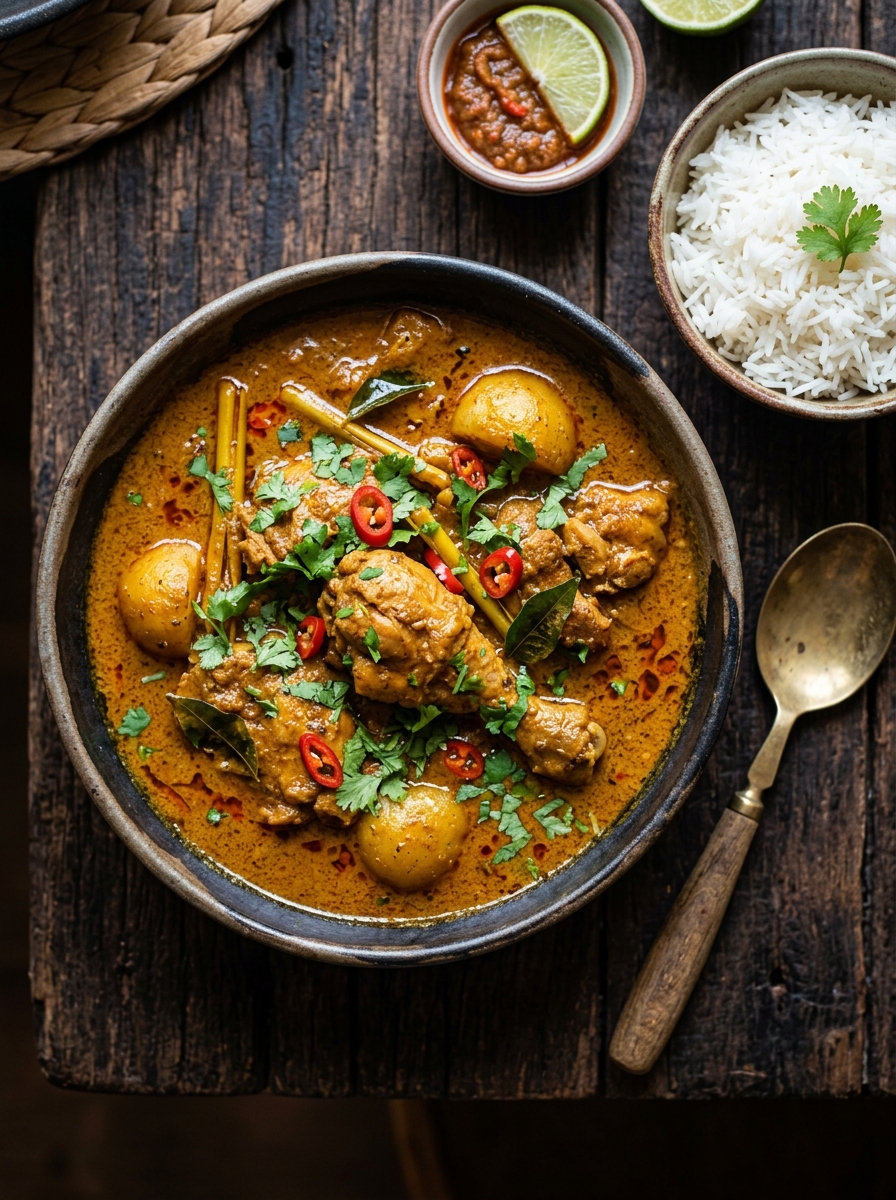
Mary Berry Malaysian Chicken Curry Recipe
Ingredients
Method
- Blend all rempah ingredients to a smooth thick paste. Set aside.
- Heat 3 tbsp oil in a large pan over medium heat. Add rempah — fry 8–10 minutes, stirring frequently, until darkened, deeply fragrant, and oil separates around the edges.
- Increase heat to medium-high. Add chicken — stir to coat. Cook 3–4 minutes until sealed and beginning to colour.
- Add coconut milk, stock, fish sauce, palm sugar, kaffir lime leaves, bruised lemongrass, and potatoes if using. Bring to a gentle simmer. Cook uncovered over low heat 25–30 minutes until chicken is tender and sauce has thickened.
- Remove kaffir lime leaves and lemongrass. Taste and balance — adjust fish sauce, sugar, and chilli as needed. Scatter coriander and red chilli. Serve with jasmine rice.
Notes
Frequently Asked Questions
Can I use chicken breast instead of thighs?
Thighs give a significantly better result in a slow-braised curry — they stay moist and tender throughout. If using breast, add it for the final 15 minutes only.
Can I make the rempah ahead?
Yes — the rempah keeps in a sealed container in the fridge for up to 5 days or in the freezer for up to 3 months. Make a double batch and freeze half for a faster curry next time.
Can I make this vegetarian?
Yes — replace chicken with firm tofu, jackfruit, or a mixture of sweet potato and aubergine. Replace fish sauce with soy sauce and use vegetable stock.
What is the difference between Malaysian and Thai curry?
Malaysian curries tend to be richer and more coconut-forward, with galangal and lemongrass as primary aromatics. Thai curries use curry paste (often with shrimp paste), are more intensely spiced, and use kaffir lime leaves and Thai basil more prominently.
















Leave a Reply