
 Anna Louise
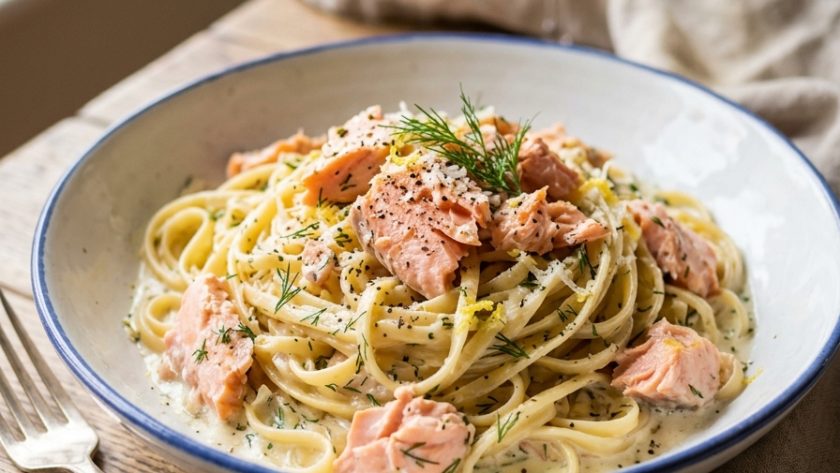
 Salmon linguine is the weeknight pasta that feels considerably more impressive than the twenty minutes it takes. Flaked salmon in a silky cream and lemon sauce with capers and fresh dill, tossed through linguine that is coated in every drop of the sauce.
It is the kind of dinner that looks like it required thought and effort and was actually assembled while the pasta boiled. The sauce is built in minutes in the pan the pasta drained into — shallots and garlic softened in butter, a splash of white wine reduced, cream added and simmered briefly, lemon zest and capers stirred through.
The salmon is added last, off the heat, and folded gently through the sauce so it breaks into large, tender flakes rather than being reduced to paste.
The quality of the salmon matters here. A good salmon fillet — not the thin, pale, overly processed type — gives a result that is noticeably better in both flavour and texture.
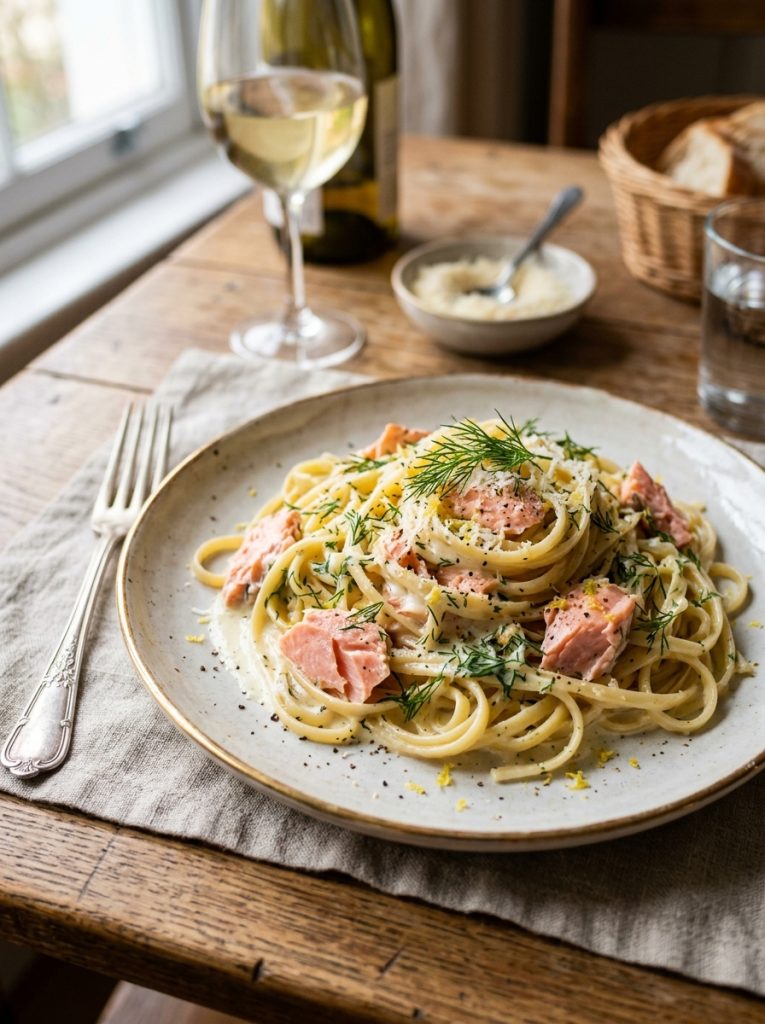
Ingredients for Mary Berry Salmon Linguine
For the Pasta and Sauce
- 400g dried linguine
- 400g salmon fillet, skin removed
- 30g unsalted butter
- 2 shallots, very finely chopped
- 3 garlic cloves, crushed
- 150ml dry white wine
- 200ml double cream
- Finely grated zest of 1 unwaxed lemon
- Juice of ½ lemon
- 2 tbsp capers, rinsed and roughly chopped
- 2 tbsp fresh dill, roughly chopped — plus extra to finish
- 2 tbsp fresh flat-leaf parsley, chopped
- Salt and freshly ground white pepper
- A drizzle of good quality extra virgin olive oil to finish
How to Make Mary Berry Salmon Linguine
Step 1 — Cook the Salmon
Season the salmon fillet generously on both sides. Heat a non-stick frying pan over a medium-high heat with a little olive oil. Cook the salmon for three to four minutes per side until golden on the outside and just cooked through. The centre should be slightly translucent — it will finish cooking when folded through the hot sauce. Flake into large pieces with a fork. Set aside.
Step 2 — Cook the Linguine
Cook the linguine in a very large pan of generously salted boiling water according to the packet instructions — until al dente. Reserve a large mugful (about 300ml) of the pasta cooking water before draining. Drain and set aside.
Step 3 — Make the Sauce
In the same pan used for the salmon, melt the butter over a medium heat. Add the finely chopped shallots and cook for four to five minutes until completely soft. Add the garlic and cook for one more minute.
Add the white wine. Let it bubble for two to three minutes until reduced by half. Add the double cream. Bring to a gentle simmer and cook for three to four minutes until the cream has reduced slightly and coats the back of a spoon.
Add the lemon zest, lemon juice, and capers. Stir to combine. Season with salt and white pepper. Taste — the sauce should be bright, creamy, and well-seasoned.
Step 4 — Combine the Pasta and Sauce
Add the drained linguine to the cream sauce. Toss well to coat every strand — add a splash or two of the reserved pasta cooking water to help the sauce cling to the pasta and reach the right silky consistency.
Step 5 — Add the Salmon and Herbs
Remove from the heat. Add the flaked salmon pieces and the dill and parsley. Fold gently through the pasta — the salmon should be in large, visible flakes rather than broken down completely. The heat of the pasta and sauce will finish cooking the salmon perfectly.
Serve immediately in warm bowls. Scatter extra dill over each portion. Drizzle with a little extra virgin olive oil.
Tips For Perfect Salmon Linguine
Reserve pasta water before draining — always. The starchy pasta water is what makes a cream sauce cling to the pasta properly rather than sitting in a pool at the bottom of the bowl. Add it gradually — a splash at a time — until the sauce coats every strand of linguine.
Do not fully cook the salmon before adding it to the sauce. Slightly underdone salmon removed from the pan — still slightly translucent in the thickest part — finishes perfectly from the residual heat of the hot pasta and cream sauce. Fully cooked salmon folded through a hot sauce becomes slightly overcooked and can taste dry.
Fold the salmon gently. The goal is large, identifiable flakes distributed through the pasta. Vigorous stirring breaks the salmon down to a paste. Two or three gentle folds — then stop.
Lemon and capers are essential. Both give a sharp, slightly salty brightness that cuts through the richness of the cream sauce. Without them the sauce tastes flat and one-dimensional.
White pepper not black. As with all pale, elegant pasta dishes — white pepper gives clean heat invisibly. Black pepper specks look untidy in this sauce.
Serving Suggestions
As a complete dinner with a simple rocket salad alongside. As a quick but impressive dinner party main for two or four people. With a glass of cold, dry white wine — Chablis or Pinot Grigio works perfectly.
How to Store
In the fridge: Store for up to 2 days. The cream sauce thickens on refrigeration — reheat gently in a pan with a splash of stock or water, stirring to restore the silky consistency.
Freezing is not recommended — cream sauces and cooked pasta do not freeze well.
Try These Recipes
- Mary Berry Chicken Hotpot With Potato Topping
- Mary Berry Salmon Risotto
- Mary Berry Chicken Curry With Coconut Milk
- Mary Berry Chicken And Broccoli Bake
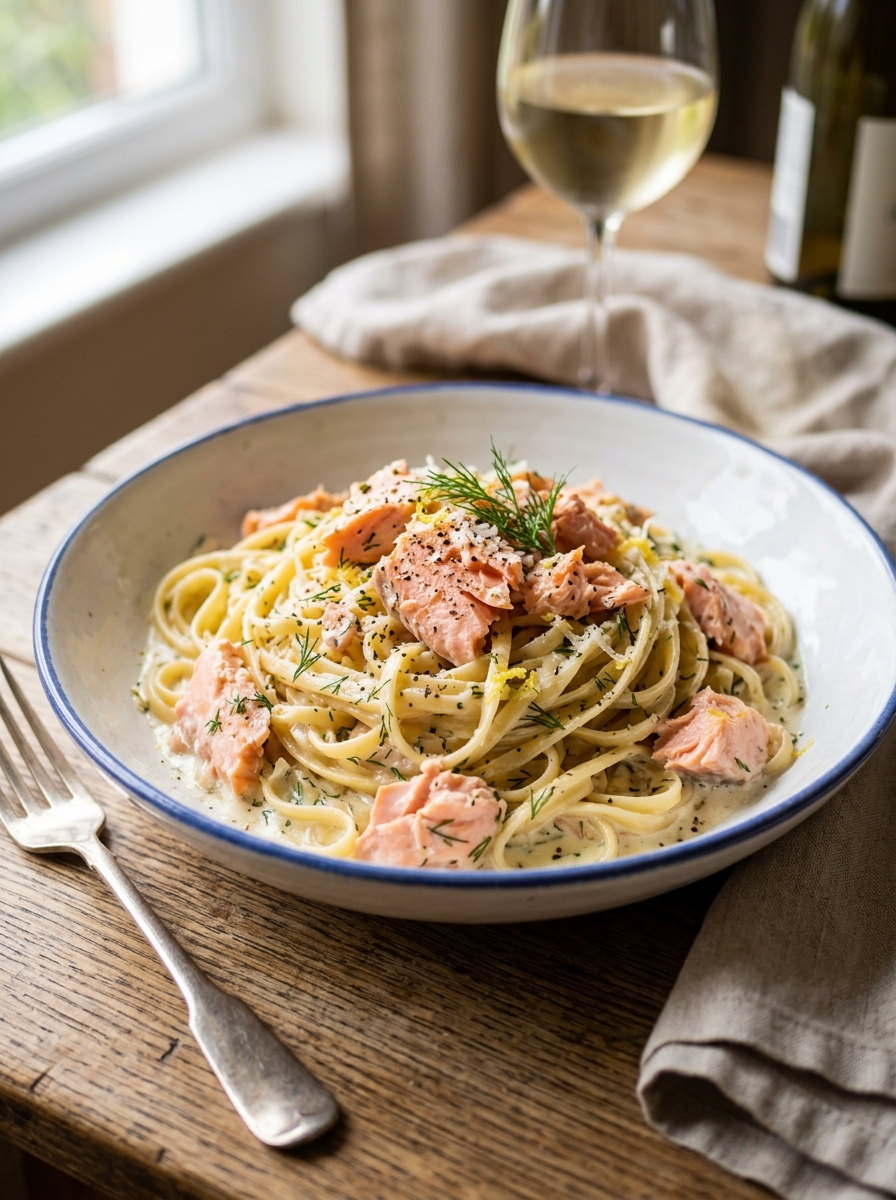
Mary Berry Salmon Linguine Recipe
Ingredients
Method
- Season salmon. Cook in a little hot oil — 3–4 minutes per side until golden outside and slightly translucent at the centre. Flake into large pieces. Set aside.
- Cook linguine in generously salted boiling water until al dente. Reserve 300ml pasta water before draining.
- In the same salmon pan, melt butter over medium heat. Cook shallots 4–5 minutes. Add garlic — 1 minute. Add wine — reduce by half, 2–3 minutes. Add cream — simmer 3–4 minutes until slightly thickened. Add lemon zest, lemon juice, and capers. Season with salt and white pepper.
- Add drained linguine. Toss to coat — add pasta water splashes to achieve a silky, coating consistency.
- Remove from heat. Fold in salmon flakes and herbs gently. Serve immediately in warm bowls. Scatter extra dill. Drizzle with extra virgin olive oil.
Notes
Frequently Asked Questions
Can I use smoked salmon instead of fresh?
Yes — smoked salmon folded through at the end without cooking gives an intensely flavoured, smoky version. Do not heat it — simply fold it through the hot pasta off the heat.
Can I use spaghetti instead of linguine?
Yes — spaghetti, tagliatelle, or any long pasta works with this sauce. Linguine gives the most elegant result.
Can I leave out the cream?
Yes — replace the cream with a few tablespoons of crème fraîche and a splash more pasta water. The sauce will be lighter but still very good.
Can I add spinach?
Yes — a handful of baby spinach wilted into the sauce before adding the pasta gives colour and freshness that complements the salmon beautifully.
Why is my sauce too thick?
Add reserved pasta water a tablespoon at a time, stirring between each addition, until the sauce loosens to the right coating consistency.














Leave a Reply