
 Anna Louise
 Minestrone is not a fixed recipe — it is a principle. Seasonal vegetables, beans, pasta or rice, good stock, and Parmesan rind simmered in the pot for depth. Every Italian family has their version and every version is slightly different.
What they all share is generosity — generous with the vegetables, generous with the beans, generous with the Parmesan at the end.
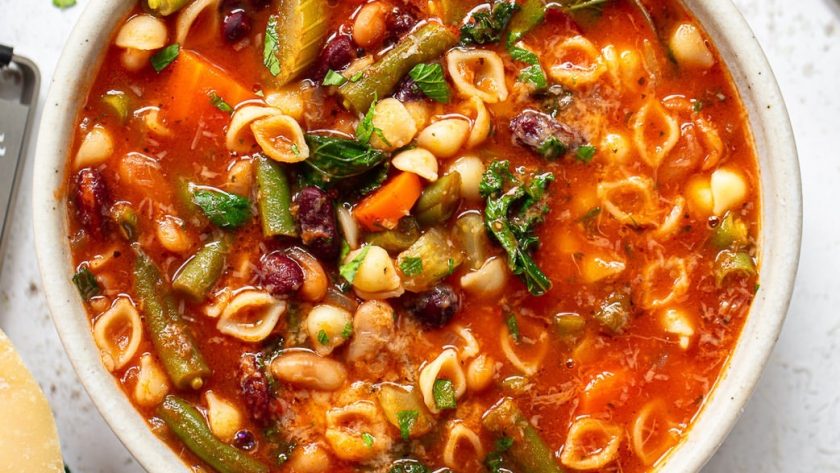
Mary Berry’s minestrone is the kind of substantial, deeply flavoured version that earns the description of a meal in a bowl. The soffritto base of onion, celery, and carrot gives depth. The cannellini beans give body and protein. Small pasta shapes add substance.
And the Parmesan rind — if you have one in the fridge — simmered in the soup for the full cooking time gives an extraordinary, deeply savoury quality that no amount of Parmesan stirred in at the end can replicate.
This is the soup to make in large batches. It improves for up to three days in the fridge and freezes perfectly without the pasta.
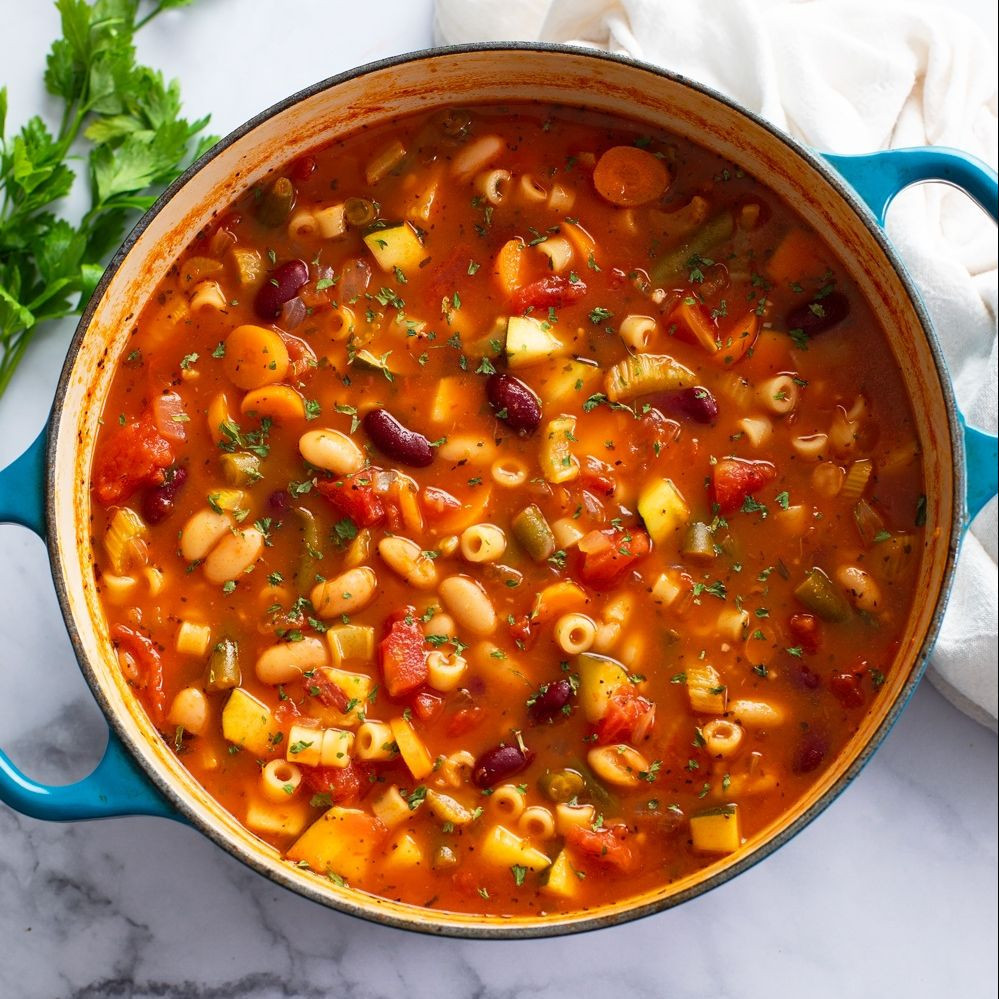
Ingredients for Mary Berry Minestrone Soup
For the Soup
- 3 tbsp good quality olive oil
- 1 large onion, finely chopped
- 3 celery sticks, finely chopped
- 2 large carrots, peeled and finely diced
- 4 garlic cloves, finely sliced
- 1 tsp dried oregano
- ½ tsp dried thyme
- 1 tsp sweet paprika
- 2 tbsp tomato purée
- 400g tin chopped tomatoes
- 1.5 litres good quality vegetable or chicken stock
- 1 Parmesan rind (optional but excellent — gives extraordinary depth)
- 400g tin cannellini beans, drained and rinsed
- 400g tin borlotti beans, drained and rinsed
- 200g courgette, diced into 1cm pieces
- 150g green beans, cut into 3cm lengths
- 100g small pasta (ditalini, orzo, or small macaroni)
- 100g cavolo nero or savoy cabbage, shredded finely
- Salt and freshly ground black pepper
- Large handful of fresh basil, roughly torn
- Parmesan, finely grated, to serve — generously
- Extra virgin olive oil for drizzling
How to Make Mary Berry Minestrone Soup
Step 1 — Build the Soffritto
Heat the olive oil in a very large, heavy-based saucepan over a medium heat. Add the onion, celery, and carrot — the classic Italian soffritto. Cook for twelve to fifteen minutes, stirring occasionally, until completely soft and beginning to turn golden. Do not rush this stage — the soffritto is the flavour foundation of the entire soup.
Add the sliced garlic, dried oregano, dried thyme, and sweet paprika. Cook for two more minutes until fragrant.
Step 2 — Add the Tomato Base
Add the tomato purée. Cook for one minute, stirring constantly. Add the chopped tomatoes. Cook for five minutes, stirring occasionally, until the tomatoes have reduced slightly and the oil is beginning to separate from the tomato — a sign the base is properly cooked.
Step 3 — Add Stock and Parmesan Rind
Pour in the stock. Add the Parmesan rind if using. Bring to the boil, then reduce to a gentle simmer. Cook for fifteen minutes to allow the base to develop flavour.
Step 4 — Add the Beans and Firmer Vegetables
Add both tins of drained beans, the diced courgette, and the green beans. Simmer for eight to ten minutes until the courgette is just tender.
Step 5 — Add the Pasta and Cavolo Nero
Add the small pasta shapes and the shredded cavolo nero or savoy cabbage. Cook for eight to ten minutes until the pasta is just tender. The pasta should be al dente — it will continue to soften slightly in the residual heat.
Remove the Parmesan rind.
Step 6 — Finish and Serve
Taste and season very generously with salt and pepper. Tear in the fresh basil and stir through.
Ladle into large, warm bowls. Scatter a generous amount of Parmesan over each bowl. Drizzle with good extra virgin olive oil. Serve with crusty bread.
My Top Tips For Perfect Minestrone Soup
Cook the soffritto for twelve to fifteen minutes. Properly cooked soffritto — soft, golden, almost caramelised — is the foundation of a great minestrone. Undercooked onions and celery give a slightly harsh, raw flavour that underpins everything. Give it time.
Use a Parmesan rind if you have one. This is the detail that transforms minestrone from a pleasant vegetable soup into something of extraordinary depth. Save Parmesan rinds in the freezer — they keep for months and add remarkable flavour to any long-simmered soup or sauce.
Add pasta separately — or cook it in the stock directly but eat immediately. Pasta cooked in minestrone absorbs the broth and expands over time. If making ahead, cook the pasta separately and add to individual bowls when serving. Or cook it in the soup and eat the same day.
Be generous with the Parmesan. Minestrone needs a proper, thick layer of Parmesan stirred through each bowl — not a light dusting. The Parmesan enriches the broth and gives the soup its characteristic Italian finish.
Use two types of bean. Cannellini beans give a creamy, mild flavour and soften the broth. Borlotti beans give a slightly firmer texture and earthier flavour. Together they give more interest than a single variety.
Serving Suggestions
As a complete meal with crusty bread — this needs nothing else. With bruschetta rubbed with garlic and drizzled with olive oil. As a starter in smaller portions before a simple main.
How to Store
In the fridge: Store without pasta for up to 4 days. The flavour improves significantly over the first two days. Add freshly cooked pasta when reheating.
In the freezer: Freeze without pasta for up to 3 months. Defrost overnight. Reheat gently, adding fresh pasta when serving.
Try These Recipes
- Mary Berry Celery Soup
- Mary Berry Pea And Mint Soup
- Mary Berry Thai Chicken Noodle Soup
- Mary Berry Asparagus Soup
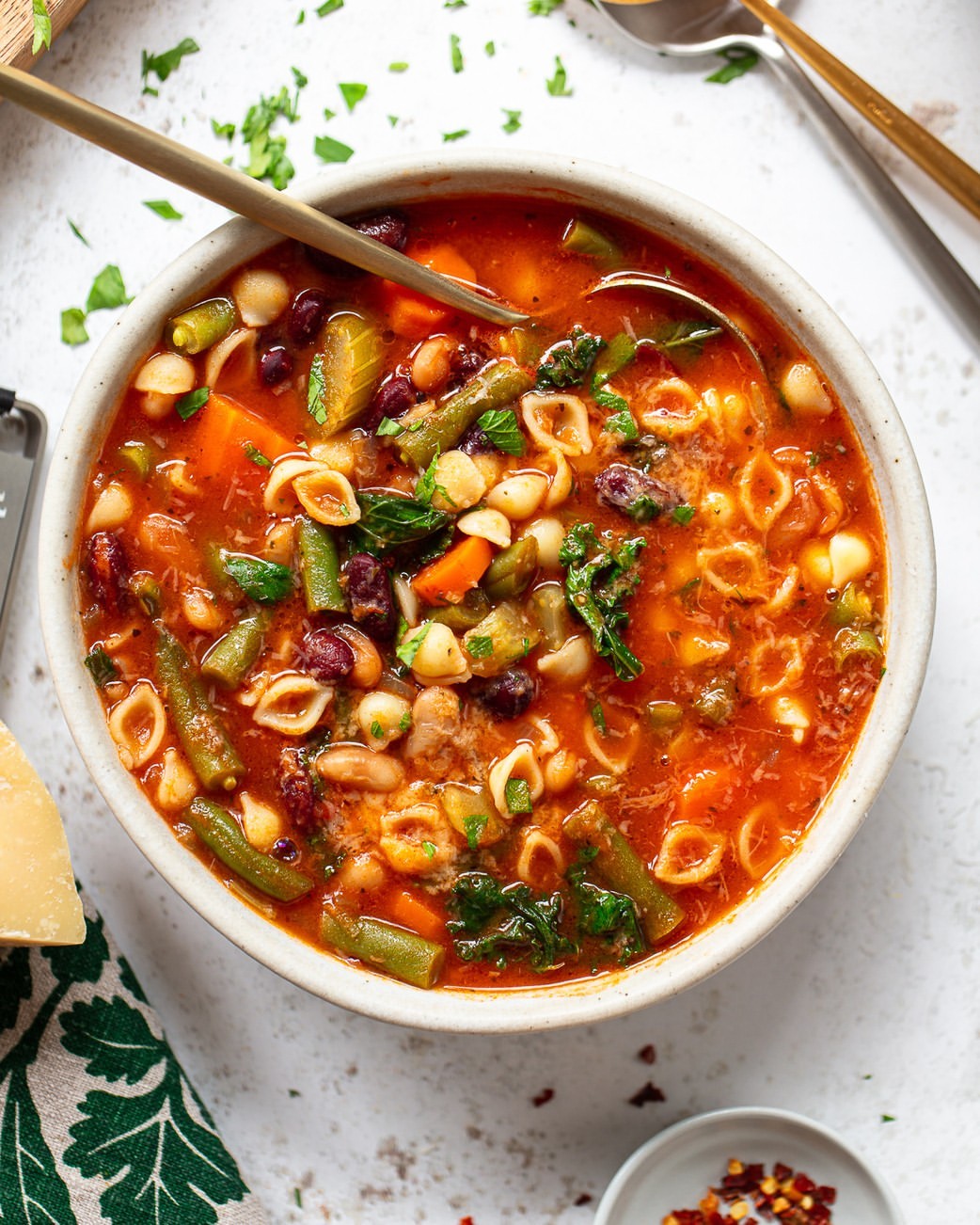
Mary Berry Minestrone Soup Recipe
Ingredients
Method
- Heat oil in a large pan. Cook onion, celery, and carrot over medium heat 12–15 minutes until golden and soft. Add garlic and dried herbs — 2 minutes. Add tomato purée — 1 minute.
- Add chopped tomatoes — cook 5 minutes until slightly reduced. Add stock and Parmesan rind if using. Bring to boil — simmer 15 minutes.
- Add cannellini beans, borlotti beans, courgette, and green beans. Simmer 8–10 minutes.
- Add pasta and cavolo nero or cabbage. Cook 8–10 minutes until pasta is just tender. Remove Parmesan rind.
- Season very generously. Tear in fresh basil. Ladle into large warm bowls. Scatter generous Parmesan. Drizzle with extra virgin olive oil. Serve with crusty bread.
Notes
Frequently Asked Questions
Can I make this vegan?
Yes — use vegetable stock, omit the Parmesan rind, and replace the Parmesan garnish with nutritional yeast or a good vegan Parmesan alternative. The soup is naturally vegan otherwise.
Can I use rice instead of pasta?
Yes — long-grain or arborio rice works well. Use the same quantity and the same timing. Rice gives a slightly more substantial, slightly more rustic result.
Can I add meat?
Yes — diced pancetta or smoked bacon lardons fried briefly before the soffritto add a smoky depth. Italian sausage crumbled and browned is an excellent addition for a more substantial, more richly flavoured soup.
Can I use fresh tomatoes instead of tinned?
Yes — 400g of ripe, deeply flavoured fresh tomatoes roughly chopped give a lighter, fresher result. Use in summer when tomatoes are at their best.
Why is my minestrone too thick?
The pasta has absorbed too much of the stock during storage. Add hot stock when reheating and stir well to loosen.
















Leave a Reply