
 Anna Louise
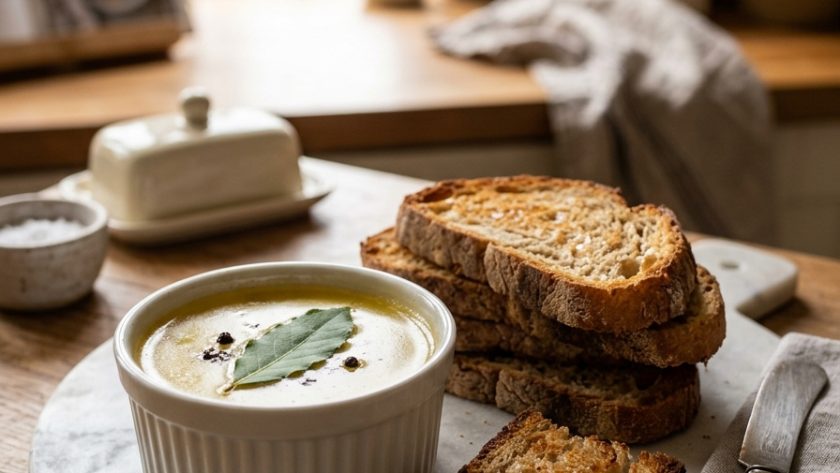
 Chicken liver pâté is one of those things that sounds impressive and complicated and is actually one of the quickest and simplest things you can make.
I have made it for dinner parties, for Christmas Eve alongside cheese and chutney, for lazy Saturday lunches with toast and cornichons, and every time it gets exactly the same response — people assume it took far longer than it did and ask for the recipe.
The whole thing takes about twenty-five minutes. You cook the livers briefly in butter with shallots, garlic, and fresh thyme, add a generous splash of brandy, blend until completely smooth, and transfer to pots to set in the fridge. That is genuinely it.
What makes Mary Berry’s chicken liver pâté special is the generous amount of butter — both cooked through with the livers and added cold at the end for silkiness — and the brandy, which is not optional.
Brandy in a chicken liver pâté does something irreplaceable. It gives a warmth and a slight sweetness that lifts the richness of the liver and gives the pâté a complexity that no amount of seasoning alone can achieve.
A Few Notes on Chicken Livers
Chicken livers are inexpensive, widely available, and genuinely nutritious. But they do need a little attention before cooking.
Trim carefully. Remove any greenish patches — these are bile duct remnants and taste bitter. Remove any stringy connective tissue. A well-trimmed liver tastes clean and rich. An untrimmed one has a slightly unpleasant bitterness.
Do not overcook them. Chicken livers should be pink in the centre when they come off the heat — not grey all the way through. Overcooked chicken livers are grainy and chalky in a pâté rather than silky and smooth. Pink in the centre is safe and correct.
Pat them dry before cooking. Wet livers steam rather than sear and do not develop the golden exterior that gives the pâté its depth of flavour. A quick pat with kitchen paper makes a real difference.
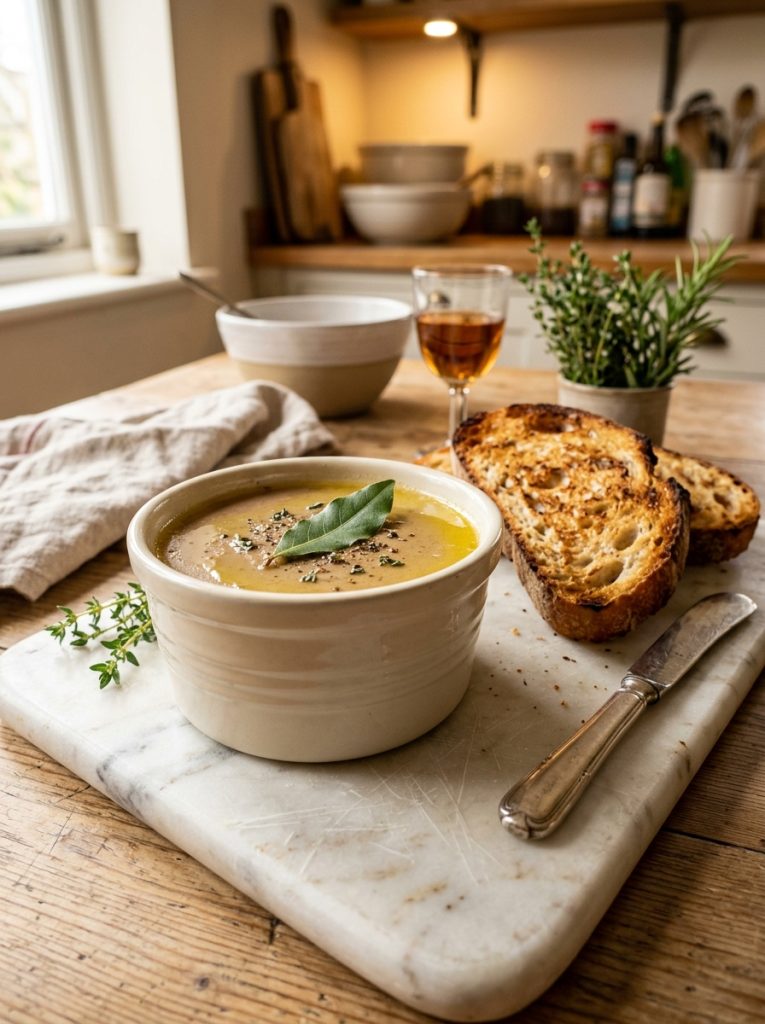
Ingredients for Mary Berry Chicken Liver Pâté
For the Pâté
- 500g chicken livers, trimmed
- 150g unsalted butter — 100g for cooking, 50g cold and cubed for finishing
- 4 shallots, finely chopped
- 3 garlic cloves, crushed
- 1 tsp fresh thyme leaves
- 4 tbsp brandy
- 100ml double cream
- 1 tsp Dijon mustard
- Salt and freshly ground black pepper
- A pinch of ground mace or nutmeg
For the Sealed Top (Optional but Beautiful)
- 75g unsalted butter, clarified — melted, skimmed, and strained
- A few sprigs of fresh thyme
- A few whole black peppercorns
To Serve
- Sourdough toast or warm crusty bread
- Cornichons
- Good quality chutney or onion marmalade
- A simple dressed salad
How to Make Mary Berry Chicken Liver Pâté
Step 1 — Prepare the Livers
Trim the chicken livers carefully, removing any green patches and stringy connective tissue. Pat completely dry with kitchen paper. Season generously with salt and pepper.
Step 2 — Cook the Shallots and Garlic
Melt 50g of the butter in a large frying pan over a medium heat. Add the shallots and cook for five to six minutes until completely soft and translucent. Add the garlic and thyme and cook for one more minute.
Step 3 — Sear the Livers
Increase the heat to medium-high. Add the remaining 50g of butter. When it is foaming, add the chicken livers in a single layer — do not crowd them or they will steam rather than sear. Cook for two to three minutes per side until golden on the outside and still pink in the centre. They should be cooked through but still slightly rosy inside.
Step 4 — Add the Brandy
Standing back slightly, add the brandy to the pan. Let it bubble and reduce for one to two minutes until almost completely evaporated. The alcohol will have gone but the flavour remains.
Step 5 — Add the Cream
Add the double cream and mustard. Stir and cook for one minute until slightly reduced. Remove from the heat.
Step 6 — Blend Until Silky
Transfer everything from the pan — livers, shallots, garlic, cooking juices, and all — into a food processor. Add the cold cubed butter and a pinch of mace or nutmeg. Blend for two to three full minutes until completely smooth.
Taste carefully and season generously — pâté served cold needs more seasoning than you think, as cold dulls the perception of salt and pepper.
Pass the blended pâté through a fine sieve for an especially silky result. This step is worth doing if you want a truly restaurant-quality texture.
Step 7 — Transfer and Set
Pour the pâté into small ramekins or one larger terrine dish. Smooth the surface.
If sealing — and I always do — pour the clarified butter over the surface in a thin layer. Place a small sprig of thyme and two or three peppercorns on top of each pot before the butter sets. Leave to set at room temperature for five minutes, then refrigerate.
Refrigerate for at least four hours before serving — overnight is better.
My Top Tips For Mary Berry Chicken Liver Pâté
Trim the livers carefully. Every green patch removed is a trace of bitterness removed. Take the time to do it properly — it makes a noticeable difference to the finished pâté.
Do not overcook the livers. Pink in the centre is the correct endpoint. Grey all the way through means an overcooked, grainy pâté. Two to three minutes per side over medium-high heat, then off.
Be generous with the brandy and the butter. Both are essential to the character of this pâté. The brandy gives warmth and complexity. The cold butter added at the end gives silkiness and richness. Do not reduce either.
Blend for three full minutes. The silky texture of a great pâté comes from proper blending. Three minutes in a food processor — two if passing through a sieve — is the minimum for the right consistency.
Season generously. Cold food needs more salt than warm food because cold temperature dulls our perception of saltiness. Season until it tastes slightly over-seasoned warm — it will be perfectly seasoned cold.
The clarified butter seal is not just decorative. It seals the surface of the pâté and prevents it from oxidising and turning grey. It also makes it look beautiful. And there is something very pleasing about cracking through it to the smooth pâté beneath.
Serving Suggestions
On warm sourdough toast with cornichons alongside — the classic and perfect combination. As a starter for a dinner party — made two days ahead, served from the ramekins, genuinely elegant.
As part of a Christmas or celebration spread alongside cheese and chutney. With thin crackers and a glass of Sauternes or a good Burgundy.
How to Store Mary Berry Chicken Liver Pâté
In the fridge: Sealed with clarified butter, the pâté keeps for up to 5 days. Once the seal is broken, eat within 2 days.
In the freezer: Freeze without the butter seal for up to 2 months. Defrost overnight in the fridge and add a fresh butter seal before serving.
Try These Recipes
- Mary Berry Cottage Pie With Dauphinoise Potatoes
- Mary Berry Chicken And Ham Pie
- Mary Berry Luxury Fish Pie
- Mary Berry Smoked Salmon Quiche
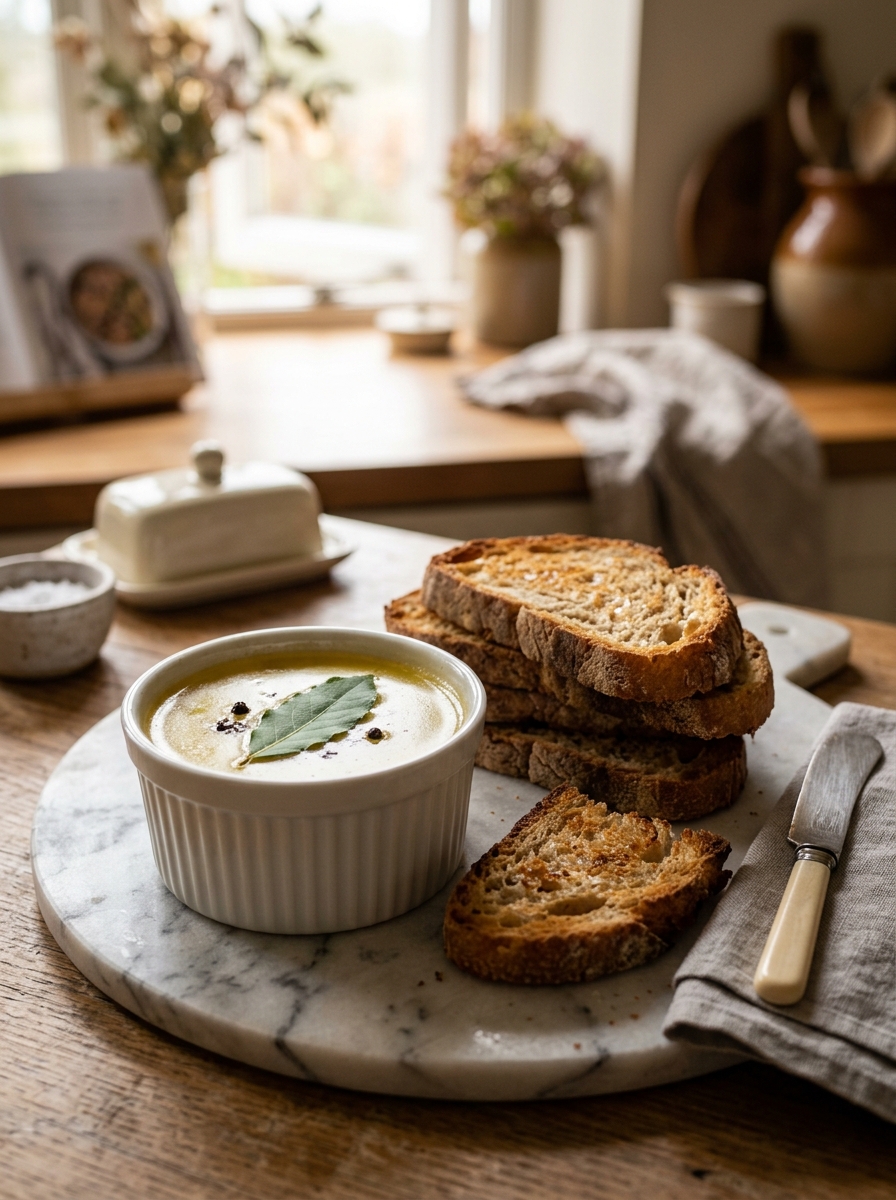
Mary Berry Chicken Liver Pâté Recipe
Ingredients
Method
- Trim livers — remove all green patches and stringy tissue. Pat completely dry. Season generously.
- Melt 50g butter over medium heat. Cook shallots 5–6 minutes until soft. Add garlic and thyme — 1 minute.
- Increase to medium-high. Add remaining 50g butter. When foaming, add livers in a single layer. Cook 2–3 minutes per side until golden outside, still pink inside.
- Add brandy — bubble 1–2 minutes until almost evaporated. Add cream and mustard — stir 1 minute. Remove from heat.
- Transfer everything to a food processor. Add cold cubed butter and mace. Blend 2–3 minutes until completely smooth. Pass through a fine sieve for the silkiest result. Taste and season generously.
- Pour into ramekins or a terrine. Smooth surfaces. Pour clarified butter over each — thin layer. Decorate with thyme and peppercorns. Set 5 minutes at room temperature. Refrigerate at least 4 hours — overnight is better.
- Serve with sourdough toast, cornichons, and chutney.
Notes
Frequently Asked Questions
Can I use duck livers instead of chicken?
Yes — duck livers give a richer, slightly gamier pâté. Use exactly the same method and quantities. They are harder to find but worth seeking out for something more luxurious.
Can I leave out the brandy?
You can — replace with a tablespoon of Worcestershire sauce and a splash of apple juice for some acidity. The pâté will be good but the brandy genuinely transforms it. Try to use it.
How do I clarify butter?
Melt butter over a low heat until foaming. Skim the white foam from the surface. Carefully pour the clear golden butter through a fine sieve lined with a piece of kitchen paper, leaving the milky white solids behind. What passes through is clarified butter.
Can I make this ahead for a dinner party?
Yes — pâté actually benefits from being made one to two days ahead. It firms up, the flavours deepen, and it slices or scoops more neatly. It is the ideal make-ahead starter.
Why is my pâté grainy?
The livers were overcooked and the proteins seized and became granular. Next time remove the livers from the heat while they are still pink in the centre — they will be perfectly smooth in the blender.















Leave a Reply