
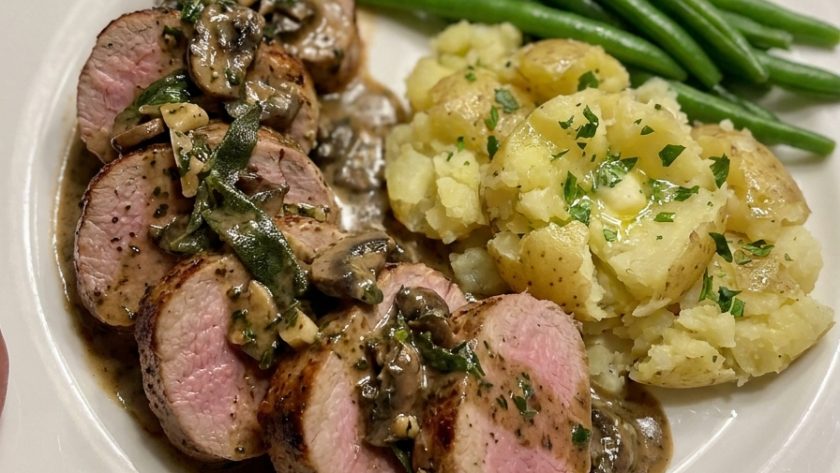
 Anna Louise
 Pork fillet — also called pork tenderloin — is one of the most underused cuts in the British kitchen. It is the leanest, most tender cut of pork, it cooks in twenty minutes, and it takes to a cream and mustard sauce with the same natural affinity that chicken has with the same treatment.
Made well, it is genuinely elegant — suitable for a weeknight dinner when time is short and for a dinner party when something impressive but low-effort is needed.
The method here is the same technique I use for the chicken dishes in this collection — sear the pork fillet until golden on all sides, remove it, build the sauce in the same pan, return the pork to the sauce and finish cooking through.
The sauce is a classic — cream, Dijon mustard, a little white wine, shallots, and fresh tarragon added at the very end. The tarragon is the specific detail that makes this dish elegant rather than simply pleasant — its slightly anise fragrance is the defining flavour of the French cream and mustard combination.
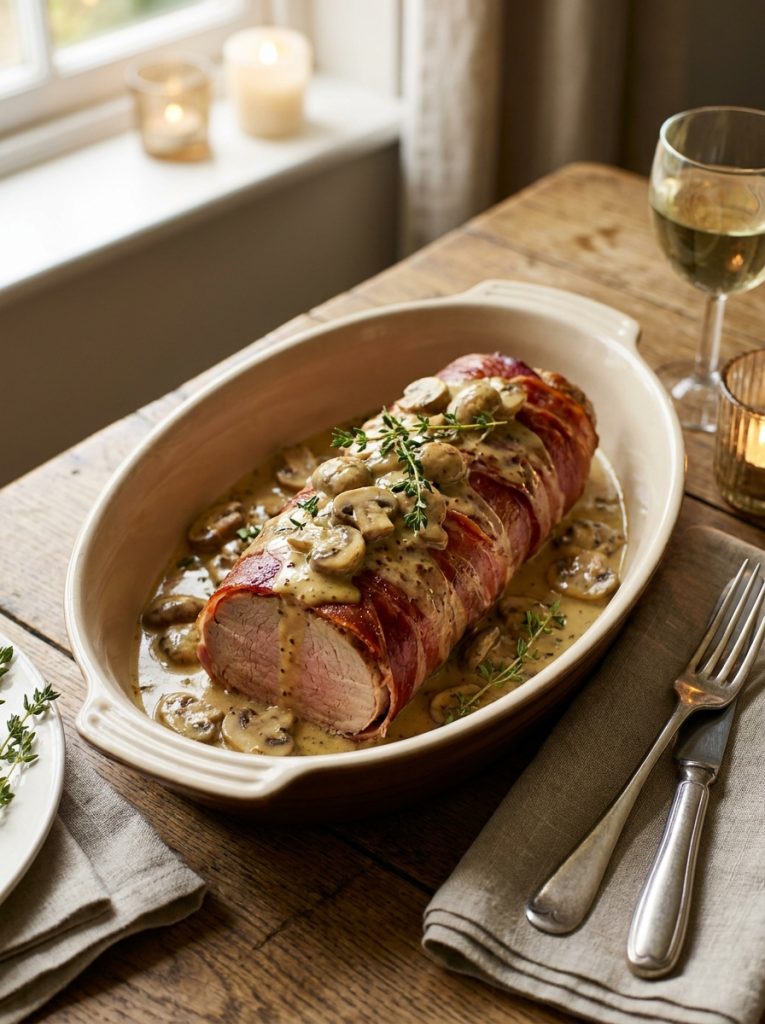
Ingredients for Mary Berry Pork Fillet
For the Pork Fillet
- 2 pork fillets (tenderloins), each approximately 400g — trimmed of any sinew
- 2 tbsp olive oil
- 25g unsalted butter
- Salt and freshly ground black pepper
For the Cream and Mustard Sauce
- 3 shallots, very finely chopped
- 3 garlic cloves, crushed
- 150ml dry white wine
- 200ml good quality chicken or pork stock
- 200ml double cream
- 2 tbsp Dijon mustard — plus 1 tsp extra stirred in at the very end
- 1 tsp wholegrain mustard (optional — gives texture and visual interest)
- 1 tbsp fresh tarragon, finely chopped — added at the very end only
- 1 tbsp fresh flat-leaf parsley, chopped — added at the very end
- Juice of ½ lemon — added at the very end
- Salt and freshly ground white pepper
How to Make Mary Berry Pork Fillet
Step 1 — Prepare the Pork
Remove any silver skin or sinew from the pork fillets — this tough membrane does not soften during cooking and makes the finished dish slightly chewy. Run a sharp knife just underneath the silver skin and pull it away cleanly.
Season the pork fillets generously on all sides with salt and black pepper.
Step 2 — Sear the Pork
Heat the olive oil in a large, wide frying pan or shallow casserole over a medium-high heat. Add the pork fillets. Sear for two to three minutes on the first side without moving — until deeply golden. Turn and sear on the second side. Continue turning and searing until the pork is golden all over — approximately eight to ten minutes total.
Remove the pork fillets to a warm plate. They should be golden all over but not yet cooked through to the centre — they will finish cooking in the sauce.
Step 3 — Build the Sauce
In the same pan, reduce the heat to medium. Add the butter. Cook the shallots for five to six minutes until completely soft. Add the garlic — cook two more minutes.
Pour in the white wine. Let it bubble for three to four minutes until reduced by two-thirds. Add the stock — bring to a simmer and cook for three minutes. Add the double cream and Dijon mustard. Stir to combine. Season with salt and white pepper. Add the wholegrain mustard if using.
Step 4 — Finish the Pork in the Sauce
Return the seared pork fillets to the pan. Nestle them into the sauce. Reduce the heat to low. Partially cover and cook for eight to twelve minutes until the pork is completely cooked through — the internal temperature should reach 63°C for slightly pink in the centre, or 71°C for fully cooked through. Pork fillet is best served slightly pink — it remains juicy and tender. Cooked to 71°C and beyond it becomes dry and slightly tough.
Step 5 — Rest, Slice, and Finish
Remove the pork fillets to a warm board. Leave to rest for five minutes. Slice into 2cm medallions on the diagonal.
Add the lemon juice, extra teaspoon of Dijon mustard, fresh tarragon, and parsley to the sauce. Stir through. Taste and adjust seasoning.
Arrange the pork medallions on warm plates or a warm serving platter. Spoon the cream and mustard sauce generously over and around. Serve immediately.
My Top Tips For Perfect Mary Berry Pork Fillet
Remove the silver skin before cooking. The silver skin — the thin, white membrane that runs along the length of the pork fillet — does not soften during cooking. It constricts the fillet as it heats, causing it to curve and cook unevenly, and gives a slightly chewy result in the finished dish. Remove it before cooking and the pork lies flat in the pan and cooks evenly.
Sear on all sides until properly golden. Pork fillet is a lean, cylindrical cut. I roll it continuously as it sears so every surface has contact with the hot pan. The golden colour on all surfaces gives depth of flavour to both the meat and the sauce. Pale, barely seared pork gives a flat result.
Pork fillet is best served slightly pink. The days of cooking all pork to grey, dry, 80°C are past. Pork fillet cooked to 63°C internal temperature is slightly pink in the centre, completely safe, juicy, and tender. Cooked beyond 71°C it becomes dry and loses most of its appeal. A meat thermometer takes the anxiety out of this entirely.
Tarragon goes in at the very end — always. Tarragon cooked in a sauce for ten minutes loses virtually all its character. Stirred in at the very end, it gives a vivid, fresh, slightly anise note that is the specific flavour of this dish. This is the same instruction as the chicken tarragon recipe on this site — it applies equally here.
Rest the pork before slicing. Five minutes of resting allows the juices to redistribute through the meat. Pork fillet sliced immediately runs its juices onto the board and gives a slightly drier result. Five minutes gives a juicier, more flavourful slice.
Serving Suggestions
With dauphinoise potatoes — the richness of the cream sauce suits a cream-based potato perfectly. With roasted new potatoes and fine green beans. With wilted spinach. With crusty bread for mopping the sauce completely.
How to Store Mary Berry Pork Fillet
In the fridge: Store for up to 2 days. Reheat very gently over a low heat — pork fillet that is reheated too aggressively becomes dry. Add a splash of stock if the sauce has thickened too much. Add fresh tarragon after reheating.
In the freezer: Freeze for up to 2 months. The cream sauce can separate slightly on defrosting — reheat gently, stirring well. Add fresh tarragon after reheating.
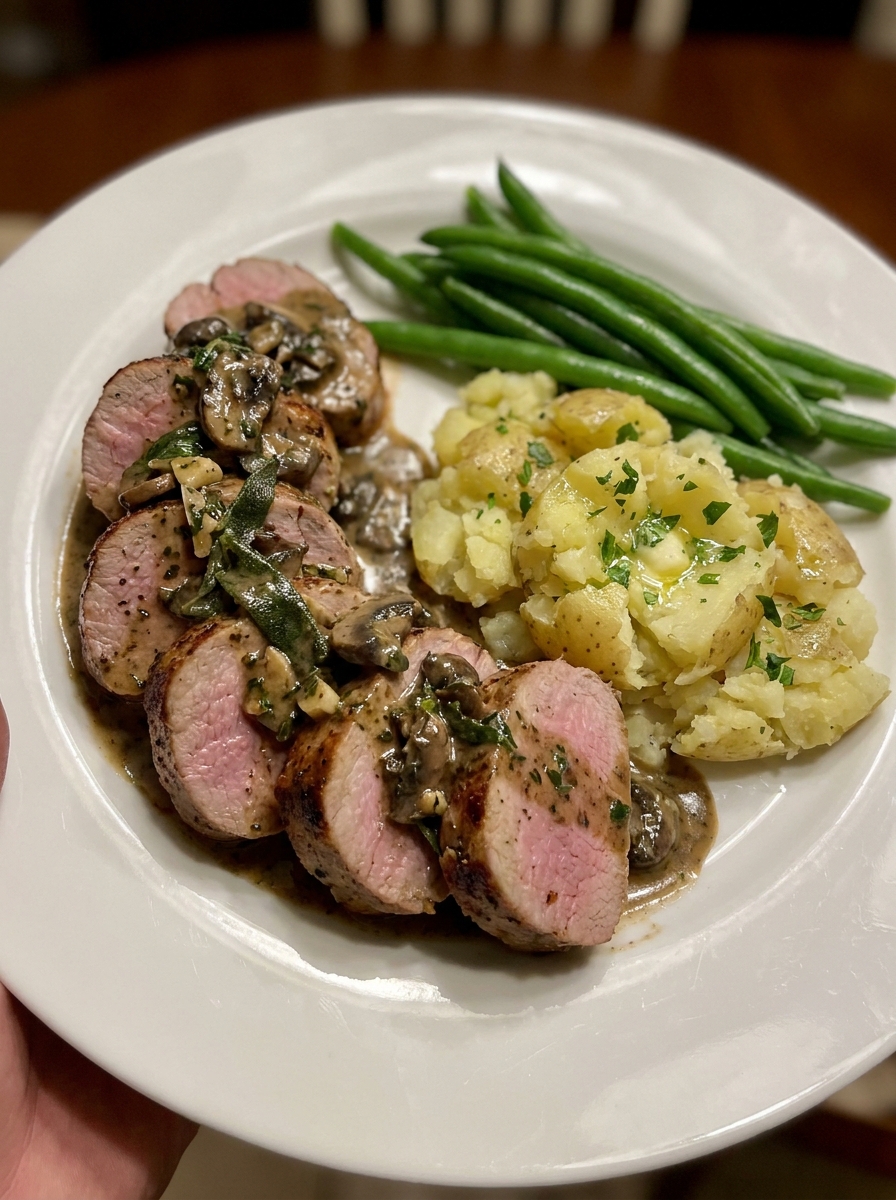
Mary Berry Pork Fillet Recipe
Ingredients
Method
- Remove silver skin from pork fillets. Season generously.
- Sear in hot oil over medium-high heat — rolling continuously until golden all over, 8–10 minutes. Remove to a warm plate.
- Add butter to same pan over medium heat. Cook shallots 5–6 minutes. Add garlic — 2 minutes. Add wine — bubble 3–4 minutes until reduced by two-thirds. Add stock — simmer 3 minutes. Add cream, Dijon mustard, and wholegrain mustard. Season.
- Return pork to pan — nestle into sauce. Cover partially over low heat. Cook 8–12 minutes until internal temperature reaches 63°C (slightly pink) or 71°C (fully cooked).
- Remove pork — rest 5 minutes. Slice into 2cm medallions on the diagonal.
- Add lemon juice, extra Dijon, tarragon, and parsley to sauce. Stir. Taste and adjust. Arrange medallions on warm plates — spoon sauce over. Serve immediately.
Notes
Frequently Asked Questions
Can I use pork chops instead of pork fillet?
Bone-in pork chops give a more robust, more flavourful result with slightly more chewing. Cook skin-side down first for three to four minutes, then as directed. The sauce is equally good with either cut.
Can I use crème fraîche instead of double cream?
Yes — crème fraîche gives a slightly tangier, slightly less rich sauce that some people prefer. It also holds better during reheating. Use the same quantity.
Can I leave out the tarragon?
Yes — without tarragon the sauce is still very good but less specifically elegant. Replace with two tablespoons of fresh parsley and a little extra Dijon if tarragon is unavailable.
Can I use dried tarragon?
One teaspoon of dried tarragon added with the shallots gives a background tarragon note rather than the vivid fresh character. It is a reasonable substitute but not the same result.
















Leave a Reply