
 Anna Louise
 I want to draw a clear distinction between this recipe and the pork fillet in a cream and mustard sauce that appears elsewhere on this site. Both use the same cut — pork tenderloin, also called pork fillet — but they are entirely different dishes. The cream sauce version is about the sauce. This version is about the crust.
A honey, mustard, and herb-crusted pork tenderloin is one of the most satisfying ways to cook this cut. The sweet, slightly sharp honey and mustard glaze caramelises in the oven into a slightly sticky, slightly crispy coating.
The fresh thyme and rosemary give fragrance. The pork inside stays moist and slightly pink — the way it should be — protected by the crust from the direct heat of the oven.
It takes thirty-five minutes from start to plate. It looks genuinely impressive on the table. And it is the kind of recipe that I recommend to anyone who tells me they are nervous about cooking pork — the tenderloin is forgiving, the crust signals when it is done, and the result is consistently wonderful.
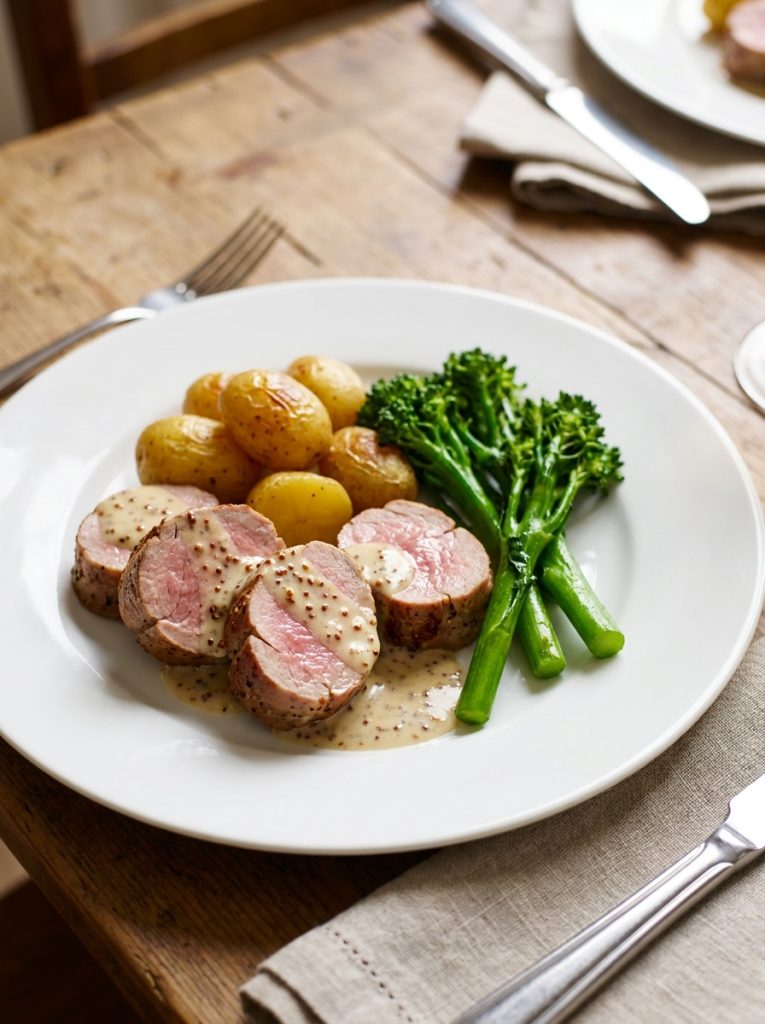
Ingredients for Mary Berry Pork Tenderloin
For the Pork Tenderloin
- 2 pork tenderloins (fillets), each approximately 400g — silver skin removed
- 2 tbsp olive oil
- Salt and freshly ground black pepper
For the Honey Mustard Herb Crust
- 2 tbsp runny honey
- 2 tbsp Dijon mustard
- 1 tbsp wholegrain mustard
- 2 garlic cloves, finely grated
- 1 tbsp fresh thyme leaves
- 1 tbsp fresh rosemary, very finely chopped
- 1 tsp olive oil
- Salt and freshly ground black pepper
To Serve
- Roasted new potatoes
- Steamed fine green beans or tenderstem broccoli
- A simple green salad
- Extra Dijon mustard alongside
How to Make Mary Berry Pork Tenderloin
Step 1 — Prepare the Pork
Remove the silver skin from both tenderloins — the thin, white membrane that runs along the length of the meat. Slide a sharp knife just underneath the membrane and pull it away cleanly. The silver skin constricts the tenderloin as it cooks, causing it to curl and cook unevenly. Removing it gives a tender that lies flat and cooks evenly throughout.
Season both tenderloins generously with salt and black pepper.
Step 2 — Make the Honey Mustard Herb Paste
Combine the honey, Dijon mustard, wholegrain mustard, grated garlic, fresh thyme, chopped rosemary, and olive oil in a small bowl. Stir together until a thick, fragrant paste forms. Taste — it should be sweet, sharp, mustardy, and herby in equal measure.
Step 3 — Sear the Pork
Heat the olive oil in a large ovenproof frying pan over a medium-high heat. Add the seasoned tenderloins. Sear for two minutes on the first side without moving — until golden. Turn and sear on the remaining sides — approximately six to eight minutes total — until golden all over.
Step 4 — Apply the Crust and Roast
Preheat your oven to 200°C / 180°C fan / Gas 6.
Remove the pan from the heat. Spoon and spread the honey mustard herb paste generously over the top and sides of both tenderloins — coating every surface that is not in contact with the pan.
Transfer the pan to the oven. Roast for 15 to 18 minutes until the crust is deeply golden and caramelised and the internal temperature of the pork reaches 63°C for a slightly pink, juicy centre, or 71°C for fully cooked through.
Step 5 — Rest and Slice
Remove from the oven. Leave to rest in the pan for five minutes — the juices redistribute and the crust firms slightly.
Transfer to a warm board. Slice into 2cm medallions on the diagonal. The crust should be deeply golden and slightly sticky on the outside. The pork inside should be slightly pink, moist, and completely tender.
Serve immediately with the chosen accompaniments.
My Top Tips For Best Mary Berry Pork Tenderloin
Remove the silver skin before searing. The same instruction as the pork fillet recipe and equally important here. Silver skin left on causes the tenderloin to curl dramatically during cooking, giving an uneven shape and uneven cooking. It takes one minute to remove and makes a significant difference.
Sear before applying the crust. The searing step gives the pork its initial colour and flavour before the crust goes on. Applying the honey mustard crust before searing would cause it to burn in the pan before the pork has any colour. Sear first, crust second, oven third.
Apply the crust generously — do not be shy. The crust is the character of this dish. A thin, tentative application gives a pale, slightly sticky glaze. A generous, thick application gives the properly caramelised, slightly crispy, deeply golden coating that makes this pork tenderloin genuinely special.
63°C for the best result. Pork at 63°C internal temperature is slightly pink in the centre, completely safe, juicy, and tender. This is the temperature that gives pork tenderloin its best possible texture. A meat thermometer is the most reliable way to achieve this consistently — they cost very little and take the anxiety out of pork cookery entirely.
Rest for five minutes before slicing. Pork tenderloin sliced immediately runs its juices onto the board. Five minutes of resting gives a medallion that is moist throughout and that does not lose its juice the moment it is cut.
Serving Suggestions
With roasted new potatoes and fine green beans — the most natural and most elegant pairing. With dauphinoise potatoes for a more indulgent occasion. With a watercress salad alongside — the slight bitterness of the watercress against the sweet, mustardy crust is completely wonderful.
How to Store Mary Berry Pork Tenderloin
In the fridge: Store for up to 2 days. Reheat gently — pork tenderloin reheated too vigorously becomes dry. Warm in a 160°C oven covered with foil for ten to twelve minutes.
In the freezer: Freeze cooked tenderloin in slices for up to 2 months. Defrost in the fridge overnight and warm gently.
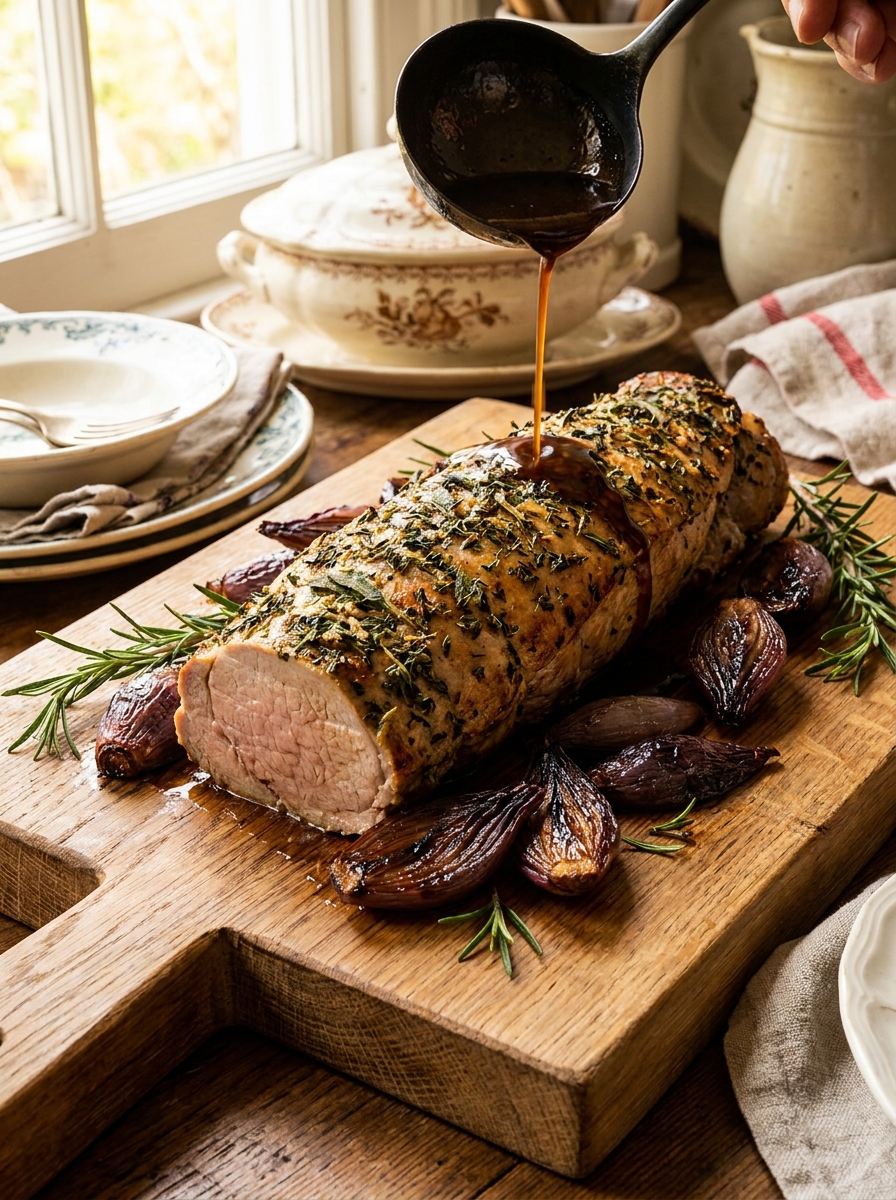
Mary Berry Pork Tenderloin Recipe
Ingredients
Method
- Remove silver skin from both tenderloins. Season generously.
- Mix honey, both mustards, garlic, thyme, rosemary, and olive oil into a thick paste.
- Heat oil in a large ovenproof pan over medium-high heat. Sear tenderloins all over — turning every 2 minutes — until golden all over, about 6–8 minutes total.
- Preheat oven to 200°C / 180°C fan / Gas 6. Remove pan from heat. Spread honey mustard paste generously over top and sides of both tenderloins.
- Roast 15–18 minutes until crust is deeply golden and internal temperature reaches 63°C (slightly pink) or 71°C (fully cooked).
- Rest 5 minutes. Slice into 2cm medallions on the diagonal. Serve immediately.
Notes
Frequently Asked Questions
Can I prepare the pork with the crust applied ahead of time?
Yes — apply the honey mustard crust after searing and refrigerate for up to 24 hours before roasting. The crust actually adheres better having been refrigerated — it firms against the meat. Roast as directed from cold, adding three to four minutes to the roasting time.
Can I cook this entirely on the hob without the oven?
Yes — after searing, reduce the heat to medium-low and cook in the pan with the crust on top, turning every two minutes, for twelve to fifteen minutes until cooked through. The crust caramelises slightly differently but the result is still very good.
Can I use a different mustard combination?
Yes — all Dijon gives a smoother, sharper crust. All wholegrain gives a coarser, slightly milder crust. The combination of both gives the best balance of sharpness and texture.
Can I add other herbs to the crust?
Yes — sage and rosemary together give a more specifically Italian character. Tarragon gives a French character. Both suit pork tenderloin very well.















Leave a Reply