
 Anna Louise
 Lancashire hotpot is one of those dishes that exists in a specific place in British culinary memory — associated with northern England, with cold evenings, with the kind of unhurried, slow cooking that fills the kitchen with a smell that is simultaneously savoury and deeply reassuring.
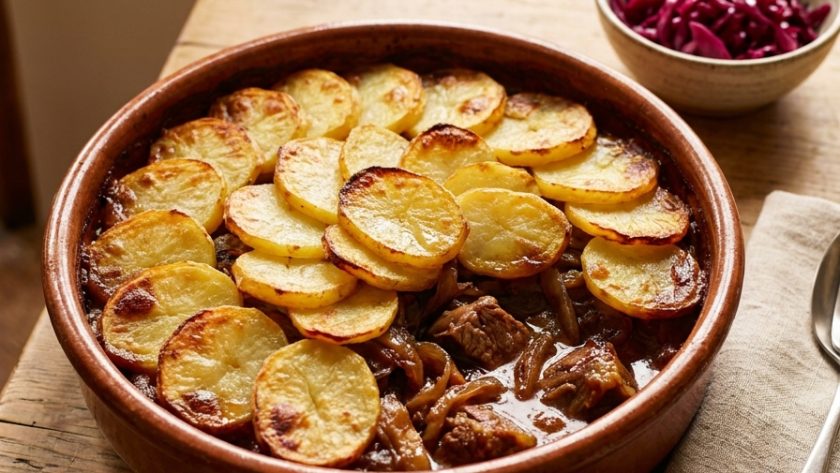
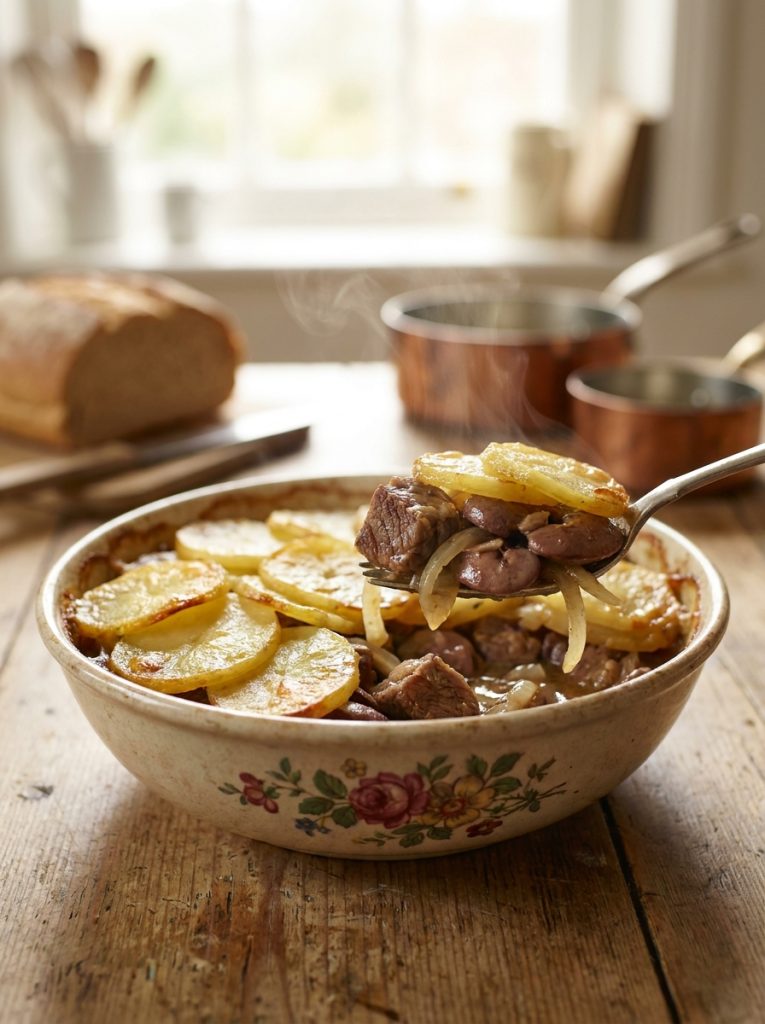
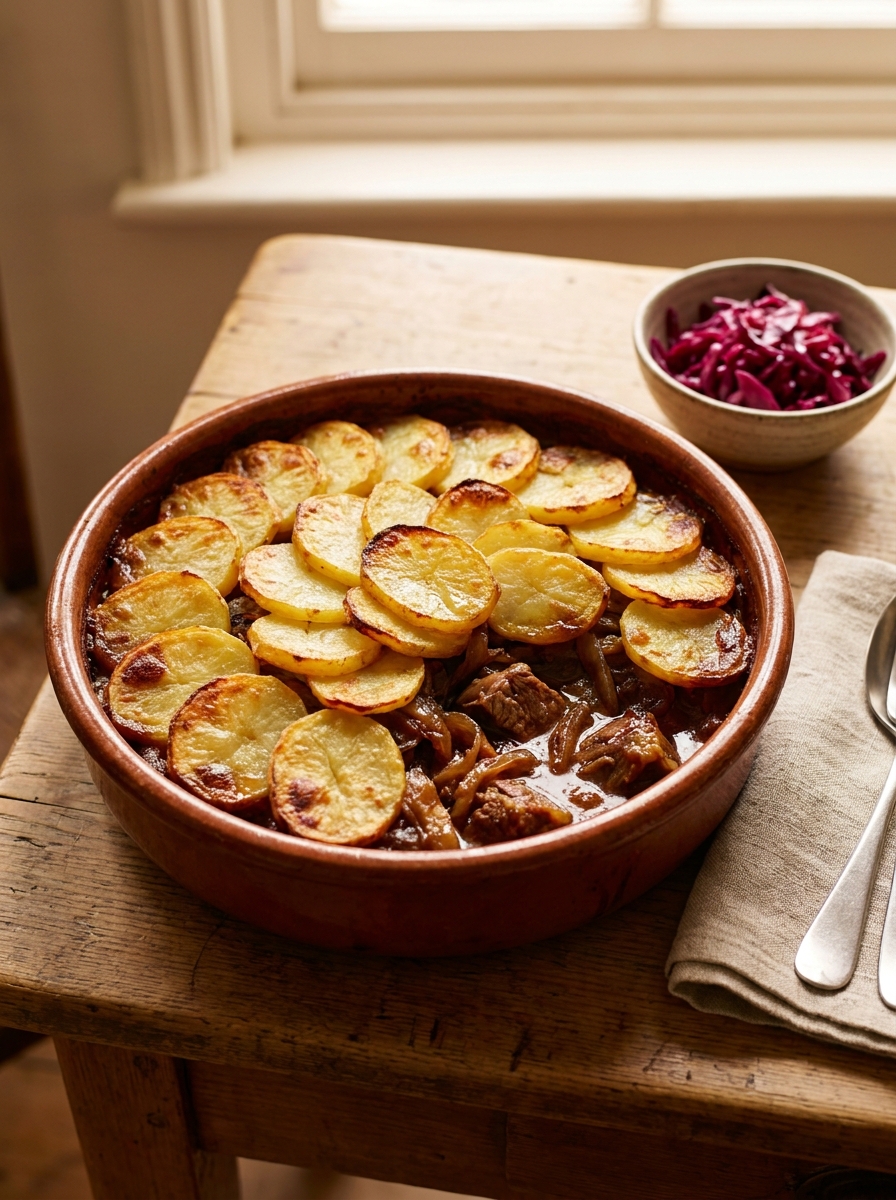
It is not a complicated dish. It is not a showy dish. It is a dish that depends entirely on good ingredients, a long slow cook, and the correct potato lid — golden, slightly crispy, the individual slices overlapping in concentric circles and burnished by the heat of the oven into something that looks genuinely beautiful.
The traditional Lancashire hotpot uses middle neck or scrag end of lamb — bony cuts that give extraordinary flavour during the long braise. I also make it with lamb shoulder chops, which give the same depth of flavour and are more widely available.
The onions are the other essential character of the dish — they cook down completely into the sauce and give a sweet, yielding base that is the reason every person who eats this asks for more.
This is the dinner for a cold Sunday in October. It has been the dinner for every cold Sunday in October in this house for as long as I can remember.
Ingredients for Mary Berry Lancashire Hotpot
For the Hotpot
- 1.2kg middle neck lamb chops or lamb shoulder chops — trimmed of excess fat
- 2 tbsp sunflower oil
- 3 large onions, halved and thinly sliced
- 3 carrots, peeled and sliced into 1cm rounds
- 2 tbsp plain flour
- 500ml good quality lamb or chicken stock — hot
- 1 tbsp Worcestershire sauce
- 1 tbsp fresh thyme leaves — or 1 tsp dried
- 2 bay leaves
- Salt and freshly ground black pepper
For the Potato Lid
- 1kg waxy potatoes — Charlotte or Désirée, peeled and sliced into 3mm rounds
- 30g unsalted butter, melted
- Salt and white pepper
How to Make Mary Berry Lancashire Hotpot
Step 1 — Brown the Lamb
Season the lamb chops generously on both sides. Heat the oil in a large, deep casserole or flameproof baking dish over a medium-high heat. Brown the lamb chops in batches — three to four minutes per side — until deeply golden on both sides. Do not crowd the pan. Remove and set aside.
The browning step gives colour and flavour to the lamb and leaves golden residue in the base of the pan that the onions will lift during cooking. It takes time but it is worth every minute.
Step 2 — Cook the Onions
In the same casserole, reduce the heat to medium. Add a little more oil if needed. Cook the sliced onions for fifteen to eighteen minutes, stirring occasionally, until completely collapsed, deeply golden, and sweet. This is one of the longest onion-cooking instructions on this site — and one of the most important. Properly caramelised onions give the hotpot its characteristic sweetness and its body.
Add the carrots and thyme. Cook for five more minutes.
Step 3 — Build the Sauce
Sprinkle the flour over the onions and carrots. Stir for two minutes. Pour in the hot stock and Worcestershire sauce. Add the bay leaves. Season generously. Bring to a simmer and cook for five minutes until the sauce is slightly thickened.
Step 4 — Layer the Lamb
Preheat your oven to 160°C / 140°C fan / Gas 3.
Place the browned lamb chops in a single layer in the casserole — or in a deep ovenproof dish if the casserole is not deep enough — nestling them into the onion and carrot sauce. The sauce should come approximately halfway up the lamb.
Step 5 — Apply the Potato Lid
Arrange the sliced potatoes over the lamb in overlapping concentric circles — starting from the outside edge and working inward. Each slice should overlap the previous one by about one-third. The potato layer should completely cover the lamb and the sauce.
Brush the potato slices generously with the melted butter. Season with salt and white pepper.
Step 6 — Slow Cook and Finish
Cover the casserole tightly with a lid or foil. Place in the oven and cook for 1 hour 30 minutes.
Remove the lid or foil. Increase the oven temperature to 200°C / 180°C fan / Gas 6. Cook for a further 25 to 30 minutes until the potato lid is deeply golden and crispy and the lamb beneath is completely tender — falling away from the bone.
Leave to rest for ten minutes before serving directly from the casserole.
My Top Tips For Perfect Mary Berry Lancashire Hotpot
Cook the onions for fifteen to eighteen minutes — not five. The onions are the soul of a Lancashire hotpot. Briefly cooked onions give a slightly harsh, slightly raw note that never fully disappears during the long slow cook. Properly caramelised onions — golden, completely collapsed, sweet — dissolve into the sauce and give a depth and sweetness that makes this dish specifically wonderful.
Use middle neck or shoulder chops — not leg. Middle neck and shoulder chops have the right amount of fat and connective tissue to give extraordinary flavour and tenderness during the long braise. Leg is too lean and becomes slightly dry over two hours of slow cooking. The bony cuts are the correct ones.
Slice the potatoes to exactly 3mm. Consistent thin slicing — a mandoline is the right tool — gives even cooking throughout the potato lid. Thicker slices in the centre cook more slowly and can be undercooked when the edges are perfectly golden.
Remove the lid for the final 25 to 30 minutes. The covered initial cook gives the lamb its tenderness and the sauce its depth. The uncovered final cook at higher temperature gives the potato lid its golden, slightly crispy surface. Both stages are essential and neither can replace the other.
Serve directly from the casserole. Lancashire hotpot is a dish that looks its most spectacular in the vessel it was cooked in — the golden potato lid intact, the smell rising from the casserole when the lid is lifted at the table. Transferring it to a serving dish destroys the potato arrangement and reduces the impact considerably.
Serving Suggestions
With pickled red cabbage alongside — the sharpness of the pickle against the rich, sweet lamb and onion is the traditional and completely correct accompaniment. With crusty bread for mopping the sauce. On its own — Lancashire hotpot is a complete meal and needs nothing else.
How to Store Mary Berry Lancashire Hotpot
In the fridge: Store covered for up to 3 days. Reheat covered with foil at 180°C for 25 to 30 minutes — removing the foil for the final ten minutes to re-crisp the potato lid.
In the freezer: Freeze in portions for up to 3 months. The potato lid loses its crispness on defrosting but the flavour is completely unaffected.
Mary Berry Lancashire Hotpot Recipe
Ingredients
Method
- Season lamb — brown in batches in hot oil 3–4 minutes per side until deeply golden. Remove.
- Cook sliced onions in same pan over medium heat 15–18 minutes until completely collapsed and golden. Add carrots and thyme — 5 minutes.
- Add flour — stir 2 minutes. Add hot stock, Worcestershire sauce, and bay leaves. Season. Simmer 5 minutes.
- Preheat oven to 160°C / 140°C fan / Gas 3. Layer browned lamb into the sauce.
- Arrange potato slices in overlapping circles over the lamb — working from outside inward. Brush generously with melted butter. Season.
- Cover tightly. Cook 1 hour 30 minutes. Remove lid — increase to 200°C / 180°C fan / Gas 6. Cook 25–30 minutes until potato lid is deeply golden and lamb is completely tender. Rest 10 minutes. Serve from the casserole.
Notes
Frequently Asked Questions
Can I use beef instead of lamb?
Yes — braising beef (chuck or shin) gives a completely different but equally good hotpot. The cooking time increases to 2 hours 30 minutes for the covered stage. The character is more robustly beefy and less specifically Lancashire in flavour.
Can I add kidneys?
Yes — lamb kidneys, halved and trimmed, added with the lamb chops give a more traditional, more deeply flavoured hotpot. Two to three kidneys for this quantity of lamb is about right.
Can I make this in a slow cooker?
Yes — complete steps 1 to 4 on the hob. Transfer to the slow cooker. Apply the potato lid. Cook on LOW for 6 to 7 hours. For a golden potato lid, transfer the potato topping to a baking tray and grill for five to eight minutes before serving.
Can I use sweet potato for the lid?
Yes — sweet potato slices give a slightly sweeter, slightly more vivid golden lid. The cooking time is the same. The character is different but the result is very good.
















Leave a Reply