
 Anna Louise
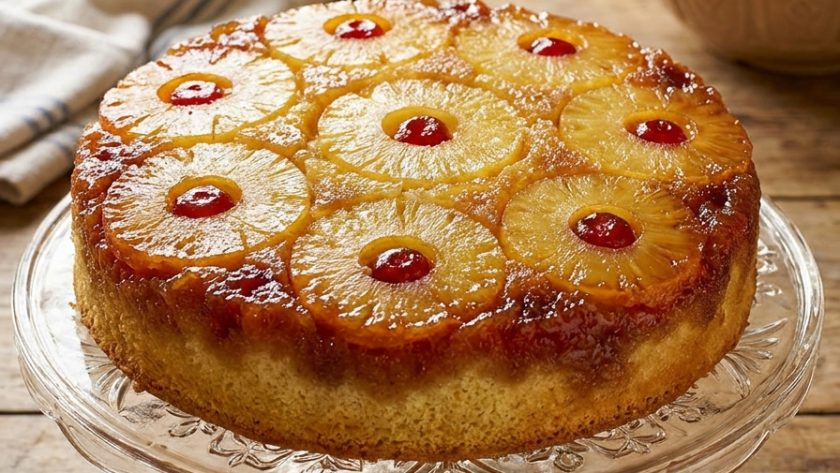
 Pineapple upside down cake is one of those recipes that occupies a specific place in British baking — cheerful, slightly retro, associated with church hall teas and childhood birthday parties, and considerably more delicious than its humble reputation suggests.
When it is made properly — the caramel base genuinely dark and fragrant, the pineapple rings properly golden where they have cooked against the hot caramel, the vanilla sponge light and perfectly baked.
The golden-bottomed tin going over, the few seconds of anticipation, and then the lifting of the tin to reveal the caramelised pineapple and cherries beneath — vivid yellow and red against the dark caramel — is one of those baking moments that never loses its appeal however many times you do it.
I make this with tinned pineapple rings rather than fresh — the tinned pineapple gives a softer, more yielding result that suits the caramel and the sponge better than fresh pineapple, which can be slightly tough and slightly acidic.
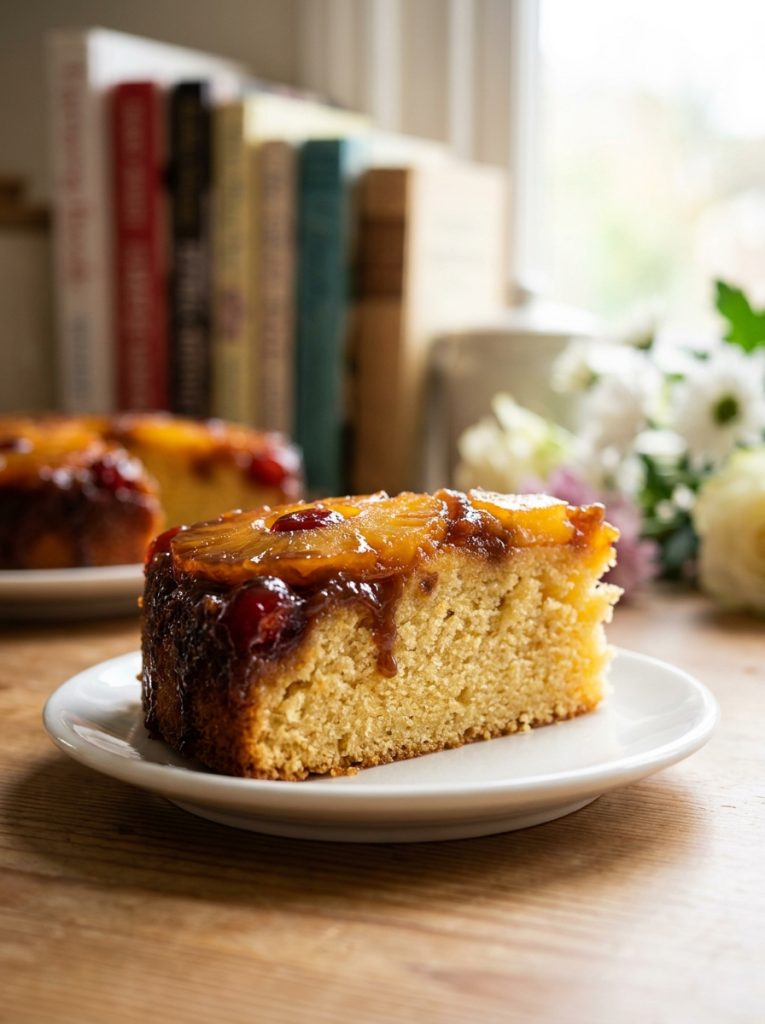
Ingredients for Mary Berry Pineapple Upside Down Cake
For the Caramelised Pineapple Base
- 50g unsalted butter, softened
- 75g soft light brown sugar
- 1 x 432g tin pineapple rings in juice — drained thoroughly, juice reserved
- 7 to 8 glacé cherries — halved, one placed in the centre of each pineapple ring
For the Vanilla Sponge
- 175g unsalted butter, softened
- 175g golden caster sugar
- 3 large eggs, at room temperature
- 175g self-raising flour, sifted
- 1½ tsp baking powder
- 1 tsp vanilla extract
- 2 tbsp reserved pineapple juice — in place of milk, gives additional pineapple flavour
How to Make Mary Berry Pineapple Upside Down Cake
Step 1 — Prepare the Tin
Preheat your oven to 180°C / 160°C fan / Gas 4. Grease a deep 23cm round fixed-base cake tin — not a loose-bottomed tin, as the caramel will leak through. Line the base with a circle of baking parchment.
Step 2 — Make the Caramel Base
Spread the softened butter evenly over the base of the lined tin. Sprinkle the soft light brown sugar evenly over the butter — covering it completely. The butter and sugar will melt and combine during baking to form the caramel that coats the pineapple.
Step 3 — Arrange the Pineapple and Cherries
Drain the pineapple rings thoroughly — pat dry with kitchen paper. Reserve two tablespoons of the juice for the sponge batter.
Arrange the pineapple rings over the butter and sugar base — one ring in the centre and the remaining rings around the edge, slightly overlapping if needed to fit. Press each ring gently into the sugar.
Place a halved glacé cherry — cut side up — in the centre of each pineapple ring. Place additional cherry halves in the gaps between the rings.
Step 4 — Make the Sponge Batter
Beat the softened butter and golden caster sugar together for four to five minutes until pale and genuinely fluffy. Add the eggs one at a time, beating well after each. Add the vanilla extract.
Sift the flour and baking powder into the bowl. Add the two tablespoons of reserved pineapple juice. Fold gently until just combined.
Step 5 — Add the Batter
Drop small spoonfuls of the sponge batter over the arranged pineapple and cherries — working from the outside inward to distribute evenly without disturbing the arrangement. Spread very gently with the back of a spoon or a palette knife to cover the pineapple completely.
Step 6 — Bake and Invert
Bake for 35 to 40 minutes until the sponge top is golden and a skewer inserted into the centre comes out clean.
Leave to cool in the tin for exactly five minutes — set a timer. Place a serving plate on top of the tin. Invert confidently in one movement. Hold both firmly. Lift the tin away. Peel the baking parchment circle away carefully.
The caramelised pineapple and cherries are now on top. Serve warm.
My Top Tips For Best Pineapple Upside Down Cake
Use a fixed-base tin — not a loose-bottomed one. The caramel is liquid during baking. A loose-bottomed tin allows it to drip into the oven — making a mess and leaving the tin with less caramel than the pineapple needs to develop its flavour and colour. A fixed-base tin keeps everything where it belongs.
Pat the pineapple rings dry. Well-drained, patted-dry pineapple rings give a caramelised, slightly golden surface where they contact the hot sugar base. Wet rings give a watery, slightly steamed result. Pat each ring thoroughly with kitchen paper before arranging.
Use the reserved pineapple juice in the sponge batter. Replacing the milk with two tablespoons of pineapple juice gives an additional, subtle pineapple flavour throughout the sponge — making the finished cake taste more completely and coherently of pineapple.
Invert after exactly five minutes — set a timer. The same principle as the upside-down apple cake on this site. Five minutes allows the cake to firm slightly so it holds together during inversion. Less than five minutes and it is too fragile. More than five minutes and the caramel begins to set against the tin and the cake sticks.
Drop the batter in small spoonfuls rather than pouring. Pouring batter directly onto the arranged pineapple rings disturbs them and can move the cherries from their positions. Small spoonfuls placed around the edges and worked inward give an even covering without disturbing the arrangement.
Serving Suggestions
Warm from the oven with a generous spoonful of clotted cream or crème fraîche alongside — the slight richness against the sweet, caramelised pineapple is completely wonderful. With warm vanilla custard as a pudding. As an afternoon tea cake served at room temperature.
How to Store Mary Berry Pineapple Upside Down Cake
At room temperature: Store covered for up to 3 days. The caramel top softens slightly but the flavour remains excellent. Warm briefly in a low oven before serving if possible.
In the freezer: Freeze in slices for up to 3 months. Defrost at room temperature and warm briefly before serving.
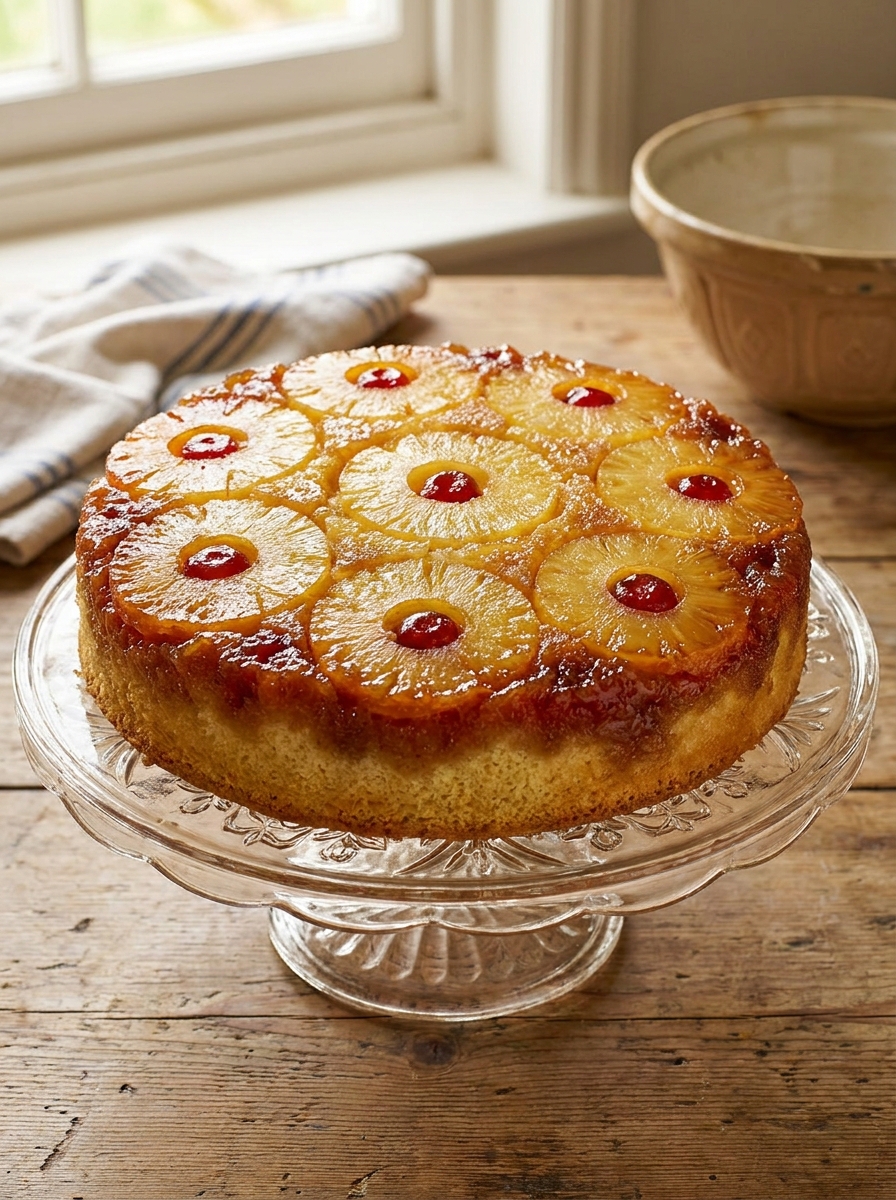
Mary Berry Pineapple Upside Down Cake Recipe
Ingredients
Method
- Preheat oven to 180°C / 160°C fan / Gas 4. Grease a deep 23cm fixed-base tin. Line base with parchment.
- Spread softened butter over base. Sprinkle brown sugar evenly.
- Drain and pat dry pineapple rings — reserve 2 tbsp juice. Arrange rings over sugar base. Place halved cherry in centre of each ring and in gaps.
- Beat butter and caster sugar 4–5 minutes. Add eggs one at a time. Add vanilla. Sift in flour and baking powder. Add 2 tbsp pineapple juice — fold gently.
- Drop small spoonfuls of batter over pineapple arrangement — spread very gently to cover completely.
- Bake 35–40 minutes until sponge top is golden and skewer comes out clean. Cool in tin exactly 5 minutes — set a timer. Invert onto serving plate. Lift tin. Peel parchment. Serve warm.
Notes
Frequently Asked Questions
Can I use fresh pineapple?
Fresh pineapple gives a firmer, slightly more acidic result. The enzyme in fresh pineapple (bromelain) can also affect the sponge batter slightly. Tinned pineapple is the better choice for this recipe — softer, sweeter, and more yielding against the caramel.
Can I use other fruit?
Yes — peaches or apricots (tinned, drained, and dried) give a beautiful alternative. Mango gives a more tropical result. The method is identical.
Can I make this without glacé cherries?
Yes — the cherries are traditional decoration rather than a defining flavour. Leave them out and the cake is equally good, just less vivid in appearance.
Can I use dark brown sugar for the caramel?
Yes — dark brown sugar gives a deeper, slightly more molasses-rich caramel. The finished cake is slightly darker in appearance but the flavour is more complex.















Leave a Reply