
 Anna Louise
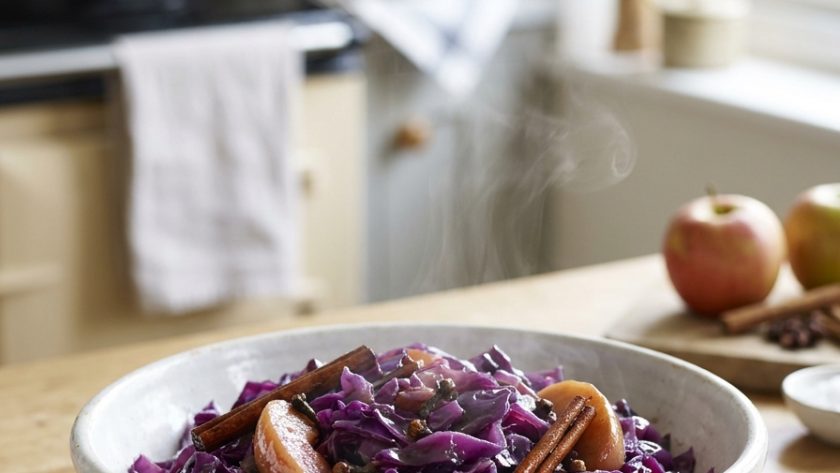
 Braised red cabbage is one of those side dishes that I think people underestimate until they eat it properly made. Slowly braised red cabbage — with apple, red wine vinegar, dark brown sugar, cinnamon, cloves, and star anise — is not simply a vegetable side dish.
It is a richly flavoured, slightly sweet, slightly sharp, warmly spiced dish that improves dramatically with reheating and that is actually better made two to three days ahead of the meal it is accompanying.
Mary Berry’s red cabbage has appeared alongside her Christmas recipes for years — it is the side dish that goes with roast goose, with beef, with the Christmas ham, with any rich roast that benefits from something slightly sharp and slightly sweet alongside.
I make it for Christmas every year, always two or three days ahead, and it is always one of the first things to be finished on the table.
The technique is simple — long, slow braising on the hob or in a low oven until the cabbage is completely tender and the liquid has reduced to a glossy, fragrant sauce that coats every strand.
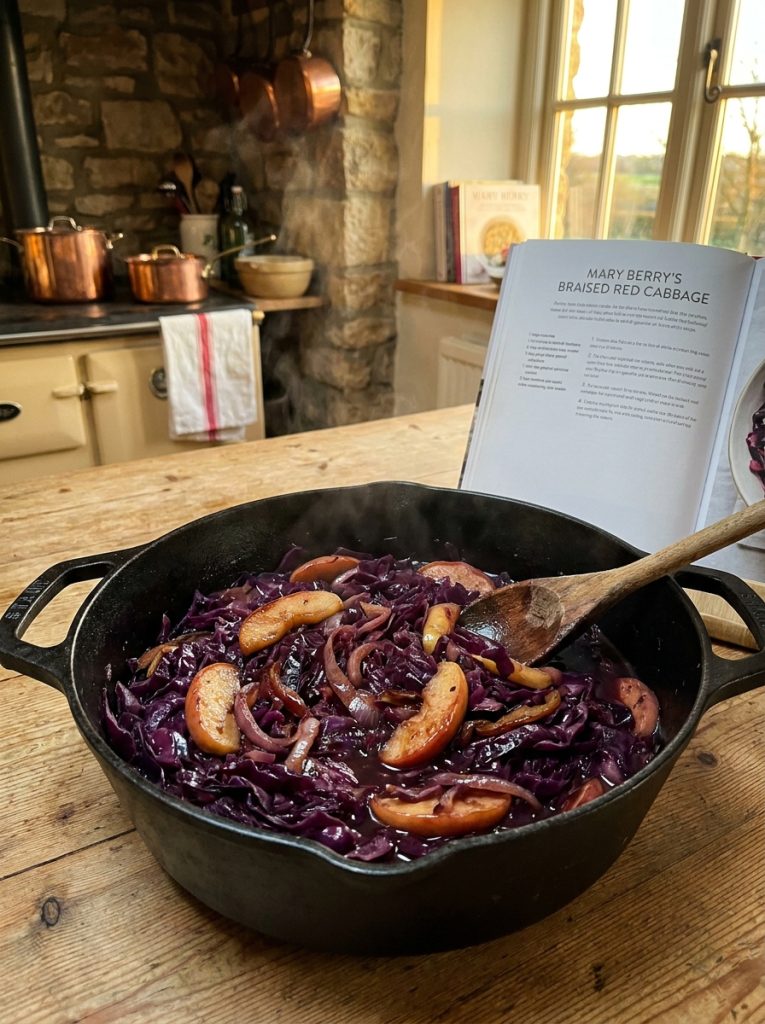
Ingredients for Mary Berry Red Cabbage
For the Braised Red Cabbage
- 1 medium red cabbage (about 1kg), outer leaves removed, quartered, core removed, and finely shredded
- 2 large cooking apples — Bramleys — peeled, cored, and roughly chopped
- 1 large onion, halved and finely sliced
- 3 tbsp soft dark brown sugar
- 4 tbsp red wine vinegar
- 150ml red wine — or extra red wine vinegar and stock if preferred without alcohol
- 1 cinnamon stick
- 4 whole cloves
- 2 star anise
- 1 bay leaf
- ½ tsp ground nutmeg
- 30g unsalted butter
- Salt and freshly ground black pepper
How to Make Mary Berry Red Cabbage
Step 1 — Prepare the Cabbage
Remove the outer leaves of the red cabbage. Quarter it, remove the tough core from each quarter, and shred finely — approximately 3 to 4mm wide. I use the slicing attachment on a food processor for speed, or a large sharp knife and patience.
Step 2 — Layer and Cook
Place the butter in a large, heavy-based casserole or saucepan over a medium heat. Add the sliced onion and cook for five minutes until beginning to soften.
Add the shredded red cabbage, chopped Bramley apple, dark brown sugar, red wine vinegar, red wine, cinnamon stick, cloves, star anise, bay leaf, and ground nutmeg. Season generously with salt and pepper. Stir everything together until combined.
Step 3 — Slow Braise
Bring to a gentle simmer. Reduce the heat to the lowest possible setting. Cover tightly and cook for 1 hour 30 minutes to 2 hours, stirring every twenty minutes, until the cabbage is completely tender and the liquid has reduced to a glossy, slightly thick sauce that coats the cabbage.
Alternatively, cook covered in a 150°C / 130°C fan / Gas 2 oven for 2 hours — stirring once halfway through.
Step 4 — Finish and Adjust
Remove and discard the cinnamon stick, star anise, cloves, and bay leaf.
Taste and adjust — a little more sugar if it seems too sharp, a little more vinegar if it seems too sweet. The braised red cabbage should be sweet, slightly sharp, warmly spiced, and deeply fragrant. The balance between sweet and sour is a personal preference — adjust confidently.
If the cabbage seems slightly too liquid, cook uncovered for a further ten to fifteen minutes over a medium heat until the sauce has reduced to the right consistency.
My Top Tips For Perfect Mary Berry Red Cabbage
Make it two to three days ahead. This is not just convenient — it actively improves the dish. Braised red cabbage refrigerated for two to three days deepens in flavour, the spices integrate fully, and the whole dish becomes more complex and more harmonious. It reheats perfectly with a splash of water or red wine added to prevent it from sticking.
Use Bramley apples. The sharpness and the way Bramleys break down during cooking gives a sweet-sharp note and a slightly jammy body to the sauce that eating apples cannot replicate. Use Bramleys specifically.
The whole spices — cinnamon stick, cloves, star anise — are essential for depth. These whole spices give a more gentle, more complex flavour than ground spices would. They infuse the cabbage during the long slow braise and are removed before serving. Do not replace with ground equivalents — the character would be overpowering.
Cook over the lowest possible heat for the full time. Red cabbage needs a long, gentle braise to become truly tender and to develop its characteristic deep colour and rich flavour. High heat gives tough, unevenly cooked cabbage. Low and slow is the only approach.
The colour is part of the appeal — do not cover with a lid that traps too much steam. A tight-fitting lid is important for the first hour to prevent the cabbage from drying out. For the final thirty minutes, a slightly ajar lid allows some of the liquid to evaporate and gives a more intensely flavoured, more deeply coloured result.
Serving Suggestions
Alongside roast goose — the traditional and completely correct pairing. Alongside roast duck, roast pork, Christmas ham, or any rich roast that benefits from a sweet-sharp contrast. As part of a Christmas buffet spread.
How to Store Mary Berry Red Cabbage
In the fridge: Store in an airtight container for up to 5 days. Reheat gently with a splash of water or red wine. The flavour improves every day.
In the freezer: Freeze in portions for up to 3 months. Defrost overnight and reheat gently.
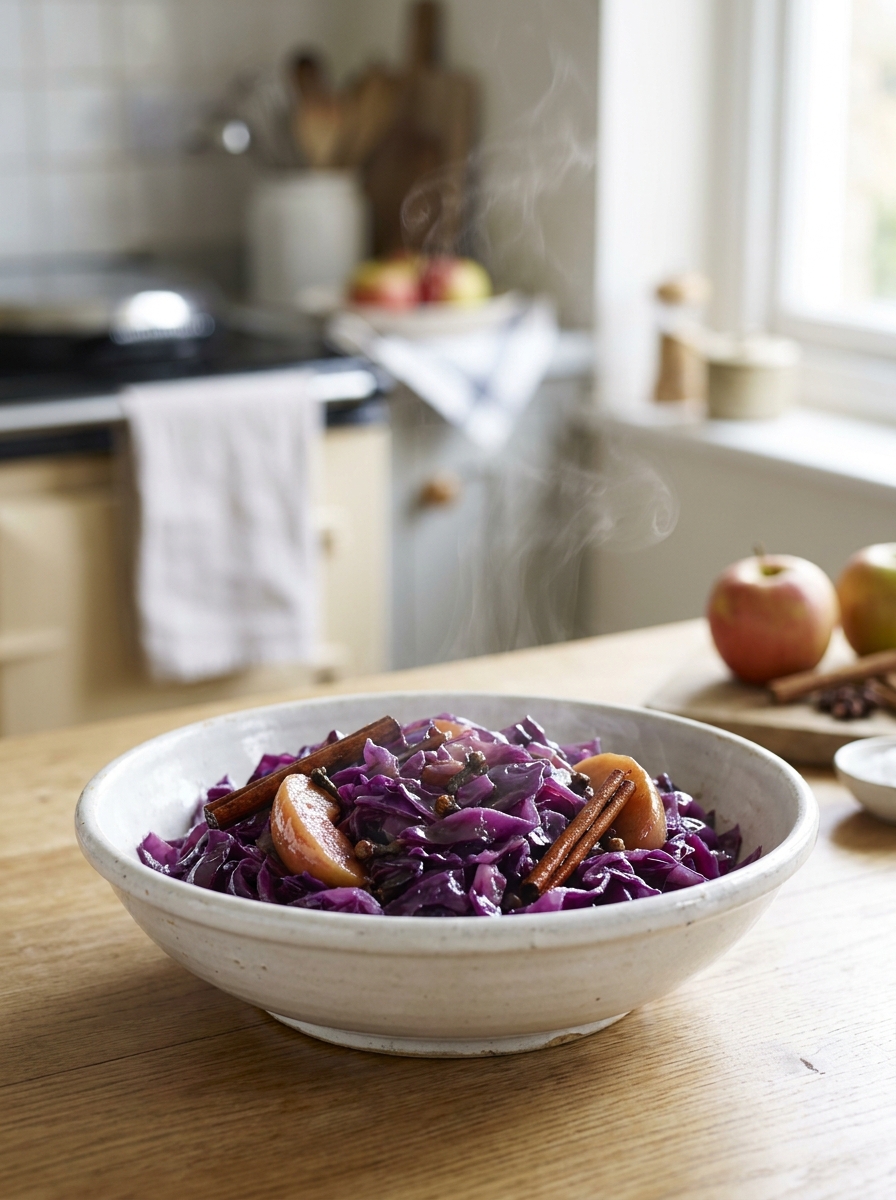
Mary Berry Red Cabbage Recipe
Ingredients
Method
- Melt butter in a large heavy casserole. Cook sliced onion 5 minutes until softening.
- Add shredded cabbage, chopped Bramley apple, brown sugar, red wine vinegar, red wine, all whole spices, nutmeg, and seasoning. Stir to combine.
- Bring to a gentle simmer. Reduce to the lowest heat — cover tightly. Cook 1 hour 30 minutes – 2 hours, stirring every 20 minutes, until completely tender and sauce is glossy.
- Remove and discard cinnamon stick, star anise, cloves, and bay leaf. Taste — adjust sugar and vinegar balance. If too liquid, cook uncovered 10–15 minutes more.
- Serve immediately or cool and refrigerate for up to 5 days — the flavour improves over time.
Notes
Frequently Asked Questions
Can I make this without alcohol?
Yes — replace the red wine with 100ml of good quality beef or vegetable stock and an additional tablespoon of red wine vinegar. The depth is slightly less but the result is still very good.
Can I add orange juice or zest?
Yes — the juice of one orange and the finely grated zest of one unwaxed orange added with the other liquids give a slightly citrusy, slightly more fragrant result that is very good alongside duck.
Can I cook this in a slow cooker?
Yes — combine all ingredients in the slow cooker. Cook on LOW for 6 to 8 hours. Remove the whole spices and adjust seasoning before serving.
Can I use balsamic vinegar instead of red wine vinegar?
Yes — balsamic vinegar gives a sweeter, slightly more complex result. Use three tablespoons rather than four as it is more intense.













Leave a Reply