
 Anna Louise
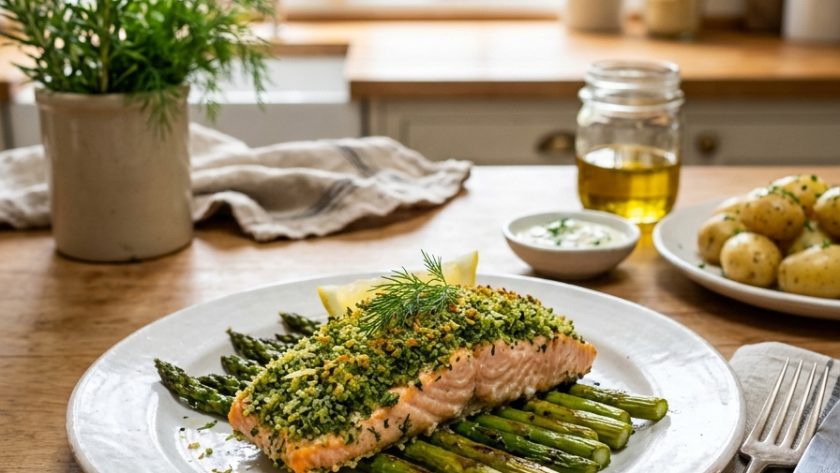
 Herb-crusted salmon is the dinner party main course that requires almost no effort and looks genuinely impressive. A salmon fillet coated in a mixture of fresh herbs, garlic, lemon zest, Parmesan, and breadcrumbs, baked until the crust is golden and crispy and the salmon beneath is just cooked — it looks completely professional and takes twenty minutes.
The herb crust serves two purposes. It gives a beautiful golden, slightly crunchy texture that contrasts with the silky salmon beneath. And it protects the salmon from the direct heat of the oven, keeping the flesh moist and perfectly cooked even if the timing is not completely precise — the crust acts as insulation.
This is the salmon recipe I reach for when I want to cook for guests without spending the evening in the kitchen.
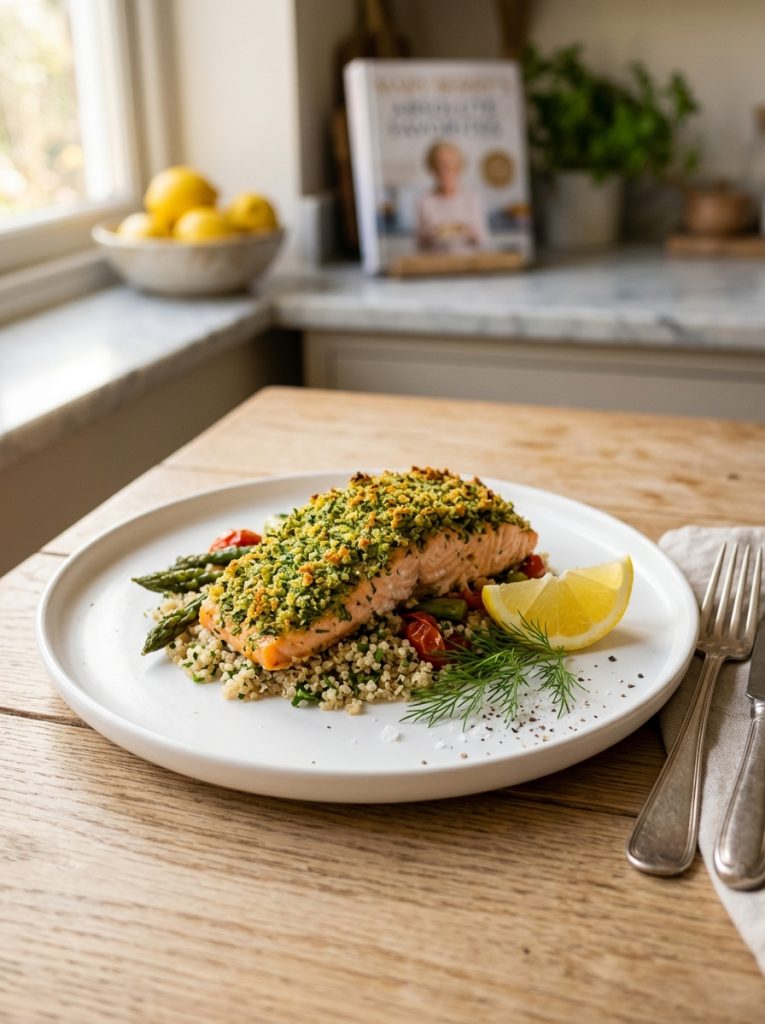
Ingredients for Mary Berry Herb Crusted Salmon
For the Herb Crusted Salmon (Serves 4)
- 4 salmon fillets (about 175g each), skin on
- Salt and freshly ground black pepper
For the Herb Crust
- 75g fresh white breadcrumbs — from day-old bread
- 40g Parmesan, finely grated
- 3 tbsp fresh flat-leaf parsley, finely chopped
- 1 tbsp fresh dill, finely chopped
- 1 tbsp fresh chives, finely snipped
- 2 garlic cloves, finely grated
- Finely grated zest of 1 large unwaxed lemon
- 3 tbsp good quality olive oil
- ½ tsp fine salt
- ¼ tsp freshly ground white pepper
For the Lemon Dijon Spread (Applied Before the Crust)
- 2 tbsp Dijon mustard
- 1 tbsp fresh lemon juice
To Serve
- Lemon wedges
- Fresh dill sprigs
- Simple green salad or steamed asparagus
- New potatoes or crusty bread
How to Make Mary Berry Herb Crusted Salmon
Step 1 — Make the Herb Crust
Combine the fresh breadcrumbs, Parmesan, chopped parsley, dill, chives, grated garlic, lemon zest, olive oil, salt, and white pepper in a bowl. Mix well with a fork until the crumbs are evenly coated in the oil and the herbs are distributed throughout. The mixture should be fragrant, slightly moist, and holding together loosely when pressed.
Step 2 — Prepare the Salmon
Preheat your oven to 200°C / 180°C fan / Gas 6. Line a baking tray with baking parchment.
Season the salmon fillets lightly on both sides — the Parmesan and breadcrumbs will add significant flavour so season the fish itself moderately.
Mix the Dijon mustard and lemon juice together. Brush this mixture over the flesh side of each salmon fillet — creating a thin, even layer. This acts as both additional flavouring and as an adhesive for the herb crust.
Step 3 — Apply the Herb Crust
Press a generous quantity of the herb crust mixture firmly onto the mustard-brushed flesh of each salmon fillet — covering the entire surface completely and pressing firmly so the crust adheres. The crust layer should be approximately 1cm thick.
Place the salmon fillets skin-side down on the lined baking tray — spaced apart.
Step 4 — Bake
Bake for 14 to 18 minutes depending on the thickness of the fillets.
The herb crust should be deeply golden and slightly crispy. The salmon should be just cooked through — a skewer inserted into the thickest part and held for three seconds should feel warm, not hot, when touched to the back of the wrist. The salmon should still have a very slight translucency at the very centre.
Do not overbake — herb-crusted salmon that is overcooked loses its specific appeal. The crust protects the fish but only up to a point.
Step 5 — Rest and Serve
Leave for two minutes before transferring to plates — the crust sets slightly and adheres better after a very brief rest.
Serve with lemon wedges, fresh dill sprigs, and the chosen accompaniments.
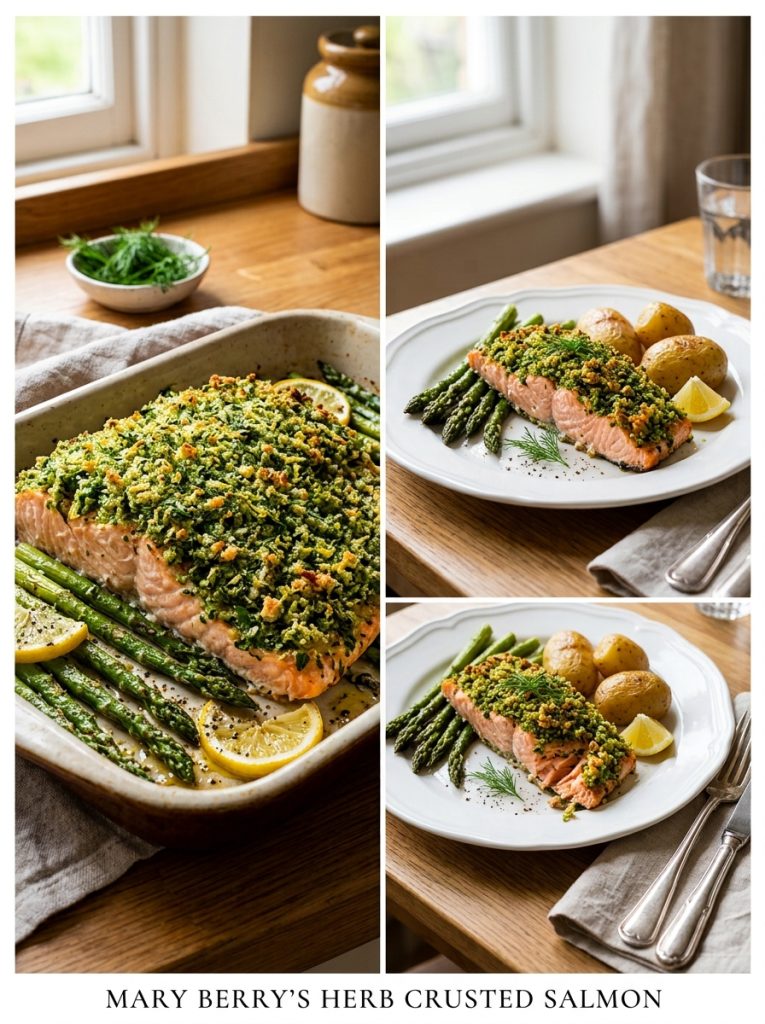
My Top Tips For Perfect Herb Crusted Salmon
Use fresh breadcrumbs — not dried. Fresh breadcrumbs from day-old white bread give a crust that is golden and slightly crispy on the surface but still slightly soft underneath, giving a layered texture that contrasts with the salmon. Dried breadcrumbs give a harder, more uniform crust that does not have the same appeal.
Press the crust on firmly. The herb crust needs to adhere to the mustard layer properly before going in the oven. Press with real force with the palm of your hand. A loosely placed crust falls off during baking.
The Dijon mustard layer is the adhesive. The mustard stuck to the salmon surface is what keeps the herb crust attached during baking. Without it, the crust loosens and slides. With it, the crust stays perfectly in place.
Do not overbake. Fourteen to eighteen minutes at 200°C is the right range for salmon fillets of 175g. Check at fourteen minutes — the crust should be golden and the salmon just set. Every additional minute beyond the right point gives drier, less pleasant salmon beneath the crust.
Bake on a lined tray with the salmon skin-side down. The skin protects the base of the salmon from direct heat and prevents the bottom from overcooking. Cooking skinless salmon on a lined tray means the skin is not eaten — peel it away before serving.
Serving Suggestions
As an elegant dinner party main — plated on warm plates with a lemon wedge and a few asparagus spears alongside. With new potatoes and a simple green salad for a complete, balanced dinner. With hollandaise sauce if you want something genuinely special — the combination of herb-crusted salmon and hollandaise is outstanding.
How to Store Herb Crusted Salmon
Uncooked assembled fillets: Refrigerate uncovered for up to four hours. The crust dries slightly on the surface, which gives an even crispier result when baked. This is the ideal approach for a dinner party.
Cooked herb-crusted salmon: Best eaten immediately. The crust softens on refrigeration. Leftover cooked salmon is excellent cold the next day, flaked over a salad, with the crust removed.
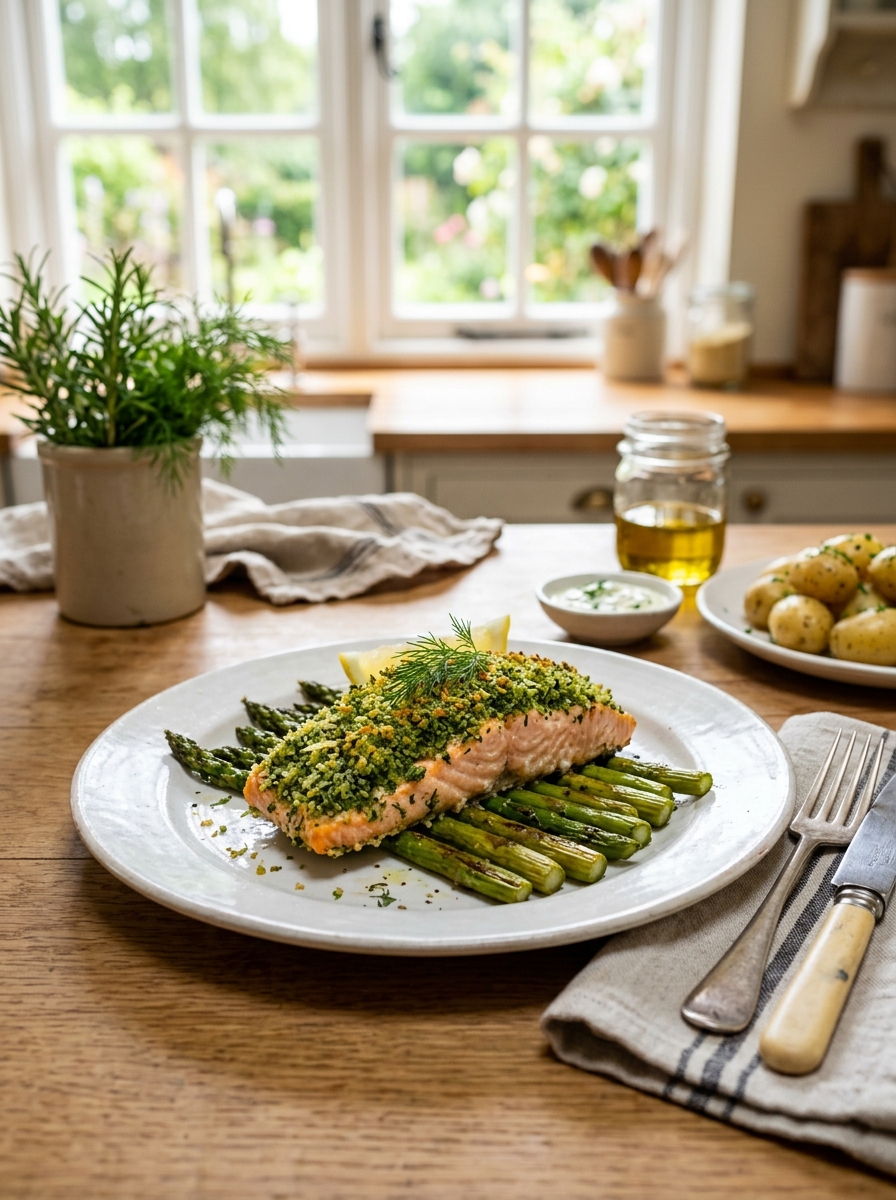
Mary Berry Herb Crusted Salmon Recipe
Ingredients
Method
- Preheat oven to 200°C / 180°C fan / Gas 6. Line a large baking tray with parchment.
- Combine all herb crust ingredients in a bowl — mix with a fork until evenly coated and fragrant.
- Season salmon fillets lightly. Mix Dijon and lemon juice — brush over flesh side of each fillet in a thin, even layer.
- Press herb crust mixture firmly onto the mustard-brushed flesh of each fillet — cover completely, approximately 1cm thick. Press with real force.
- Place skin-side down on lined tray — spaced apart. Bake 14–18 minutes until crust is deeply golden and salmon is just cooked through.
- Rest 2 minutes. Serve with lemon wedges, fresh dill, and chosen accompaniments.
Notes
Frequently Asked Questions
Can I use panko breadcrumbs instead of fresh?
Panko gives a lighter, slightly more dramatic crust with more visible golden pieces. Fresh breadcrumbs give a more compact, slightly more integrated crust. Both are excellent — panko gives a more dramatic visual result.
Can I make the herb crust without Parmesan?
Yes — the Parmesan gives a nutty, slightly salty depth that is very good. Without it, add an extra pinch of salt and a little more lemon zest to compensate.
Can I use cod or sea bass instead of salmon?
Yes — any thick, firm white fish fillet works well with this herb crust. Sea bass gives a particularly elegant result. Cod works beautifully. Adjust the baking time slightly for thinner fillets — check at twelve minutes.
Can I add sun-dried tomatoes to the crust?
Yes — two sun-dried tomatoes, very finely chopped and patted dry of oil, give a rich, Mediterranean note to the herb crust that works very well.













Leave a Reply