
 Anna Louise
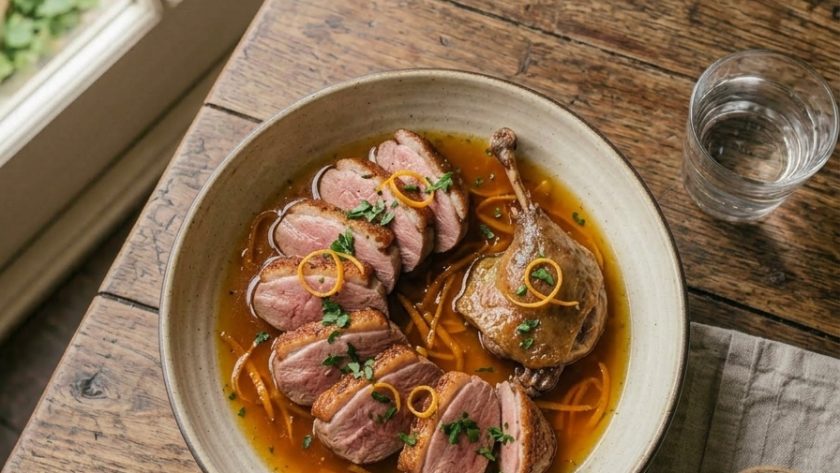
 Duck à l’orange — roast duck with orange sauce — is one of the great French classics, the dish that most people associate with a formal French restaurant rather than their own kitchen. The association with difficulty is unearned.
The sauce itself is straightforward once you understand what it needs to be — not a sweet, orangey gravy, but a sauce bigarade — a sauce built on the bitter, slightly caramelised flavour of reduced orange juice, duck stock, and a little sugar caramelised to a dark caramel before the liquid is added.
The bitterness is the point. The bigarade orange — the Seville orange, bitter and fragrant — gives this sauce its character. Made with sweet juice, duck à l’orange becomes cloying. Made with properly bitter orange and a properly caramelised base, it becomes one of the most elegant, most balanced sauces in French cooking.
This recipe serves the sauce alongside a roast duck — either a whole roasted duck or duck breasts — and gives all the guidance needed for both.
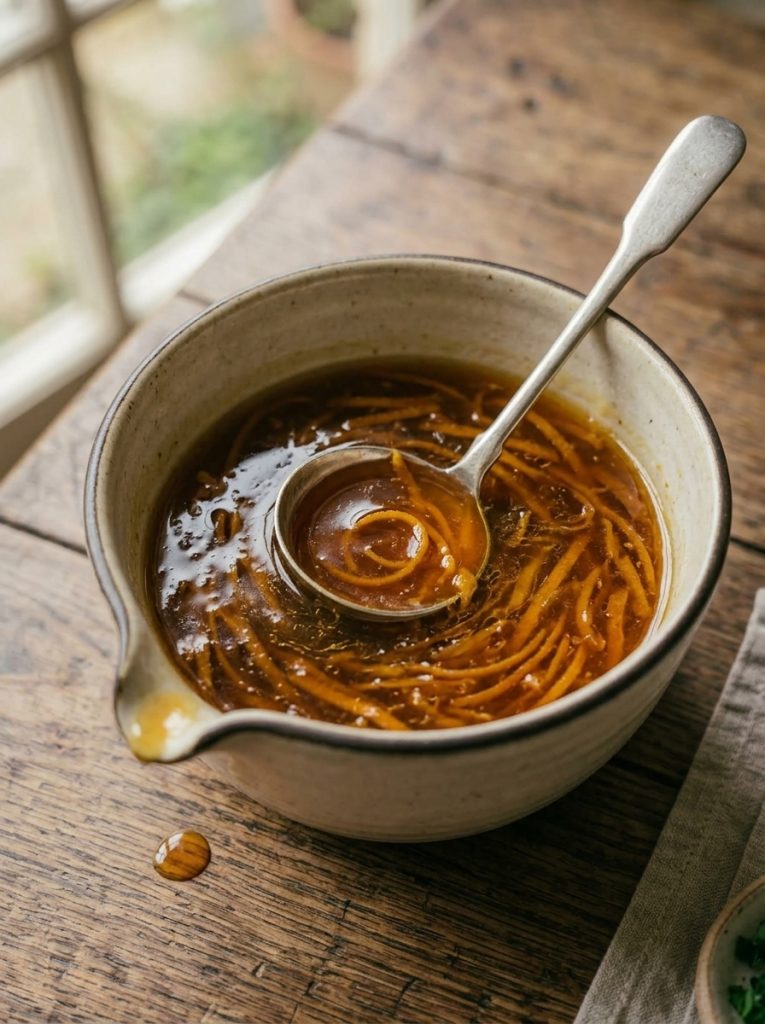
Ingredients for Mary Berry Orange Sauce for Duck
For the Orange Sauce (Serves 4–6)
- 2 tbsp granulated sugar
- 2 tbsp red wine vinegar
- 300ml good quality duck or chicken stock — warm
- Juice of 3 large oranges (about 200ml) — or 2 Seville oranges if in season
- Finely grated zest of 1 unwaxed orange
- 2 tbsp Grand Marnier or Cointreau — optional but excellent
- 1 tbsp cold unsalted butter — whisked in at the end to give gloss and body
- Salt and freshly ground white pepper
For the Duck
- 1 whole duck (about 2kg) — or 4 duck breasts
- Salt and freshly ground black pepper
- 1 orange, halved — placed inside the cavity of a whole duck
How to Make Mary Berry Orange Sauce for Duck
Step 1 — Roast the Duck
For a whole duck: Preheat the oven to 200°C / 180°C fan / Gas 6. Score the duck skin all over with a sharp knife — this allows the fat to render during roasting. Season very generously inside and out. Place the halved orange inside the cavity. Roast breast-side up on a rack over a roasting tin for 1 hour 30 minutes to 1 hour 45 minutes until the skin is deeply golden and the juices run clear. Rest for 15 minutes.
For duck breasts: Score the skin in a crosshatch pattern. Season generously. Place skin-side down in a cold ovenproof pan and bring to medium heat. Cook skin-side down for eight to ten minutes until the skin is deeply golden and the fat has rendered. Turn — cook two minutes. Transfer to a 200°C oven for six to eight minutes for pink breast (58°C internal), or ten to twelve minutes for more well done. Rest five minutes.
Step 2 — Make the Caramel Base
Place the granulated sugar in a small, heavy-based saucepan. Heat over a medium heat — do not stir. Watch the sugar carefully as it melts and begins to colour. When it reaches a deep amber — the colour of dark caramel — add the red wine vinegar immediately.
Stand back — the vinegar hitting the hot caramel causes dramatic sputtering and steam. Stir quickly until the caramel and vinegar have combined into a smooth, dark, bittersweet base.
Step 3 — Add the Stock and Orange
Add the warm stock to the caramel and vinegar base. Stir to combine — any solidified caramel will dissolve back into the liquid over the heat. Bring to a simmer.
Add the orange juice and orange zest. Simmer for fifteen to twenty minutes until the sauce has reduced by about half and is slightly syrupy — it should coat the back of a spoon with a thin layer.
Step 4 — Add Resting Juices and Grand Marnier
Add any resting juices from the duck to the sauce — they are deeply flavoured and add body. Add the Grand Marnier or Cointreau and simmer for two more minutes.
Step 5 — Finish with Butter
Remove from the heat. Taste and season carefully — the sauce should be bittersweet, slightly sharp, glossy, and perfectly balanced. Add salt and white pepper if needed.
Whisk the cold butter into the sauce in small pieces — this final step emulsifies the sauce and gives it a beautiful, glossy sheen. Serve immediately.
My Top Tips For Perfect Orange Sauce for Duck
The caramel must reach dark amber — not pale golden. A pale caramel gives a flat, slightly sweet sauce without the necessary bitter depth. Dark amber gives the slightly bitter, complex caramel character that gives this sauce its specific, French restaurant quality.
Stand back when you add the vinegar to the caramel. The sputtering is dramatic and the steam is hot. Use a long-handled spoon and stand at arm’s length when the vinegar goes in.
Use bitter orange if Seville oranges are available. Seville oranges are in season from January to March and give the bigarade character that the sauce is traditionally made with. Sweet orange juice makes a pleasant sauce but a less specifically French one.
Add resting juices from the duck. The juices that collect as the duck rests are intensely flavoured. Every drop goes into the sauce — they add depth and body that the stock alone does not quite achieve.
Butter whisked in at the end gives gloss. One tablespoon of cold butter whisked into the finished sauce off the heat gives a glossy, slightly thickened sauce with a restaurant-quality sheen. Do not boil after adding the butter.
Serving Suggestions
Spooned generously over carved duck on warm plates. With roasted new potatoes and braised red cabbage alongside — the classic accompaniments for duck. With wilted spinach or roasted root vegetables.
How to Store Orange Sauce for Duck
The sauce: Make up to 2 days ahead without the butter finish. Reheat gently and whisk in the cold butter just before serving.
Cooked duck: Store covered in the fridge for up to 3 days. Reheat in a 180°C oven for fifteen minutes covered with foil.
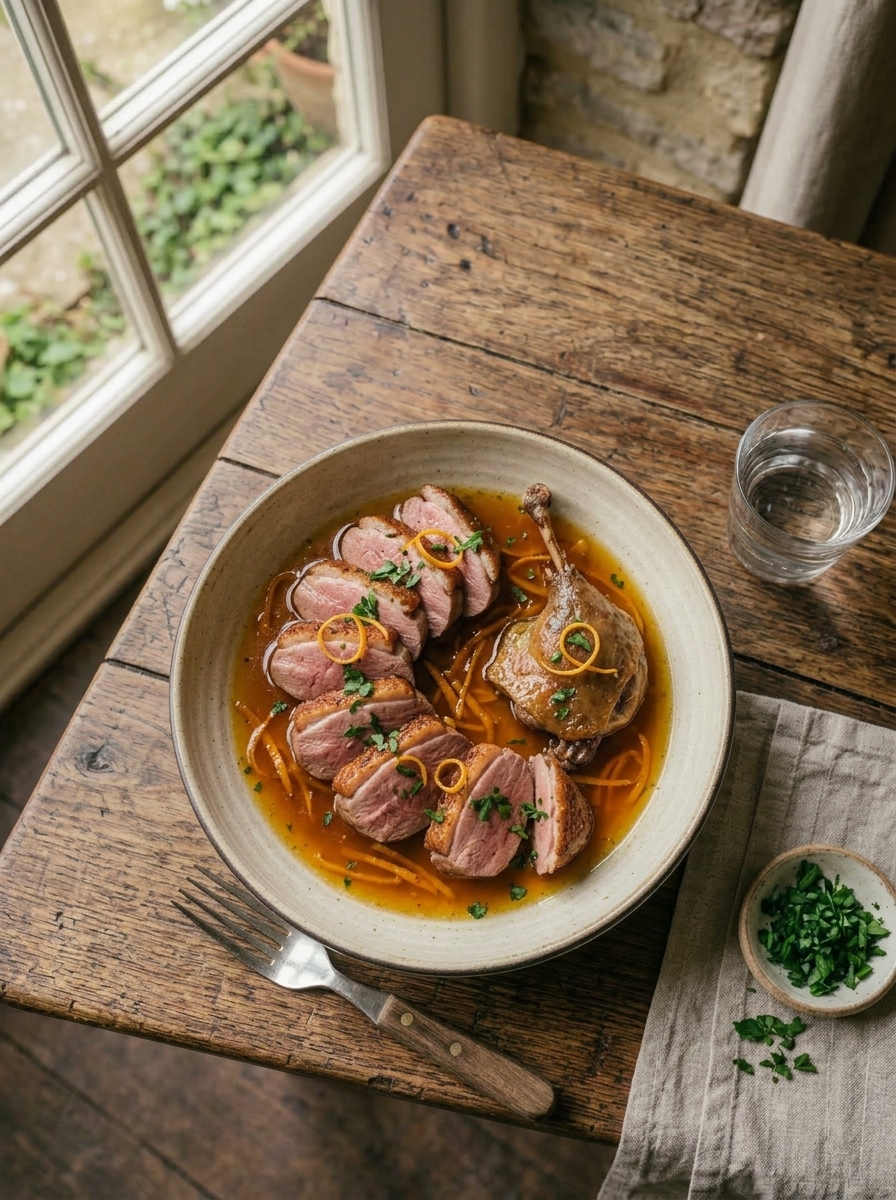
Mary Berry Orange Sauce for Duck Recipe
Ingredients
Method
- Roast whole duck at 200°C on a rack for 1 hour 30–45 minutes until golden and juices run clear. Rest 15 minutes. Or: cook duck breasts skin-side down in a cold pan brought to medium heat 8–10 minutes — turn 2 minutes — oven at 200°C 6–12 minutes depending on preference. Rest 5 minutes.
- Heat sugar in a small heavy saucepan without stirring until deep amber. Add vinegar — stand back, stir quickly until combined.
- Add warm stock — stir until any solidified caramel dissolves. Add orange juice and zest. Simmer 15–20 minutes until reduced by half and slightly syrupy.
- Add duck resting juices and Grand Marnier if using — simmer 2 minutes. Taste and season.
- Remove from heat. Whisk in cold butter in small pieces until glossy. Serve immediately over carved duck.
Notes
Frequently Asked Questions
Can I use shop-bought orange juice?
Fresh-squeezed orange juice gives a considerably more vivid, more complex flavour than shop-bought. If using carton juice, use a high-quality, freshly squeezed variety and add a little extra orange zest.
Can I make this sauce without Grand Marnier?
Yes — the Grand Marnier deepens the orange flavour and gives a slight warmth. Leave it out and add an extra tablespoon of orange juice instead.
Can I use this sauce with chicken?
Yes — an orange sauce with a similar method is excellent with roast chicken. Reduce the caramel intensity slightly — chicken suits a lighter sauce than duck.
Can I thicken the sauce with cornflour?
The sauce thickens through reduction — which concentrates the flavour at the same time. Cornflour gives a thicker but less flavourful result. Reduction is always the right approach for a classic French sauce.














Leave a Reply