
 Anna Louise
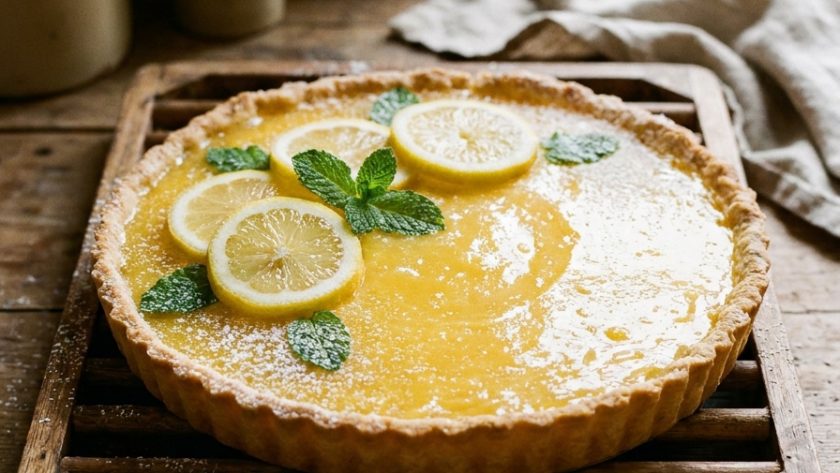
A lemon tart — tarte au citron — is the dessert I make when I want something that is simultaneously simple and genuinely impressive. The filling has just four ingredients — eggs, cream, sugar, and lemon juice — but when they are combined in the right proportions and baked correctly.
The result is a silky, set custard that is intensely sharp and specifically, unmistakably lemon. It is the dessert I serve at dinner parties when I want something that shows a level of care and skill without requiring a complicated method.
The pastry must be properly blind-baked until completely dry before the filling goes in. I have made lemon tarts where I rushed the blind baking and regretted it — a slightly underbaked pastry absorbs the lemon filling during baking and gives a soggy base that no amount of time in the oven fully corrects.
The twenty-five minutes of blind baking, and the extra two minutes with the egg white seal, are completely worth the time.
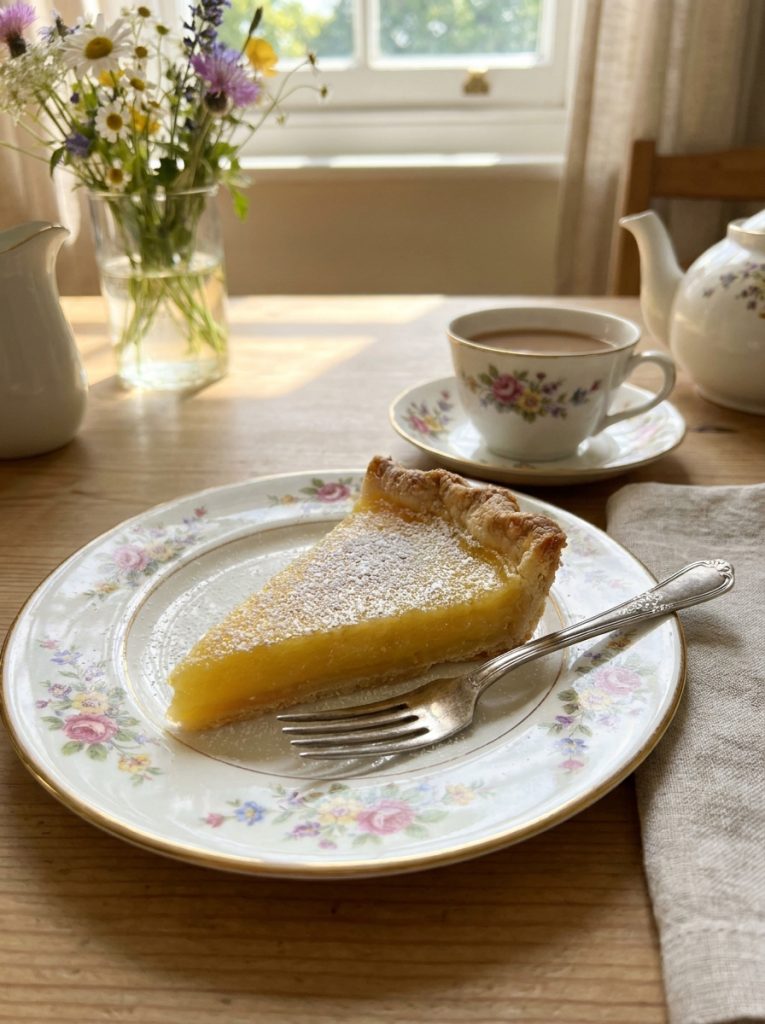
Ingredients for Mary Berry Lemon Tart
For the Sweet Shortcrust Pastry Case
- 200g plain flour, sifted
- 100g cold unsalted butter, cubed
- 50g icing sugar, sifted
- 2 large egg yolks
- 2–3 tbsp cold water
- Pinch of fine salt
- 1 large egg white — beaten, for sealing the blind-baked case
For the Lemon Filling
- 5 large eggs
- 2 large egg yolks — gives extra richness and a more silky set
- 200g golden caster sugar
- Finely grated zest of 4 large unwaxed lemons
- 200ml freshly squeezed lemon juice — from approximately 6 to 7 large lemons
- 200ml double cream
To Finish
- Icing sugar — dusted generously just before serving
- A few very thin slices of lemon — for decoration (optional)
How to Make Mary Berry Lemon Tart
Step 1 — Make and Blind Bake the Pastry Case
Pulse the flour, icing sugar, salt, and cold butter in a food processor until fine breadcrumbs. Add the egg yolks and cold water one tablespoon at a time until the dough just comes together. Flatten into a disc, wrap, and chill for 30 minutes.
Preheat your oven to 190°C / 170°C fan / Gas 5. Roll the chilled pastry on a floured surface to 3mm. Line a deep 23cm loose-bottomed tart tin — pressing carefully into the base and sides without stretching. Prick the base. Chill for 20 minutes.
Line with parchment and baking beans. Blind bake for 15 minutes. Remove beans and parchment — bake a further 8 to 10 minutes until pale golden and completely dry throughout.
Brush the hot base and sides with beaten egg white immediately. Return to the oven for two minutes. The egg white seals every tiny crack and prevents the lemon filling from leaking through. Cool completely.
Reduce the oven to 150°C / 130°C fan / Gas 2.
Step 2 — Make the Lemon Filling
Whisk the eggs, egg yolks, and golden caster sugar together in a large bowl for one to two minutes — just until combined and slightly thickened. Do not beat vigorously or for too long — too much air incorporated here gives a filling that puffs and cracks during baking.
Add the lemon zest, lemon juice, and double cream. Whisk gently until smooth and completely combined. Leave to rest for ten minutes — this allows any bubbles to settle.
Step 3 — Fill and Bake
Place the cooled pastry case — still in its tin — on a baking tray. Place the tray in the oven. Pour the lemon filling carefully into the pastry case — filling to within 3mm of the rim. This is easier than carrying a full tart from the work surface to the oven.
Bake at 150°C for 30 to 40 minutes until the filling is just set — firmly set at the edges with a distinct wobble in the centre that moves as one when the tin is gently shaken. The wobble is correct — the filling will continue to set as it cools and the centre should end up silky and smooth, not rubbery.
Cool completely at room temperature — at least one hour. Refrigerate for at least three hours before serving.
Step 4 — Finish and Serve
Dust generously with icing sugar just before serving — not ahead of time, as icing sugar absorbs into the filling during refrigeration. Slice with a sharp, hot knife wiped clean between each cut.
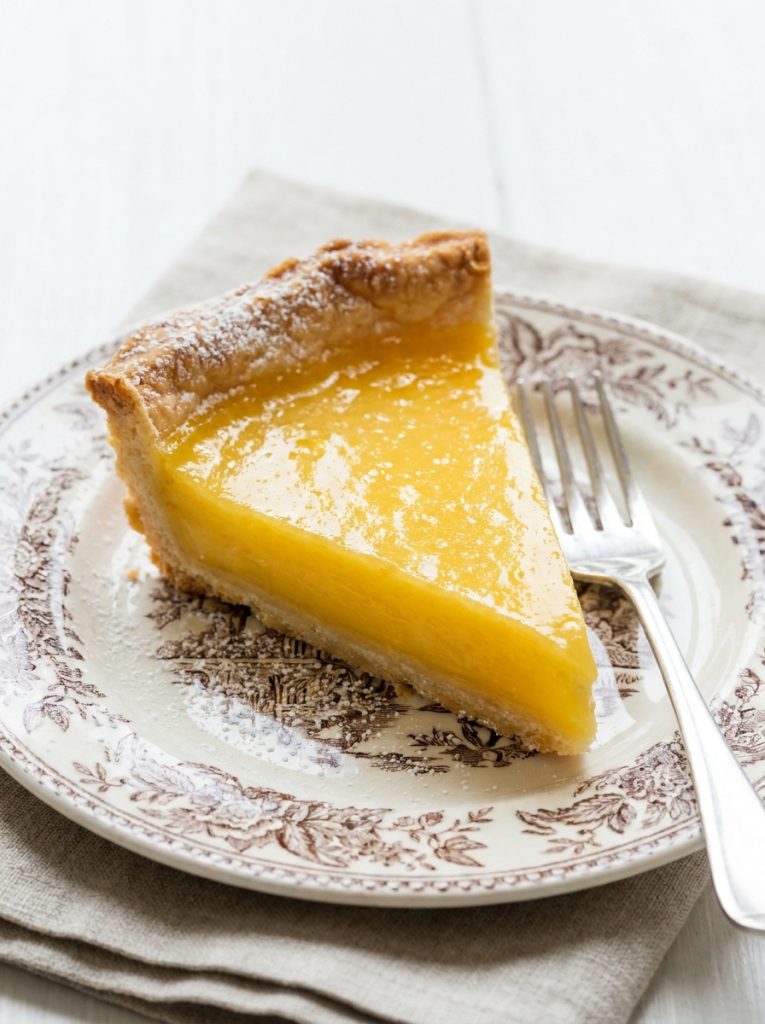
My Top Tips For Best Mary Berry Lemon Tart
Blind bake until completely dry — and use the egg white seal. A soggy lemon tart base is the most common disappointment with this recipe, and it is entirely preventable. The pastry must be pale golden and feel completely dry to the touch before the filling goes in. The egg white seal gives additional insurance — two minutes in the oven after brushing and every tiny crack is closed.
Do not over-whisk the filling. Vigorous whisking incorporates air into the egg and cream mixture. Air in the filling gives a slightly puffed, slightly cracked tart rather than a smooth, silky, flat surface. Whisk gently — just enough to combine everything.
Pour the filling in the oven. Carrying a tart tin full of liquid lemon filling from the work surface to the oven is risky — one slight tilt and the filling runs over the rim. Place the tray and tin in the oven first, then pour the filling in. It is the most practical approach and gives a perfectly filled tart every time.
The central wobble is correct — do not bake beyond it. A lemon tart baked until completely set in the oven gives a slightly rubbery, slightly overcooked filling when cool. The wobble in the centre at the end of baking gives the silky, smooth filling that makes a great lemon tart specifically great.
Dust with icing sugar just before serving. Icing sugar dusted hours ahead absorbs into the slightly moist surface of the filling and disappears. Dusted immediately before bringing to the table, it gives a vivid white, slightly sparkly surface.
Serving Suggestions
Cold from the fridge in generous slices with crème fraîche alongside — the slight tang of the crème fraîche suits the sharp lemon perfectly. As a dinner party dessert made entirely the day before. With fresh raspberries scattered around each slice on the plate.
How to Store Mary Berry Lemon Tart
In the fridge: Store covered for up to 3 days. The pastry softens slightly after the first day but the filling remains completely wonderful.
Freezing is not recommended — the filling becomes slightly grainy on defrosting.
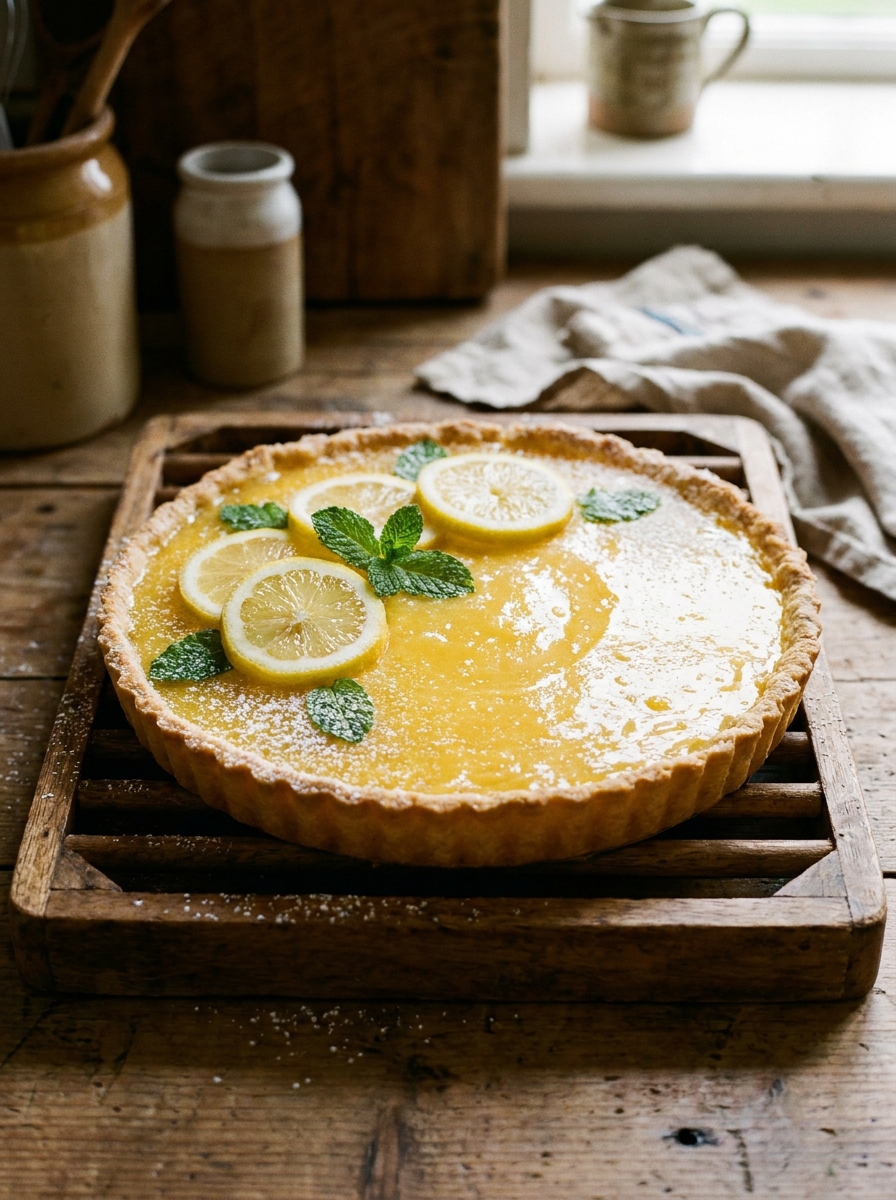
Mary Berry Lemon Tart Recipe
Ingredients
Method
- Make pastry — pulse to crumbs, add egg yolks and water, wrap and chill 30 minutes. Blind bake at 190°C: 15 minutes with beans, 8–10 minutes without until pale golden and dry. Brush hot base and sides with egg white — return to oven 2 minutes. Cool completely. Reduce oven to 150°C / 130°C fan / Gas 2.
- Whisk eggs, egg yolks, and sugar gently 1–2 minutes — just until combined. Add lemon zest, juice, and cream — whisk gently until smooth. Rest 10 minutes for bubbles to settle.
- Place cooled tart tin on a baking tray — place in oven. Pour filling carefully into case — to within 3mm of the rim.
- Bake at 150°C 30–40 minutes until firmly set at edges with a distinct central wobble. Cool completely at room temperature — 1 hour. Refrigerate 3 hours minimum.
- Dust generously with icing sugar just before serving. Slice with a hot sharp knife wiped between cuts.
Notes
Frequently Asked Questions
Can I use lime instead of lemon?
Yes — lime gives a slightly more fragrant, slightly more tropical result. Use the same quantities of zest and juice.
Why did my lemon tart crack on top?
Too much air was beaten into the filling, the oven temperature was too high, or the tart was baked beyond the central wobble. All three give cracking. Beat gently, bake at 150°C, and remove when the centre still wobbles.
Can I make individual lemon tarts?
Yes — line six 10cm individual tart tins with pastry. Blind bake as directed for 12 minutes with beans and 6 minutes without. Fill and bake at 150°C for 18 to 22 minutes.
Can I add a meringue topping to make a lemon meringue tart?
Yes — see the lemon meringue pie recipe on this site for the meringue technique. Apply to the cooled lemon tart filling and torch or flash under a hot grill.















Leave a Reply