
 Anna Louise
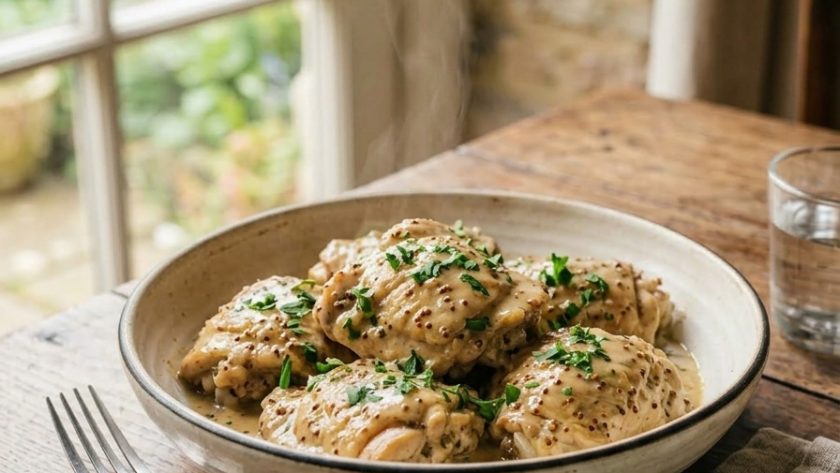
 Poulet à la moutarde — Dijon chicken — is the French bistro dish that requires almost nothing and produces something genuinely elegant. Chicken, white wine, cream, and Dijon mustard — the mustard is the character of the dish, giving the cream sauce a sharpness and complexity that transforms it from something generic into something specifically, memorably good.
The key is using enough mustard. Many recipes are tentative about the quantity — a teaspoon here, a teaspoon there. This recipe uses two tablespoons, which gives a sauce where the mustard is clearly present, slightly sharp, and unmistakable.
The cream rounds it. The white wine gives brightness. The result is a bistro classic that deserves to be made at home much more often than it is.
Thirty-five minutes from start to plate.
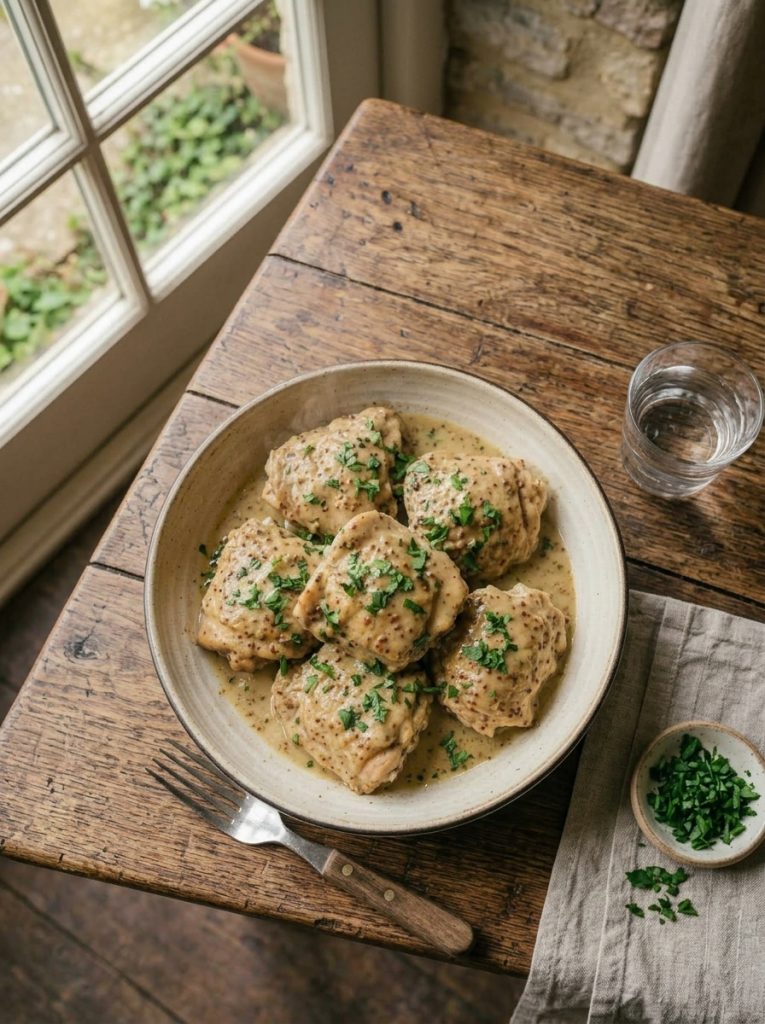
Ingredients for Mary Berry Dijon Chicken
For the Dijon Chicken
- 4 large boneless skinless chicken breasts — or 8 boneless skinless thighs
- 2 tbsp olive oil
- 25g unsalted butter
- 2 shallots, very finely chopped
- 3 garlic cloves, crushed
- 150ml dry white wine
- 250ml good quality chicken stock
- 200ml double cream
- 2 tbsp Dijon mustard — plus 1 tsp extra to stir through at the end
- 1 tsp wholegrain mustard (optional — adds texture and visual interest)
- 1 tsp fresh thyme leaves
- Juice of ½ lemon — added at the very end
- Salt and freshly ground white pepper
- 2 tbsp fresh flat-leaf parsley, chopped — to finish
How to Make Mary Berry Dijon Chicken
Step 1 — Brown the Chicken
Season the chicken pieces generously on both sides. Heat the olive oil in a large, wide frying pan over a medium-high heat. Add the chicken and cook for three to four minutes per side until golden on the outside. For breasts — they do not need to be cooked through at this stage. For thighs — cook until golden. Remove and set aside.
Step 2 — Cook the Shallots
In the same pan, reduce the heat to medium. Add the butter. Cook the finely chopped shallots for five to six minutes until completely soft and translucent. Add the garlic and thyme and cook for two more minutes.
Step 3 — Add the Wine and Reduce
Pour in the white wine. Let it bubble for three to four minutes until reduced by two-thirds — the pan should smell rounded and the wine should no longer smell raw. This reduction concentrates the flavour and removes any harsh alcohol edge.
Step 4 — Build the Cream Mustard Sauce
Add the chicken stock. Bring to a simmer and cook for three minutes. Add the double cream. Stir to combine. Bring to a gentle simmer.
Add the Dijon mustard and wholegrain mustard if using. Stir through. Taste — the mustard should be clearly present and sharp. Season with salt and white pepper. The sauce should taste confident and well-seasoned at this point.
Step 5 — Return the Chicken and Finish
Return the browned chicken pieces to the pan. For breasts — nestle skin-side up, cover partially, and cook over a low heat for fifteen to eighteen minutes until cooked through. For thighs — cook for twelve to fifteen minutes.
Add the lemon juice and the extra teaspoon of Dijon mustard. Stir through gently. The second addition of mustard at the end reinforces the mustard character that can fade slightly during cooking.
Scatter with fresh parsley. Serve immediately from the pan.
My Top Tips For Perfect Dijon Chicken
Use two tablespoons of Dijon mustard — not one. This is the instruction that separates a properly Dijon chicken from a chicken dish that merely has a suggestion of mustard. Two tablespoons gives a sauce where the mustard is clearly, pleasantly present. One tablespoon gives something bland.
Add extra mustard at the end. Mustard loses some of its sharpness and character when cooked — the heat gradually reduces its punch. Stirring through a teaspoon of fresh Dijon right at the end, off the heat or just before serving, reinforces the mustard character and gives the finished dish the right vivid sharpness.
Reduce the wine properly. Three to four minutes of vigorous bubbling after the wine goes in removes the raw alcohol and concentrates the flavour. A sauce built on insufficiently reduced wine has a slightly harsh, slightly sharp edge that is different from the sharp brightness of well-cooked wine.
Do not boil the cream. Keep the heat gentle from the moment the cream goes in. A vigorous boil can cause the cream to separate and give a slightly grainy appearance. Gentle simmering gives a smooth, glossy sauce.
Lemon juice at the end is essential. The lemon juice brightens and sharpens the entire sauce in the same way as in every cream sauce on this site. Without it the sauce tastes slightly flat and slightly heavy.
Serving Suggestions
With steamed new potatoes and green beans — the classic bistro accompaniment. With crusty bread for mopping — the sauce demands it. With buttered egg noodles. With a simple dressed green salad alongside.
How to Store Dijon Chicken
In the fridge: Store for up to 2 days. Reheat very gently over a low heat — do not boil. The mustard flavour remains vivid.
In the freezer: Freeze for up to 2 months. Cream and mustard sauces can separate slightly on defrosting — reheat gently, stirring well.
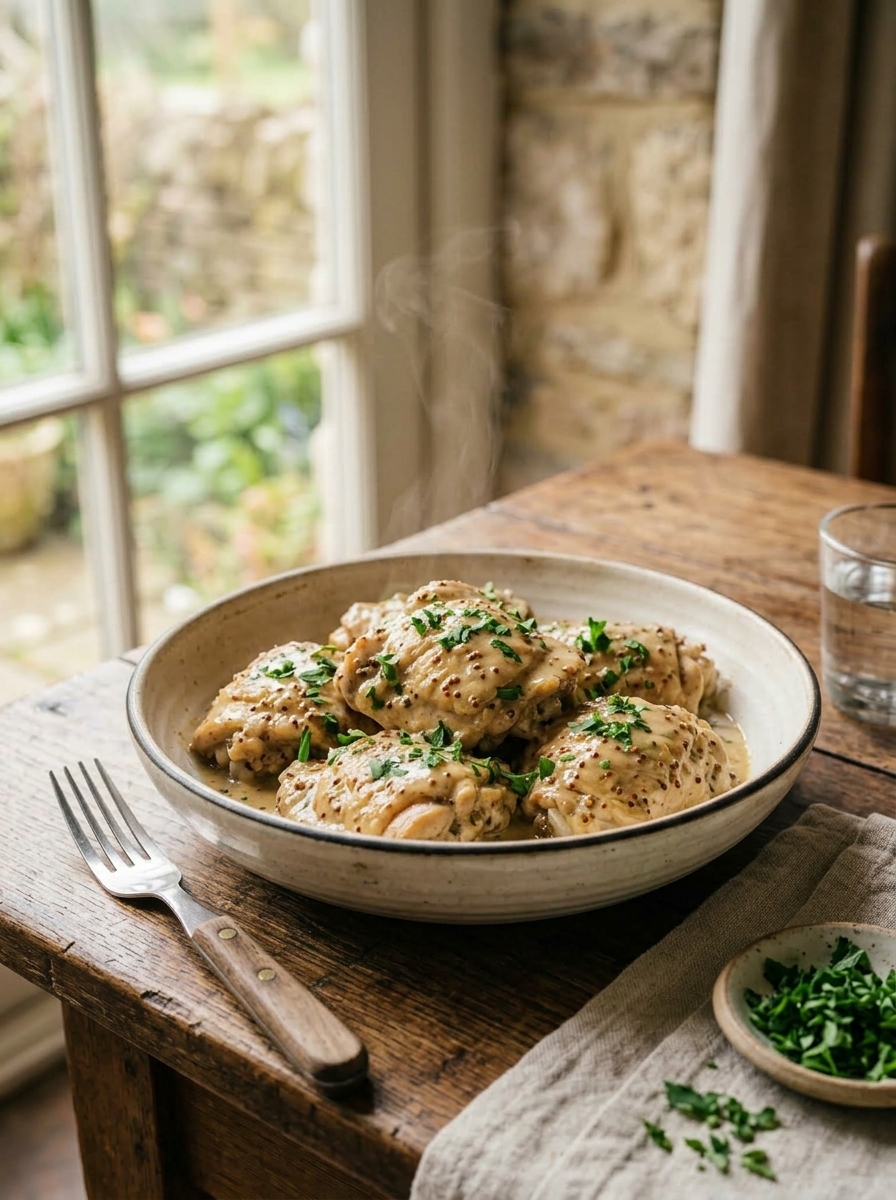
Mary Berry Dijon Chicken Recipe
Ingredients
Method
- Season chicken. Brown in hot oil 3–4 minutes per side until golden. Remove.
- Add butter over medium heat. Cook shallots 5–6 minutes. Add garlic and thyme — 2 minutes.
- Add wine — bubble vigorously 3–4 minutes until reduced by two-thirds.
- Add stock — simmer 3 minutes. Add cream — bring to gentle simmer. Add Dijon and wholegrain mustard. Stir. Season assertively. Taste.
- Return chicken. Cover partially. Cook on low heat 15–18 minutes (breasts) or 12–15 minutes (thighs) until cooked through.
- Add lemon juice and extra tsp Dijon — stir through. Scatter parsley. Serve immediately.
Notes
Frequently Asked Questions
Can I use wholegrain mustard only?
Wholegrain mustard gives a milder, less sharp sauce with visible mustard seeds. Use three tablespoons if using wholegrain only, and add a teaspoon of Dijon at the end for sharpness.
Can I use crème fraîche instead of double cream?
Yes — full-fat crème fraîche gives a slightly less rich, slightly more sour result that some people prefer. It holds better during reheating than double cream.
Can I make this without wine?
Replace the wine with an extra 100ml of chicken stock and a tablespoon of white wine vinegar. The depth will be slightly less but the result is still very good.
Can I add tarragon?
Yes — fresh tarragon and Dijon mustard are a specifically French combination. Add two tablespoons of fresh tarragon at the very end alongside the parsley.














Leave a Reply