
 Anna Louise
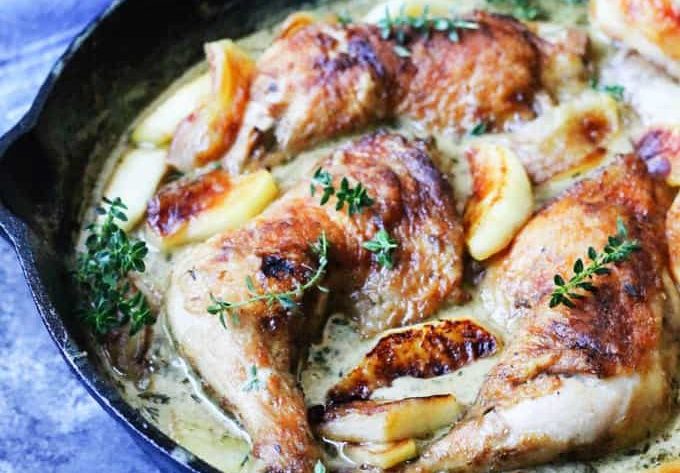
 Poulet Vallée d’Auge — Normandy chicken — is one of the great regional dishes of French cooking. Normandy is apple country. Its cooking is defined by apples, apple cider, Calvados apple brandy, and the rich cream produced by the dairy cattle that graze its pastures. All four appear in this single dish.
The combination of tart apple, dry cider, cream, and the distinctive warm, apple-brandy character of Calvados gives a sauce that is simultaneously richer and lighter than many French cream sauces — the apple cuts through the cream and the Calvados gives warmth and depth.
The result is something that tastes unmistakably of its region — fragrant, slightly sweet, slightly sharp, completely elegant.
If you cannot find Calvados, a good quality apple brandy or even a little additional dry cider works. But Calvados is not expensive and it keeps for months — it is worth having in the kitchen for this dish and for adding to apple desserts throughout the year.
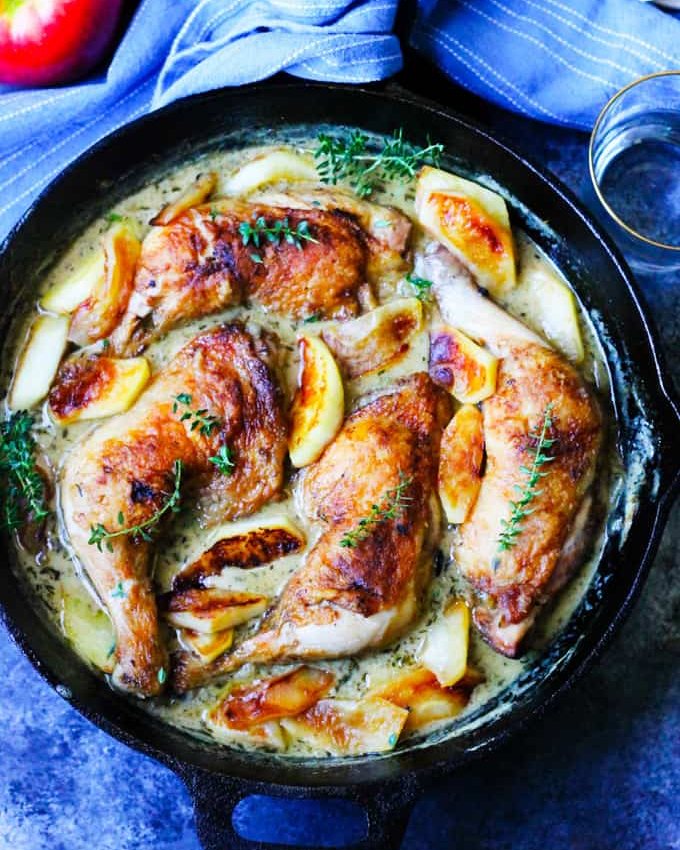
Ingredients for Mary Berry Normandy Chicken
For the Casserole
- 8 bone-in skin-on chicken thighs
- 2 tbsp olive oil
- 40g unsalted butter
- 1 large onion, finely chopped
- 3 garlic cloves, crushed
- 3 Cox or Braeburn apples — peeled, cored, and cut into 8 wedges each
- 3 tbsp Calvados or apple brandy
- 300ml dry cider — good quality, dry
- 200ml good quality chicken stock
- 200ml double cream
- 1 tsp fresh thyme leaves
- 1 bay leaf
- 1 tsp Dijon mustard
- Salt and freshly ground white pepper
To Finish
- 1 tbsp fresh flat-leaf parsley, chopped
- A few extra apple wedges, briefly fried in butter until golden — optional garnish
How to Make Mary Berry Normandy Chicken
Step 1 — Brown the Chicken
Season the chicken thighs very generously. Heat the olive oil in a large, deep casserole over a medium-high heat. Brown skin-side down for five to six minutes until deeply golden — do not move during browning. Turn and cook two minutes on the other side. Remove and set aside.
Step 2 — Cook the Onion
Pour off most of the fat from the casserole, leaving about one tablespoon. Reduce the heat to medium. Add the butter. Cook the onion for eight minutes until completely soft. Add the garlic and thyme and cook for two more minutes.
Step 3 — Add Calvados and Flame (Optional)
Add the Calvados to the pan. If you want to flame it — a dramatic but optional step — tilt the pan slightly from the heat source and use a long match or lighter to ignite the Calvados. It will flame briefly and dramatically. Let the flames die down naturally — about thirty seconds. This burns off the raw alcohol while preserving the apple brandy flavour.
Alternatively, simply let the Calvados bubble for two minutes without flaming — the result is virtually identical.
Step 4 — Add the Apple Wedges and Cider
Add the apple wedges to the casserole. Pour in the dry cider. Bring to a brisk simmer and let the cider bubble for three to four minutes — this concentrates the flavour and removes the raw edge of the alcohol.
Add the chicken stock, cream, mustard, and bay leaf. Season generously. Stir to combine.
Step 5 — Braise the Chicken
Return the browned chicken thighs skin-side up to the casserole — skin above the sauce level. Bring to a gentle simmer. Cover partially and cook over the lowest possible heat — or in a preheated 160°C / 140°C fan / Gas 3 oven — for 35 to 40 minutes until the chicken is completely tender and cooked through.
The apple wedges should have softened and partially collapsed into the sauce — this is correct. They give the sauce its characteristic slightly sweet, slightly tart character.
Step 6 — Finish and Serve
Remove the bay leaf. Taste and season generously — this sauce needs confident seasoning to balance the sweetness of the apple and the richness of the cream. Add a squeeze of lemon juice if the sauce seems slightly flat.
Scatter fresh parsley over the top. Serve from the casserole with a garnish of extra golden-fried apple wedges if using.
My Top Tips For Perfect Normandy Chicken
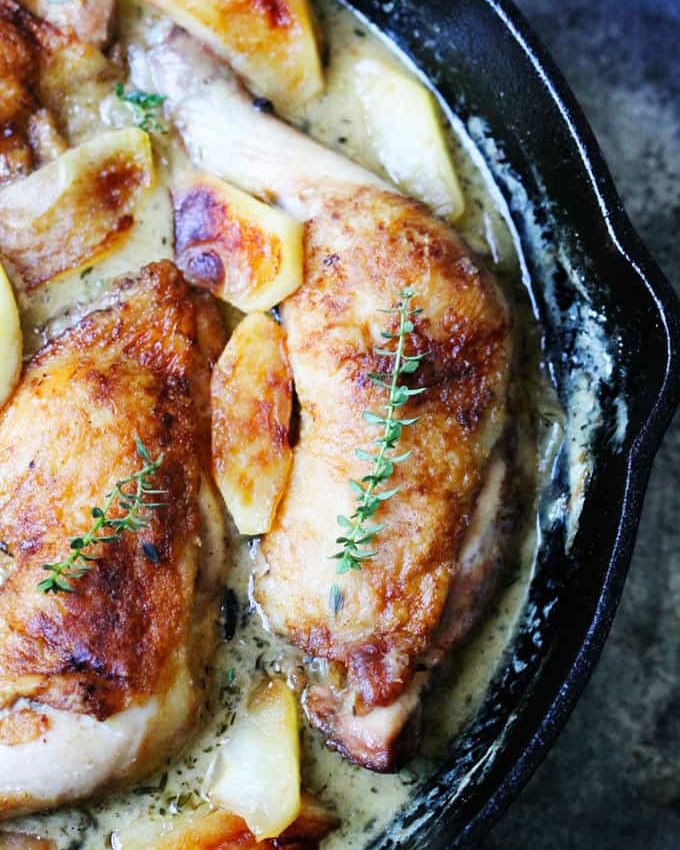
Use Cox or Braeburn apples — not Bramleys. Bramleys collapse completely and give apple flavour but no texture. Cox or Braeburn give wedges that soften but retain their shape, giving a sauce with identifiable apple pieces alongside the general apple sweetness.
Use genuinely dry cider. Sweet cider gives a sauce that is too sweet and slightly cloying. A good quality dry cider — Aspall or a farmhouse cider — gives the right balance of apple acidity and flavour.
The Calvados flaming is optional but atmospheric. Flaming the Calvados is one of those kitchen moments that feels genuinely dramatic. It is not technically necessary — simply bubbling the alcohol off gives the same flavour result — but it is enjoyable and makes the cooking of this dish feel like a proper event.
Season the sauce assertively. The cream and apple sweetness can make an underseasoned Normandy chicken sauce taste flat and slightly bland. Taste before serving and season until the sauce tastes clearly, confidently flavoured.
Make it the day before. Like every cream-based casserole on this site, Normandy chicken improves overnight. The Calvados and apple flavours deepen and integrate with the cream and chicken juices in a way that makes the day-two version noticeably better.
Serving Suggestions
With dauphinoise potatoes — the richness of the cream sauce and the cream-based potato is indulgent but completely appropriate for a French regional dish. With crusty bread for mopping every trace of sauce. With buttered noodles or steamed new potatoes. With a simple green salad alongside for freshness.
How to Store Normandy Chicken
In the fridge: Store for up to 3 days. Reheat very gently — do not boil the cream sauce. The flavour improves significantly overnight.
In the freezer: Freeze for up to 2 months. Cream sauces can separate slightly on defrosting — reheat gently and stir well.
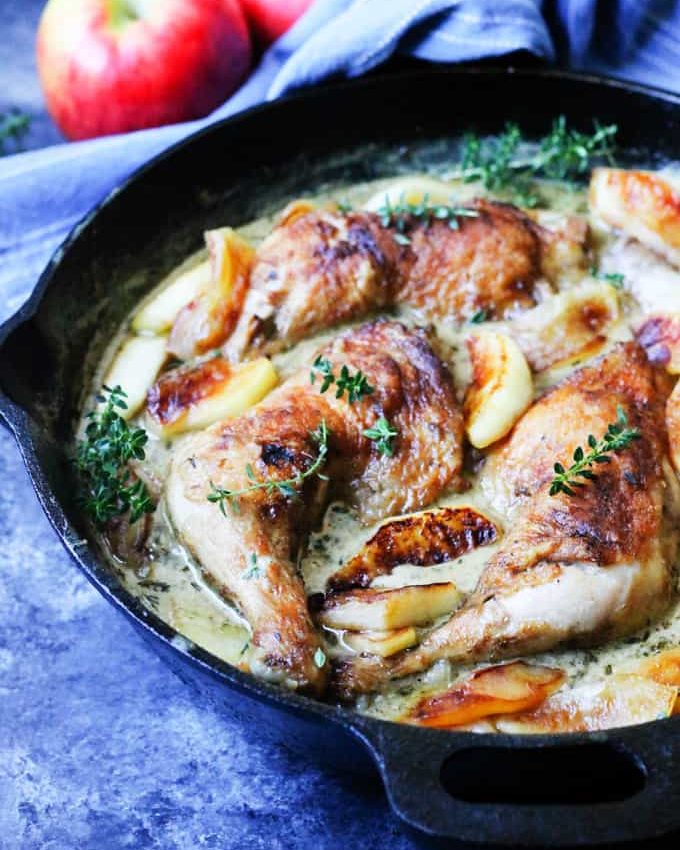
Mary Berry Normandy Chicken Recipe
Ingredients
Method
- Season chicken generously. Brown skin-side down in hot oil 5–6 minutes without moving. Turn — 2 minutes. Remove.
- Pour off most fat — leave 1 tbsp. Add butter over medium heat. Cook onion 8 minutes. Add garlic and thyme — 2 minutes.
- Add Calvados — flame if desired or bubble 2 minutes. Add apple wedges and cider — simmer briskly 3–4 minutes.
- Add stock, cream, mustard, and bay leaf. Season generously. Stir.
- Return chicken skin-side up. Cover partially. Cook over lowest heat or in 160°C oven 35–40 minutes until completely tender.
- Remove bay leaf. Taste and season assertively. Scatter parsley. Serve with optional golden apple garnish.
Notes
Frequently Asked Questions
Can I use chicken breast?
Thighs give a significantly better result in a long braise — they stay moist through the full cooking time. If using breast, add it in the final twenty minutes only.
Can I use apple juice instead of cider?
Apple juice gives a sweeter, less complex result. Dry cider gives the right balance. If using apple juice, add the juice of half a lemon to compensate for the reduced acidity.
Can I leave out the Calvados?
Replace with two extra tablespoons of dry cider and a teaspoon of apple cider vinegar added at the end. The Calvados warmth will be absent but the overall character is similar.
Can I add mushrooms?
Yes — 200g of chestnut mushrooms caramelised separately and added with the chicken give an earthy note that works well alongside the apple. Add in the final ten minutes.
















Leave a Reply