
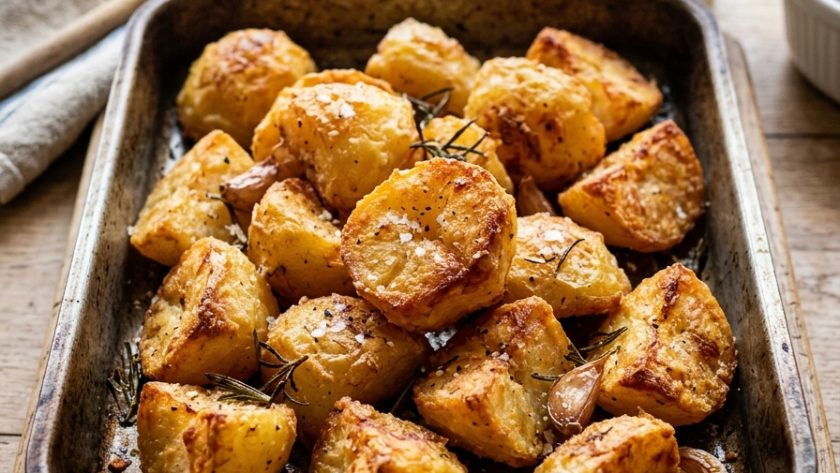
 Anna Louise
 Roast potatoes are the thing most people are most anxious about getting right at a Sunday lunch or Christmas dinner. There is no reason for the anxiety — the method for genuinely crispy, golden, fluffy-inside roast potatoes is completely reliable and completely learnable.
Once you understand what makes a great roast potato and why each step matters, you will never produce a disappointing one again. The twice-cooked method is the most reliable approach. Par-boiling the potatoes first begins the cooking process and softens the exterior.
Draining them thoroughly and shaking them in the pan creates a rough, fluffy surface of broken starch on every potato. That roughed-up surface, coated in very hot fat, gives the most dramatically crispy exterior possible — more surface area, more crust, more crunch per square centimetre than any other method.
The fat matters. Goose fat gives the most flavoursome, most deeply golden result. Duck fat is equally good. Good quality lard is excellent. Vegetable oil works and is the right choice for vegetarians. What does not work is olive oil — it has too low a smoke point at the temperature roast potatoes need and gives a less crispy result.
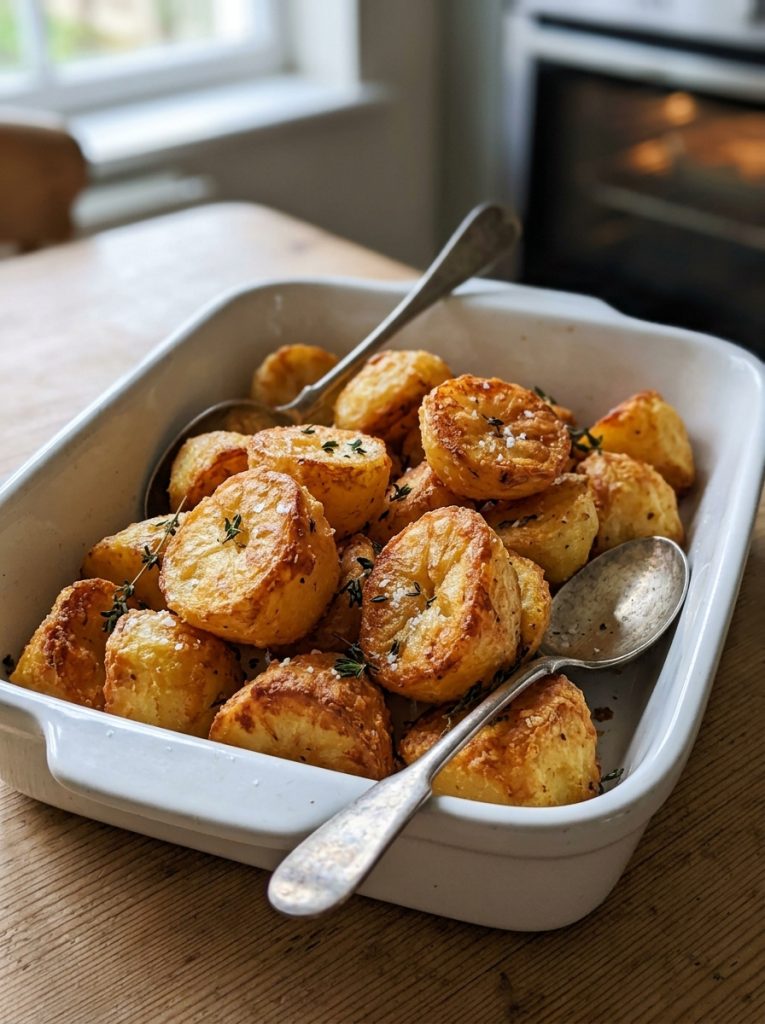
Ingredients for Mary Berry Twice Cooked Roast Potatoes
For the Potatoes (Serves 6)
- 1.5kg floury potatoes — Maris Piper is the standard choice, King Edward is equally good
- 1 tbsp fine salt — for the par-boiling water
- 100g goose fat, duck fat, or good quality lard — or 100ml vegetable oil
- 1 tsp fine salt and ½ tsp white pepper — for seasoning before roasting
- 1 tsp semolina or plain flour (optional — scattered over the roughed-up potatoes before roasting for extra crunch)
Optional Flavourings (Added in the Final 15 Minutes)
- 4 unpeeled garlic cloves — bruised and added to the tin
- 3 sprigs fresh rosemary
- 3 sprigs fresh thyme
- A few dried chilli flakes scattered over the top
How to Make Mary Berry Twice Cooked Roast Potatoes
Step 1 — Peel and Cut
Peel the potatoes and cut into even pieces — roughly the size of a large egg. Pieces that are too small dry out before they are golden. Pieces that are too large take too long. The goal is pieces that are similar enough in size to cook in the same time.
Step 2 — Par-Boil
Place the cut potatoes in a large pan of cold salted water. Bring to the boil from cold — starting in cold water gives more even cooking than putting them into already-boiling water. Boil for eight to ten minutes until the outside is just beginning to turn soft but a skewer meets significant resistance in the centre. The potatoes should be nowhere near cooked through.
Drain immediately and thoroughly.
Step 3 — Rough Up the Surface
Return the drained potatoes to the empty pan. Place the lid on and shake the pan vigorously for ten to fifteen seconds until the surface of every potato is roughed up and fluffy with broken starch. The potatoes should look slightly mashed at the surface — jagged, fluffy, with no smooth surface remaining.
If using semolina or flour, scatter over the roughed-up potatoes now and toss to coat — this creates additional texture on the surface that crisps particularly dramatically in the hot fat.
Leave the roughed-up potatoes in the pan, uncovered, for ten minutes. The steam escaping in these ten minutes dries the surface further and gives an even crispier final result.
Step 4 — Heat the Fat Until Smoking
This is the step most often done incorrectly. The fat must be genuinely, visibly smoking before the potatoes go in. Place the fat in a large roasting tin and put it in the oven at 220°C / 200°C fan / Gas 7. Heat for at least fifteen minutes until the fat is smoking hot.
Test before adding potatoes — if a small piece of potato dropped into the fat does not sizzle dramatically immediately, the fat is not hot enough. Return to the oven.
Step 5 — Roast
Working quickly and carefully — the fat is extremely hot — remove the tin from the oven. Tip the roughed-up potatoes into the smoking fat in a single layer. Turn each potato immediately so every surface is coated in hot fat. The fat should continue to sizzle and spit around each potato.
Return to the oven immediately. Roast at 220°C for 45 to 55 minutes, turning the potatoes two or three times during cooking, until deeply golden and crispy on all surfaces.
Step 6 — Add Flavourings and Finish
If using garlic, rosemary, or thyme, add them to the tin in the final fifteen minutes of roasting. Added earlier, the herbs burn and become bitter.
Season with a little extra salt immediately as they come out of the oven — salt adheres to the hot, slightly oily surface and gives a properly seasoned crust.
Serve immediately.
My Top Tips For Perfect Twice Cooked Roast Potatoes
Start par-boiling from cold water. Cold water brought to the boil gives more evenly cooked potatoes than potatoes dropped into boiling water. The exterior and interior cook together rather than the outside softening before the inside has started.
Par-boil for eight to ten minutes only — not until fully soft. The potatoes finish cooking in the oven. Over-boiled potatoes fall apart when shaken and give a mashed surface rather than a fluffy, jagged one.
Shake vigorously and without mercy. The roughed-up surface is what creates the crust. A gentle shake gives a slightly softened surface. A vigorous fifteen-second shake gives a dramatically jagged, fluffy surface that crisps spectacularly. Do not be tentative.
The fat must be smoking. Not hot. Not very hot. Smoking. This is the step that most people shortcut and that most consistently explains disappointing roast potatoes. The fat must be at full temperature before the potatoes go in. A potato dropped into smoking fat seals immediately, creating a crust before moisture can escape. A potato dropped into warm fat absorbs the fat and goes soggy.
Turn the potatoes during roasting. Two or three turns during the 45 to 55 minutes ensures every surface achieves the same level of golden crispness. Potatoes that sit on one surface throughout come out golden on top and pale on the bottom.
Add herbs in the final fifteen minutes. Earlier and they burn.
Season immediately on coming out of the oven. Salt on hot potatoes adheres and seasons the crust. Salt on cool potatoes sits on the surface and does not penetrate.
Serving Suggestions
With roast chicken, roast beef, roast lamb, or roast pork — the classic accompaniment. With a Yorkshire pudding and gravy alongside. At Christmas alongside the turkey and all the trimmings. On their own, straight from the tin, as a cook’s privilege while the rest of the meal is assembled.
How to Store
Leftover roast potatoes: Store in an airtight container in the fridge for up to 3 days. Reheat in a 220°C oven for 15 to 20 minutes on a wire rack — they regain most of their crispness.
Par-boiled and roughed-up but unroasted: Can be stored uncovered in the fridge for up to 24 hours — the surface dries further in the fridge, which actually improves the crispness when roasted. This is an excellent technique for getting ahead before a large dinner.
Try These Recipes
- Mary Berry Chicken And Mushroom Lasagne
- Mary Berry Fish Pie With Rosti Topping
- Mary Berry Tortilla Quiche
- Mary Berry Chicken Leek And Mushroom Pie
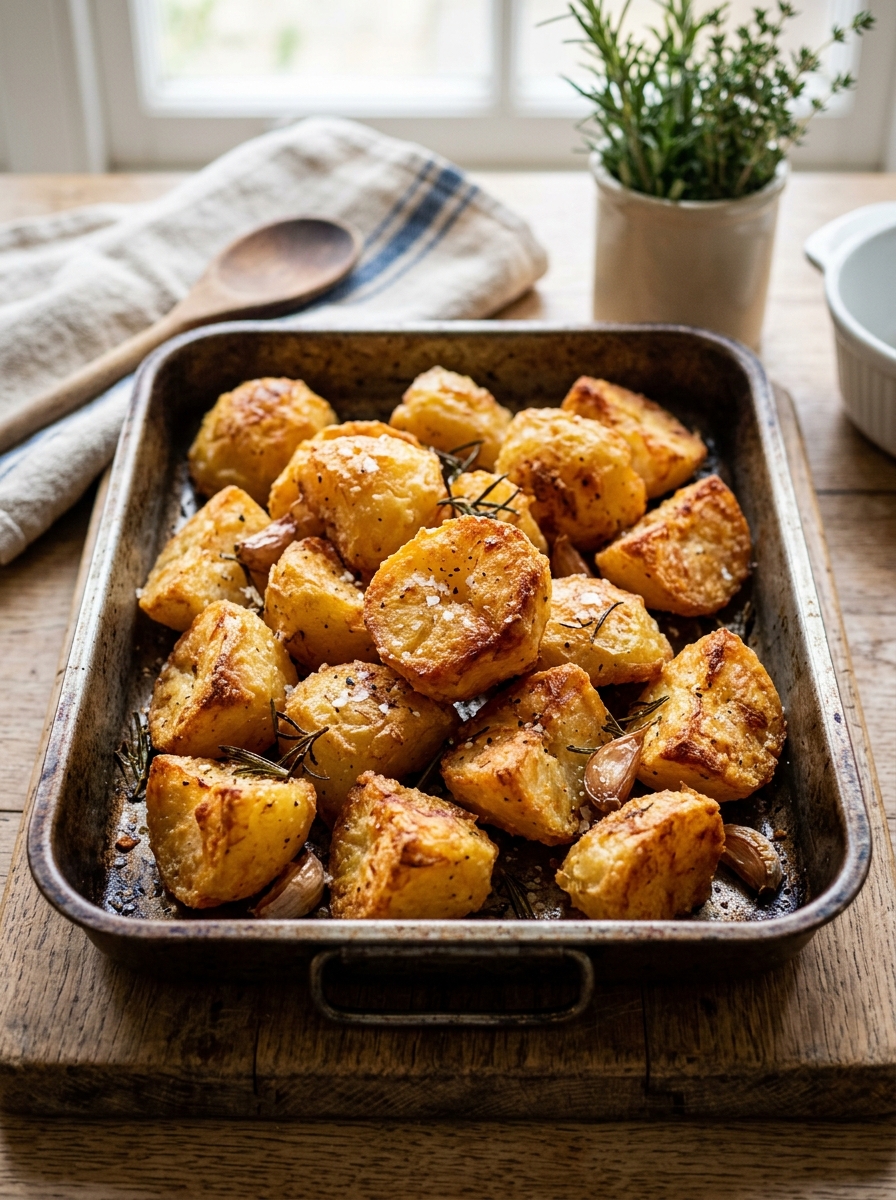
Mary Berry Twice Cooked Roast Potatoes Recipe
Ingredients
Method
- Peel and cut potatoes to large-egg size pieces — evenly sized.
- Place in cold salted water. Bring to the boil from cold. Boil 8–10 minutes until just beginning to soften at the edges but still firm inside. Drain thoroughly.
- Return to empty pan. Lid on. Shake vigorously 10–15 seconds until all surfaces are rough and fluffy. Scatter semolina or flour if using. Leave uncovered 10 minutes to steam dry.
- Place fat in a large roasting tin in 220°C / 200°C fan / Gas 7 oven for at least 15 minutes until smoking. Test — a potato piece must sizzle dramatically immediately on contact.
- Remove tin from oven. Tip potatoes into smoking fat carefully. Turn each piece immediately to coat all surfaces. Return to oven without delay.
- Roast 45–55 minutes, turning 2–3 times, until deeply golden and crispy on all surfaces. Add garlic and herbs in the final 15 minutes. Season with salt immediately on coming out of the oven. Serve immediately.
Notes
Frequently Asked Questions
Which potato variety is best?
Maris Piper is the standard recommendation and gives an excellent result. King Edward is equally good and gives a slightly fluffier interior. Desiree works well. Avoid waxy varieties — Charlotte, Jersey Royal, new potatoes — they do not fluff up when roughed and do not crisp in the same way.
Can I use olive oil instead of goose fat?
Olive oil has a smoke point that is lower than the temperature needed for genuinely crispy roast potatoes. It works but gives a less crispy result and a slightly different flavour. Vegetable oil, sunflower oil, or rapeseed oil are better oil alternatives.
Can I par-boil the day before?
Yes — par-boil, rough up, and leave uncovered in the fridge overnight. The surface dries completely in the fridge, which gives an even crispier final result. This is genuinely one of the best techniques for making Christmas dinner manageable.
Why are my roast potatoes soggy?
The fat was not hot enough, the potatoes were not dried sufficiently after par-boiling, or the tin was too crowded. Address all three.
Can I add Parmesan for extra crunch?
Yes — scatter finely grated Parmesan over the potatoes in the final ten minutes of roasting. It melts into the surface and gives an additional crunchy, savoury coating.
















Leave a Reply