
 Anna Louise
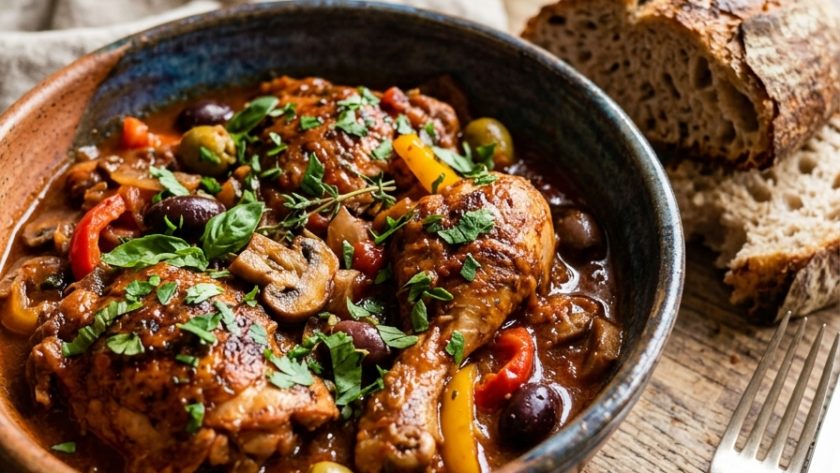
 Chicken cacciatore — hunter’s chicken — is the Italian dish I make when I want something that tastes like it has been cooking all day and actually took about an hour.
The name comes from the Italian hunting tradition, the same root as the French chasseur, and both dishes share that same principle — chicken braised in a robust, wine-enriched sauce with whatever ingredients the hunter had available.
The Italian version uses red wine rather than white, adds capers and olives for their briny depth, and has a more tomato-forward sauce that is slightly richer and more robust than its French counterpart. It is a bigger, more assertive dish than chicken chasseur — deeper in colour, bolder in flavour, and completely extraordinary.
Mary Berry’s chicken cacciatore is the version that has become a regular in my kitchen through autumn and winter. It is the sort of dinner that makes the whole house smell wonderful from the moment the wine goes into the pan, and it tastes even better the next day — which means making it ahead is not just convenient, it is genuinely the right choice.
Red Wine Is What Makes This Cacciatore
The difference between this and the Italian chicken recipe on this site is primarily the wine. Italian chicken uses white wine and tinned tomatoes for a brighter, more vibrant sauce.
Cacciatore uses red wine — reduced properly in the pan before anything else goes in — which gives a darker, richer, more robust sauce that is the defining character of this dish.
Use a red wine you would drink. Not expensive, but not cooking wine either. A basic Chianti, a Montepulciano, or whatever Italian red you have open.
The wine reduces significantly during cooking, so its quality matters — cheap wine gives a slightly harsh, acidic sauce. A decent wine gives depth and complexity.
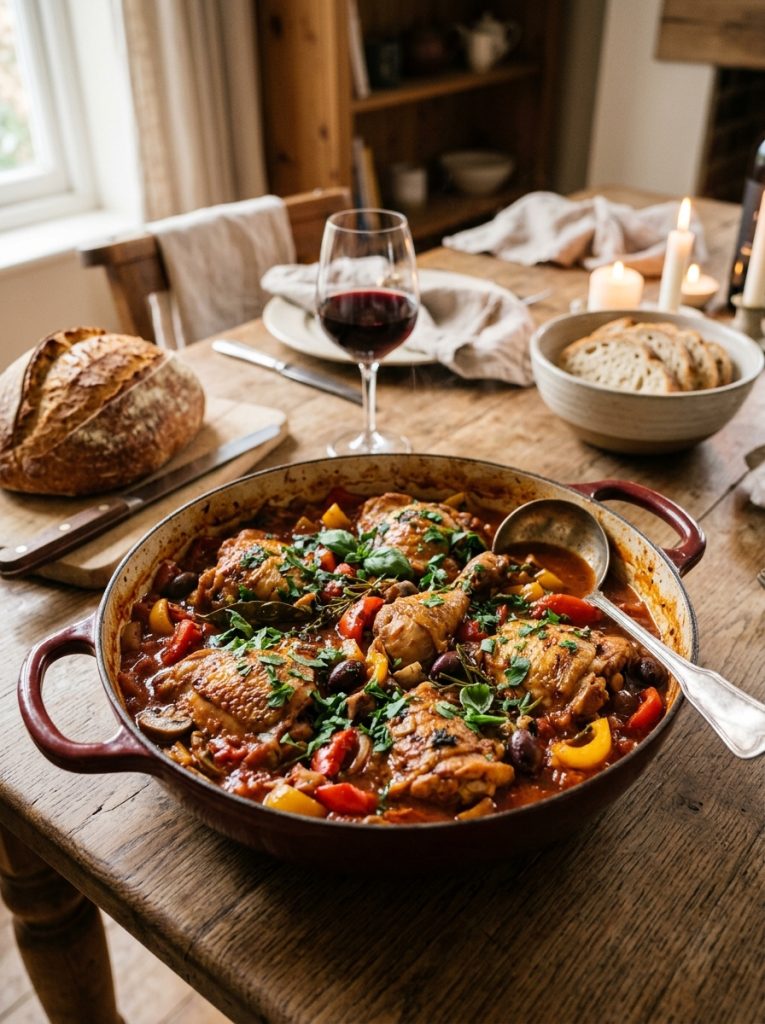
Ingredients for Mary Berry Chicken Cacciatore
- 8 chicken thighs and drumsticks, skin on, bone in
- 2 tbsp olive oil
- 1 large onion, finely chopped
- 1 red pepper, deseeded and roughly chopped
- 4 garlic cloves, finely sliced
- 200ml robust red wine
- 400g tin chopped tomatoes
- 2 tbsp tomato purée
- 150ml good quality chicken stock
- 2 tbsp capers, rinsed
- 100g pitted black olives
- 2 sprigs fresh rosemary
- 1 tsp dried oregano
- 1 tsp caster sugar
- 1 tbsp red wine vinegar (added at the end — brightens everything)
- Salt and freshly ground black pepper
- Fresh flat-leaf parsley and a drizzle of extra virgin olive oil to finish
How to Make Mary Berry Chicken Cacciatore
Step 1 — Brown the Chicken
Season the chicken pieces very generously — cacciatore needs more assertive seasoning than a milder dish. Heat the olive oil in a large, deep ovenproof casserole over a medium-high heat. Brown the chicken in batches, skin-side down first — four to five minutes until the skin is deeply golden and crisp. Turn and cook for two minutes on the other side. Remove and set aside.
Step 2 — Soften the Vegetables
In the same casserole, reduce the heat to medium. Cook the onion and red pepper for eight minutes until softened and beginning to colour. Add the sliced garlic and cook for two more minutes — garlic in cacciatore should be sliced, not crushed, for a slightly more textured, rustic character.
Step 3 — Add the Wine and Reduce
Pour in the red wine. Increase the heat and let it bubble vigorously for four to five minutes until reduced by about half. Scrape up every bit of the caramelised residue from the base of the casserole as the wine bubbles — this is pure flavour. The wine should smell rounded and slightly sweet at this point, not raw and sharp.
Step 4 — Build the Sauce
Add the chopped tomatoes, tomato purée, chicken stock, rosemary sprigs, dried oregano, and sugar. Season generously. Stir well to combine. Bring to a gentle simmer.
Step 5 — Braise the Chicken
Return the browned chicken pieces skin-side up to the casserole — the skin must sit above the sauce. Bring back to a simmer.
Cover partially and cook on a low heat — or in a preheated 160°C / 140°C fan / Gas 3 oven — for 35 to 40 minutes until the chicken is completely cooked through and very tender.
Step 6 — Add Capers and Olives
In the final ten minutes of cooking, add the capers and olives. These need only a brief warming through — added earlier they become soft and lose their pleasant bite.
Step 7 — Finish and Serve
Remove the rosemary sprigs. Add the red wine vinegar — stir through. This single tablespoon added at the very end brightens all the rich, robust flavours of the sauce without making it taste sour. Taste and adjust seasoning.
Scatter with fresh parsley. Drizzle with a little extra virgin olive oil. Serve from the casserole.
My Top Tips For Perfect Chicken Cacciatore
Reduce the wine properly. Four to five minutes of vigorous bubbling after the wine goes in is not optional. Insufficiently reduced wine gives the sauce a raw, slightly harsh edge. Properly reduced wine gives a round, complex depth that is the foundation of this dish.
Slice the garlic — don’t crush it. Sliced garlic in cacciatore gives a slightly more rustic, more visible presence in the sauce. Crushed garlic disappears into the background. For this particular dish, sliced garlic is the traditional choice and it looks beautiful.
Keep the chicken skin above the sauce. The golden, crispy skin sitting above the sauce during the braise gives a better final result than skin submerged and going soft. Nestle the chicken skin-side up and keep it there.
Add capers and olives in the last ten minutes. Both are flavourful and both benefit from being barely cooked rather than braised for the full cooking time. Ten minutes of gentle warmth gives them the right temperature and keeps their texture pleasant.
The red wine vinegar at the end is the detail that makes the difference. One tablespoon of red wine vinegar stirred through just before serving lifts and brightens the entire sauce without adding sourness. It is a classic Italian technique — acidity at the end to sharpen and focus the flavours. Do not skip it.
Serving Suggestions
With creamy polenta — the classic Italian pairing that absorbs the sauce beautifully. With wide pappardelle or rigatoni tossed in the sauce. With crusty ciabatta for mopping. With a simple rocket salad dressed with lemon and olive oil alongside.
How to Store Chicken Cacciatore
In the fridge: Store in an airtight container for up to 3 days. The flavour improves significantly overnight — this is one of the dishes that genuinely tastes better the next day.
In the freezer: Freeze in portions for up to 3 months. Defrost overnight in the fridge. Reheat gently, adding a splash of stock or wine if the sauce has thickened too much.
Try These Recipes
- Mary Berry Pot Roast Chicken
- Mary Berry Roasted Vegetable Quiche
- Mary Berry Sweet And Sour Chicken
- Mary Berry Cottage Pie With Dauphinoise Potatoes
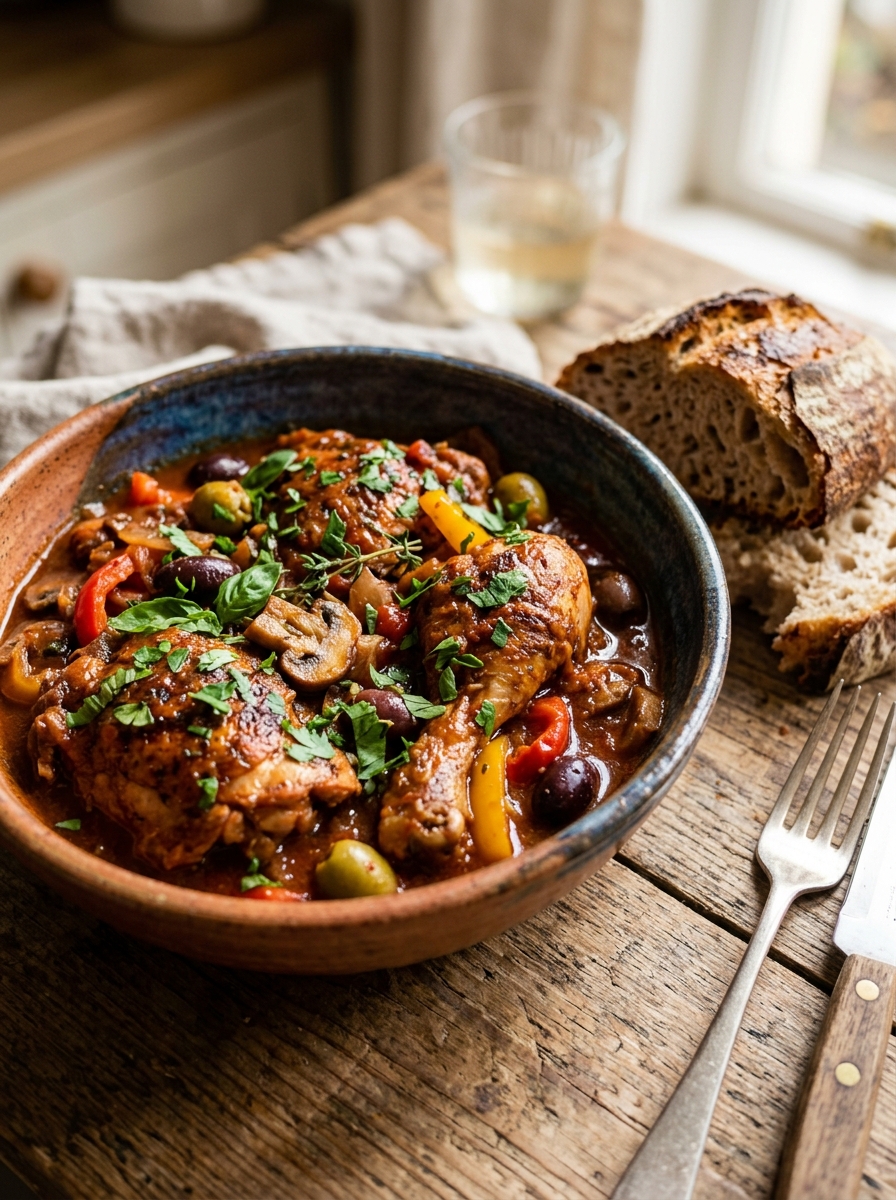
Mary Berry Chicken Cacciatore Recipe
Ingredients
Method
- Season chicken generously. Brown skin-side down in hot oil — 4–5 minutes until deeply golden. Turn — 2 minutes. Remove.
- Cook onion and red pepper in same casserole over medium heat — 8 minutes. Add sliced garlic — 2 minutes.
- Add wine — bubble vigorously 4–5 minutes until reduced by half, scraping the base.
- Add tomatoes, purée, stock, rosemary, oregano, and sugar. Season. Stir. Bring to a simmer.
- Return chicken skin-side up. Cover partially. Braise on low heat or in 160°C oven 35–40 minutes until cooked through.
- Add capers and olives — final 10 minutes. Remove rosemary. Add red wine vinegar. Taste and adjust. Scatter parsley. Drizzle olive oil. Serve.
Notes
Frequently Asked Questions
What is the difference between chicken cacciatore and chicken chasseur?
Both are hunter’s chicken braises. Cacciatore is Italian — red wine, tomatoes, capers, and olives give a more robust, darker sauce. Chasseur is French — white wine, mushrooms, and fresh tarragon give a lighter, more delicate result. Both are wonderful and both are on this site.
Can I use boneless chicken?
You can but bone-in chicken gives a significantly better result in a long braise — the bones add flavour and gelatin to the sauce, giving it body and richness. If using boneless thighs, reduce the braising time to 25 to 30 minutes.
Can I make this in a slow cooker?
Yes — brown the chicken and build the sauce as directed, then transfer to a slow cooker. Cook on LOW for 6 to 7 hours. Add capers and olives in the final 30 minutes. The skin will not stay crisp but the flavour is excellent.
Can I add mushrooms?
Yes — 200g of chestnut mushrooms caramelised until golden added with the tomatoes give an earthy depth that works beautifully in the sauce.
Is this suitable for freezing with the olives in?
Yes — olives freeze and defrost without any noticeable change in flavour or texture. The capers do the same. The whole dish freezes and reheats well.















Leave a Reply