
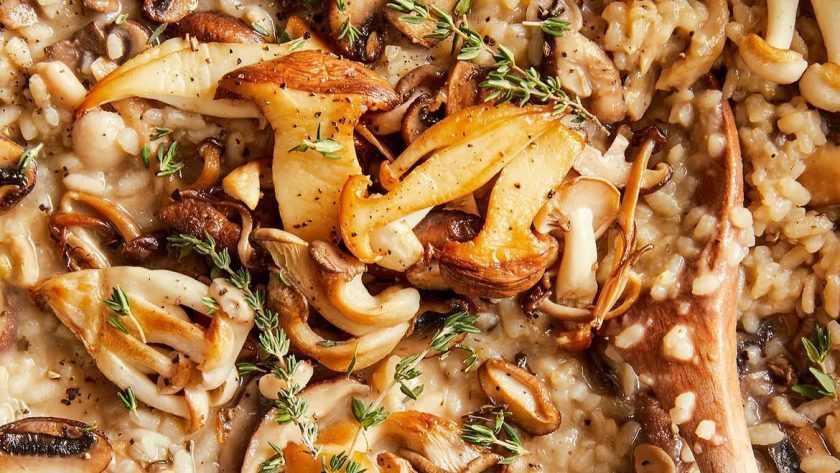
 Anna Louise
 A properly made risotto is one of the most satisfying things you can cook. Not difficult — but attentive. The rice must be added to the right temperature of liquid, the stock must go in ladleful by ladleful.
And the stirring must be consistent enough to coax the starch from the arborio and create that characteristic silky, flowing consistency that makes a great risotto completely unlike any other rice dish.
Mary Berry’s chicken and mushroom risotto builds flavour from the first moment — chicken thighs browned in butter, mushrooms caramelised in the same pan, aromatics softened, rice toasted, wine added, and then the patient ladleful-by-ladleful addition of stock that is the heart of the method.
The finishing butter and Parmesan — added off the heat and beaten in vigorously — is what gives the risotto its final glossy, unctuous texture.
This is the risotto I make when I want something genuinely comforting and impressive on a weeknight. Once you understand the method, it becomes one of the most reliable and versatile dishes in the repertoire.
The Three Principles of Perfect Risotto
Hot stock, added gradually. Cold stock shocks the rice and interrupts the cooking process. The stock must be kept simmering in a separate pan and added one ladle at a time — each addition fully absorbed before the next goes in. This gradual addition coaxes starch from the rice and builds the silky sauce.
Toast the rice before adding liquid. Two minutes of stirring the dry rice in the hot butter and shallots before any liquid goes in toasts the outside of each grain, giving it a nutty depth and helping it absorb the stock more evenly.
The mantecatura. The final step — adding cold butter and Parmesan off the heat and beating vigorously — is called mantecatura. It emulsifies the fats with the starchy cooking liquid and creates the glossy, flowing texture that defines a great risotto. Never skip this.
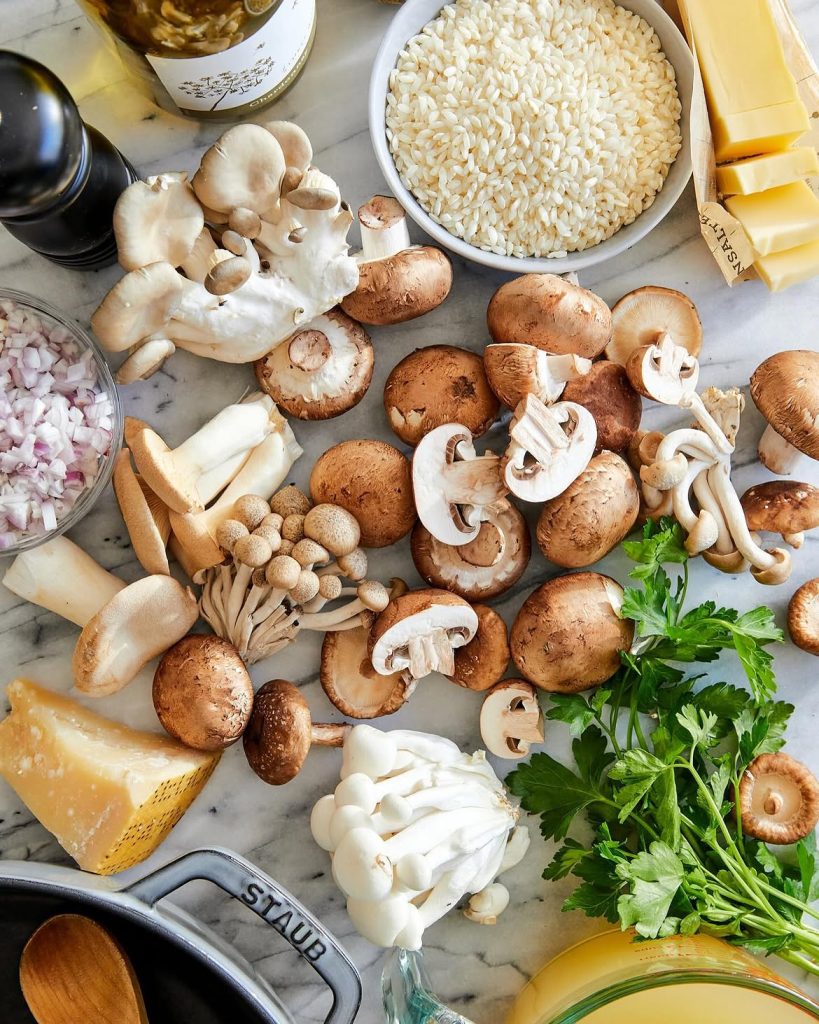
Ingredients for Mary Berry Chicken and Mushroom Risotto
- 400g boneless skinless chicken thighs, cut into 2cm pieces
- 300g chestnut mushrooms, sliced
- 50g dried porcini mushrooms, soaked in 200ml boiling water for 20 minutes
- 75g unsalted butter
- 1 tbsp olive oil
- 2 shallots or 1 small onion, very finely chopped
- 3 garlic cloves, crushed
- 350g arborio or carnaroli rice
- 150ml dry white wine
- 1.2 litres good quality chicken stock, kept hot in a separate pan
- The porcini soaking liquid, strained (approximately 150ml — add to the hot stock)
- 75g Parmesan, finely grated, plus extra to serve
- 25g cold unsalted butter, cubed (for the mantecatura)
- 2 tbsp fresh flat-leaf parsley, chopped
- Salt and freshly ground black pepper
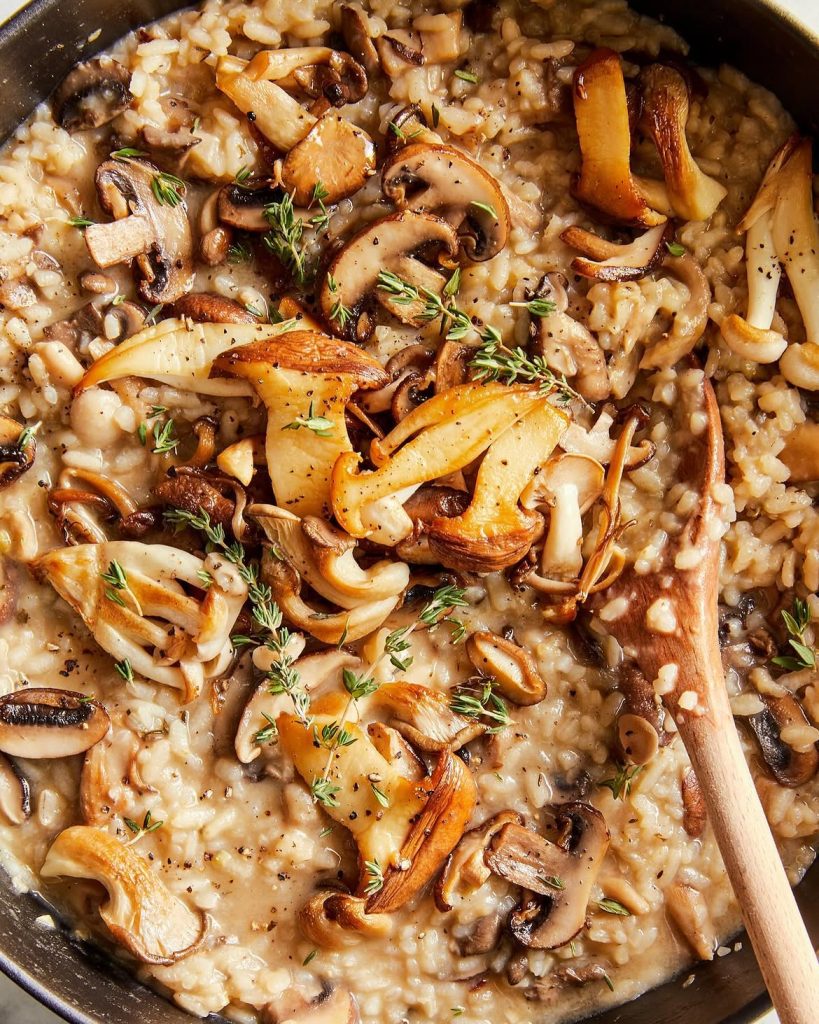
How to Make Mary Berry Chicken and Mushroom Risotto — Step by Step
Step 1 — Rehydrate the Porcini and Prepare the Stock
Soak the dried porcini in 200ml of boiling water for 20 minutes. Lift out the porcini, chop roughly, and set aside. Strain the soaking liquid carefully through a fine sieve and add to the hot chicken stock in a saucepan. Keep this combined stock at a gentle simmer throughout cooking.
Step 2 — Brown the Chicken
Melt 25g of the butter with the olive oil in a large, deep frying pan or wide saucepan over a medium-high heat. Season the chicken pieces. Brown in one layer for three to four minutes, turning once, until golden. Remove and set aside — the chicken does not need to be fully cooked at this stage.
Step 3 — Caramelise the Mushrooms
In the same pan, add another 25g of butter. Add the sliced chestnut mushrooms and the chopped rehydrated porcini. Cook over a high heat for four to five minutes, without stirring for the first two minutes, until golden and all the moisture has evaporated. Season well and remove. Set aside with the chicken.
Step 4 — Build the Risotto Base
Reduce the heat to medium. Melt the remaining 25g of butter in the same pan. Add the shallots and cook for five to six minutes until completely soft and translucent. Add the garlic and cook for one more minute.
Step 5 — Toast the Rice
Add the arborio rice to the pan. Stir continuously for two minutes until the rice grains look slightly translucent at the edges and smell faintly nutty. This toasting step is important — do not rush it.
Step 6 — Add the Wine
Pour in the white wine. Stir continuously until the wine is completely absorbed — about two minutes. The sharp smell of raw alcohol should have cooked off before the stock goes in.
Step 7 — Add the Stock Gradually
Add the hot stock one ladle at a time — approximately 100ml per addition. Stir almost continuously after each addition, keeping the rice moving so it releases its starch into the liquid. Wait until each ladle of stock is almost completely absorbed before adding the next.
This process takes 18 to 20 minutes in total. After about 15 minutes, return the browned chicken to the pan and stir through.
After 18 to 20 minutes, taste the rice. It should be tender but with a very slight bite — not chalky, not mushy. The consistency should be loose and flowing — like thick porridge rather than dry separate grains.
Step 8 — Add Mushrooms and Mantecatura
Add the caramelised mushrooms. Remove the pan from the heat. Add the cold cubed butter and grated Parmesan. Beat vigorously with a wooden spoon for one minute until the butter and cheese have emulsified into the risotto and the texture is glossy and flowing.
Taste and season generously with salt and pepper. Add the chopped parsley.
Step 9 — Serve Immediately
Risotto waits for nobody. Spoon into warm bowls immediately — the texture is at its best the moment the mantecatura is complete. Scatter with extra Parmesan and serve.
My Top Tips For Perfect Chicken and Mushroom Risotto
Keep the stock hot and add it warm. Cold stock from a jug stops the cooking process and makes the rice cook unevenly. Keep the stock at a gentle simmer in a separate saucepan throughout and add it warm, one ladle at a time.
Stir consistently but not obsessively. The starch needs agitation to release from the rice into the liquid — this is what creates the silky sauce. But constant, frantic stirring is not required. Stir every 30 seconds or so, making sure the rice does not stick to the base of the pan.
The mantecatura is the final step that makes it great. Always add cold butter and Parmesan off the heat and beat vigorously. This is not optional — it is what creates the glossy, flowing, restaurant-quality texture.
Never rinse arborio rice. Rinsing removes the surface starch that is the entire point of risotto rice. Use it exactly as it comes from the packet.
The consistency should be loose enough to flow. A great risotto spreads slightly in the bowl when it is served. If yours stands up in a pile, add another ladle of hot stock and stir vigorously.
Serving Suggestions
In warm, deep bowls immediately — this is the only way. With a glass of the same white wine used in the cooking. With a simple rocket and Parmesan salad alongside for freshness.
How to Store Chicken and Mushroom Risotto
In the fridge: Store in an airtight container for up to 2 days. Reheat gently on the hob with a splash of stock, stirring continuously — it will not be quite as silky as fresh but is still very good.
Freezing is not recommended — the texture of risotto rice suffers significantly when frozen and defrosted.
Try These Recipes
- Mary Berry Italian Chicken
- Mary Berry Honey Mustard Chicken
- Mary Berry Vegetable Lasagne
- Mary Berry Chicken And Bacon Casserole
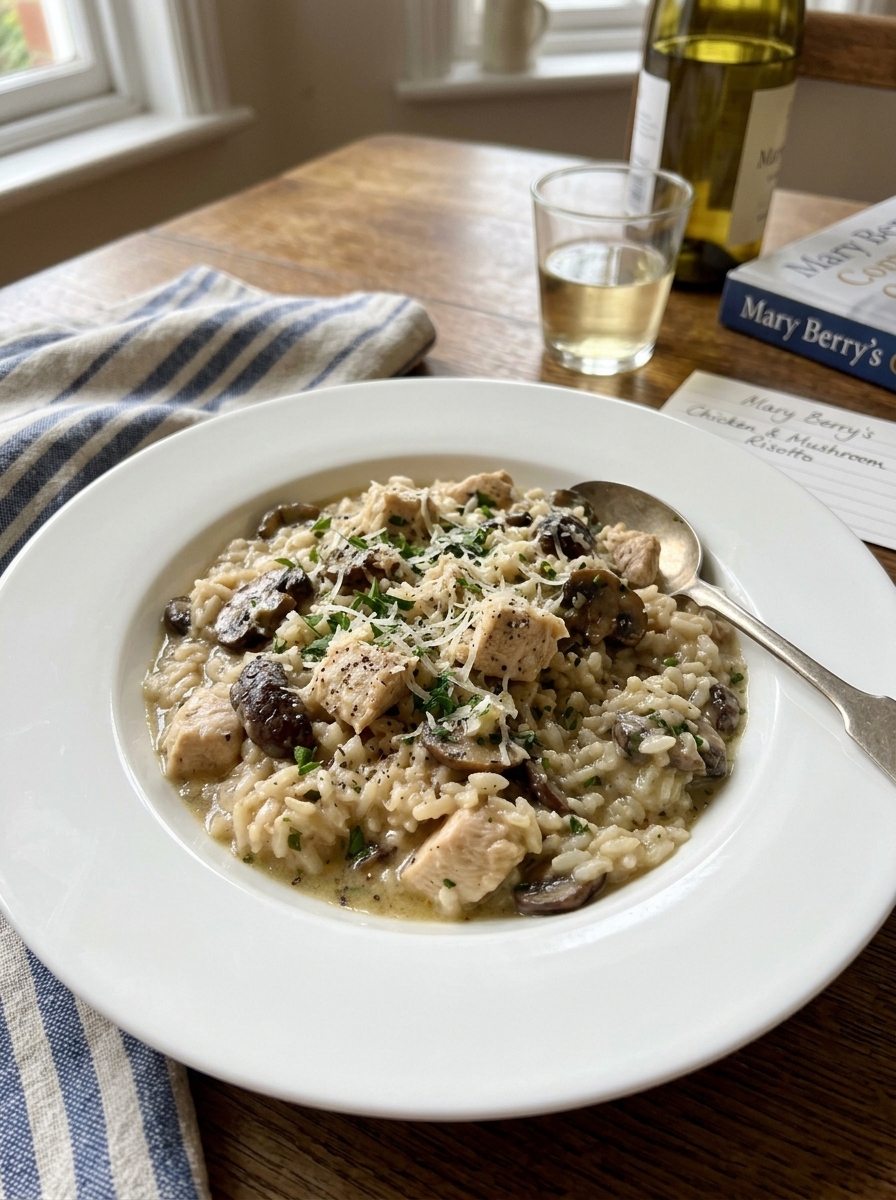
Mary Berry Chicken and Mushroom Risotto Recipe
Ingredients
Method
- Soak porcini 20 minutes. Lift out, chop. Strain liquid — add to hot stock. Keep stock at gentle simmer throughout.
- Melt 25g butter with oil. Brown chicken — 3–4 minutes. Remove.
- Add 25g butter. Cook mushrooms and porcini over high heat 4–5 minutes until golden. Remove.
- Melt remaining 25g butter. Cook shallots 5–6 minutes. Add garlic — 1 minute.
- Add rice — stir 2 minutes until slightly translucent. Add wine — stir until absorbed.
- Add hot stock 1 ladle at a time, stirring and waiting for each to absorb before adding the next — 18–20 minutes total. Return chicken after 15 minutes.
- Add mushrooms. Remove from heat. Add cold butter and Parmesan — beat vigorously 1 minute until glossy. Season. Add parsley.
- Serve immediately in warm bowls with extra Parmesan.
Notes
Frequently Asked Questions
Can I use long-grain rice instead of arborio?
No — long-grain rice does not release the starch that creates the silky texture of risotto. Arborio or carnaroli are the correct choices. Carnaroli gives a slightly firmer, more elegant result; arborio gives a creamier, more yielding one.
Can I leave out the dried porcini?
You can but you will lose a significant amount of depth and umami. The porcini and their soaking liquid are what give this risotto its earthy, complex character. If you cannot find dried porcini, increase the fresh mushrooms to 400g.
Why is my risotto stodgy rather than silky?
Either too much stock was added at once, the rice was overcooked, or the mantecatura was not done properly. Add stock gradually, taste the rice from 16 minutes, and always add cold butter and Parmesan off the heat at the end.
Can I make risotto ahead of time?
Professional restaurants par-cook risotto — cooking it to 80% done and spreading on a tray to cool, then finishing to order. At home, cook the risotto 80% through, spread on a baking tray, and refrigerate. When ready to serve, return to the pan with a ladle of hot stock and finish the final five minutes of cooking.
















Leave a Reply