
 Anna Louise
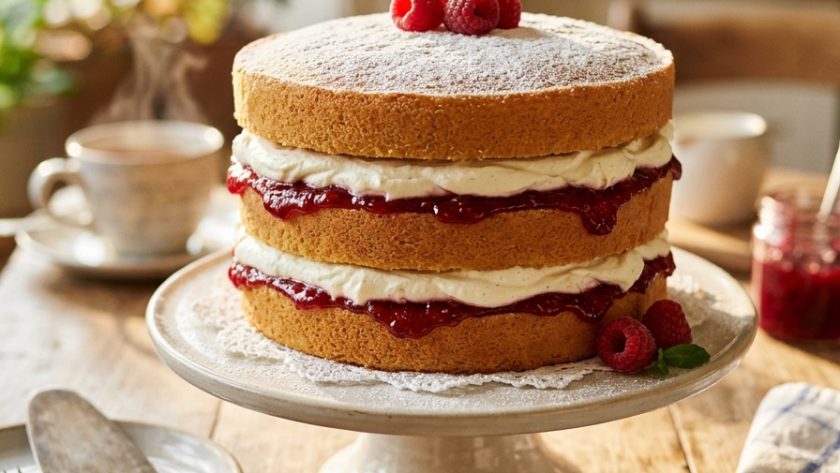
 A three-layer Victoria sponge is the version of the classic that makes the most dramatic impression on a cake stand. The same sponge, the same jam and cream filling, the same icing sugar top — but with three layers rather than two, it stands considerably taller, the cross section when sliced reveals two distinct filling layers, and the overall proportion is simply more generous and more impressive.
This is the cake for a significant celebration where the two-layer version would look slightly modest. A birthday, an anniversary, a large afternoon tea where the cake needs to be the centrepiece rather than simply one of the items on the table.
The method is identical to the standard Victoria sponge on this site — the batter is simply divided between three tins rather than two. The only additional consideration is ensuring the three sponge layers are as even as possible — which is entirely achievable with a set of kitchen scales and thirty seconds of care.
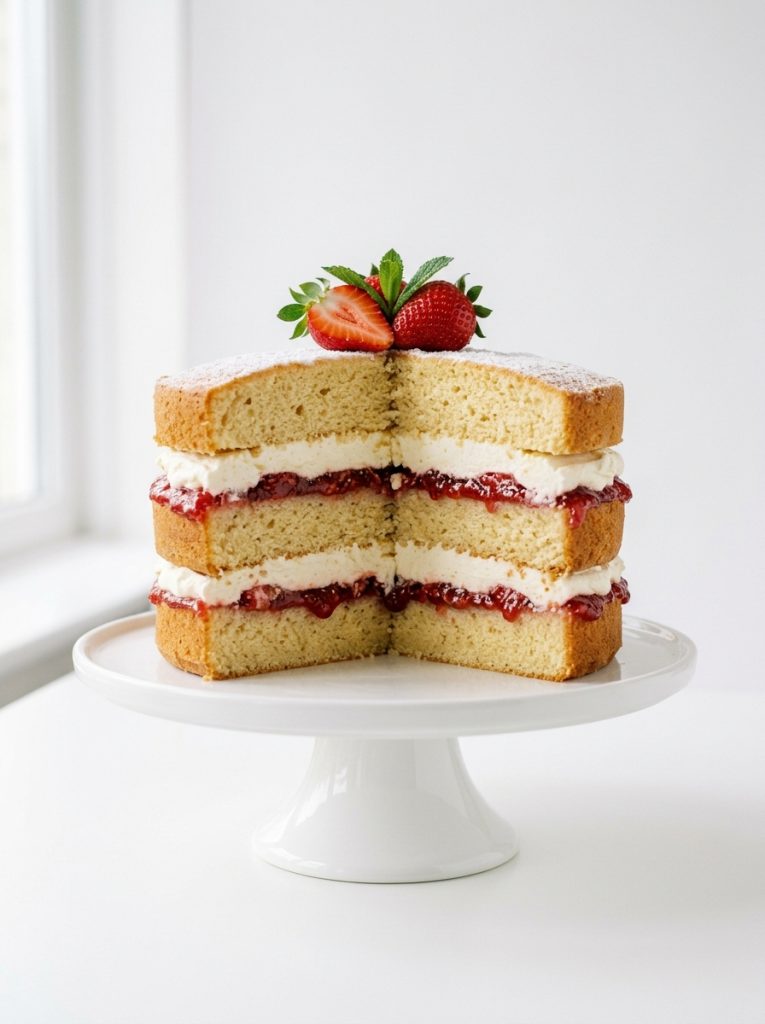
Ingredients for Mary Berry 3 Layer Victoria Sponge
For the Three-Layer Sponge
- 300g unsalted butter, softened
- 300g caster sugar
- 5 large eggs, at room temperature
- 300g self-raising flour, sifted
- 2½ tsp baking powder
- 3 tbsp whole milk
- 2 tsp vanilla extract
For the Filling (Two Layers)
- 6 tbsp good quality strawberry or raspberry jam
- 400ml double cream, cold
- 2 tbsp icing sugar
- 1 tsp vanilla extract
To Finish
- Icing sugar for dusting — generously
- Fresh strawberries or raspberries — optional but beautiful
How to Make Mary Berry 3 Layer Victoria Sponge
Step 1 — Preheat and Prepare
Preheat your oven to 180°C / 160°C fan / Gas 4. Grease three 20cm round sandwich tins and line the bases with baking parchment circles. If you only have two tins, bake in two batches — keeping the remaining batter covered at room temperature while the first batch bakes.
Step 2 — Make the Batter
Beat the softened butter and caster sugar together for four to five minutes until very pale and genuinely fluffy — the pale colour and increased volume indicate the butter has been properly aerated.
Add the eggs one at a time, beating well after each. If the mixture looks as though it might curdle, add a tablespoon of the measured flour and continue. Add the vanilla extract.
Sift the flour and baking powder directly into the bowl. Add the milk. Fold gently with a large spatula until just combined — stop at the last streak of flour.
Step 3 — Divide and Bake
Weigh the batter. Divide the total weight by three. Weigh exactly one-third into each prepared tin — this is the only way to guarantee three visually even layers in the finished cake. Spread gently.
Bake all three tins on the same shelf if space allows — or on two shelves, swapping the tins halfway through baking. Bake for 20 to 24 minutes until golden, springy, and a skewer comes out clean.
Cool in the tins for five minutes. Turn out onto wire racks. Cool completely — at least one hour.
Step 4 — Make the Cream Filling
Whip the cold double cream, icing sugar, and vanilla extract to soft, pillowy peaks — holding their shape gently when the whisk is lifted.
Step 5 — Assemble
Place the first sponge upside down on a serving plate or cake stand. Spread three tablespoons of jam generously over the surface. Spread a generous layer of whipped cream over the jam — approximately one-third of the total cream.
Place the second sponge on top — right-side up. Spread the remaining jam and another generous layer of cream.
Place the third sponge on top — right-side up. Press down very gently.
Step 6 — Finish and Serve
Dust generously with icing sugar. Add fresh strawberries or raspberries on top if using — they look beautiful and add colour and freshness.
Refrigerate for thirty minutes before slicing — the cream filling firms slightly and the cake cuts cleanly into neat slices that hold their shape.
My Top Tips For Perfect 3 Layer Victoria Sponge
Weigh the batter between tins exactly. Three even layers are the foundation of a three-layer cake that looks professional. Uneven layers result in a cake that leans, has visible uneven gaps in the filling, and does not hold together when sliced. Thirty seconds of weighing gives perfect layers every time.
The bottom sponge goes upside down — always. The flat base of the bottom sponge becomes the level surface for the jam and cream filling. The rounded top of the sponge faces upwards on the third layer, giving the characteristic dome that looks beautiful dusted with icing sugar.
Firm the cream between layers before topping. If the cream layers are too thick and too soft, the cake can slide slightly when the second and third sponges are placed on top. Spreading the cream to within 1cm of the edge rather than right to it prevents the filling from squeezing out dramatically when the next layer is pressed down.
Refrigerate before slicing. Thirty minutes of refrigeration firms the cream layers and gives a cake that slices cleanly into neat portions. A three-layer cake sliced immediately can be slightly unstable.
Three tins are genuinely worth having for this cake. Baking in batches with two tins means the third layer of batter sits at room temperature while the first two bake — which is fine, but the baking powder has already started to activate. Three tins baked simultaneously gives the most consistent results.
Serving Suggestions
On a tall cake stand where the height can be appreciated. As a celebration centrepiece. At an afternoon tea for twelve or more people — three layers give significantly more generous portions than two. At a birthday where the Victoria sponge is the right choice but a more dramatic version is wanted.
How to Store
At room temperature: Store in an airtight container or cake dome for up to 2 days. The cream requires cool storage — refrigerate if the room is warm.
In the freezer: Freeze the unfilled sponge layers individually for up to 3 months. Assemble fresh when needed.
Try These Recipes
- Mary Berry Apple And Almond Cake
- Mary Berry Coconut Loaf Cake
- Mary Berry Chocolate Fairy Cakes
- Mary Berry Apple And Blackberry Cake
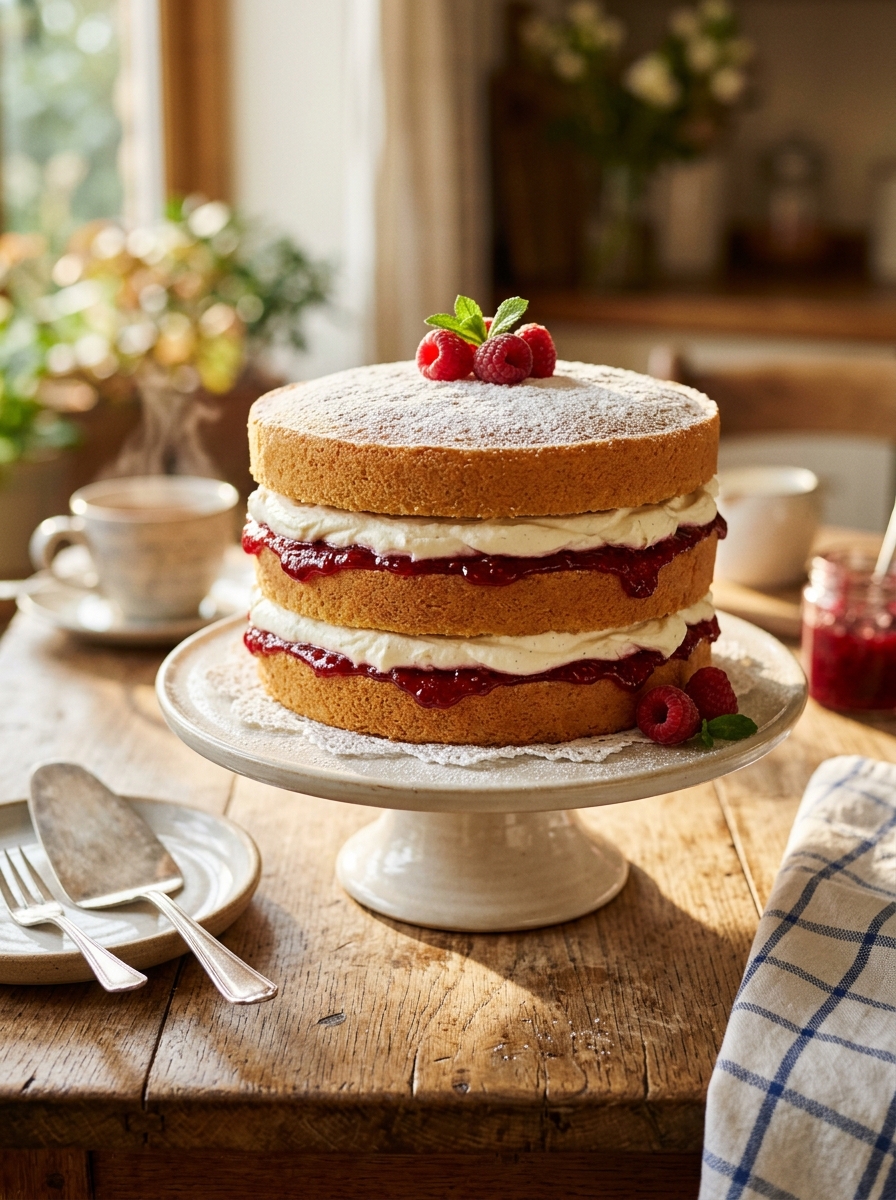
Mary Berry 3 Layer Victoria Sponge Recipe
Ingredients
Method
- Preheat oven to 180°C / 160°C fan / Gas 4. Grease and line three 20cm sandwich tins.
- Beat butter and sugar 4–5 minutes until very pale and fluffy. Add eggs one at a time — add a tbsp flour if it threatens to curdle. Add vanilla. Sift in flour and baking powder. Add milk — fold gently.
- Weigh batter. Divide exactly into thirds between tins — weigh for precision. Bake 20–24 minutes until golden and skewer comes out clean. Cool in tins 5 minutes. Cool completely on wire racks.
- Whip cold cream, icing sugar, and vanilla to soft peaks.
- Place first sponge upside down on serving plate. Spread 3 tbsp jam then one-third of the cream. Top with second sponge right-side up. Spread remaining jam and another third of cream. Top with third sponge right-side up — press gently.
- Dust generously with icing sugar. Add fresh fruit if using. Refrigerate 30 minutes before slicing.
Notes
Frequently Asked Questions
Can I use buttercream instead of whipped cream?
Yes — vanilla buttercream (see the buttercream icing recipe on this site) gives a more stable filling that does not require refrigeration and holds at room temperature for longer. Use one and a half times the standard buttercream recipe quantity for three layers.
Can I make this in a 23cm tin instead of 20cm?
Yes — a wider tin gives thinner layers that are less dramatic in height but equally delicious. The baking time reduces to 18 to 22 minutes.
Can I add fruit to the filling?
Yes — sliced fresh strawberries or raspberries placed on the cream between each layer give a fresh, slightly sharp contrast to the sweet jam and cream. Press them lightly into the cream before adding the next sponge.
How do I transport a three-layer Victoria sponge?
The best approach is to refrigerate it until completely firm and transport it in the fridge rather than at room temperature. A cake box with a firm base and enough height is essential.













Leave a Reply