
 Anna Louise
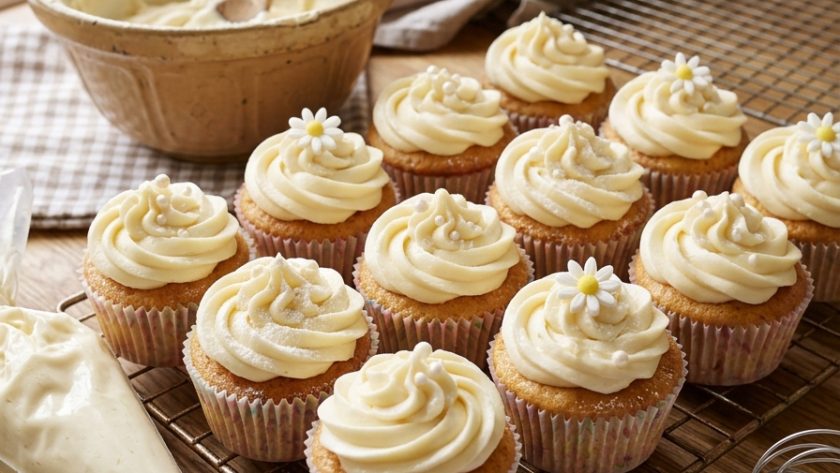
 Buttercream for cupcakes needs to do two things — taste good and pipe well. A buttercream that is delicious but collapses after piping is frustrating. A buttercream that holds its shape but tastes primarily of icing sugar is equally disappointing. This recipe achieves both.
The method is the one used consistently across all the cupcake recipes on this site — butter beaten alone for four minutes before any icing sugar is added, sifted icing sugar added in batches, a small amount of milk or cream to bring it to the right consistency, and enough vanilla extract to give genuine flavour.
The result is a buttercream that is noticeably lighter and silkier than one made by adding everything at once, pipes cleanly from a star nozzle, and holds its shape for hours at room temperature.
This is the recipe written specifically for people searching for a standalone buttercream guide — whether they are making vanilla cupcakes, birthday cupcakes, or any cupcake where a reliable, beautiful buttercream is needed.
Ingredients for Mary Berry Buttercream Icing
Basic Vanilla Buttercream (Frosts 12 cupcakes generously)
- 200g unsalted butter, at room temperature — genuinely soft, not slightly cold
- 400g icing sugar, sifted twice
- 2–3 tbsp whole milk or double cream
- 2 tsp good quality vanilla extract
- Pinch of fine salt
Flavour Variations
- Chocolate: Replace 50g icing sugar with 50g sifted good quality cocoa powder. Add an extra tablespoon of milk.
- Lemon: Replace vanilla with 2 tbsp fresh lemon juice and the zest of 1 unwaxed lemon.
- Strawberry: Replace 2 tbsp milk with 2 tbsp strawberry purée (blended fresh strawberries, sieved).
- Coffee: Dissolve 2 tsp instant espresso in 1 tbsp boiling water, cool, and add in place of vanilla.
How to Make Mary Berry Buttercream Icing
Step 1 — Beat the Butter Alone
Place the softened butter in a large bowl. Beat with an electric hand whisk on medium-high speed for four full minutes until the butter is very pale — almost white — and genuinely fluffy. Set a timer. Do not cut this short.
This step creates the aerated base that gives the finished buttercream its light, silky texture. Buttercream made by adding icing sugar to unbeaten butter is noticeably heavier and denser. Four minutes of beating butter alone makes the difference immediately apparent.
Step 2 — Add the Icing Sugar
Add the double-sifted icing sugar in three batches. Beat on low speed after each addition until incorporated — starting on low prevents an icing sugar cloud covering you and the kitchen. Once each batch is incorporated, increase to medium-high and beat for one minute before adding the next batch.
After all the icing sugar is added, the buttercream will look rough and slightly dense — this is normal at this stage.
Step 3 — Add Vanilla, Salt, and Milk
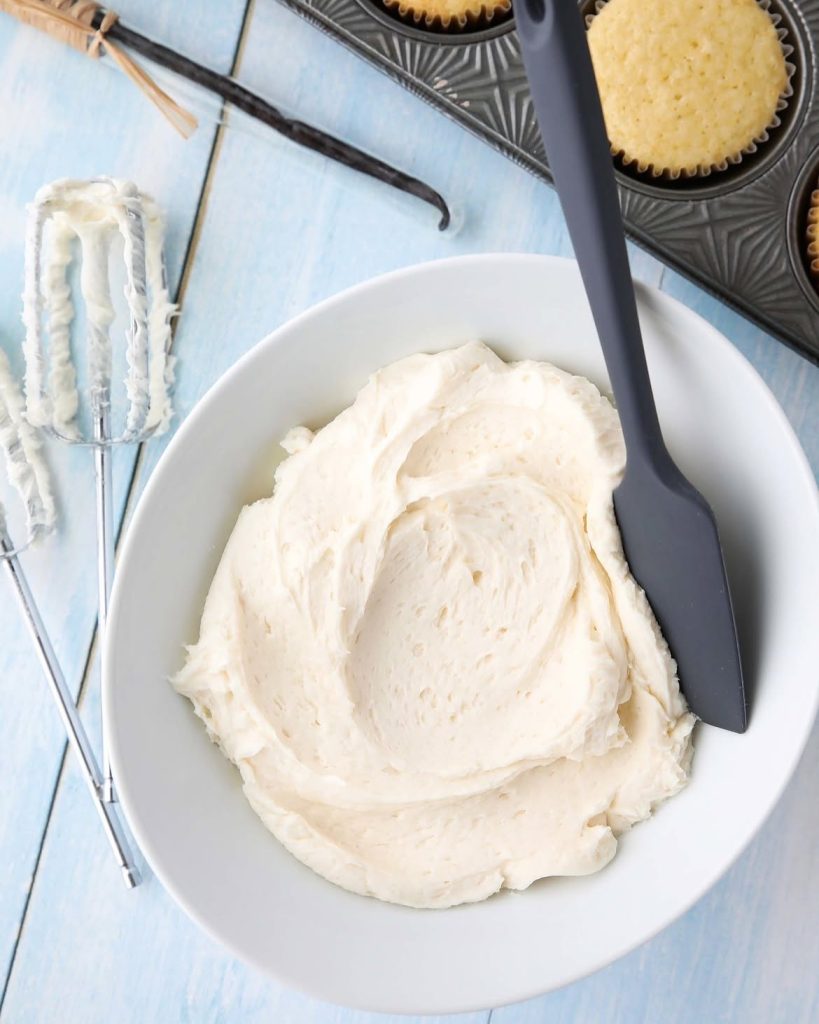
Add the vanilla extract, pinch of salt, and two tablespoons of milk or cream. Beat on medium-high for two full minutes until the buttercream transforms — it should become smooth, glossy, slightly lighter in colour, and pipeable. It should hold a firm peak when the whisk is lifted but still look soft and silky, not stiff or grainy.
If the buttercream seems too stiff, add the remaining tablespoon of milk and beat for another minute. If it seems too soft, refrigerate for fifteen minutes and it will firm to the right piping consistency.
Step 4 — Colour if Desired
If colouring the buttercream, add gel food colouring — not liquid, which can make the buttercream too wet and affect the consistency. Add a small amount, beat until evenly distributed, and build the colour gradually. Gel colours are concentrated and a little goes a very long way.
Step 5 — Pipe
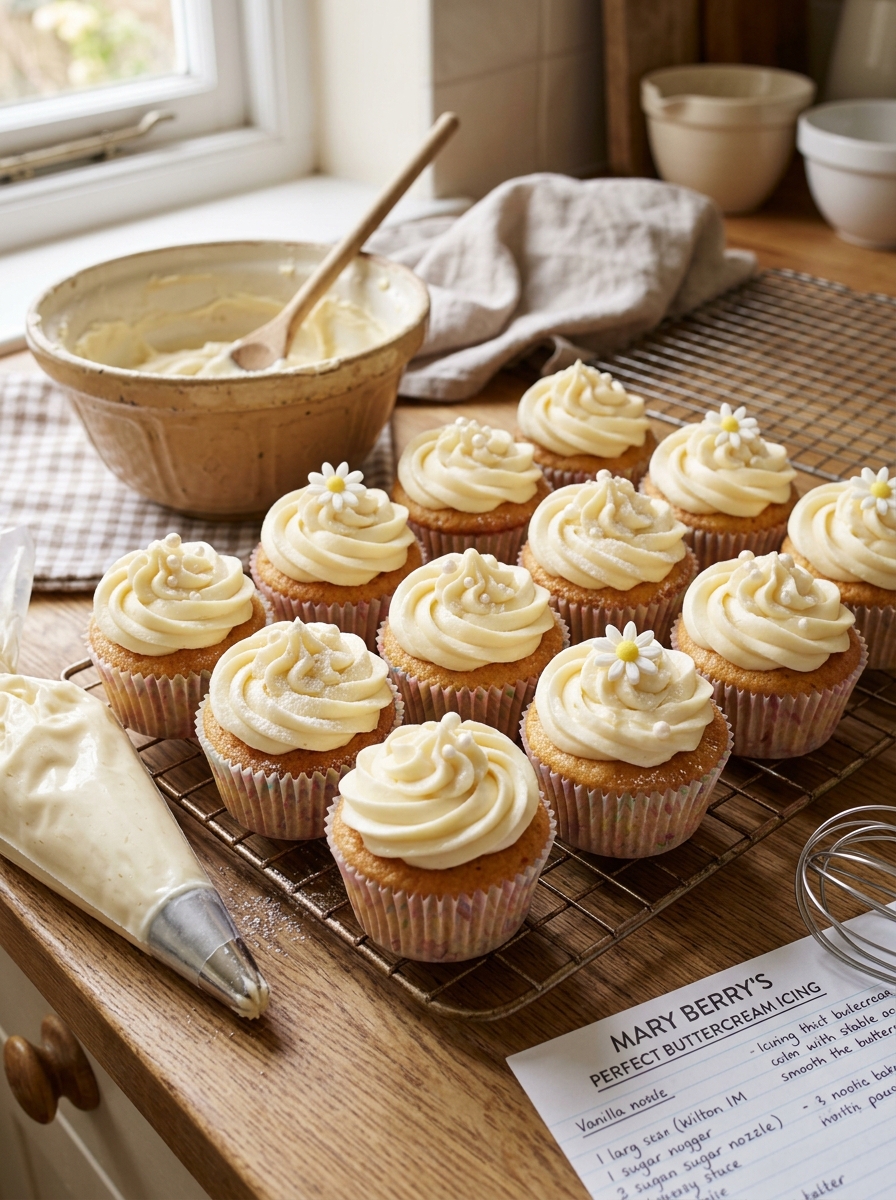
Transfer to a piping bag fitted with your chosen nozzle. A large star nozzle (1M or 2D) gives the classic swirled cupcake finish. A round nozzle gives a cleaner, more modern look.
To pipe a classic swirl: start at the outer edge of the cupcake, apply consistent pressure, spiral slowly inwards and upwards to a peak at the centre, release pressure sharply and lift.
My Top Tips For Buttercream Icing for Cupcakes
Butter must be genuinely soft. Press your finger into the butter — it should yield completely with almost no resistance. If it requires any pressure, it is not soft enough. Take it out of the fridge at least an hour before you need it. Cold butter gives grainy, lumpy buttercream that no amount of beating can fully rescue.
Sift the icing sugar twice. Once removes the lumps. Twice ensures the buttercream is completely smooth. This takes two minutes and eliminates the gritty texture that ruins otherwise good buttercream.
Four minutes of beating the butter — time it. Do not do this by feel. Set a timer. Four minutes of beating at medium-high speed transforms the butter from yellow and dense to pale and fluffy. Three minutes is not enough. Five is fine.
Add a pinch of salt. Salt cuts through the sweetness of the icing sugar and brings out the vanilla flavour. Without it, buttercream can taste one-dimensionally sweet. With it, it tastes balanced and complex.
Gel colouring only. Liquid food colouring adds water to the buttercream and can make it too soft to pipe well. Gel colouring is oil-based and does not affect the consistency.
If the buttercream is too soft, refrigerate — do not add more icing sugar. Adding more icing sugar when the buttercream is too soft makes it sweeter and heavier without necessarily solving the consistency problem. Fifteen minutes in the fridge firms it to the perfect piping consistency.
Common Problems and Solutions
Buttercream is grainy: The butter was too cold or the icing sugar was not sifted. Beat for longer — the heat from the motor can sometimes smooth out slight graininess.
Buttercream is too stiff: Add milk one teaspoon at a time and beat. Too much at once can make it suddenly too soft.
Buttercream is too soft: Refrigerate for 15 to 20 minutes, then beat briefly before using.
Buttercream looks separated or curdled: Usually because the milk was added too quickly or was cold. Beat vigorously and it usually comes back together. If not, add a tablespoon of sifted icing sugar and beat again.
Piping is inconsistent: Consistent pressure throughout the piping is the key skill. Practice on a piece of baking parchment before piping onto cupcakes — any imperfect attempts can be scraped off and repiped.
How to Store Buttercream Icing for Cupcakes
Buttercream (unused): Store in a sealed container in the fridge for up to 5 days. Bring to room temperature and beat briefly before using.
Frosted cupcakes: Store at room temperature for up to 2 days — refrigerating makes the buttercream firm and less pleasant. If the room is very warm, refrigerate and bring back to room temperature for thirty minutes before serving.
In the freezer: Freeze the buttercream in a sealed container for up to 3 months. Defrost overnight in the fridge, bring to room temperature, and beat until smooth before using.
Try These Recipes
- Mary Berry Malteser Cheesecake
- Mary Berry No Bake Vanilla Cheesecake
- Mary Berry Raspberry And White Chocolate Cheesecake
- Mary Berry Biscoff Cheesecake
Mary Berry Buttercream Icing for Cupcakes Recipe
Ingredients
Method
- Beat softened butter alone on medium-high speed for 4 full minutes until very pale and fluffy — set a timer.
- Add double-sifted icing sugar in 3 batches. Beat on low then medium-high after each addition — 1 minute per batch.
- Add vanilla extract, salt, and 2 tbsp milk. Beat on medium-high for 2 full minutes until smooth, glossy, and pipeable. Add remaining milk if too stiff.
- Add gel colouring if using — gradually, beating between each addition.
- Transfer to a piping bag fitted with a large star nozzle. Pipe immediately or refrigerate until needed.
Notes
Frequently Asked Questions
How much buttercream do I need for 12 cupcakes?
This recipe — 200g butter and 400g icing sugar — gives a generous amount for 12 cupcakes piped with a large star nozzle. For a smaller swirl, it will frost 14 to 16 cupcakes.
Can I make Swiss meringue buttercream instead?
Swiss meringue buttercream — made from cooked egg whites and butter — is less sweet and more silky than American-style buttercream. It requires more skill and equipment. This recipe is the reliable, accessible version that works for everyday cupcake baking.
Can I use salted butter?
You can but the salt content is unpredictable and you may over-salt the buttercream. Unsalted butter with a measured pinch of salt gives more control.
Can I make this dairy-free?
Yes — use a good quality dairy-free block butter (not spread) and plant-based milk. The result is very similar to the standard version.
How do I get a perfectly smooth swirl?
Consistent pressure from start to finish. Begin with more pressure, maintain it evenly throughout, and release sharply at the peak. Practice is the only teacher here — piping on parchment before the cupcakes is always worth doing.













Leave a Reply