
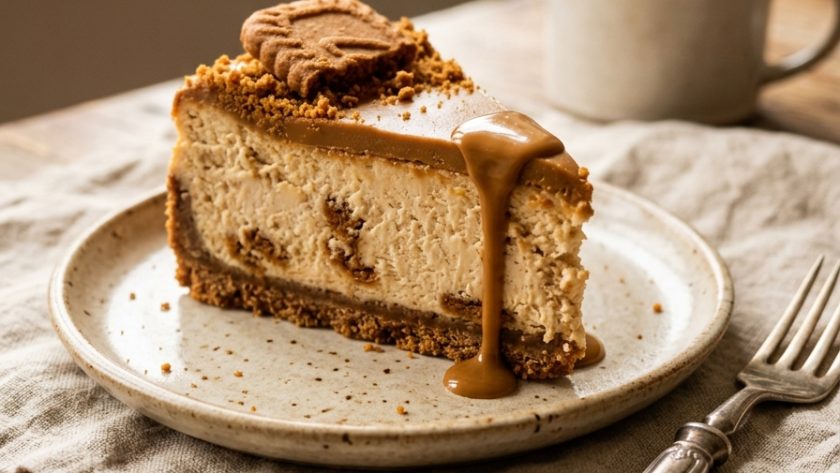
 Anna Louise
 If you know someone who is obsessed with Biscoff — and there are a lot of these people, and they are very enthusiastic about their obsession — this is the cake you make for their birthday.
It has Biscoff in the base, Biscoff stirred through the filling, and a generous drizzle of Biscoff spread over the top. By the time you have finished making it, the kitchen smells like a very good Belgian café and everyone who walks past wants to know what you are making.
Biscoff biscuits — the caramelised, warmly spiced speculoos biscuits that come with a coffee in half the cafés in Europe — give a cheesecake base that is noticeably more interesting than plain digestives.
The spice and caramel notes of the biscuits carry through the base and into the filling in a way that gives the whole cheesecake a warm, slightly exotic character.
Biscoff spread — the smooth, caramelised, addictively good spread made from the same biscuits — stirred through the cream cheese filling gives the flavour of the biscuit throughout every bite of the filling. And drizzled over the top it sets to a glossy, beautiful finish.
This is not a subtle cheesecake. It is unapologetically, gloriously Biscoff from top to bottom.
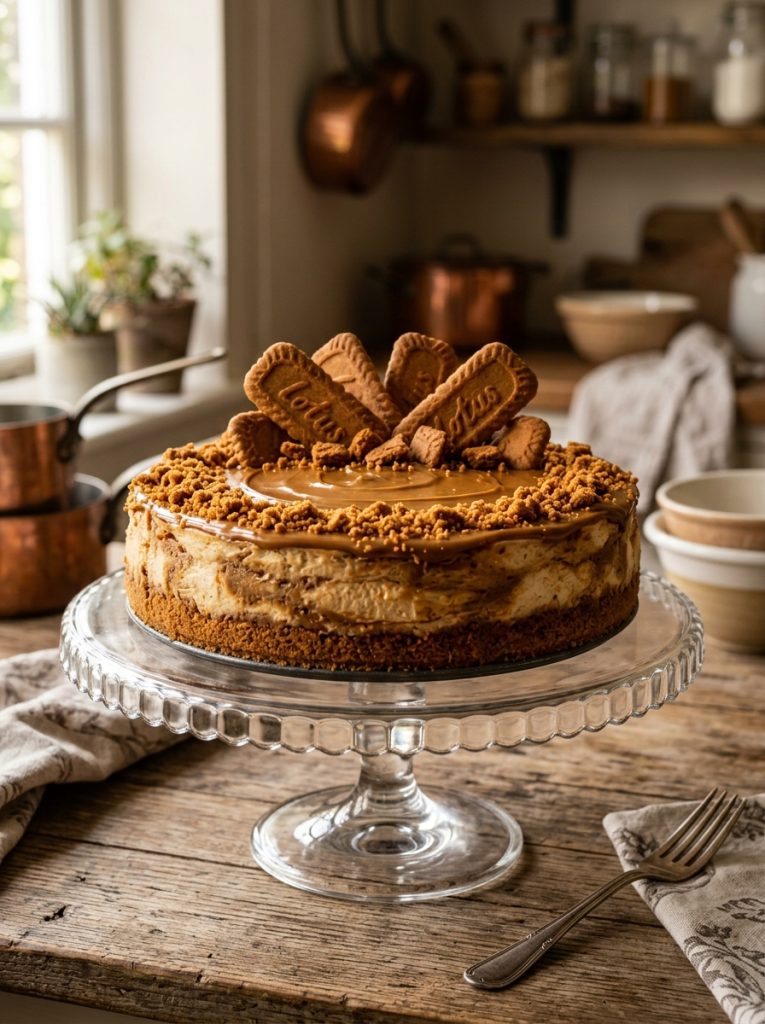
Ingredients for Mary Berry Biscoff Cheesecake
For the Biscoff Biscuit Base
- 300g Biscoff biscuits (Lotus speculoos), crushed to fine crumbs
- 150g unsalted butter, melted
- 1 tbsp soft light brown sugar
For the Biscoff Cheesecake Filling
- 600g full-fat cream cheese, at room temperature
- 125g icing sugar, sifted
- 200g smooth Biscoff spread, at room temperature
- 300ml double cream, cold
- 1 tsp vanilla extract
For the Decoration
- 100g smooth Biscoff spread, warmed until drizzleable
- 6 whole Biscoff biscuits, to decorate
- A little finely crushed Biscoff for scattering
How to Make Mary Berry Biscoff Cheesecake
Step 1 — Make the Biscoff Base
Combine the crushed Biscoff biscuits, melted butter, and soft light brown sugar. The mixture will smell incredible — the warmly spiced biscuit with melted butter is genuinely wonderful.
Press very firmly into a 23cm round loose-bottomed springform tin using the base of a flat glass — particularly firmly at the edges. Refrigerate for 30 minutes until completely set and firm.
Step 2 — Make the Biscoff Filling
Beat the room-temperature cream cheese and icing sugar together until completely smooth — two to three minutes. Add the room-temperature Biscoff spread and vanilla extract. Beat until completely combined and smooth. The mixture will be thick and a warm caramel colour — it should smell wonderful.
In a separate bowl, whip the cold double cream to soft peaks — billowy and holding a gentle shape.
Fold the whipped cream into the Biscoff cream cheese mixture in two additions — gently, preserving the air. Stop the moment no white streaks remain.
Step 3 — Fill and Set
Spoon the Biscoff filling onto the chilled base. Spread evenly with a palette knife. Smooth the surface as much as possible — dip the knife in hot water and wipe dry for the smoothest finish.
Cover loosely with cling film and refrigerate overnight — eight hours minimum. This cheesecake has more fat from the Biscoff spread than a plain version and needs the full overnight set to be firm enough to slice cleanly.
Step 4 — Decorate
Run a thin palette knife around the edge. Release the springform sides slowly. Slide onto a serving plate.
Warm the Biscoff spread for twenty seconds in the microwave until fluid and drizzleable. Drizzle generously over the top of the cheesecake in whatever pattern pleases you — I usually do a zigzag across the whole surface and let it drip down the sides slightly.
Press the whole Biscoff biscuits around the outer edge of the top of the cheesecake — one per slice if you are cutting into eight portions, which looks very neat. Scatter a little crushed Biscoff over the surface.
Top Tips For Perfect Biscoff Cheesecake
Use only smooth Biscoff spread for the filling. The crunchy version has small pieces of biscuit that give a slightly uneven, slightly grainy texture when beaten into cream cheese. Smooth gives a perfectly silky, evenly flavoured filling.
Biscoff spread must be at room temperature for the filling. Cold spread is stiff and does not combine smoothly into the cream cheese — it leaves lumps rather than blending evenly. Room temperature Biscoff spread is the consistency of thick peanut butter and incorporates beautifully.
Press the base very firmly. Biscoff biscuits are slightly different in texture from digestive biscuits — they crush to a slightly oilier, slightly more fragile crumb. Press with real force and refrigerate for the full 30 minutes before filling.
Refrigerate overnight — this cheesecake needs it. The Biscoff spread adds a significant amount of fat to the filling, which you might think would help it set faster. In practice the filling is slightly softer than a plain cream cheese version until it has had the full overnight in the fridge.
Warm the drizzle just enough to be pourable. Biscoff spread that is too hot becomes very fluid and runs off the cheesecake rather than setting in attractive drizzle lines. Twenty seconds in the microwave gives the right consistency.
Serving Suggestions
At a birthday party for a Biscoff enthusiast — obvious and essential. At any gathering where you want to make people extremely happy with minimum effort.
As a dinner party dessert — it can be made two days ahead and refrigerated. With a cup of strong coffee alongside — the Biscoff and coffee combination is genuinely perfect.
How to Store Biscoff Cheesecake
In the fridge: Store covered for up to 3 days. The Biscoff filling stays firm and the flavour remains excellent.
In the freezer: Freeze without the decorative drizzle and biscuits for up to 2 months. Wrap tightly. Defrost overnight in the fridge and decorate fresh.
Try These Recipes
- Mary Berry Raspberry And White Chocolate Cheesecake
- Mary Berry Chocolate Biscuit Cake
- Mary Berry Apple And Cinnamon Cake
- Mary Berry Chocolate Chip Banana Bread
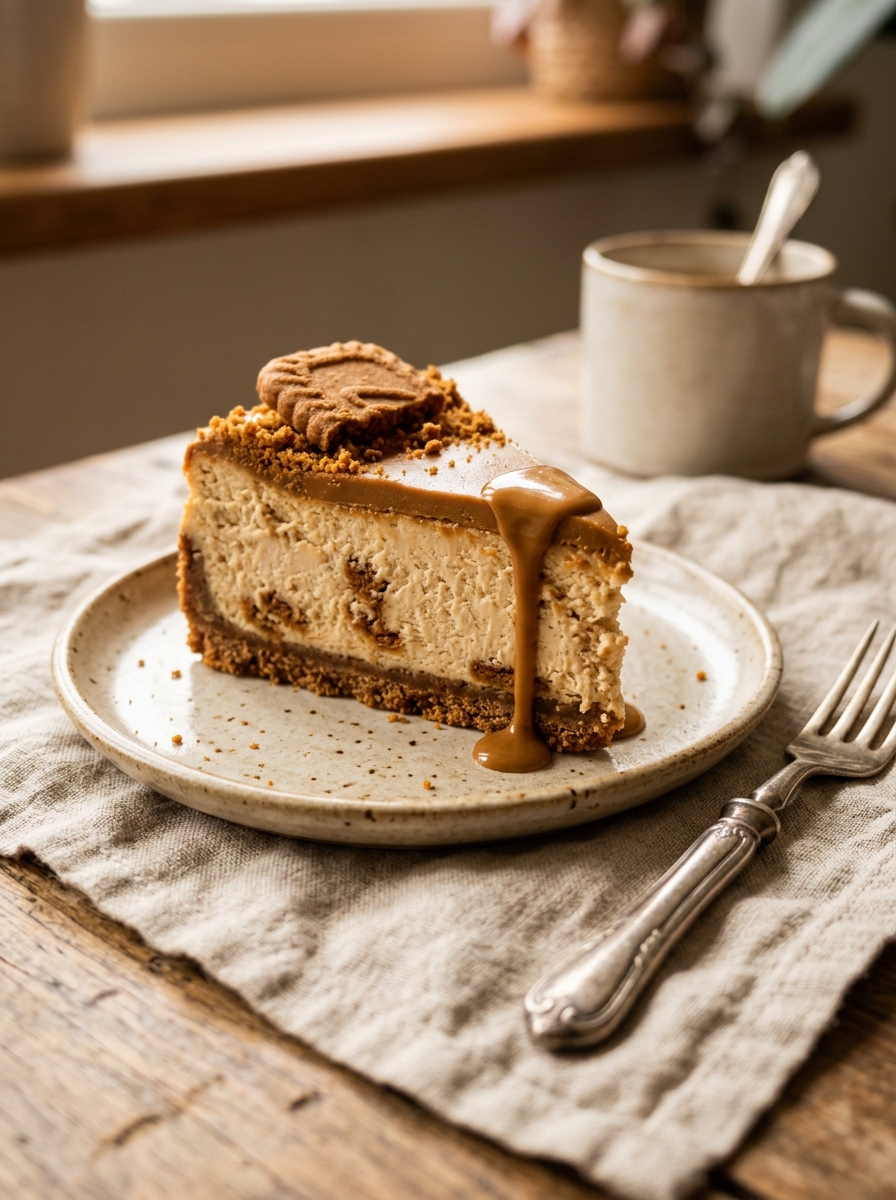
Mary Berry Biscoff Cheesecake Recipe
Ingredients
Method
- Combine crushed Biscoff biscuits, melted butter, and brown sugar. Press very firmly into a 23cm springform tin. Refrigerate 30 minutes.
- Beat room-temperature cream cheese and icing sugar until smooth. Add room-temperature Biscoff spread and vanilla — beat until completely combined.
- Whip cold cream to soft peaks. Fold into Biscoff mixture in two additions until just combined.
- Spoon onto base. Spread evenly. Smooth surface. Cover loosely. Refrigerate overnight.
- Release tin. Warm Biscoff spread 20 seconds — drizzle generously over the top. Press whole biscuits around the edge. Scatter crushed Biscoff.
Notes
Frequently Asked Questions
Can I use Speculoos spread instead of Biscoff?
Yes — Biscoff and Speculoos are essentially the same product from different brands. Use whichever you can find. The flavour is virtually identical.
Can I make this with a Digestive base instead of Biscoff biscuits?
You can but you lose the spiced, caramelised biscuit flavour in the base that makes this cheesecake so specific. Digestives give a more neutral base that lets the Biscoff filling speak for itself — not bad but different.
Can I add Biscoff spread between the base and the filling?
Yes — spread three tablespoons of Biscoff over the chilled base before adding the filling. It gives an extra concentrated layer of Biscoff flavour that people discover with great delight when the cheesecake is sliced.
Why is my Biscoff cheesecake not setting?
The Biscoff spread can make the filling softer than a plain version. Make sure you used full-fat cream cheese at room temperature, whipped the cream to proper soft peaks, and refrigerated overnight. If still too soft after overnight, it will not firm further but is still delicious served in glasses as a mousse.
Can I make this without a springform tin?
You can use a deep dish or a rectangular baking dish — but removal will be tricky. A springform tin is really the right tool for cheesecake. If you do not have one, line a deep dish with cling film so you can lift the cheesecake out.














Leave a Reply