
 Anna Louise
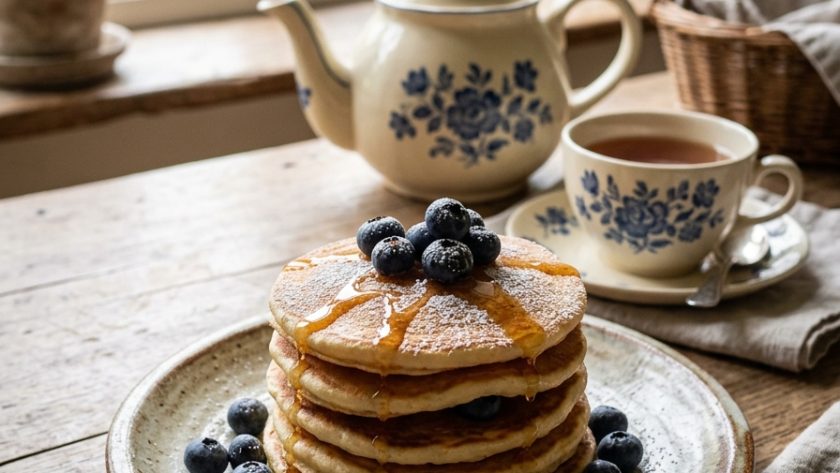
 Drop scones are one of those things that people from Scotland and the north of England grow up knowing about and people from elsewhere discover with a genuine sense of delight when they try them for the first time.
Small, thick, slightly spongy pancakes — much smaller and thicker than a standard British pancake, made from a thicker batter, cooked on a griddle or flat pan — golden on both sides and completely wonderful with a generous spread of butter and a drizzle of golden syrup or good jam.
Mary Berry has been making drop scones her whole life. They appear in her earliest cookbooks, they have appeared on television, and they are — she has said on several occasions — one of her favourite quick bakes. The recipe is simple, the ingredients are always in the cupboard, and they are ready from start to plate in about twenty minutes.
I make them on Sunday mornings when I want something a little more interesting than toast and a little less demanding than a full cooked breakfast. They are also the thing I make when unexpected guests arrive and I need something warm and homemade quickly.
Drop Scones Versus British Pancakes Versus American Pancakes
All three are made from batter and cooked in a pan. But they are quite different things.
British pancakes (Shrove Tuesday pancakes) are thin, flat, and large — more like a crêpe. Made with a thin, liquid batter. Cooked to fill the entire pan.
American pancakes (buttermilk pancakes — see the recipe on this site) are thick, fluffy, and large — made with buttermilk and baking powder, sized to fill most of the pan.
Drop scones / Scotch pancakes are small, thick, and slightly spongy — about 8cm across and 1cm thick. Made with a thicker batter, dropped by the spoonful onto a hot surface. Cooked in batches of four or five at a time.
Drop scones have a slightly denser, more substantial texture than American pancakes — more like a light bread than a fluffy cake — and a flavour that is slightly more savoury, which makes them equally good with sweet toppings or savoury ones.
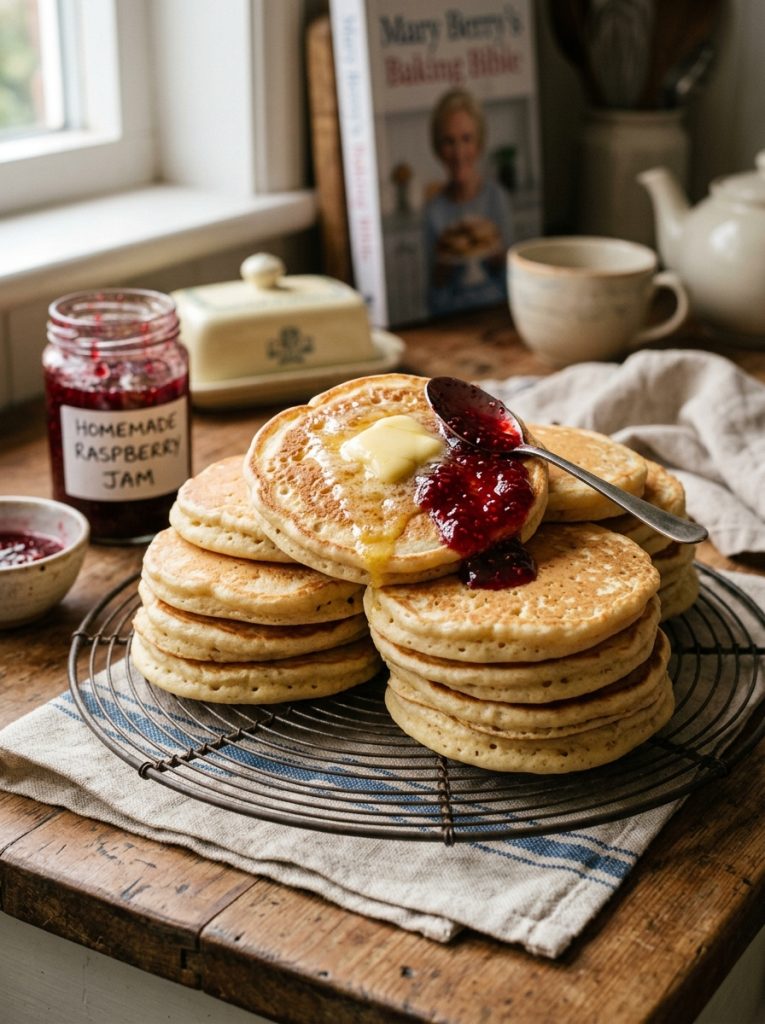
Ingredients for Mary Berry Drop Scones / Scotch Pancakes
For the Drop Scones (Makes about 20)
- 225g plain flour, sifted
- 2 tsp baking powder
- 1 tsp caster sugar (just enough — these are only slightly sweet)
- ½ tsp fine salt
- 2 large eggs, beaten
- 250ml whole milk
- 1 tbsp sunflower oil or melted butter
- A small knob of butter or a little sunflower oil for cooking
To Serve
- Cold salted butter — generously applied
- Golden syrup or good quality jam — the traditional choices
- Clotted cream and jam for something more indulgent
- Or try them with smoked salmon and crème fraîche — surprisingly excellent
How to Make Mary Berry Drop Scones / Scotch Pancakes
Step 1 — Make the Batter
Sift the flour, baking powder, sugar, and salt into a large bowl. Make a well in the centre.
Add the beaten eggs and about half the milk to the well. Beat with a wooden spoon or whisk, gradually drawing in the flour from the sides, until you have a smooth, thick batter. Add the remaining milk and the oil or melted butter. Beat until smooth.
The batter should be thick enough to drop from a spoon in a slow, heavy drip — not pourable and not stiff. If it seems too thick, add a tablespoon or two more milk.
Leave to rest for five minutes. This allows the baking powder to begin activating and gives slightly better-risen drop scones.
Step 2 — Heat the Pan
Heat a large, flat non-stick frying pan or griddle over a medium heat. Add a small knob of butter — just enough to coat the surface lightly. When the butter stops foaming and the surface looks barely greasy, the pan is at the right temperature.
The heat should be medium — not high. Drop scones need time to cook through before the outside overbrowns.
Step 3 — Cook the Drop Scones
Drop heaped tablespoons of batter onto the hot surface — about three or four at a time, spacing them a few centimetres apart. Each drop of batter should settle into a round of about 8cm across.
Cook for two to three minutes until bubbles appear across the entire surface and the edges look dry and set. The base should be golden when lifted to check.
Flip with a palette knife or spatula in one confident movement. Cook for a further one to two minutes on the second side until golden. Both sides should be an even, attractive golden brown.
Step 4 — Keep Warm and Continue
Transfer to a warm plate and cover with a clean tea towel — this keeps them warm and soft while you cook the remaining batches. Continue cooking in batches until all the batter is used.
Step 5 — Serve
Serve warm, stacked in a small pile, with cold salted butter and golden syrup or jam alongside. The butter should melt on contact with the warm drop scone — this is the correct and only acceptable state.
My Top Tips For Perfect Drop Scones Pancakes
Medium heat — always. Drop scones need two to three minutes on the first side to cook through. High heat gives a dark, slightly burnt exterior before the inside is done. Medium heat gives that even, golden colour and a properly cooked interior every time.
Look for bubbles before flipping. The bubbles that appear across the surface of a drop scone as it cooks are CO2 escaping from the baking powder. When they cover the whole surface and the edges look dry, the first side is done. If you flip before the bubbles cover the surface, the inside will be undercooked.
Consistent size makes consistent cooking. A heaped tablespoon per drop scone gives a consistent size that cooks in the same time. Vary the size and some will be done before others.
Keep them warm under a tea towel. A pile of drop scones cooling on a plate without a covering dries out quickly on the surface. A tea towel keeps them warm and soft between batches.
Rest the batter for five minutes. The baking powder needs a little time to activate and the resting also allows the gluten to relax slightly, giving a lighter, more tender drop scone.
Serving Suggestions
With cold salted butter and golden syrup — the most traditional and completely right. With clotted cream and good strawberry jam for a Scottish cream tea version.
With smoked salmon, crème fraîche, and a little lemon juice for an elegant savoury version. As part of a weekend breakfast spread with bacon, eggs, and fresh orange juice.
How to Store Drop Scones Pancakes
At room temperature: Best eaten within an hour of making. Store in an airtight container for up to 2 days — warm briefly in a low oven or toaster to refresh.
In the freezer: Freeze in an airtight container with parchment between each scone for up to 3 months. Toast from frozen in a toaster or warm in a 180°C oven for five minutes. They are excellent toasted from frozen.
Try These Recipes
- Mary Berry Simple Pancake Mixture
- Mary Berry 2 Egg Yorkshire Pudding
- Mary Berry Plain Scones
- Mary Berry Fruit Loaf
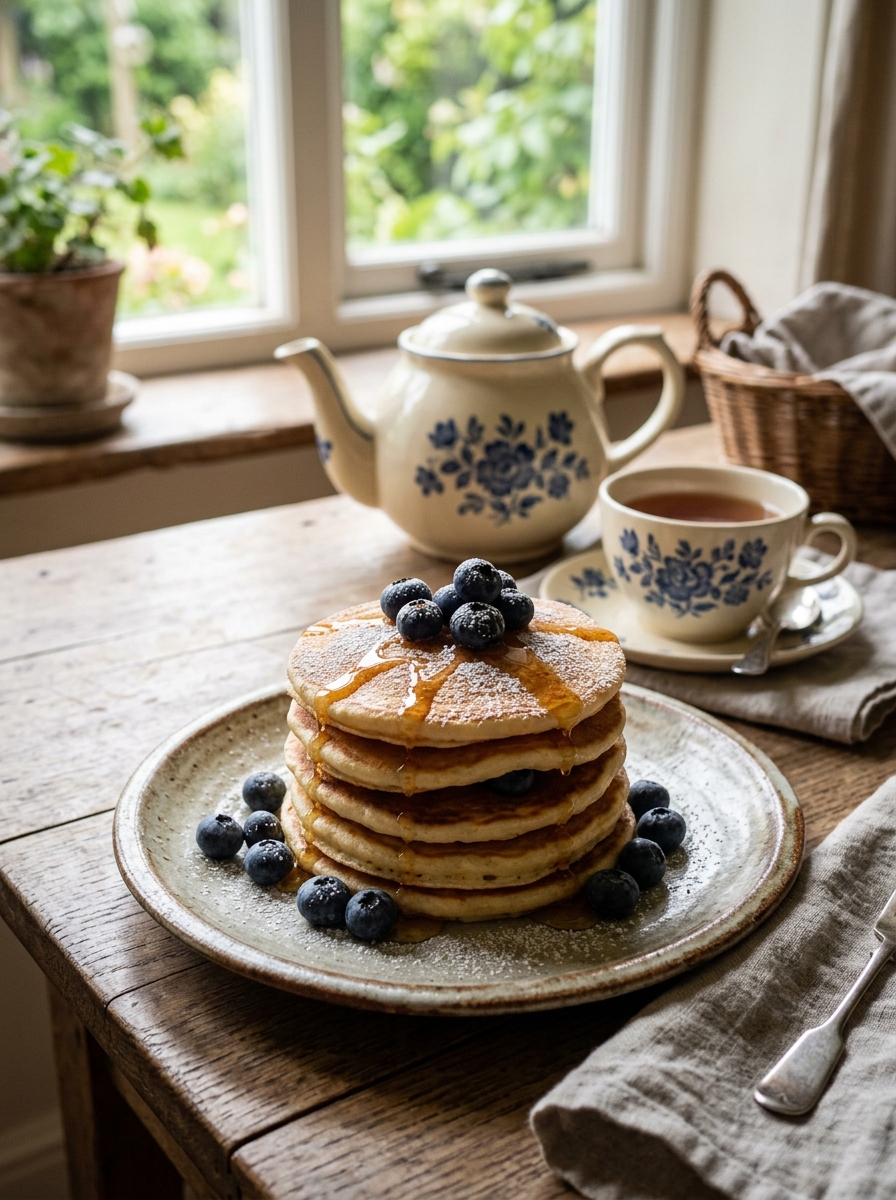
Mary Berry Drop Scones Pancakes Recipe
Ingredients
Method
- Sift flour, baking powder, sugar, and salt into a large bowl. Make a well.
- Add beaten eggs and half the milk. Beat, drawing in flour from the sides, until smooth. Add remaining milk and oil — beat until smooth. Rest 5 minutes.
- Heat a large flat non-stick pan over medium heat. Add a small knob of butter — let it melt and stop foaming.
- Drop heaped tablespoons of batter onto the surface — 3 or 4 at a time, spaced apart. Cook 2–3 minutes until bubbles appear across the entire surface and edges look dry and set.
- Flip with a palette knife — cook 1–2 minutes on second side until golden.
- Transfer to a warm plate under a clean tea towel. Continue in batches. Serve warm with cold butter and syrup or jam.
Notes
Frequently Asked Questions
What is the difference between drop scones and Scotch pancakes?
They are the same thing — just different names depending on where you are in Britain. Drop scones is the more common English name. Scotch pancakes is the Scottish name. The recipe is identical.
Can I make these with buttermilk?
Yes — replace the whole milk with buttermilk for a slightly tangier, slightly more tender drop scone. Add half a teaspoon of bicarbonate of soda to the batter if using buttermilk and reduce the baking powder to one teaspoon.
Can I add fruit to the batter?
Yes — fresh blueberries, dried currants, or finely diced apple folded through the batter are all traditional additions. Dried fruit was the most common addition in older recipes.
Can I make these savoury?
Yes — omit the sugar and add a pinch of white pepper. They make excellent vehicles for smoked salmon, cream cheese, or savoury toppings.
Why are my drop scones flat?
Either the baking powder was old and inactive, the batter was too thin, or the pan was too hot and the scones spread before they could rise. Check the baking powder date, make sure the batter is thick enough to drop slowly, and use a medium heat.














Leave a Reply