
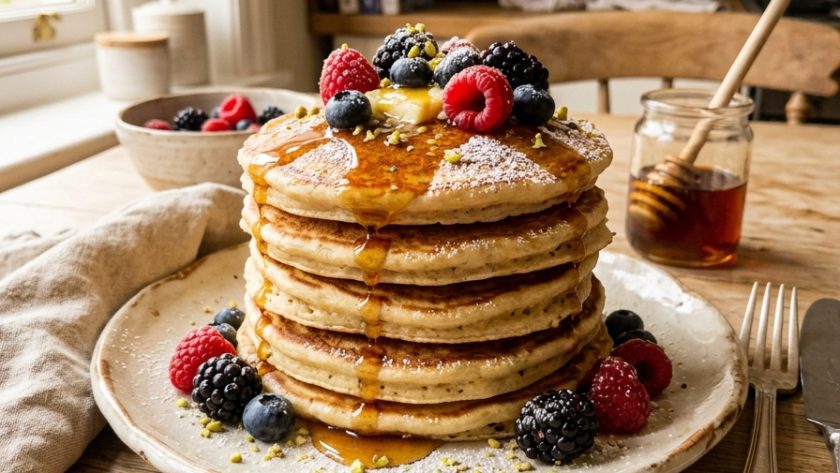
 Anna Louise
 Every home cook should be able to make a pancake without looking at a recipe. Not because it is particularly impressive to know by heart — though it is genuinely useful — but because it takes about three minutes to make the batter, uses ingredients that are always in the kitchen, and produces something that makes people genuinely happy.
This is the classic British pancake recipe — the thin, slightly lacy, crepe-style pancake that we make on Shrove Tuesday and that, frankly, we should be making much more often throughout the year.
Not the thick American pancakes with buttermilk and baking powder from the pancakes recipe on this site — this is the simple, traditional version. Thin, flexible, slightly golden, and completely wonderful with a squeeze of lemon and a dusting of caster sugar.
Mary Berry’s simple pancake mixture is exactly that — simple. Plain flour, eggs, milk, a pinch of salt. Mixed together until smooth, rested for thirty minutes, cooked in a hot pan with the thinnest possible coating of butter. That is the entire recipe. Knowing it by heart is genuinely useful.
The Resting Time Is Not Optional
Almost every pancake recipe says to rest the batter and almost everyone ignores this instruction. I was one of those people for years and my first pancakes were always slightly tough and slightly uneven.
The resting time lets the gluten in the flour relax. Freshly mixed batter has tense, tight gluten from the mixing — this makes the pancake slightly rubbery and slightly resistant when it spreads in the pan.
Thirty minutes of resting relaxes the gluten completely, giving a batter that spreads thinly, evenly, and without resistance, and cooks to a more tender, more delicate pancake.
Thirty minutes. Just set a timer and do something else.
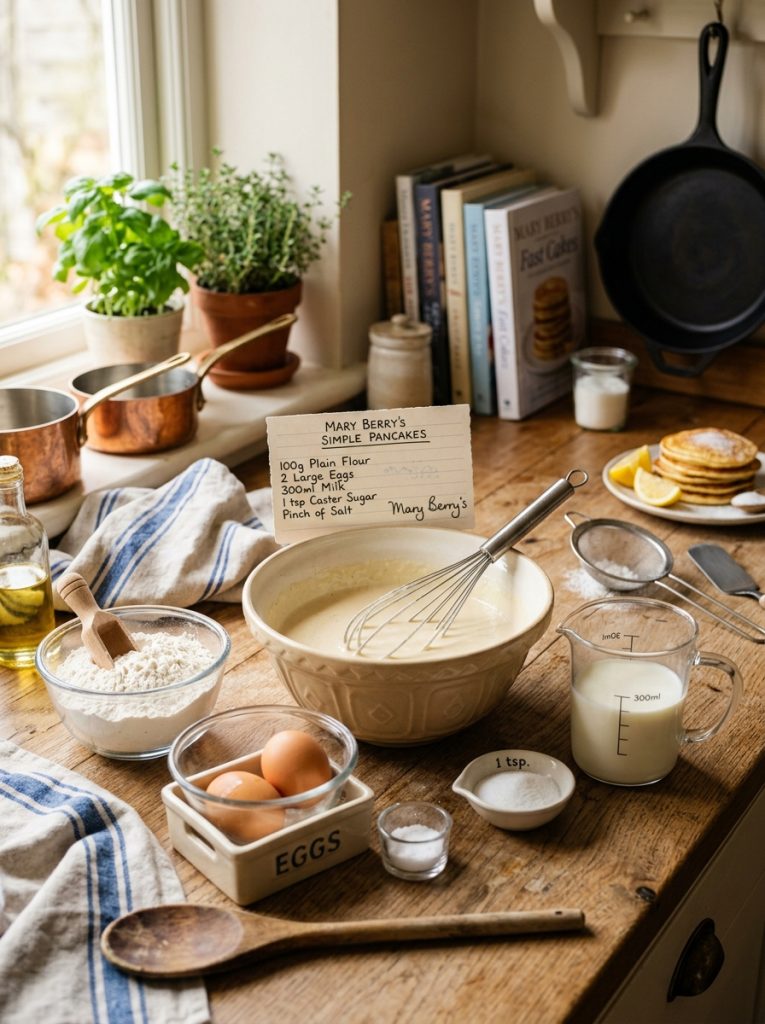
Ingredients for Mary Berry Simple Pancake Mixture
For the Pancakes (Makes about 10–12)
- 125g plain flour, sifted
- Pinch of fine salt
- 2 large eggs
- 300ml whole milk (or half milk and half water for slightly lighter pancakes)
- 1 tbsp sunflower oil or melted butter, plus more for cooking
- 1 tsp vanilla extract (optional — I always add it)
To Serve — The Classic Options
- Caster sugar and lemon juice — the most traditional and the best
- Good quality strawberry jam and double cream
- Nutella and sliced banana
- Golden syrup
- Or the full sweet option: caster sugar, lemon, and a fold of whipped cream
How to Make Mary Berry Simple Pancake Mixture
Step 1 — Make the Batter
Sift the flour and salt into a large bowl. Make a well in the centre.
Crack the eggs into the well. Add about half the milk. Using a whisk, beat the eggs and milk together in the centre, gradually incorporating the flour from the sides as you work outwards. Beat until you have a smooth, thick paste with no lumps — this approach of starting in the centre prevents lumps much more effectively than adding all the milk at once.
Once the paste is smooth, add the remaining milk and the tablespoon of oil or melted butter and vanilla if using. Whisk until completely smooth. The batter should be the consistency of thin single cream and should flow easily off the whisk.
Step 2 — Rest the Batter
Cover the bowl with cling film or a clean tea towel and leave at room temperature for 30 minutes. The batter will look slightly different after resting — slightly thicker and slightly smoother. If it seems very thick, add a splash more milk and stir through.
Step 3 — Heat the Pan
Heat a 20cm non-stick frying pan over a medium-high heat. Add the tiniest amount of butter — just enough to give a very thin, barely-there coating. Too much butter and the pancakes fry rather than cook. Too little and they stick. A very small knob wiped around the pan with a piece of kitchen paper gives the ideal amount.
When the butter begins to foam and stops sizzling — which happens in about twenty seconds — the pan is at the right temperature.
Step 4 — Cook the First Pancake
Pour in just enough batter to coat the base of the pan — about three tablespoons. The moment it hits the pan, lift the pan from the heat and swirl it in a circular motion so the batter spreads in a thin, even layer across the entire base. This needs to happen quickly and confidently before the batter begins to set.
Return to the heat. Cook for 60 to 90 seconds until the edges are beginning to curl away from the pan and the underside is golden when you lift one edge with a palette knife or spatula.
Flip — either with a palette knife and confident flick of the wrist, or with a spatula — and cook for a further 30 to 45 seconds on the second side until pale golden.
Slide onto a warm plate.
Step 5 — Continue Cooking
Add the smallest amount of butter before each subsequent pancake. After the first pancake — which is always a test pancake that tells you whether the heat and the batter consistency are right — the remaining pancakes should come out consistently golden and beautiful.
Keep finished pancakes warm by stacking them on a plate over a pan of barely simmering water, or in a low oven at 100°C covered loosely with foil.
Step 6 — Serve
Serve immediately with whatever toppings you prefer. The classic — caster sugar and lemon juice squeezed over the warm pancake then rolled up tightly — is the best.
My Top Tips For Simple Pancake Mixture
Start in the centre when mixing. Adding the eggs and half the milk first and working in the flour from the sides gives a completely smooth batter without any whisking drama. Adding all the liquid at once to the flour creates lumps that are hard to eliminate.
Rest the batter for thirty minutes. I know I already said this. I say it again because it makes a real difference and it is the instruction most often skipped.
The first pancake is always a test pancake. Every pancake cook knows this. The first pancake tells you if the heat is right, if the batter is the right consistency, and how much batter you need per pancake. Eat it in the kitchen. Start the proper batch after.
Swirl the pan immediately when batter hits it. You have about two seconds before the batter starts to set. Lift the pan the moment you pour the batter in and swirl with confidence. Hesitation gives an uneven pancake.
Do not add too much butter between pancakes. A non-stick pan needs almost no fat once properly heated. Too much butter makes the pancakes fry and gives a greasy, slightly thick edge rather than a thin, even pancake.
Half milk and half water gives a slightly lighter result. Whole milk gives a slightly richer pancake. Half milk and half water gives a slightly more delicate, lighter pancake that is the style many people prefer for the classic British version.
Serving Suggestions
With caster sugar and fresh lemon juice — rolled up and eaten immediately. With strawberry jam and a little whipped cream. With Nutella and sliced banana — for children and adults who have not yet outgrown this. With a savoury filling of cheese and ham or smoked salmon and cream cheese for a different kind of dinner entirely.
How to Store Pancake Mixture
Cooked pancakes: Stack with a piece of baking parchment between each. Store in the fridge for up to 2 days. Warm individually in a dry pan for thirty seconds per side.
The batter: Cover and refrigerate for up to 24 hours. Stir well before using — the batter settles on sitting and needs a proper stir to recombine.
In the freezer: Freeze cooked pancakes stacked with parchment between each for up to 2 months. Defrost at room temperature or warm directly from frozen in a dry pan.
Try These Recipes
- Mary Berry Sultana Scones
- Mary Berry Drop Scones Pancakes
- Mary Berry 2 Egg Yorkshire Pudding
- Mary Berry Plain Scones
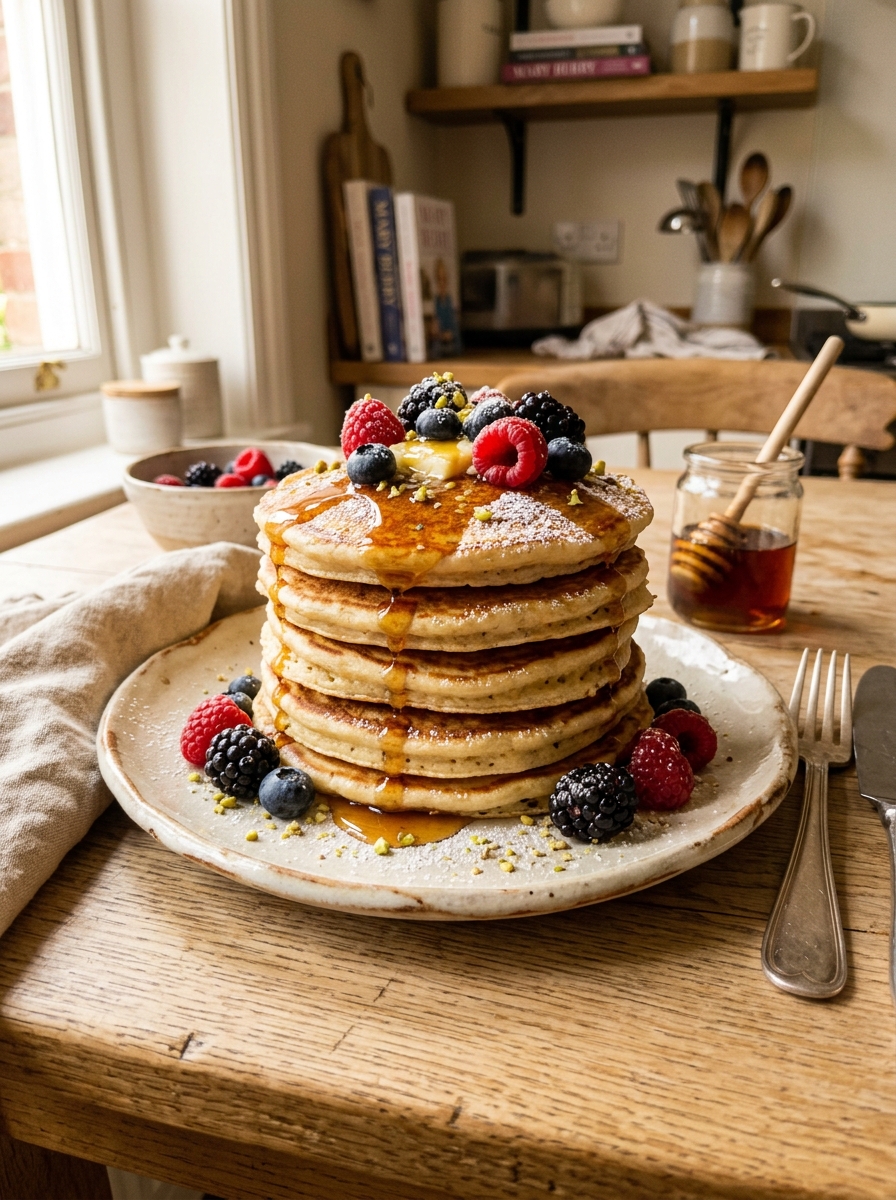
Mary Berry Simple Pancake Mixture Recipe
Ingredients
Method
- Sift flour and salt into a large bowl. Make a well. Add eggs and half the milk to the well. Beat from the centre outwards, gradually incorporating the flour. Once smooth, add remaining milk, oil, and vanilla. Whisk until completely smooth — consistency of thin single cream.
- Cover and rest 30 minutes at room temperature.
- Heat a 20cm non-stick pan over medium-high heat. Add tiniest amount of butter — wipe around the pan. When butter foams and stops sizzling, pan is ready.
- Pour in about 3 tablespoons of batter. Immediately lift the pan and swirl to coat the base in a thin, even layer. Cook 60–90 seconds until edges curl and underside is golden. Flip — cook 30–45 seconds on second side.
- Slide onto a warm plate. Continue — adding the smallest amount of butter before each pancake.
- Serve immediately with caster sugar and lemon juice.
Notes
Frequently Asked Questions
Can I make these gluten-free?
Yes — substitute the plain flour with a good quality gluten-free plain flour blend. The batter behaves slightly differently — it may need a little more milk and a slightly shorter resting time — but the pancakes are very good.
Can I make a larger batch?
Yes — simply double or triple the recipe. The batter keeps covered in the fridge for 24 hours so you can make it ahead and cook to order throughout the day.
Can I make savoury pancakes with this batter?
Yes — omit the vanilla extract and add a pinch of white pepper. Use for crêpes with savoury fillings. The same batter works for both sweet and savoury applications.
Why are my pancakes thick and heavy?
Either the batter was too thick — needs more milk — or the pan was not hot enough and the pancake did not spread thinly before setting. The batter should be as thin as single cream and the pan should be properly hot.
Can I use self-raising flour?
You can but it gives a slightly thicker, more bubble-textured pancake rather than a thin, smooth crêpe-style British pancake. Use plain flour for the classic result.














Leave a Reply