
 Anna Louise
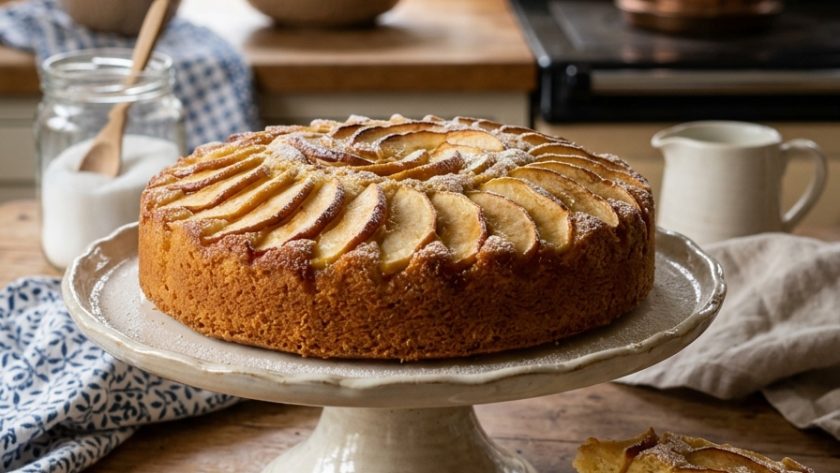
 An apple sponge cake is one of the most straightforwardly wonderful things in British baking. A light, golden vanilla sponge baked over a layer of warmly spiced, slightly softened apple — the apple flavours the sponge from below during baking.
The sponge provides the golden, buttery structure above, and the combination of the two gives something that is both comforting and genuinely delicious.
This version is the classic interpretation — Bramley apple cooked briefly with sugar and cinnamon, spread over the base of a tin, and the vanilla sponge batter spooned carefully over the top.
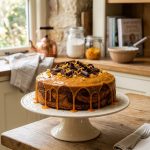
When inverted after baking, the apple is revealed on top — soft, slightly sticky, golden at the edges where it has caramelised against the tin — and the sponge becomes the base. It looks like an upside-down cake, but it is specifically an apple sponge cake — a distinct British classic.
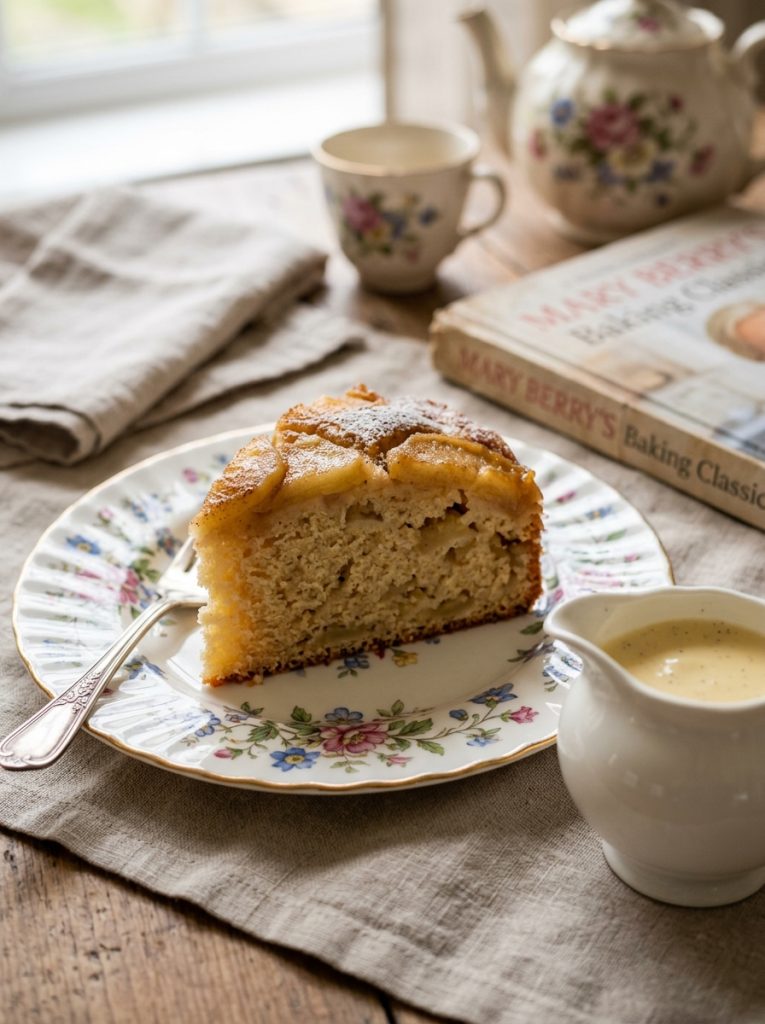
Ingredients for Mary Berry Apple Sponge Cake
For the Apple Layer
- 600g Bramley apples, peeled, cored, and sliced into 5mm rounds
- 75g golden caster sugar
- 1 tsp ground cinnamon
- ¼ tsp ground ginger
- 30g unsalted butter
- Juice of ½ lemon — tossed with the apple immediately after slicing
For the Vanilla Sponge
- 200g unsalted butter, softened
- 200g golden caster sugar
- 3 large eggs, at room temperature
- 200g self-raising flour, sifted
- 1½ tsp baking powder
- 2 tbsp whole milk
- 1 tsp vanilla extract
To Serve
- Custard — warm and properly made
- Or clotted cream
- A dusting of icing sugar
How to Make Mary Berry Apple Sponge Cake
Step 1 — Preheat and Prepare the Tin
Preheat your oven to 180°C / 160°C fan / Gas 4. Grease a deep 23cm round fixed-base cake tin — not loose-bottomed, as the apple layer will leak — generously with butter. Line the base with a circle of baking parchment.
Step 2 — Prepare the Apple Layer
Toss the sliced Bramley apple with the lemon juice immediately after cutting — Bramleys oxidise very quickly.
Melt the 30g of butter in a medium saucepan over a medium heat. Add the apple slices, sugar, cinnamon, and ginger. Cook, stirring gently, for four to five minutes until the apple is beginning to soften and the sugar has dissolved into a fragrant, slightly sticky sauce around the apple. The apple should be partially softened but still holding its shape — it will finish cooking in the oven.
Remove from the heat. Spread the apple and all the cooking juices evenly over the base of the prepared tin.
Step 3 — Make the Sponge Batter
Beat the softened butter and golden caster sugar together for four to five minutes until pale and very fluffy. Add the eggs one at a time, beating well after each. Add the vanilla extract.
Sift the flour and baking powder into the bowl. Add the milk. Fold gently until just combined.
Step 4 — Add the Sponge Over the Apple
Drop small spoonfuls of the sponge batter over the apple layer — working from the outside edge inwards to distribute evenly. Spread very gently with the back of a spoon or a palette knife to cover the apple layer completely. Take care not to disturb the apple arrangement beneath.
Step 5 — Bake
Bake for 40 to 45 minutes until the sponge top is deep golden, springs back when pressed gently in the centre, and a skewer comes out clean.
Leave to cool in the tin for exactly five minutes — set a timer.
Step 6 — Invert and Serve
Place a serving plate on top of the tin. Invert in one confident movement. Lift the tin away. Peel back the parchment circle — the apple layer is now on top, golden and slightly caramelised. Serve warm with custard or clotted cream.
My Top Tips For Perfect Apple Sponge Cake
Use a fixed-base tin — not loose-bottomed. The apple releases juice during baking. A loose-bottomed tin allows this juice to drip into the oven, creating both a mess and a less juicy, less flavoured apple layer in the finished cake.
Par-cook the apple before it goes into the tin. Four to five minutes of pre-cooking ensures the apple is partially softened and its juices have been released and slightly concentrated before baking. Raw apple in the tin gives a slightly undercooked, slightly sharp apple layer in the finished cake.
Invert after exactly five minutes. The same instruction as the upside-down apple cake — and for the same reason. Five minutes allows the cake to firm slightly so it holds together during inversion. Less than five minutes and it is too fragile. More than five minutes and the apple caramel begins to set against the tin and the cake sticks.
Spread the sponge batter gently over the apple. Large blobs of batter dropped directly onto the apple can displace the apple slices. Small spoonfuls distributed evenly, then spread gently with the back of a spoon, preserves the apple layer beneath.
Serve warm — not hot. Slightly warm apple sponge cake with custard is one of the finest pudding combinations in British baking. Hot from the oven the apple layer is very liquid. Slightly warm, after the five-minute rest, it has thickened slightly and gives a perfect result.
Serving Suggestions
Warm with proper poured custard — the classic and completely correct accompaniment. With clotted cream for something richer. As a pudding at Sunday lunch. As a comforting dessert on any autumn or winter evening.
How to Store Apple Sponge Cake
At room temperature: Store covered for up to 3 days. Warm slices briefly in a microwave or low oven before serving.
In the freezer: Freeze in slices for up to 3 months. Defrost at room temperature and warm before serving.
Try These Recipes
- Mary Berry Chocolate Orange Cupcakes
- Mary Berry Chocolate And Orange Marble Cake
- Mary Berry Carrot Cake Muffins
- Mary Berry Chocolate Orange Cheesecake
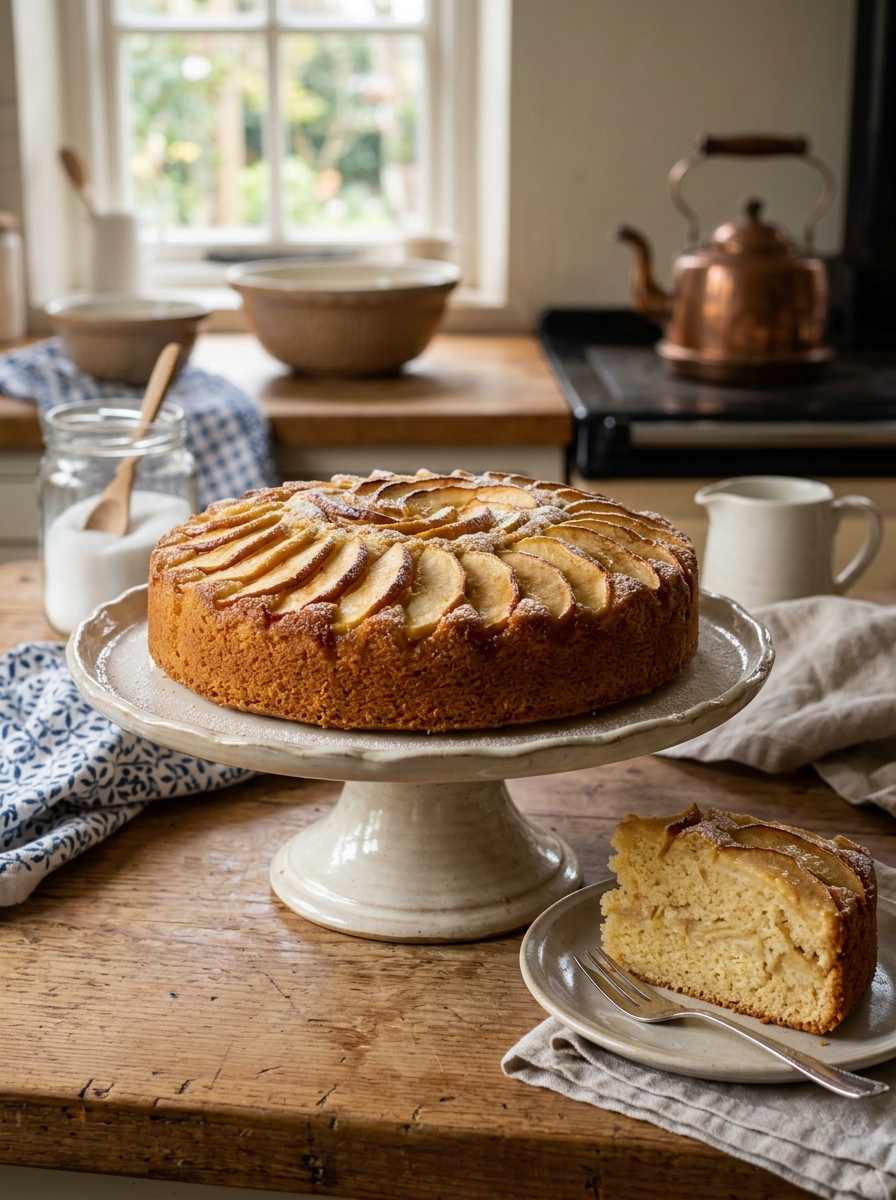
Mary Berry Apple Sponge Cake Recipe
Ingredients
Method
- Preheat oven to 180°C / 160°C fan / Gas 4. Grease a deep 23cm fixed-base tin generously. Line base with parchment.
- Toss apple slices in lemon juice immediately. Melt 30g butter in a pan — add apple, sugar, cinnamon, and ginger. Cook 4–5 minutes until beginning to soften. Spread apple and all juices evenly over the base of the prepared tin.
- Beat butter and sugar 4–5 minutes until pale and fluffy. Add eggs one at a time. Add vanilla. Sift in flour and baking powder. Add milk — fold gently.
- Drop small spoonfuls of batter over the apple layer — distribute evenly from outside inwards. Spread gently to cover completely without disturbing apple.
- Bake 40–45 minutes until sponge top is golden and skewer comes out clean.
- Cool in tin exactly 5 minutes — set a timer. Place serving plate on top — invert confidently. Lift tin. Peel back parchment. Serve warm with custard.
Notes
Frequently Asked Questions
Can I use eating apples instead of Bramleys?
Eating apples hold their shape more completely during baking and give distinct, slightly firmer apple slices on top. Bramleys give a softer, slightly more jammy result. Both are good — the character of the apple layer differs.
Can I add sultanas to the apple layer?
Yes — 75g of sultanas stirred into the par-cooked apple give a pleasant sweetness and a more traditional character.
Can I make this in a traybake tin?
Yes — a 30x23cm traybake tin gives a shallower cake that cuts into squares. The apple layer is slightly thinner but equally good. Reduce the baking time to 30 to 35 minutes.
Can I add almond to the sponge?
Yes — replace 50g of self-raising flour with 50g of ground almonds for a slightly denser, richer sponge that suits the apple very well.













Leave a Reply