
 Anna Louise
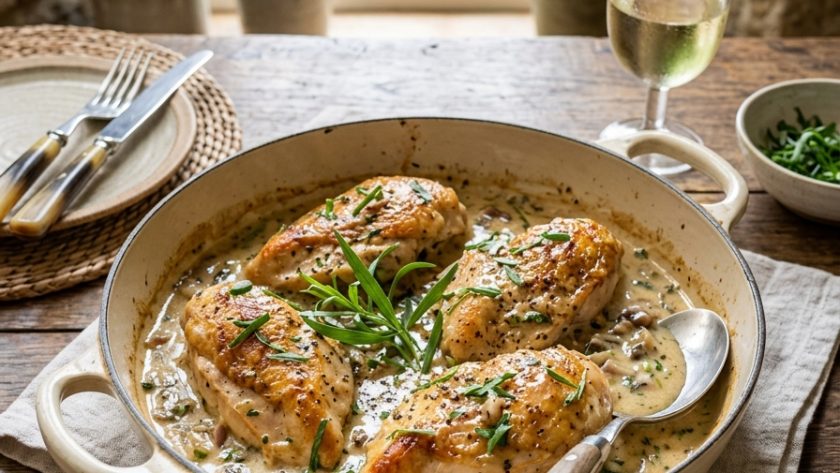
 Poulet à l’estragon — chicken with tarragon — is one of the great French bistro classics, and it is the chicken dish I make when I want to cook something genuinely elegant with minimal effort.
Tarragon has a specific, slightly anise-flavoured fragrance that is unlike any other herb — vivid, slightly sweet, completely distinctive — and it suits chicken in a cream sauce in a way that no other herb quite manages.
The technique is the same as several other cream sauce chicken dishes in this collection — brown the chicken, soften the aromatics, build the sauce with wine and stock, finish with cream — but the tarragon gives this version a character that is specifically and memorably French.
And critically, the tarragon goes in at the very end, off the heat or just before serving. Cooked tarragon loses its fragrance almost completely. Fresh tarragon added at the last moment gives a vivid, clear, unmistakably tarragon flavour throughout every bite.
This is the dish I serve when I want to impress without working particularly hard.
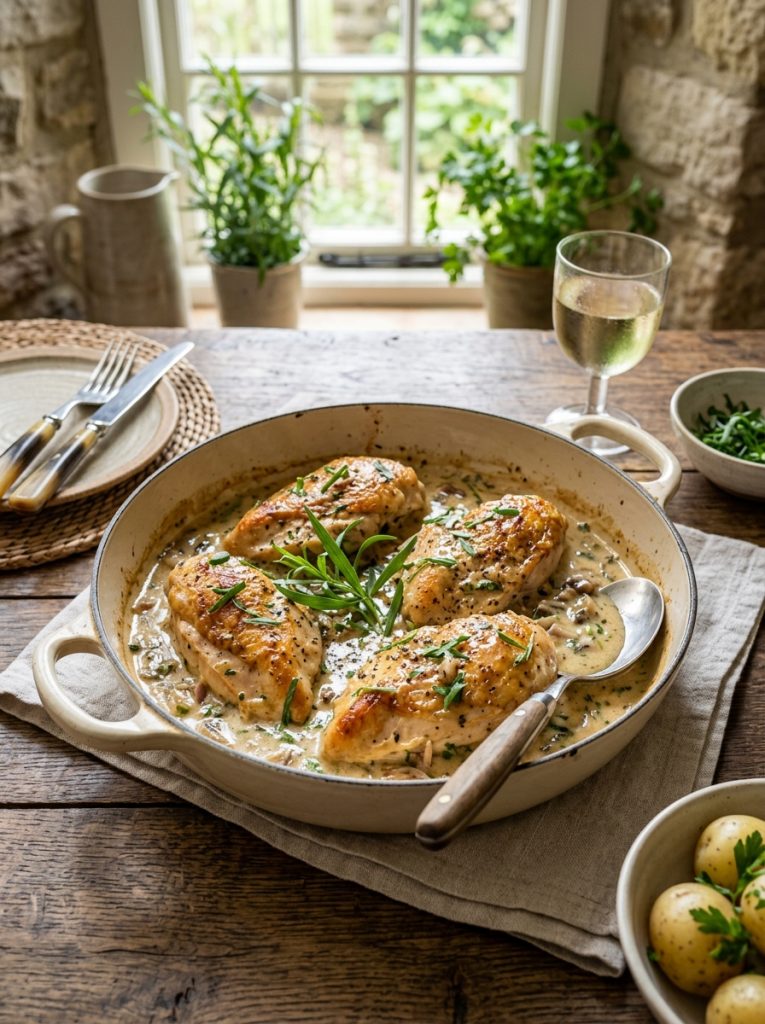
Ingredients for Mary Berry Chicken Tarragon
For the Chicken Tarragon
- 4 large bone-in skin-on chicken breasts — or 8 bone-in skin-on thighs
- 2 tbsp olive oil
- 25g unsalted butter
- 3 shallots, very finely chopped
- 3 garlic cloves, crushed
- 200ml dry white wine
- 200ml good quality chicken stock
- 200ml double cream
- 1 tsp Dijon mustard
- 1 tbsp fresh tarragon leaves, finely chopped — for the sauce, added at the end only
- 1 tbsp fresh flat-leaf parsley, finely chopped — added at the end
- Juice of ½ lemon — added at the very end
- Salt and freshly ground white pepper
For Serving
- Steamed new potatoes — the most natural accompaniment
- Steamed fine green beans or tenderstem broccoli
- Crusty bread for mopping the sauce
How to Make Mary Berry Chicken Tarragon
Step 1 — Brown the Chicken
Season the chicken generously on both sides. Heat the olive oil in a large, wide frying pan or shallow casserole over a medium-high heat. Add the chicken skin-side down.
Cook for five to six minutes without moving — the skin must form a proper golden crust before the chicken is turned. Turn and cook for two to three minutes on the other side until golden. Remove and set aside.
Step 2 — Build the Aromatics
Pour off most of the fat from the pan, leaving about one tablespoon. Reduce the heat to medium. Add the butter. Cook the shallots for five minutes until completely soft and translucent — they should be yielding and slightly golden at the edges.
Add the garlic and cook for two more minutes.
Step 3 — Add the Wine and Reduce
Pour in the white wine. Bring to a vigorous bubble and let it reduce for three to four minutes — scraping any golden bits from the base of the pan — until the wine has reduced by about two-thirds and no longer smells raw.
Step 4 — Build the Cream Sauce
Add the chicken stock. Bring to a simmer and cook for three minutes. Add the double cream and Dijon mustard. Stir to combine. Season generously with salt and white pepper. The sauce should taste clearly seasoned and slightly rich — assertive enough that it will not seem flat when the chicken is returned.
Step 5 — Return the Chicken and Cook Through
Return the browned chicken skin-side up to the pan — skin above the sauce line. Reduce the heat to low. Cover partially and cook for 20 to 25 minutes for chicken breasts, or 30 to 35 minutes for thighs, until the chicken is completely cooked through and the sauce has reduced to a silky, slightly thickened consistency.
Step 6 — Add the Tarragon and Serve
Add the lemon juice. Add the fresh tarragon and parsley. Stir gently through the sauce. Taste and adjust seasoning.
Serve immediately — the tarragon character is most vivid and most fragrant within the first few minutes of being added to the warm sauce.
My Top Tips For Perfect Mary Berry Chicken Tarragon
Fresh tarragon goes in at the very end — not during cooking. I make this point in the chicken and herb casserole recipe and repeat it here because it is equally critical for this dish. Tarragon cooked for twenty-five minutes loses virtually all its specific, vivid fragrance and becomes simply a background herbal note. Added at the end, off the heat or immediately before serving, it gives a clear, fresh, unmistakably tarragon flavour throughout the sauce.
Use dried tarragon if fresh is unavailable — but reduce the quantity. Dried tarragon goes in at the beginning — with the shallots and garlic — rather than at the end, because its flavour is released through cooking rather than through freshness. Use one teaspoon of dried tarragon in place of the tablespoon of fresh, added much earlier.
The Dijon mustard is not dominant — it deepens the sauce. One teaspoon of Dijon mustard in a cream sauce does not make the sauce taste of mustard. It deepens, rounds, and gives a background complexity that is immediately noticeable by its absence. It suits the tarragon particularly well.
Brown the chicken properly before building the sauce. The golden, slightly crispy skin on the chicken and the golden bits left on the base of the pan after browning are flavour. A pale, barely coloured chicken gives a pale, slightly flat sauce. Five to six minutes of undisturbed cooking on the skin side gives the colour and the flavour the dish needs.
Lemon juice at the very end brightens everything. The cream sauce without lemon is slightly heavy and slightly flat. The juice of half a lemon added at the same moment as the tarragon brightens and focuses everything — the tarragon, the cream, the mustard, the chicken.
Serving Suggestions
With steamed new potatoes alongside — the sauce is designed to be eaten with something that can absorb it. With steamed fine green beans. With crusty bread for mopping the pan completely clean at the end — the sauce is too good to leave.
How to Store Mary Berry Chicken Tarragon
In the fridge: Store for up to 2 days. Reheat gently over a low heat — do not boil. Add fresh tarragon again when reheating for maximum fragrance.
In the freezer: Freeze for up to 2 months. Cream sauces can separate slightly on defrosting — reheat gently, stirring well. Add fresh tarragon after reheating.
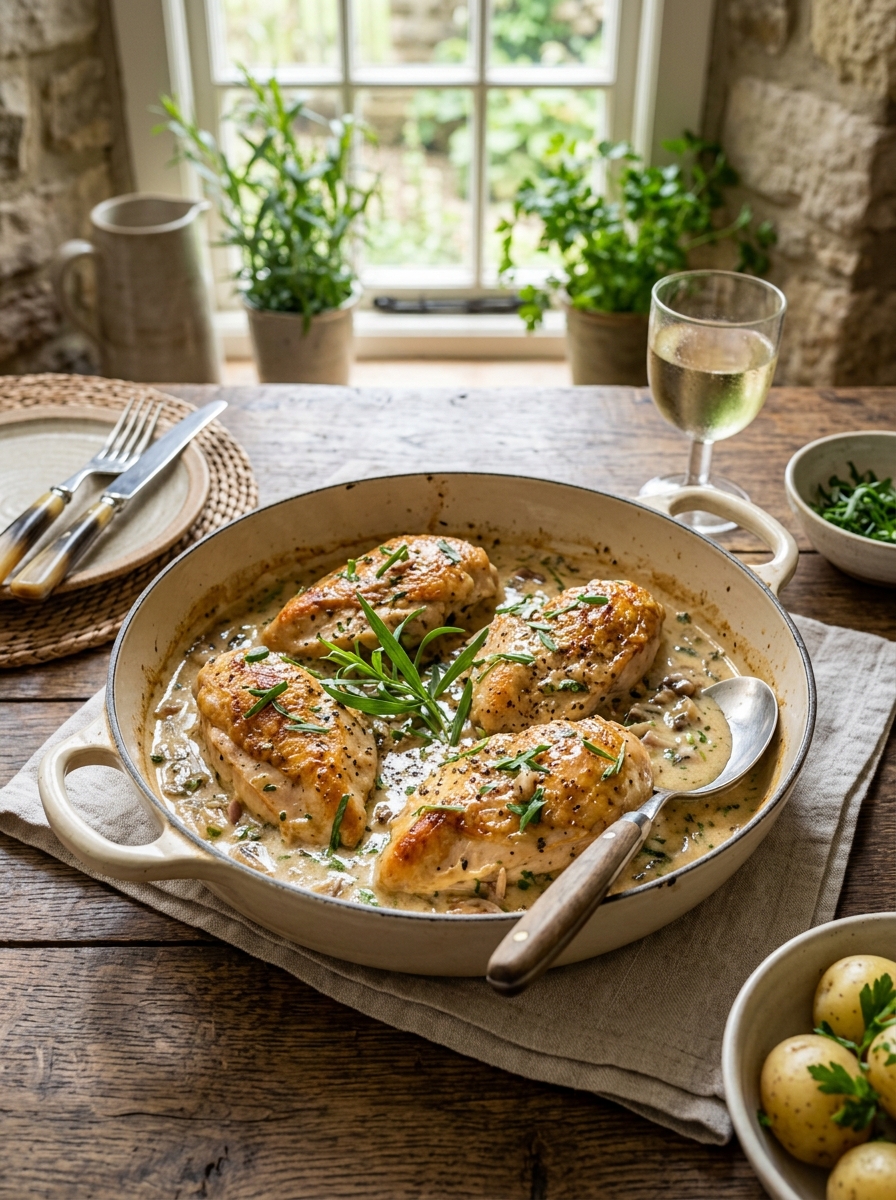
Mary Berry Chicken Tarragon Recipe
Ingredients
Method
- Season chicken generously. Brown skin-side down in hot oil 5–6 minutes without moving. Turn — 2–3 minutes. Remove.
- Pour off most fat — leave 1 tbsp. Add butter over medium heat. Cook shallots 5 minutes. Add garlic — 2 minutes.
- Add wine — bubble vigorously 3–4 minutes until reduced by two-thirds.
- Add stock — simmer 3 minutes. Add cream and mustard. Season assertively.
- Return chicken skin-side up. Cover partially over low heat. Cook 20–25 minutes (breasts) or 30–35 minutes (thighs) until cooked through.
- Add lemon juice, fresh tarragon, and parsley. Stir gently. Taste and adjust. Serve immediately.
Notes
Frequently Asked Questions
Can I use chicken thighs instead of breasts?
Yes — thighs give a richer, more forgiving result in a braised sauce. They take slightly longer — 30 to 35 minutes — and stay moister throughout. I actually prefer thighs for this dish.
Can I add mushrooms?
Yes — 200g of chestnut mushrooms, caramelised separately in butter and added with the cream, give an earthy note that suits the tarragon very well.
Can I use crème fraîche instead of double cream?
Yes — full-fat crème fraîche gives a slightly tangier, slightly less rich result that some people prefer. It holds better during reheating than double cream.
Can I make this ahead?
Yes — make the sauce and chicken up to the point before the tarragon and lemon are added. Refrigerate. Reheat gently and add the fresh tarragon and lemon just before serving.















Leave a Reply