
 Anna Louise
 A Swiss roll is one of those bakes that people find more intimidating than it deserves to be. The rolling technique — turning a flat sponge into a tight spiral while still warm — sounds alarming and turns out, with the right instructions, to be completely manageable.
Mary Berry has made Swiss rolls famous through the Great British Bake Off — it was one of the signature technical challenges, and watching dozens of bakers approach it with various degrees of confidence and success gave the whole nation a specific anxiety about it. I want to take that anxiety away completely.
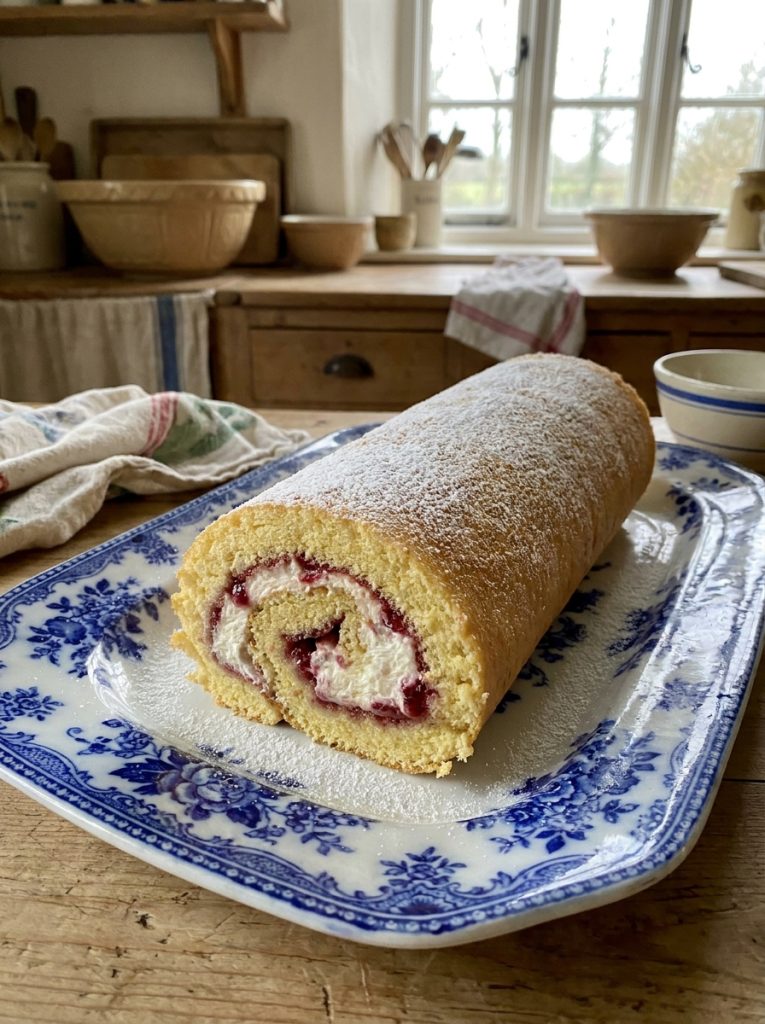
The sponge is a fatless sponge — eggs, sugar, and flour only, no butter — which gives a very light, very pliable result that rolls without cracking when handled correctly. The key is rolling it while warm, using a sheet of icing sugar-dusted parchment as a guide, filling it when cooled, and rolling again.
The two-roll technique takes the pressure off — the first roll while warm sets the shape, the second roll with the filling completes the finished Swiss roll.
Ingredients for Mary Berry Swiss Roll
For the Fatless Sponge
- 4 large eggs, at room temperature — separated
- 125g golden caster sugar — plus 2 tbsp extra for dusting the parchment
- 125g plain flour, sifted twice — twice-sifted flour gives a lighter crumb
- 1 tsp vanilla extract
- 2 tbsp boiling water — added at the very end, gives a moister, more pliable sponge
- Pinch of fine salt
For the Filling
- 4 tbsp good quality raspberry jam — warmed slightly for easier spreading
- 250ml double cream, cold
- 1 tbsp icing sugar
- 1 tsp vanilla extract
To Finish
- 2 tbsp icing sugar — dusted generously over the finished roll
- A few fresh raspberries arranged alongside (optional)
How to Make Mary Berry Swiss Roll
Step 1 — Preheat and Prepare
Preheat your oven to 200°C / 180°C fan / Gas 6. Grease a 33x23cm Swiss roll tin and line with baking parchment — pushing the parchment neatly into the corners.
Prepare a second sheet of baking parchment slightly larger than the tin. Dust it generously and evenly with the extra two tablespoons of caster sugar. Set aside on a flat surface — this is the surface onto which the sponge will be turned immediately on leaving the oven.
Step 2 — Make the Fatless Sponge
Whisk the egg yolks, golden caster sugar, vanilla, and salt together with an electric hand whisk for three to four minutes until the mixture is very pale, thick, and has trebled in volume — when the whisk is lifted, the mixture should fall in thick ribbons that hold for three to four seconds.
In a separate clean bowl, whisk the egg whites to stiff peaks.
Sift the flour over the egg yolk mixture. Add the boiling water. Fold in very gently with a large metal spoon — eight to ten careful folds. Add one-third of the whisked egg whites and fold in gently to loosen the mixture. Add the remaining egg whites in two more additions — folding very gently each time. Stop the moment no white streaks remain.
Step 3 — Bake
Pour the batter into the prepared tin immediately. Tilt the tin gently to spread the batter evenly to the corners — do not use a spoon or spatula to spread, as this deflates the batter.
Bake for 10 to 12 minutes — no longer. The sponge should be pale golden, springy when pressed very lightly, and just beginning to pull away from the edges.
Step 4 — First Roll — While Hot
Turn the sponge immediately onto the sugar-dusted parchment — the lined side facing up. Peel away the baking parchment carefully.
Working quickly while the sponge is still hot — trim a thin strip from each short end to give clean edges. Score a shallow line across one short end approximately 2cm from the edge — this helps start the roll cleanly.
Roll the hot sponge up tightly from the scored short end — using the sugar-dusted parchment underneath as a guide. Roll firmly and confidently. The sponge should roll without cracking because it is warm and pliable.
Leave to cool completely — rolled up — for at least 45 minutes. Do not unroll until fully cooled.
Step 5 — Fill and Second Roll
Whip the cold cream, icing sugar, and vanilla to soft peaks.
Unroll the cooled sponge gently. Spread the warmed raspberry jam evenly over the entire surface — going right to the edges. Spread the whipped cream over the jam in an even layer.
Re-roll the sponge — firmly but slightly more gently than the first roll, as the filling needs to stay in place. Transfer to a serving plate with the seam underneath.
Step 6 — Finish and Serve
Dust generously with icing sugar. Refrigerate for thirty minutes — the cream firms and the roll slices more cleanly. Arrange fresh raspberries alongside if using. Slice thickly to serve.
My Top Tips For Perfect Mary Berry Swiss Roll
Roll the sponge while it is still hot — immediately. This is the most important instruction in this recipe. A warm sponge is pliable — it rolls without cracking and sets in the rolled shape as it cools. A cooled sponge has set flat and cracks when rolled. The moment the tin comes out of the oven, the sponge goes onto the sugar-dusted parchment and rolling begins. Do not allow it to cool in the tin.
The two-roll technique takes the pressure off. Rolling the sponge hot without the filling, cooling it in the rolled shape, then unrolling, filling, and re-rolling gives a Swiss roll that has already learned its shape before the filling is added. The second roll with the filling is considerably less stressful than a single roll attempted with the filling in place.
Fold the egg whites very gently — the air is the leavening. This is a fatless sponge — there is no butter to give richness and no baking powder to give rise. The only leavening is the air beaten into the egg whites and egg yolks. Every fold must be gentle enough to preserve this air while distributing the flour evenly.
The boiling water at the end gives a more pliable sponge. Two tablespoons of boiling water folded in just before the egg whites gives a slightly more moist, slightly more pliable sponge that rolls more easily without cracking. This is a technique from professional patisserie and it works.
Do not overbake. Ten to twelve minutes is the correct time. Overbaked Swiss roll sponge is dry, slightly brittle, and cracks when rolled. Under-baked sponge is slightly tacky and slightly pale — but it is considerably better than over-baked for rolling purposes.
Serving Suggestions
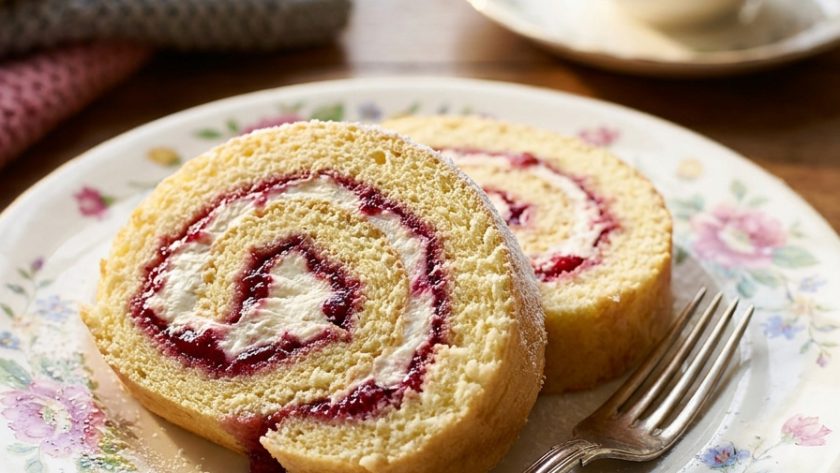
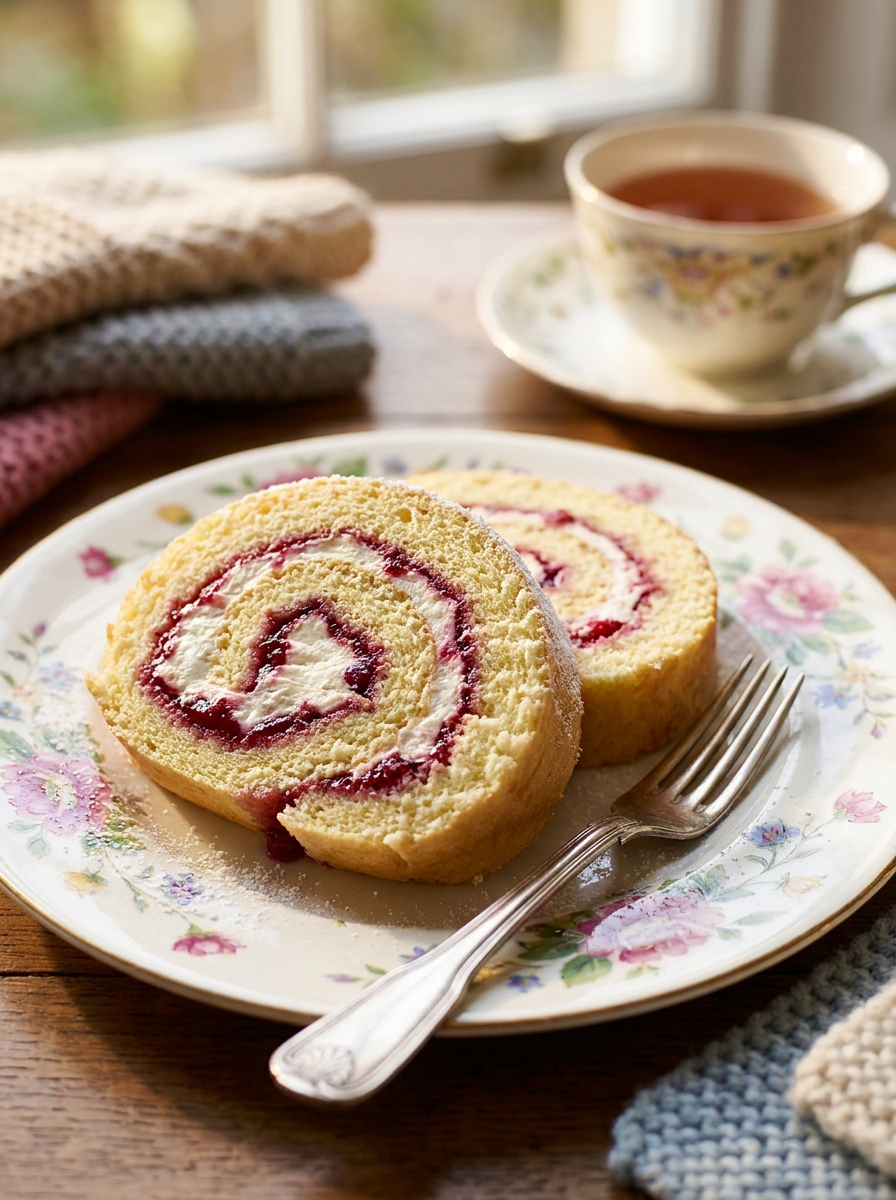
In thick slices on a serving plate — the cream and jam spiral visible in every slice. As a dessert with extra fresh raspberries and a light dusting of icing sugar alongside. At afternoon tea — one of the most elegant things on a tea table.
How to Store Mary Berry Swiss Roll
In the fridge: Store covered for up to 2 days. The sponge softens slightly around the cream but remains delicious.
Freezing is not recommended — the cream filling does not survive freezing and the sponge becomes slightly soggy on defrosting.
Mary Berry Swiss Roll Recipe
Ingredients
Method
- Preheat oven to 200°C / 180°C fan / Gas 6. Grease and line a 33x23cm tin. Prepare a second sheet of parchment — dust generously with caster sugar. Set aside flat.
- Whisk egg yolks, sugar, vanilla, and salt 3–4 minutes until very pale, thick, and ribbon-like. Whisk egg whites in a separate bowl to stiff peaks.
- Sift flour over yolk mixture. Add boiling water. Fold gently 8–10 strokes. Add one-third of egg whites — fold to loosen. Add remaining whites in 2 additions — fold very gently until no white streaks remain.
- Pour into tin immediately — tilt gently to spread to corners. Bake 10–12 minutes until pale golden and springy.
- Turn immediately onto sugar-dusted parchment — peel away lining parchment. Trim short ends. Score a line 2cm from one short end. Roll up tightly from scored end using the parchment. Cool completely — 45 minutes.
- Unroll gently. Spread warmed jam to the edges. Spread whipped cream over jam. Re-roll firmly — seam underneath. Dust generously with icing sugar. Refrigerate 30 minutes. Slice thickly.
Notes
Frequently Asked Questions
Can I use strawberry jam instead of raspberry?
Yes — strawberry jam gives a slightly sweeter, slightly less sharp filling. Any good jam works. The raspberry and cream combination is the most classic.
Can I fill it with just cream and no jam?
Yes — plain whipped cream gives a lighter, more delicate filling. Add the finely grated zest of one lemon to the cream for a lemon Swiss roll, or fold lemon curd through the cream as in the lemon meringue roulade recipe on this site.
My Swiss roll cracked — what went wrong?
The sponge was not rolled while hot enough, or it was overbaked and slightly dry. Ensure rolling begins immediately when the tin comes out of the oven, and check the baking time carefully — ten minutes is often sufficient.
Can I make a chocolate Swiss roll?
Yes — replace 25g of the plain flour with 25g of good quality cocoa powder. Sift the cocoa with the flour. The method is identical. Fill with whipped cream for a classic chocolate Swiss roll or with chocolate ganache for a more indulgent result.














Leave a Reply