
 Anna Louise
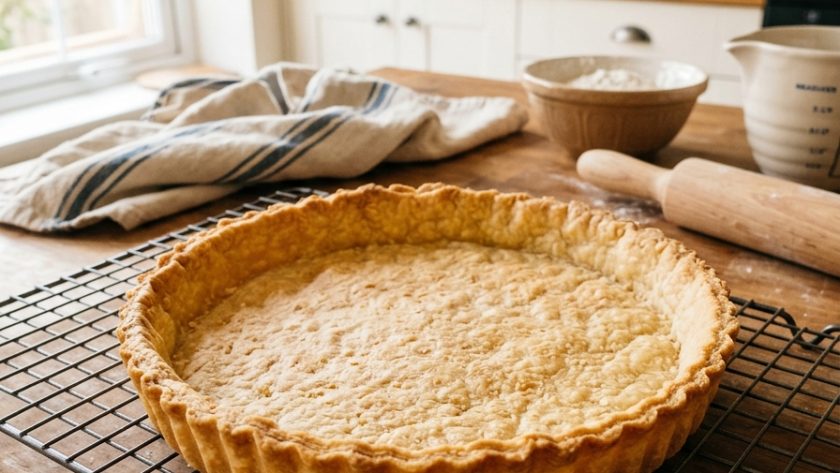
 Shortcrust pastry is the foundation recipe that unlocks more of the recipes on this site than any other single technique. Master shortcrust pastry and the quiches, the pies, the tarts, and the flans all follow naturally. Struggle with it and all of those recipes carry a degree of anxiety that they should not have.
I want to take away the anxiety completely with this post. Shortcrust pastry is not difficult. It has four ingredients — flour, butter, salt, water — and one technique: keep everything cold, work quickly, and stop mixing the moment the dough comes together.
The cold fat, rubbed into the flour to create fine, uneven crumbs with some pea-sized butter pieces remaining, is what gives the characteristic short, crumbly texture.
Overworking develops gluten and gives a tough, leathery result. The cold water binds the crumbs into a dough. Chilling rests the gluten and makes the pastry easier to roll and handle.
That is shortcrust pastry. It takes ten minutes to make and thirty minutes to chill. Once you understand it, it takes less thought than any other aspect of the dishes it goes into.
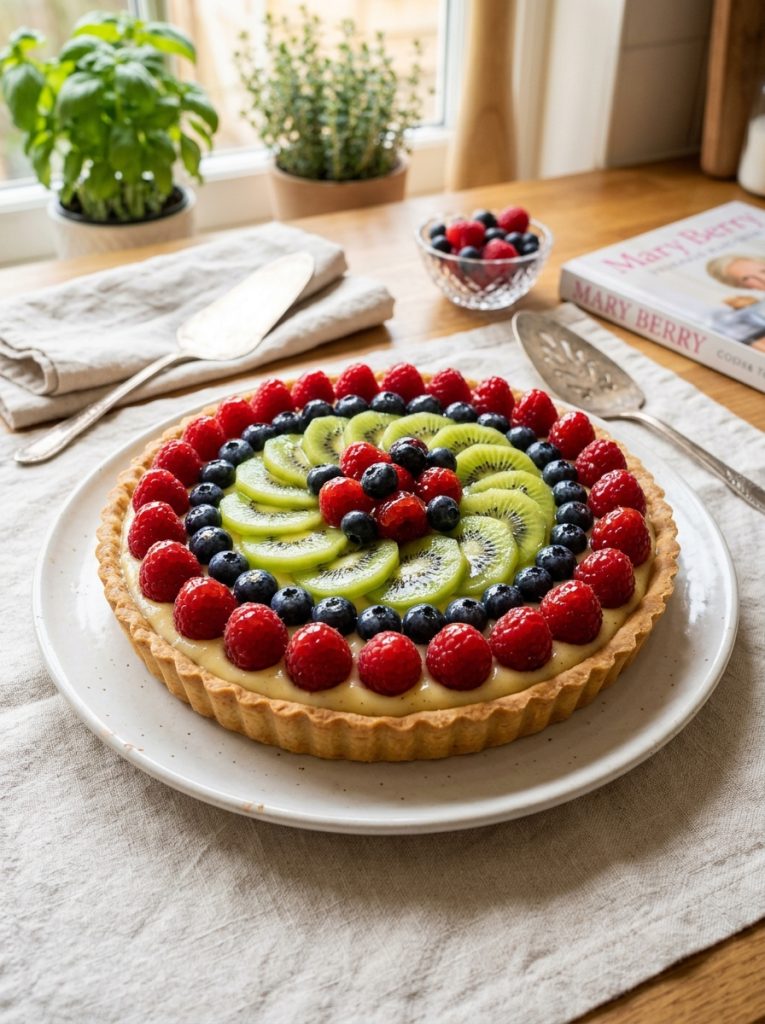
Ingredients for Mary Berry Shortcrust Pastry
For a Standard Shortcrust (Enough for one 23cm tart case or one double-crust 20cm pie)
- 225g plain flour, sifted
- 115g cold unsalted butter, cut into small cubes
- Pinch of fine salt
- 3–4 tbsp cold water — added one tablespoon at a time
For a Sweet Shortcrust (Dessert tarts and sweet pies)
- 225g plain flour, sifted
- 115g cold unsalted butter, cubed
- 30g icing sugar, sifted
- 1 large egg yolk
- 2–3 tbsp cold water
- Pinch of fine salt
For a Rich Shortcrust (For quiches and savoury tarts)
- 225g plain flour, sifted
- 140g cold unsalted butter, cubed — the higher proportion gives a shorter, richer pastry
- Pinch of fine salt
- 1 large egg yolk
- 2–3 tbsp cold water
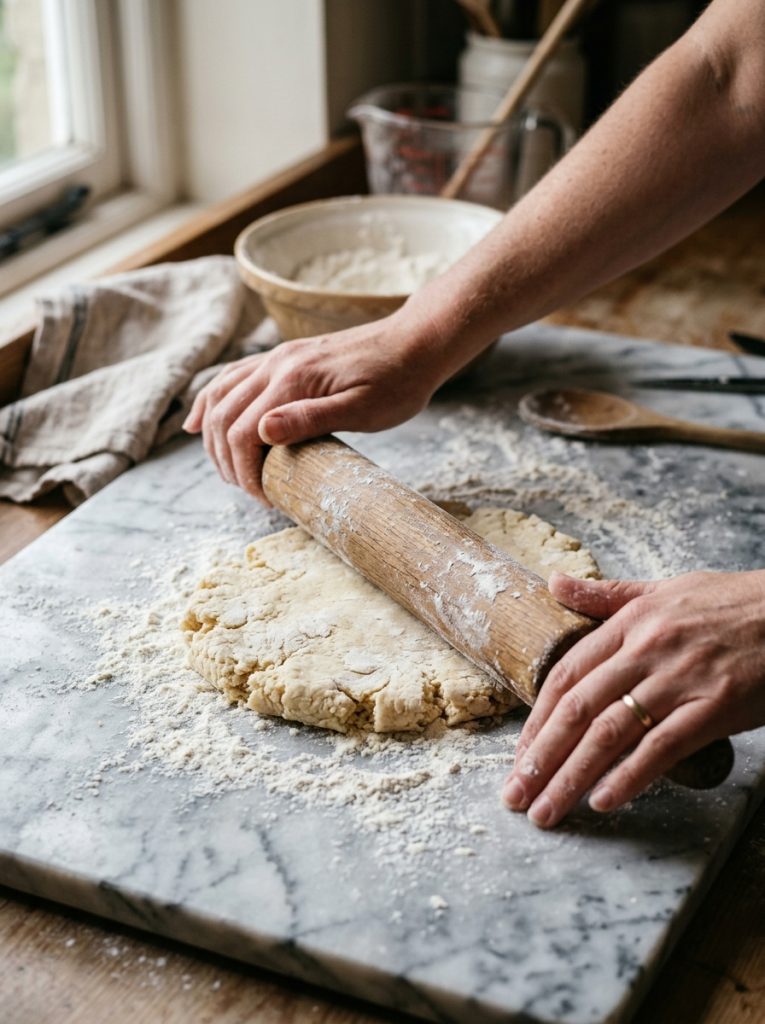
How to Make Mary Berry Shortcrust Pastry
By Food Processor (My Preferred Method)
Step 1 — Place the flour, salt (and icing sugar if making sweet shortcrust) in the food processor bowl. Add the cold cubed butter.
Step 2 — Pulse four to six times until the mixture resembles fine breadcrumbs with some pea-sized pieces of butter remaining. Do not over-process to a uniform fine powder — the remaining butter pieces give the pastry its short texture.
Step 3 — Add the egg yolk if using. With the processor running on its lowest speed, add the cold water one tablespoon at a time — stopping the moment the dough just begins to come together. It will look crumbly but should hold when pressed between your fingers.
Step 4 — Turn out onto a lightly floured surface. Bring together with your hands into a smooth disc — the minimum possible handling. Wrap and refrigerate for at least 30 minutes.
By Hand
Step 1 — Sift the flour and salt into a large bowl. Add the cold cubed butter.
Step 2 — Working quickly — if your hands feel warm, run them under cold water and dry them first — rub the butter into the flour between your fingertips. Lift the mixture as you rub to aerate it. Work until the mixture resembles rough breadcrumbs with some pea-sized pieces. Stop before it becomes uniform.
Step 3 — Add the egg yolk if using. Add the cold water one tablespoon at a time, mixing with a round-bladed knife in cutting strokes until the dough just comes together. It will be crumbly but should hold when pressed.
Step 4 — Bring together gently with your hands. Flatten into a disc. Wrap and refrigerate for at least 30 minutes.
Rolling and Lining
Step 5 — Remove the chilled pastry from the fridge. Leave for five minutes at room temperature if very firm.
Roll on a lightly floured surface — rolling away from you in one direction, turning the pastry a quarter turn between rolls to keep it even. Roll to approximately 3mm thick — thicker pastry holds its shape better in the tin but takes longer to cook through.
Step 6 — Lift the rolled pastry by draping it over the rolling pin. Lower it gently into the tin. Press into the base and sides without stretching — stretched pastry shrinks during baking. Trim the excess. Refrigerate for a further 20 minutes before blind baking.
Blind Baking
Step 7 — Preheat the oven to 200°C / 180°C fan / Gas 6. Line the chilled pastry case with baking parchment. Fill with baking beans or dried rice.
Bake for 15 minutes. Remove the beans and parchment. Bake for a further 8 to 10 minutes until the base is pale golden and dry to the touch.
My Top Tips For Best Mary Berry Shortcrust Pastry
Keep everything cold. Cold butter, cold water, cold hands if possible. The cold butter must not melt during the mixing process — if it does, the water and fat combine prematurely and the pastry becomes tough and greasy rather than short and crumbly. If the mixture feels warm at any point, refrigerate the bowl for five minutes before continuing.
Stop mixing the moment the dough comes together. This is the most important instruction in the recipe. Over-mixed shortcrust develops gluten — the protein structure in wheat flour that gives bread its chewiness. In pastry, gluten gives toughness rather than short-crumbliness. The moment the dough holds together when pressed, stop.
Always chill before rolling and after lining the tin. The first chill — after making the dough — rests the gluten and makes the pastry easier to roll without springing back. The second chill — after lining the tin — firms the pastry so it holds its shape during blind baking rather than shrinking dramatically.
Do not stretch the pastry when lining the tin. Pastry stretched to fit the tin has tension in it. When it goes into the oven, that tension releases as the pastry shrinks. Lift the pastry to drape loosely into the tin and press it gently into the base and sides rather than stretching it into position.
Blind bake until the base is genuinely dry. A pastry case that is not properly blind-baked will absorb moisture from any wet filling — whether cream, custard, or fruit — and give a soggy result that no amount of time in the oven will fully rescue.
Serving Suggestions
Use this pastry as the base for: quiche lorraine, leek and stilton quiche, fish pie, chicken and leek pie, apple pie, bakewell tart, apple crumble tart, lemon tart, and any other tart or pie on this site that calls for shortcrust.
How to Store Mary Berry Shortcrust Pastry
Unbaked pastry: Wrap in cling film and refrigerate for up to 3 days. Freeze for up to 3 months — defrost overnight in the fridge.
Blind-baked pastry case: Store at room temperature in the tin, covered loosely, for up to 2 days. Do not fill until ready to bake.
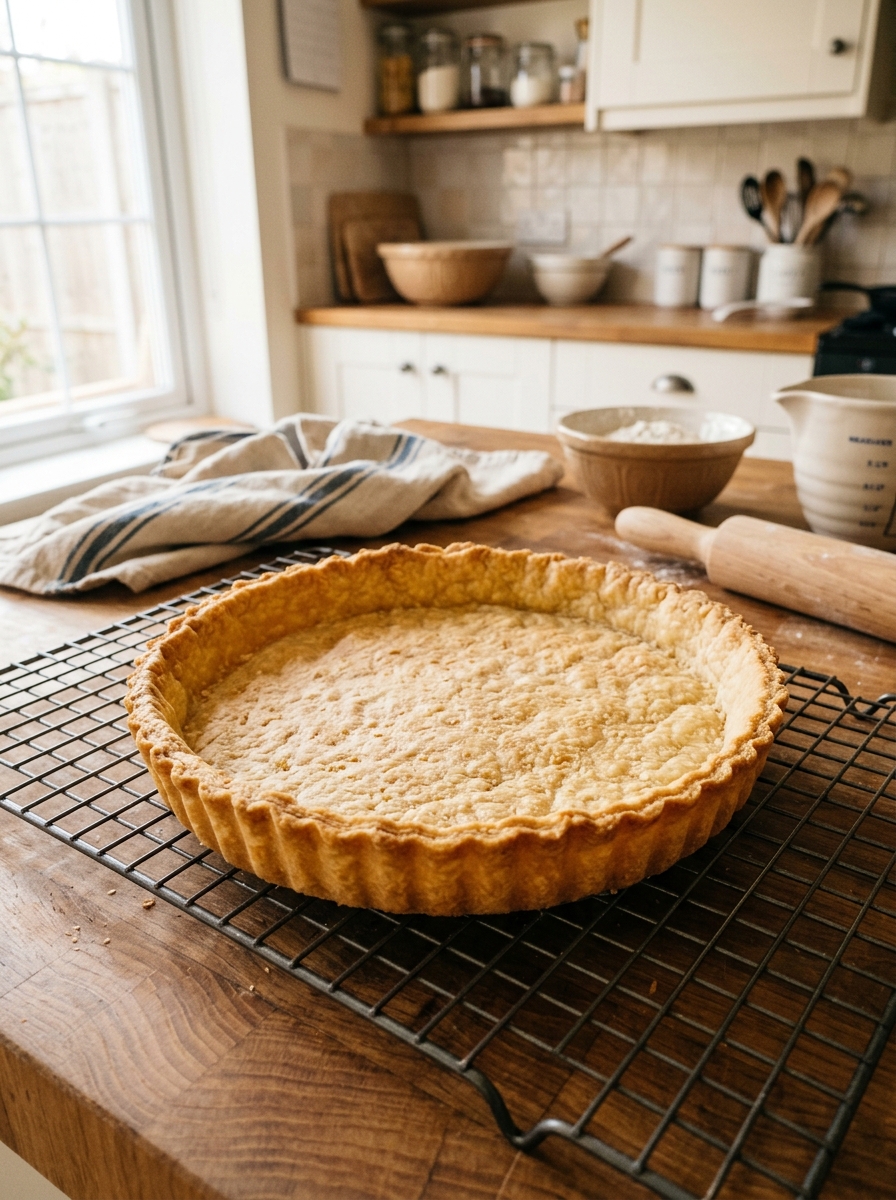
Mary Berry Shortcrust Pastry Recipe
Ingredients
Method
- Food processor: Pulse flour, salt, and butter 4–6 times to rough breadcrumbs with pea-sized pieces. Add egg yolk if using. Add cold water 1 tbsp at a time until dough just comes together.
- By hand: Rub cold butter into flour until rough breadcrumbs. Add egg yolk if using. Add cold water 1 tbsp at a time with a round-bladed knife until just combined.
- Flatten into a disc — wrap and chill 30 minutes.
- Roll on a floured surface to 3mm. Drape over the rolling pin — lower into the tin. Press gently into base and sides — do not stretch. Trim. Chill 20 minutes.
- Blind bake: preheat to 200°C / 180°C fan / Gas 6. Line with parchment and beans. Bake 15 minutes. Remove beans — bake 8–10 minutes more until pale golden and dry.
Notes
Frequently Asked Questions
Can I use self-raising flour?
No — self-raising flour contains baking powder which makes the pastry rise and gives a more bready, less short texture. Plain flour is essential for shortcrust.
Can I use margarine instead of butter?
Butter gives the best flavour and the most reliable short texture. Margarine gives a softer, slightly less flavourful pastry. For the best possible result, always use cold unsalted butter.
Why does my pastry shrink during blind baking?
The most common cause is insufficient chilling after lining the tin, or the pastry being stretched rather than draped into the tin. Both introduce tension that releases as the pastry heats. Chill for the full 20 minutes after lining and never stretch.
Can I make pastry the day before?
Yes — make the dough and refrigerate for up to 3 days before rolling. Bring to a workable temperature for five minutes at room temperature before rolling.















Leave a Reply