
 Anna Louise
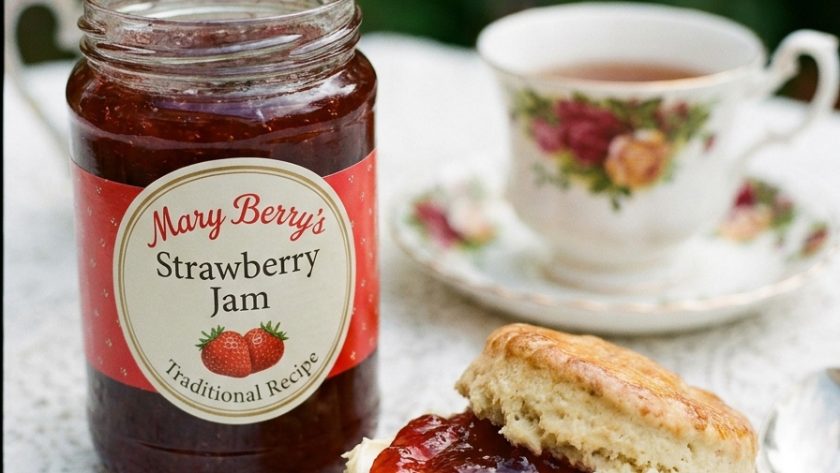
Strawberry jam is the quintessential British preserve — the jam that goes on scones at afternoon tea, that fills Victoria sponges, that sits in a dish at the breakfast table alongside thick toast and salted butter.
It is the jam that most people make first when they start making jam and that most people continue making because nothing — no raspberry jam, no blackcurrant jam, no marmalade — quite has the same specific, vivid, summery character of a properly made strawberry jam.
Strawberries are one of the lowest-pectin fruits, which means they need more help to set than raspberries or redcurrants. I make strawberry jam in June and July when British strawberries are at their absolute peak — fragrant, deeply flavoured, vivid red throughout rather than pale in the centre.
The quality of the strawberries gives the quality of the jam. This is a recipe where buying the best strawberries you can find, preferably locally grown, makes a direct and very significant difference.
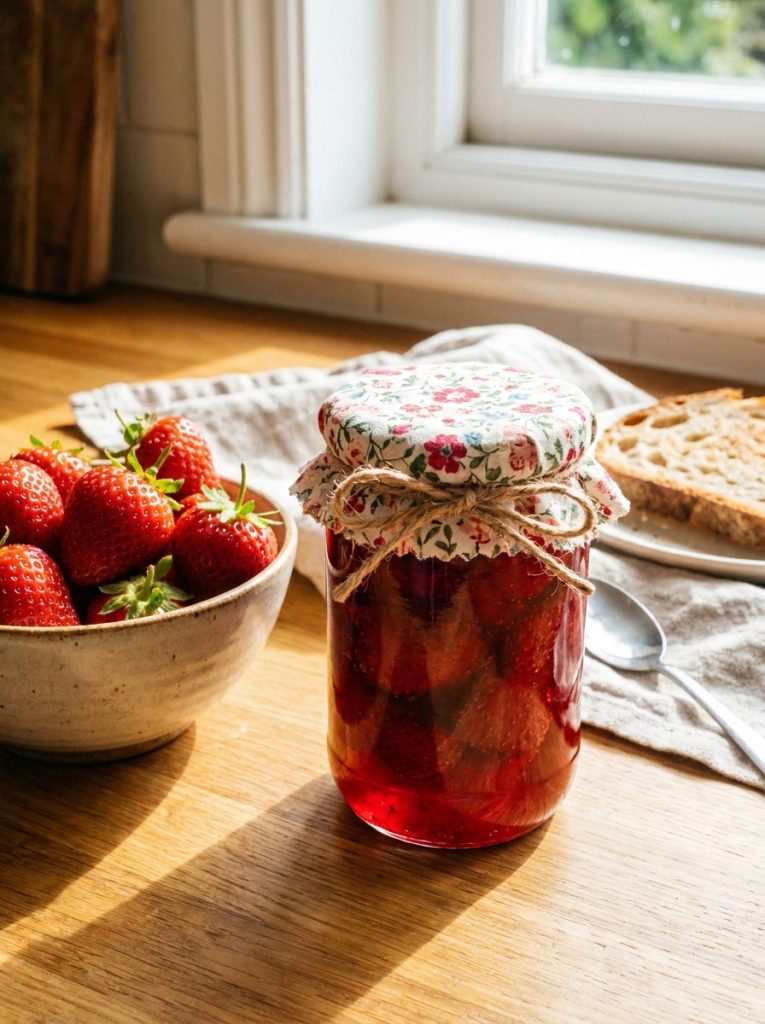
Ingredients for Mary Berry Strawberry Jam
For the Strawberry Jam (Makes approximately 5 x 450g jars)
- 1.2kg fresh British strawberries — hulled and halved
- 1kg granulated sugar — warmed in a low oven for 15 minutes
- Juice of 2 large unwaxed lemons — essential for the set
- 30g unsalted butter — added at the end to disperse any foam
How to Make Mary Berry Strawberry Jam
Step 1 — Macerate the Strawberries
Place the hulled and halved strawberries in a large preserving pan. Add the lemon juice and half the sugar. Stir gently. Cover and leave at room temperature for at least one hour — or overnight in the fridge.
This maceration step softens the strawberries, draws out their juice, and begins the dissolving of the sugar. It also gives a slightly more intensely flavoured, slightly more vivid jam than one made with raw strawberries added directly.
Step 2 — Dissolve the Sugar
Add the remaining warm granulated sugar to the macerated strawberries. Heat over a low to medium heat — stirring continuously — until every grain of sugar has completely dissolved. This is essential — test by running a spoon along the base of the pan. No graininess at all before the heat is increased.
Step 3 — Boil to Setting Point
Increase the heat to high. Bring to a vigorous rolling boil. Add the knob of butter — it disperses the foam that forms on the surface. Boil for 10 to 20 minutes — strawberry jam takes longer to reach setting point than raspberry jam due to the low pectin content. Start testing at 10 minutes.
Wrinkle test: Place a teaspoon of jam on a cold plate from the freezer. Leave one minute. Push with your finger — if the surface wrinkles and does not flood back, setting point is reached. If it floods back, boil for three more minutes and test again.
Sugar thermometer: Setting point is 104–105°C.
Step 4 — Rest and Pot
Remove from the heat when setting point is reached. Skim any remaining foam.
Leave to stand for fifteen minutes — this is longer than for most jams because strawberry pieces are large and light and float to the top of the jars if potted immediately. Fifteen minutes of resting allows the jam to thicken very slightly and the fruit to distribute evenly.
Stir gently. Ladle into warm sterilised jars. Seal immediately. Label and store.
My Top Tips For Perfect Strawberry Jam
Macerate the strawberries with sugar and lemon juice before cooking. One hour — or overnight — of the strawberries sitting in the sugar and lemon gives a more vibrant, more intensely flavoured jam than one made without this step. The sugar draws out the strawberry juice and the lemon begins working on the pectin. It is the most significant technique difference between a good strawberry jam and a great one.
Do not overcook — test from ten minutes. Strawberry jam that is cooked beyond setting point gives a dark, slightly caramelised jam that has lost the vivid, fresh strawberry colour and character. Test from ten minutes and pot the moment setting point is reached. The vivid red colour and fresh flavour are preserved only in a jam that is not over-boiled.
The butter at the boiling stage disperses the foam. A small knob of butter added once the jam is boiling disperses the foam that forms on the surface — making skimming unnecessary in most cases. It does not affect the flavour.
Rest for fifteen minutes before potting. Strawberry pieces are large and buoyant — they float straight to the top of the jar if the jam is potted immediately. Fifteen minutes of resting thickens the jam slightly and gives even distribution of fruit throughout each jar.
Use the best fresh British strawberries you can find in season. Out-of-season strawberries — pale, slightly hard, lacking in flavour — give a pale, slightly lacking jam. British strawberries in June and July, picked at the peak of ripeness, give a jam that is specifically and memorably wonderful. The quality of the fruit is the quality of the jam.
Serving Suggestions
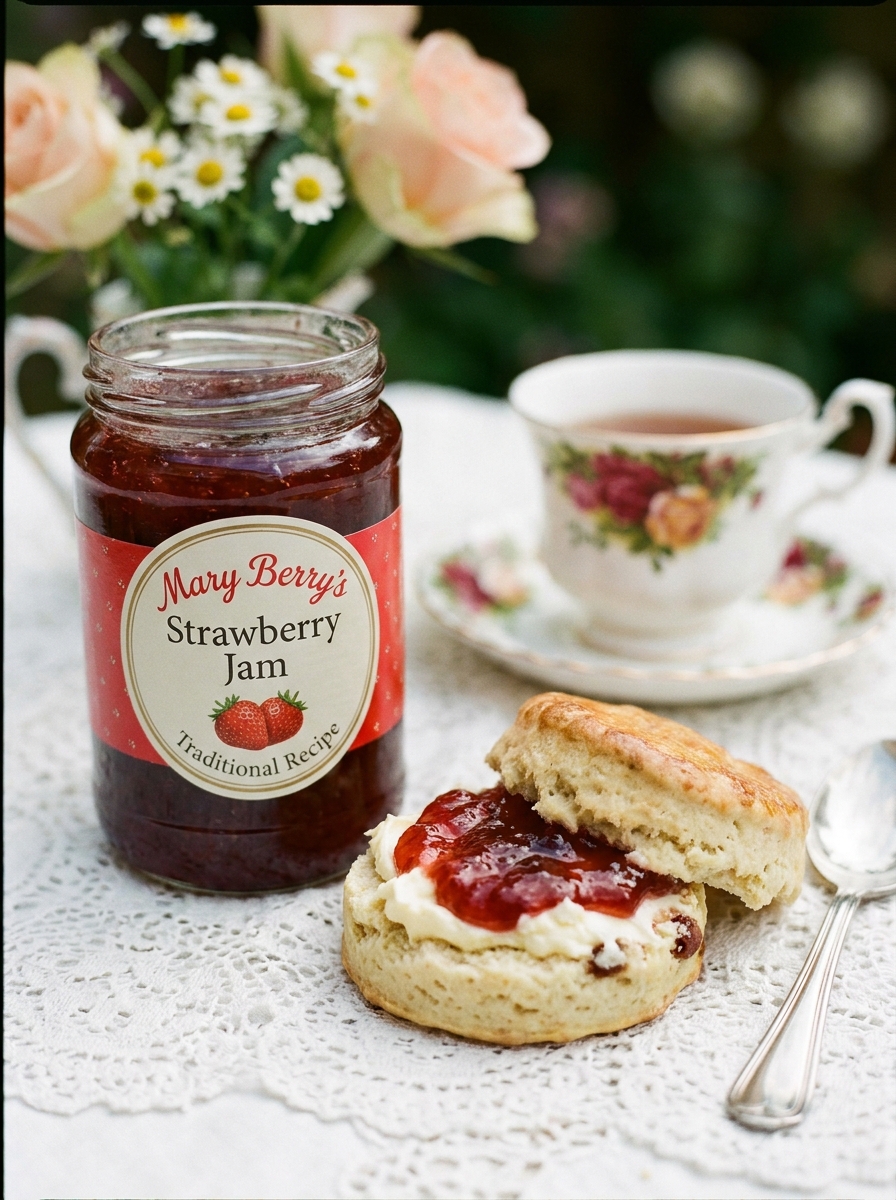
Spread on warm scones with clotted cream — the most quintessentially British use. As a filling in a Victoria sponge with whipped cream. On thick buttered toast. As a filling in a Swiss roll. Stirred into natural yoghurt. As a gift — strawberry jam in a labelled jar with a ribbon is one of the most universally appreciated homemade presents.
How to Store Mary Berry Strawberry Jam
Sealed, unopened jars: Store in a cool, dark place for up to 12 months.
Opened jar: Refrigerate and use within 6 weeks.
Mary Berry Strawberry Jam Recipe
Ingredients
Method
- Hull and halve strawberries. Place in preserving pan with lemon juice and half the sugar. Stir — cover and macerate at room temperature 1 hour minimum, or overnight.
- Add remaining warm sugar — stir over low to medium heat until every grain completely dissolved. No graininess on the base.
- Increase heat — bring to vigorous rolling boil. Add knob of butter. Boil 10–20 minutes. Test for set at 10 minutes using wrinkle test or thermometer (104–105°C). Boil and test until setting point reached.
- Remove from heat. Skim any remaining foam. Stand 15 minutes — stir gently. Ladle into warm sterilised jars. Seal immediately. Label and store.
Notes
Frequently Asked Questions
Can I use frozen strawberries?
Yes — frozen strawberries give a very good jam. They release more liquid than fresh strawberries, which can extend the boiling time slightly. The flavour is slightly less vivid than fresh but very good. Do not defrost before using — place them frozen into the preserving pan with the lemon juice and allow to cook from frozen.
My strawberry jam is not setting — what do I do?
Return to the pan, add the juice of one more lemon, boil hard for five minutes, and test again. Alternatively, use the loose jam as a sauce or coulis — it is delicious even without a proper set.
Can I use jam sugar instead of granulated?
Yes — jam sugar with added pectin gives a much more reliable set with low-pectin strawberries, reducing the boiling time to eight to ten minutes. The result is slightly firmer and the colour slightly less vivid but the set is completely reliable.
Can I add vanilla to strawberry jam?
Yes — one vanilla pod, split and scraped, added with the strawberries and lemon juice during maceration gives a slightly fragrant, slightly more complex jam. Remove before potting.














Leave a Reply