
 Anna Louise
Rhubarb and ginger is one of the great flavour combinations in British baking and preserving. The sharp, slightly sour character of rhubarb and the warm, slightly spicy heat of stem ginger suit each other so well that they feel specifically made for each other.
This jam has that combination in its simplest and most satisfying form — vivid pink rhubarb jam with pieces of stem ginger throughout, slightly sharp, slightly sweet, and with a gentle warmth that develops as you eat it.
I make this in spring when forced rhubarb — the bright pink, slender stalks from Yorkshire — is available. The forced rhubarb gives the most vivid pink colour and the most intense flavour. Maincrop rhubarb later in the season gives a slightly greener result but is equally good in terms of flavour.
Rhubarb is very low in pectin, which means it needs lemon juice and careful management of the boiling stage to set properly. I have included full instructions for testing the set so you can be confident every time.
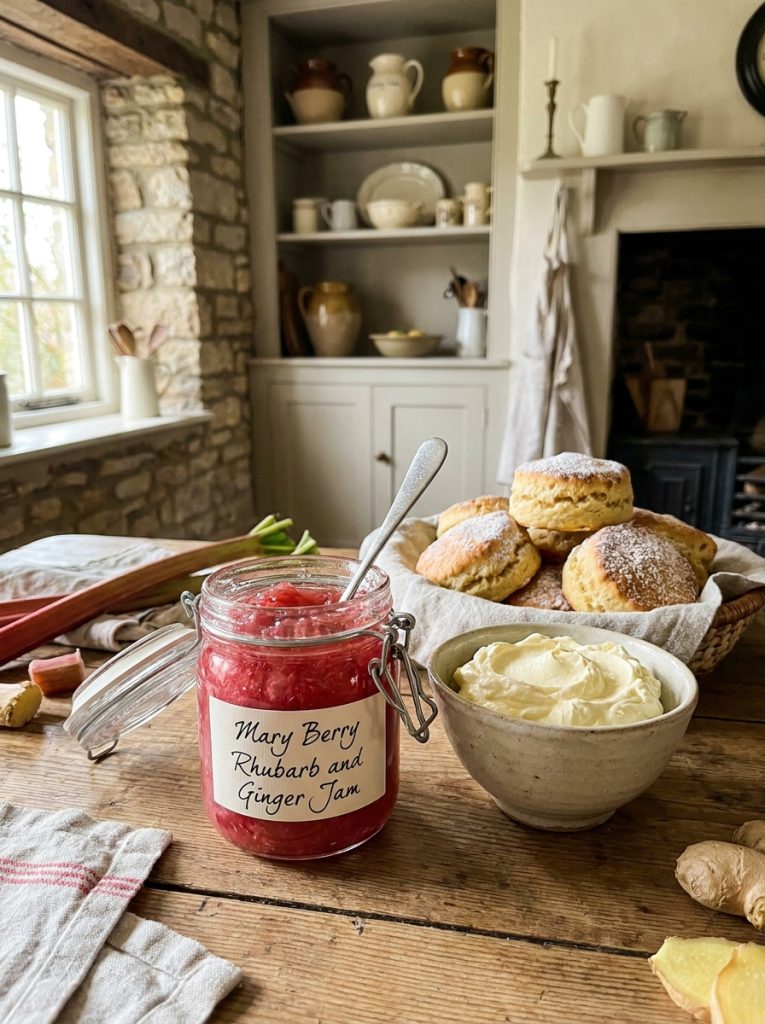
Ingredients for Mary Berry Rhubarb and Ginger Jam
For the Jam (Makes approximately 5 x 450g jars)
- 1.2kg fresh rhubarb — trimmed and cut into 2cm pieces
- 1kg granulated sugar — warmed in a low oven for 15 minutes
- Juice of 2 large unwaxed lemons — essential for the set
- 4 balls stem ginger in syrup, finely chopped
- 3 tbsp stem ginger syrup — from the jar
- 1 tsp ground ginger — gives additional background ginger warmth
How to Make Mary Berry Rhubarb and Ginger Jam
Step 1 — Macerate the Rhubarb
Put the rhubarb pieces into a large bowl with the granulated sugar, lemon juice, chopped stem ginger, ginger syrup, and ground ginger. Stir well. Cover and leave at room temperature overnight — or for a minimum of six hours.
The rhubarb will release a large amount of juice during this time, the sugar will begin dissolving, and the ginger will start to penetrate the rhubarb pieces. This maceration step gives a more vibrant, more deeply flavoured jam than one made with rhubarb added directly to the pan.
Step 2 — Dissolve and Boil
Pour everything from the bowl into a large preserving pan. Heat over a medium heat, stirring constantly, until every grain of sugar has completely dissolved. Test by running a spoon along the base — no graininess at all.
Increase the heat to high. Bring to a vigorous rolling boil. Boil for 10 to 20 minutes — rhubarb is very low in pectin and may take longer to reach setting point than higher-pectin fruits. Start testing at 10 minutes.
Wrinkle test: Place a teaspoon of jam on a cold plate from the freezer. Leave one minute. Push with your finger — if it wrinkles and does not flood back, it is ready. If it floods back, boil for a further five minutes and test again.
Sugar thermometer: Setting point is 104–105°C.
Step 3 — Pot and Seal
Remove from the heat. Skim any foam. Leave to stand for five minutes — this helps the rhubarb pieces distribute evenly through the jars rather than floating to the top.
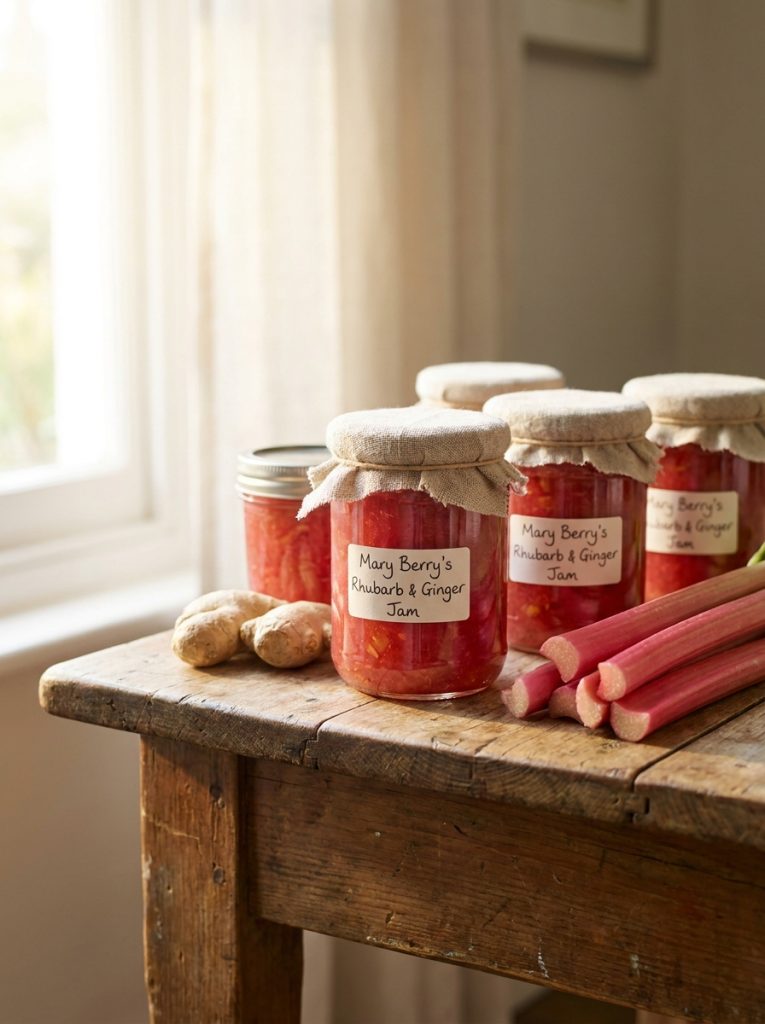
Stir gently. Ladle into warm sterilised jars. Seal immediately. Label and store in a cool, dark place.
My Top Tips For Perfect Rhubarb and Ginger Jam
Macerate overnight — do not skip this step. The overnight maceration does two important things: it draws the juice out of the rhubarb so the sugar dissolves more easily, and it allows the ginger to infuse the rhubarb before cooking even begins. The flavour of a macerated jam is noticeably more developed and more vibrant than one made without this step.
Both stem ginger and ground ginger give the best result. Stem ginger alone gives vivid pockets of ginger in the jam but a milder background warmth. Ground ginger alone gives background warmth without the textural interest of the stem ginger pieces. Together they give a jam that tastes specifically, completely of rhubarb and ginger throughout.
The ginger syrup from the jar is too good to waste. Three tablespoons of the syrup from the stem ginger jar give additional ginger flavour and a slight sweetness throughout the jam. It is a concentrated flavour bonus that I use in every jam that includes stem ginger.
Rhubarb is very low in pectin — be patient with the boiling stage. Do not be discouraged if the jam takes 15 to 20 minutes to reach setting point. Rhubarb jam needs longer than higher-pectin fruits. Keep testing every five minutes and trust the wrinkle test.
A five-minute rest before potting distributes the rhubarb pieces evenly. Without this rest, the rhubarb pieces float straight to the top of each jar. Five minutes of standing gives a jam where the fruit is distributed throughout.
Serving Suggestions
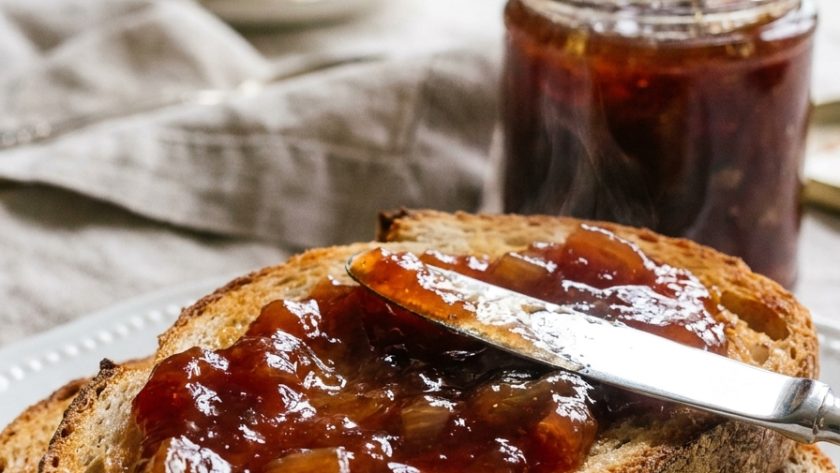
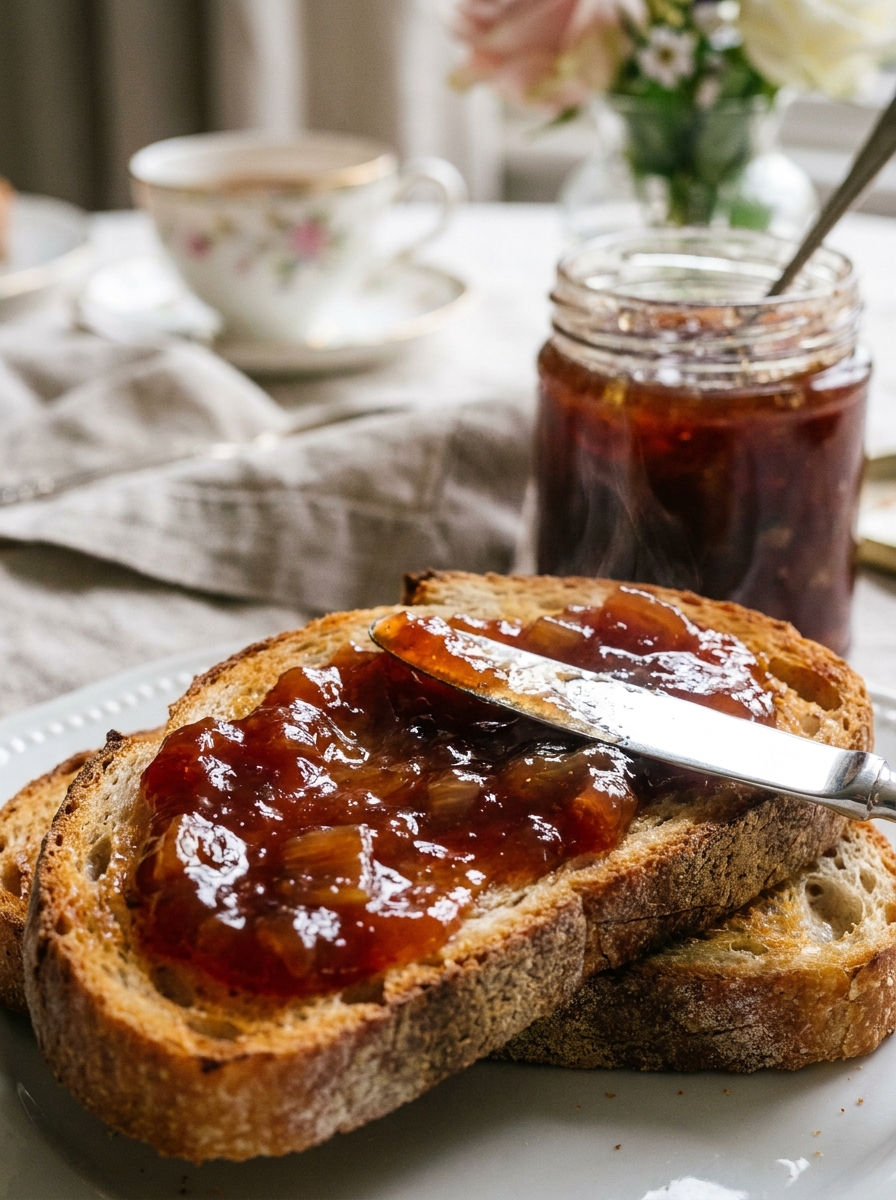
Spread on warm toast with cold salted butter. On scones with clotted cream instead of strawberry jam — it is completely wonderful and a little unexpected. Stirred into natural yoghurt. As a filling in a Victoria sponge for something different. As a gift — the vivid pink colour looks beautiful in a jar.
How to Store Mary Berry Rhubarb and Ginger Jam
Sealed, unopened jars: Store in a cool, dark place for up to 12 months. Opened jar: Refrigerate and use within 6 weeks.
Mary Berry Rhubarb and Ginger Jam Recipe
Ingredients
Method
- Combine rhubarb, warm sugar, lemon juice, stem ginger, ginger syrup, and ground ginger in a large bowl. Stir well. Cover and macerate overnight or minimum 6 hours.
- Pour everything into a preserving pan. Heat over medium heat, stirring constantly, until every grain of sugar dissolved. Increase heat — bring to vigorous rolling boil. Boil 10–20 minutes. Test for set at 10 minutes using wrinkle test or thermometer (104–105°C). Boil and test every 5 minutes until setting point reached.
- Remove from heat. Skim foam. Stand 5 minutes — stir gently. Ladle into warm sterilised jars. Seal immediately. Label and store.
Notes
Frequently Asked Questions
Can I use frozen rhubarb?
Yes — frozen rhubarb works very well. It releases more juice than fresh, so the maceration step produces a very liquid mixture. This is fine — proceed as directed.
Can I use more ginger?
Yes — increase to six balls of stem ginger for a more intensely ginger-forward jam. The rhubarb and ginger balance shifts slightly but the result is very good.
My jam is not setting — what do I do?
Return to the pan, add the juice of one more lemon, and boil hard for five to eight minutes. Test again. The extra pectin from the lemon almost always rescues a loose set.
Can I leave out the ground ginger?
Yes — the jam will still have ginger character from the stem ginger pieces and syrup. The ground ginger gives background warmth rather than a dominant flavour — it is worth including but not essential.













Leave a Reply