
 Anna Louise
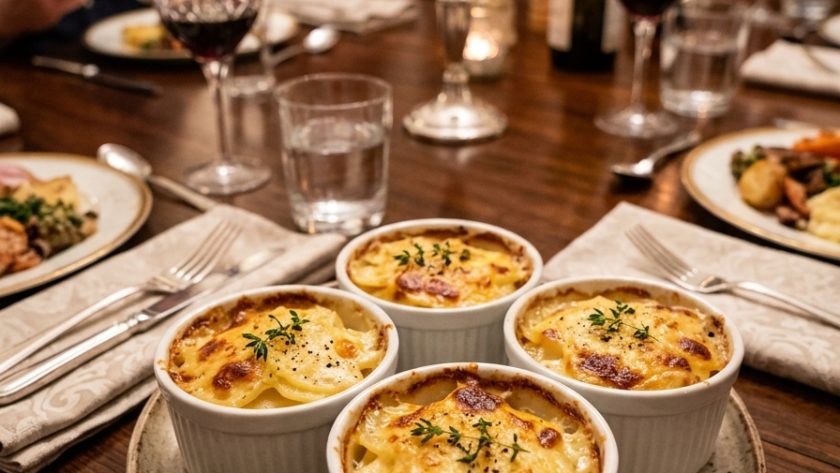
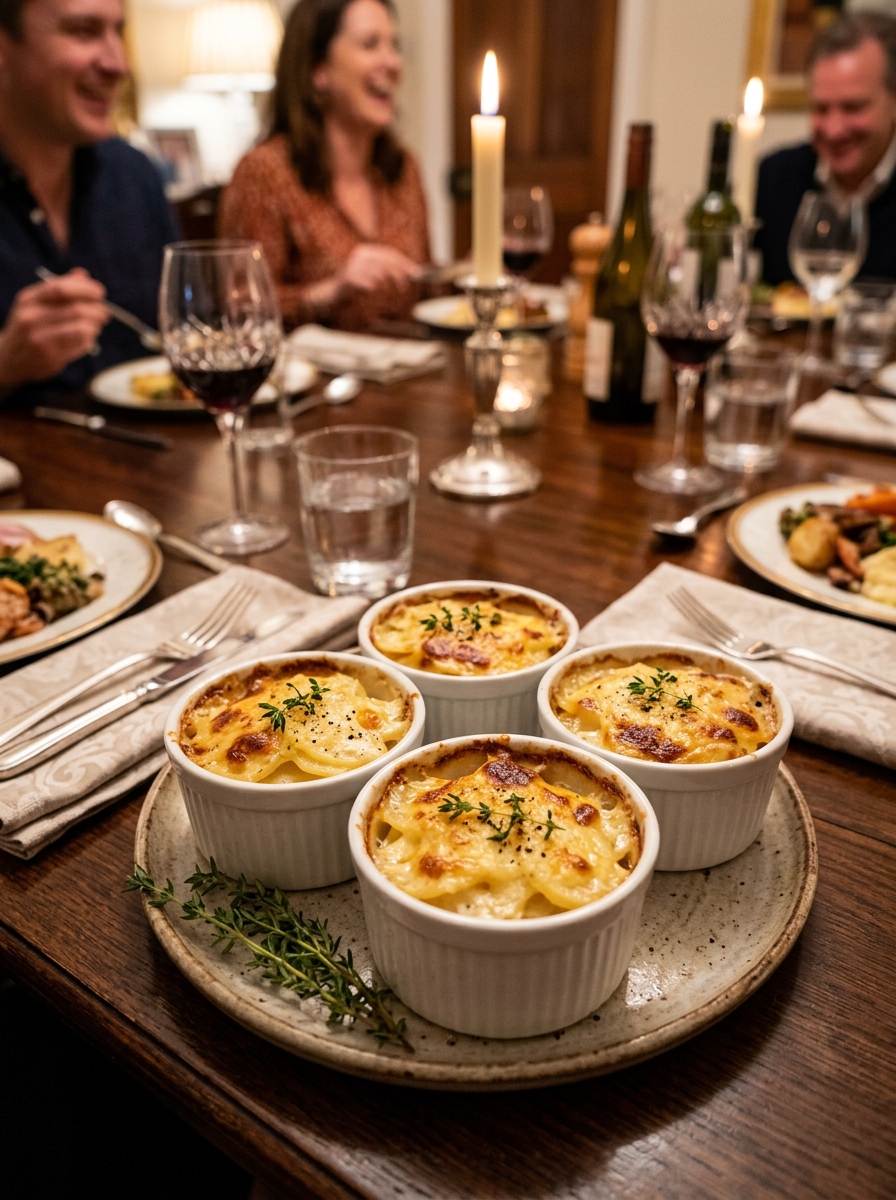
 Individual dauphinoise potatoes solve the one problem with serving dauphinoise at a dinner party — the serving problem. A large dish of dauphinoise is wonderful but serving it neatly in portions without the carefully layered gratin collapsing is genuinely difficult.
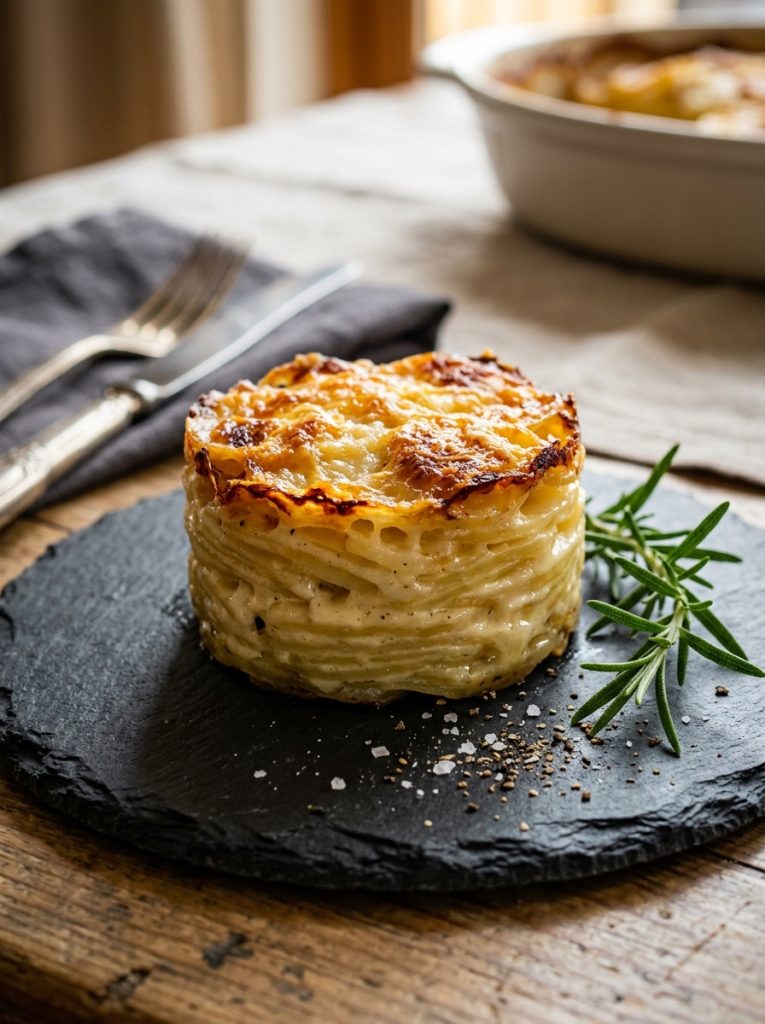
Individual portions, cooked in a muffin tin or individual ramekins, unmould cleanly onto the plate and look spectacular — a perfect golden cylinder of layered potato, crispy at the edges, creamy in the centre.
The method is identical to the large dauphinoise recipe on this site. Thinly sliced waxy potatoes, garlic cream, Gruyère between layers and on top — baked until completely tender and golden.
The difference is scale and presentation. Made in a 12-hole muffin tin, each portion is the ideal size for an individual serving and unmoulds with the golden top becoming the base on the plate — revealing a beautiful cross section of layered potato.
This is the potato side dish for occasions where presentation matters as much as flavour.
Ingredients for Mary Berry Individual Dauphinoise Potatoes
For the Individual Dauphinoise (Makes 8–10 portions)
- 900g waxy potatoes (Charlotte or Désirée), peeled and sliced very thinly — 2–3mm
- 2 garlic cloves, very finely crushed to a paste
- 400ml double cream
- 200ml whole milk
- 1 tsp fresh thyme leaves
- ½ tsp freshly grated nutmeg
- Salt and freshly ground white pepper
- 75g Gruyère or mature Cheddar, finely grated — for between layers and the top
- A little unsalted butter for greasing the tin
How to Make Mary Berry Individual Dauphinoise Potatoes
Step 1 — Preheat and Prepare the Tin
Preheat your oven to 160°C / 140°C fan / Gas 3. Grease a 12-hole deep muffin tin very generously with butter — every surface of each hole. Line each hole with a small square of baking parchment in the base.
The generous buttering is critical — if any potato sticks to the tin during baking, the individual portions will not unmould cleanly.
Step 2 — Make the Cream Mixture
Combine the double cream, whole milk, crushed garlic paste, thyme leaves, nutmeg, salt, and white pepper in a large saucepan. Bring to a very gentle simmer over a low heat — stir occasionally and watch carefully as cream can catch. Taste and adjust seasoning — the cream mixture should be assertively seasoned since the potatoes will absorb much of it during baking.
Step 3 — Par-Cook the Potatoes
Add the thinly sliced potatoes to the warm cream mixture. Stir gently to separate the slices and coat each one. Cook over a low heat for five minutes, stirring very gently, until the potatoes have just started to soften and the cream has thickened slightly from the released potato starch.
This par-cooking step ensures the potatoes are fully cooked and the cream properly absorbed by the time the individual portions are baked, and that they bake evenly.
Step 4 — Layer Into the Muffin Tin
Working carefully with a spoon and tongs, layer the cream-coated potato slices into each prepared muffin hole — building the layers as neatly and compactly as possible. Scatter a little grated Gruyère between every two to three layers. Press down very firmly with the back of a spoon after every few layers — compact layering gives portions that hold together when unmoulded.
Spoon a little of the remaining cream mixture over each filled hole. Scatter grated Gruyère over every top.
Step 5 — Bake
Place the muffin tin on a baking tray to catch any cream that bubbles over. Cover the entire tin tightly with foil.
Bake for 35 minutes covered. Remove the foil and bake for a further 20 to 25 minutes until the tops are deeply golden and a thin knife or skewer inserted through the centre of a portion meets no resistance.
Step 6 — Cool and Unmould
Leave to cool in the tin for fifteen minutes. This resting time is important — the cream sets slightly as it cools and the portions hold together far better when warm than when piping hot.
Run a thin palette knife carefully around every edge of each portion. Place a large baking tray or board over the muffin tin. Invert in one confident movement. Lift the tin away. The individual dauphinoise should sit golden-top-down on the tray, revealing clean layered sides. Peel away the parchment circles.
Use a palette knife to transfer each portion to the serving plate.
My Top Tips For Perfect Individual Dauphinoise Potatoes
Grease the muffin tin generously — every surface. Individual dauphinoise that sticks to the tin gives ragged, broken portions rather than clean cylinders. Generous butter on every surface — base and sides — and a parchment circle in the base is the combination that gives clean release every time.
Slice potatoes to exactly 2–3mm. A mandoline is the right tool — consistent, thin slices cook evenly and layer neatly. Thicker slices may not be fully tender by the time the tops are golden.
Press each layer down firmly. Compactness is what gives individual dauphinoise that holds together when unmoulded. Each addition of potato should be pressed with the back of a spoon before the next layer goes in.
Rest for fifteen minutes before unmoulding. Piping hot dauphinoise is fragile and may break when inverted. Fifteen minutes of cooling gives the cream time to set slightly, giving portions that unmould cleanly and hold their shape on the plate.
Use waxy potatoes not floury. Waxy potatoes hold their layers during the par-cooking and baking without collapsing. Floury potatoes can break down too much during the long bake and give portions that do not hold together when unmoulded.
Serving Suggestions
As the potato side dish for a dinner party main course — alongside roast beef, lamb, or a dressed fish fillet. Plated elegantly on a warm plate with the golden top visible. At a formal dinner where presentation matters as much as flavour.
How to Store
In the fridge: Store covered for up to 2 days. Reheat individual portions on a baking tray at 180°C for 12 to 15 minutes until piping hot — they regain their golden top beautifully.
In the freezer: Freeze unmoulded portions individually for up to 2 months. Reheat from frozen at 180°C for 25 to 30 minutes covered with foil, removing the foil for the final ten minutes.
Try These Recipes
- Mary Berry Aubergine Lasagne
- Mary Berry Sausage And Red Pepper Casserole
- Mary Berry Chicken And Mushroom Lasagne
- Mary Berry Twice Cooked Roast Potatoes
Mary Berry Individual Dauphinoise Potatoes
Ingredients
Method
- Preheat oven to 160°C / 140°C fan / Gas 3. Grease a 12-hole deep muffin tin very generously with butter — every surface. Place a small parchment circle in each base.
- Combine cream, milk, garlic paste, thyme, nutmeg, salt, and white pepper in a saucepan. Bring to a gentle simmer. Season assertively — taste before adding potatoes.
- Add sliced potatoes — stir gently to coat each slice. Cook 5 minutes over low heat until potatoes just begin to soften and cream thickens slightly.
- Layer cream-coated potato slices into each muffin hole — building compactly. Scatter Gruyère between layers every 2–3 layers. Press firmly with back of spoon after each addition. Spoon a little remaining cream over each top. Scatter Gruyère on every top.
- Place tin on baking tray. Cover tightly with foil. Bake 35 minutes. Remove foil — bake 20–25 more minutes until tops are deeply golden and a knife meets no resistance.
- Rest in tin 15 minutes. Run palette knife around each edge. Place baking tray over tin — invert confidently. Lift tin. Peel parchment circles. Transfer to serving plates.
Notes
Frequently Asked Questions
Can I make these the day before?
Yes — bake and unmould the day before. Refrigerate on a lined tray, uncovered. Reheat at 180°C for 15 minutes on the day of serving. This is the ideal approach for a dinner party.
Can I use a different cheese?
Yes — Comté gives a more complex, nuttier flavour than Gruyère. Mature Cheddar gives a more British character. Parmesan gives a particularly sharp, savoury top crust. All work excellently.
Can I add other flavourings to the cream?
Yes — a bay leaf, a few black peppercorns, and a strip of lemon zest steeped in the warm cream for ten minutes before adding the garlic and potatoes give additional fragrance and depth.
What if my portions break when I unmould them?
They were either too hot, the tin was not greased sufficiently, or they were not rested long enough. The pieces can be gently pressed back together on the plate — the golden top goes on top and the slightly broken sides can be hidden with a garnish.
















Leave a Reply