
 Anna Louise
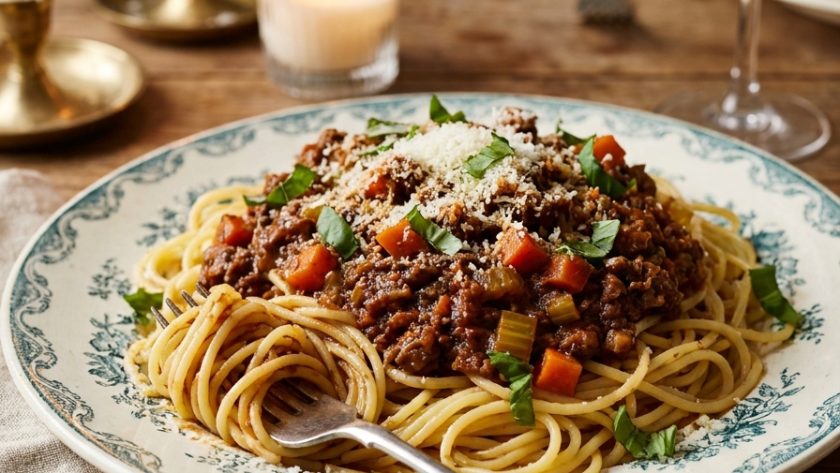
 Bolognese is the pasta sauce that everyone cooks and that very few people cook correctly. The version that appears on British tables most often — browned mince, a tin of tomatoes, thirty minutes on the hob — is a reasonable weeknight dinner.
It is not bolognese. Genuine bolognese — the ragù that comes from Bologna and that has been cooked by Italian home cooks for generations — involves a lower proportion of tomato than you might expect, a higher proportion of meat, a significant amount of milk added during the cook, and a long, slow simmer that cannot be shortened.
The milk is the detail that most surprises people when they encounter it for the first time. Milk added to the meat before the wine and tomatoes goes in — and allowed to absorb completely before anything acidic is added — gives the ragù a richness, a gentleness, and a depth that is completely unlike any bolognese made without it.
I make this on a Sunday, let it cook for three hours while I do other things, and eat it that evening and for the next two days. Bolognese reheated is better than bolognese made and eaten immediately — this is one of the few sauces where I say this without hesitation.
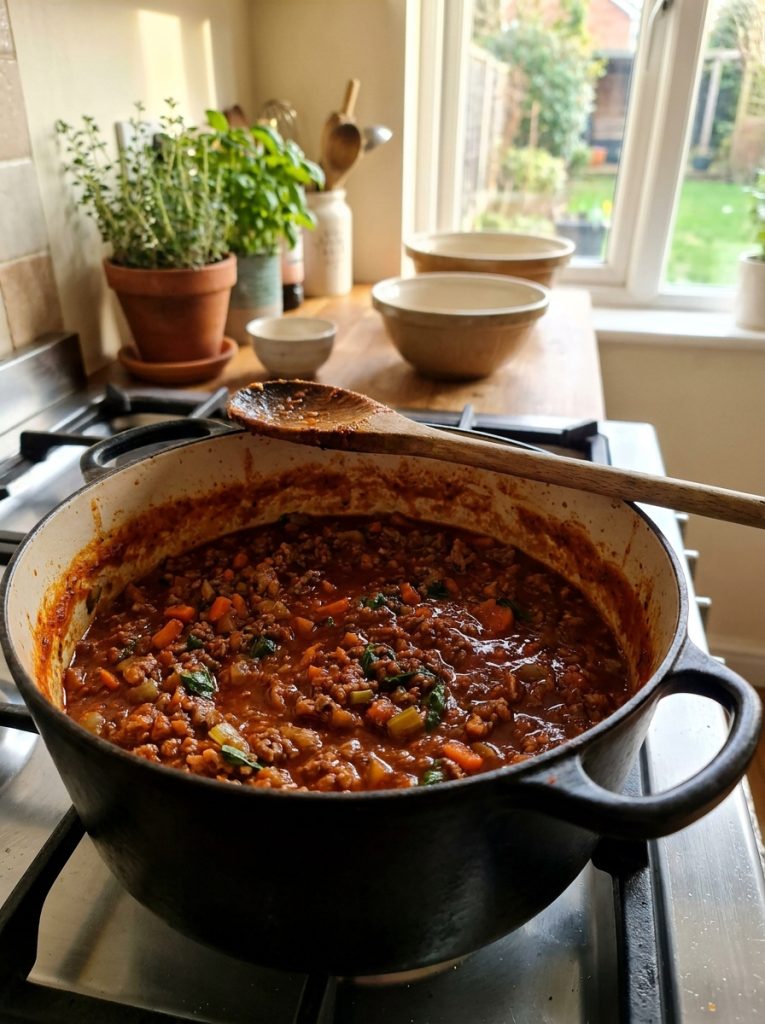
Ingredients for Mary Berry Bolognese
For the Bolognese
- 400g beef mince (15–20% fat) — the fat gives flavour; lean mince gives a dry result
- 200g pork mince — the mixture of beef and pork gives a more complex, more tender sauce
- 2 tbsp olive oil
- 25g unsalted butter
- 1 large onion, very finely chopped
- 2 celery sticks, very finely chopped
- 2 medium carrots, peeled and very finely chopped
- 4 garlic cloves, crushed
- 150ml whole milk — added before the wine, absorbed completely before the tomatoes
- 150ml dry white wine — or dry red wine for a deeper, more robust sauce
- 2 tbsp tomato purée
- 1 x 400g tin chopped tomatoes
- 200ml beef stock
- 1 tsp dried oregano
- 1 bay leaf
- Salt and freshly ground black pepper
- Freshly grated nutmeg — a pinch, grated directly over the sauce
To Serve
- 500g tagliatelle, pappardelle, or rigatoni — cooked to al dente
- Freshly grated Parmesan — generous
- A drizzle of good extra virgin olive oil
How to Make Mary Berry Bolognese
Step 1 — Build the Soffritto
Heat the olive oil and butter together in a large, heavy-based saucepan or casserole over a medium heat. Add the very finely chopped onion, celery, and carrot — the soffritto that is the flavour foundation of every proper bolognese.
Cook for fifteen to eighteen minutes, stirring occasionally, until completely soft, slightly golden, and sweet. The vegetables should be so soft they are almost melting. Do not rush this.
Add the garlic. Cook for two more minutes.
Step 2 — Brown the Meat
Increase the heat to medium-high. Add the beef and pork mince. Break it up thoroughly with a wooden spoon. Cook for ten to twelve minutes — stirring and breaking up continuously — until the meat is deeply browned and all the liquid has evaporated. The meat should be sizzling in fat, not steaming in liquid. This is the most important step.
Step 3 — Add the Milk
Reduce the heat to medium. Pour in the whole milk. Stir to combine. Cook, stirring occasionally, until the milk has been completely absorbed — eight to ten minutes. The mixture should look slightly creamy and the milk should have disappeared into the meat.
Step 4 — Add the Wine
Pour in the wine. Stir and scrape up any golden bits from the base of the pan. Cook until the wine has almost completely evaporated — eight to ten minutes. The raw alcohol smell should be completely gone.
Step 5 — Add the Tomatoes and Simmer
Add the tomato purée — stir for one minute. Add the chopped tomatoes, beef stock, dried oregano, and bay leaf. Season generously. Add a pinch of freshly grated nutmeg.
Bring to a gentle simmer. Reduce the heat to the lowest possible setting. Cook partially covered for 2 to 3 hours — stirring every thirty minutes — until the sauce is deeply rich, thick, and glossy. Add a splash of stock if it seems to be catching. The longer it cooks, the better it becomes.
Taste and season assertively before serving.
My Top Tips For Perfect Mary Berry Bolognese
The soffritto is the flavour foundation — do not rush it. Fifteen to eighteen minutes of cooking the onion, celery, and carrot until completely soft and slightly golden gives the sweet, complex base that makes a great bolognese. Five minutes gives a slightly raw, slightly sharp undertone that persists throughout the long cook.
Brown the meat until genuinely dry and sizzling. The most common mistake in bolognese — and in most mince-based sauces — is not browning the meat sufficiently. The meat must be browned until all the liquid it releases during cooking has evaporated and it is sizzling in fat. Pale, slightly grey mince gives a pale, slightly grey sauce.
The milk step is not optional. This is the instruction that most people skip or question — and that makes the most significant difference to the finished sauce. Milk added before the acidic wine and tomatoes, and allowed to absorb completely, gives the bolognese its characteristic gentleness and rounded richness. Do not skip it.
Cook for at least two hours — three is better. A genuine bolognese cannot be made in thirty minutes. The long, slow cook is what gives the sauce its depth, its concentration, and its specific character. Two hours gives something very good. Three hours gives something extraordinary.
Use a mixture of beef and pork. All beef gives a slightly one-dimensional, slightly robust result. The pork adds a slight sweetness and a different texture that gives the finished sauce more complexity and a more tender, more varied texture.
Serving Suggestions
With fresh tagliatelle — the traditional Bolognese pairing. With pappardelle for a more substantial result. With rigatoni for a tube pasta that catches the sauce inside.
Never with spaghetti — this is a common pairing in Britain but the meat sauce slips off spaghetti rather than clinging to it. With a generous amount of freshly grated Parmesan and a good drizzle of olive oil.
How to Store Mary Berry Bolognese
In the fridge: Store covered for up to 4 days. The sauce is noticeably better on the second and third day as the flavours deepen.
In the freezer: Freeze in portions for up to 3 months. Defrost overnight and reheat gently — the sauce reheats beautifully.
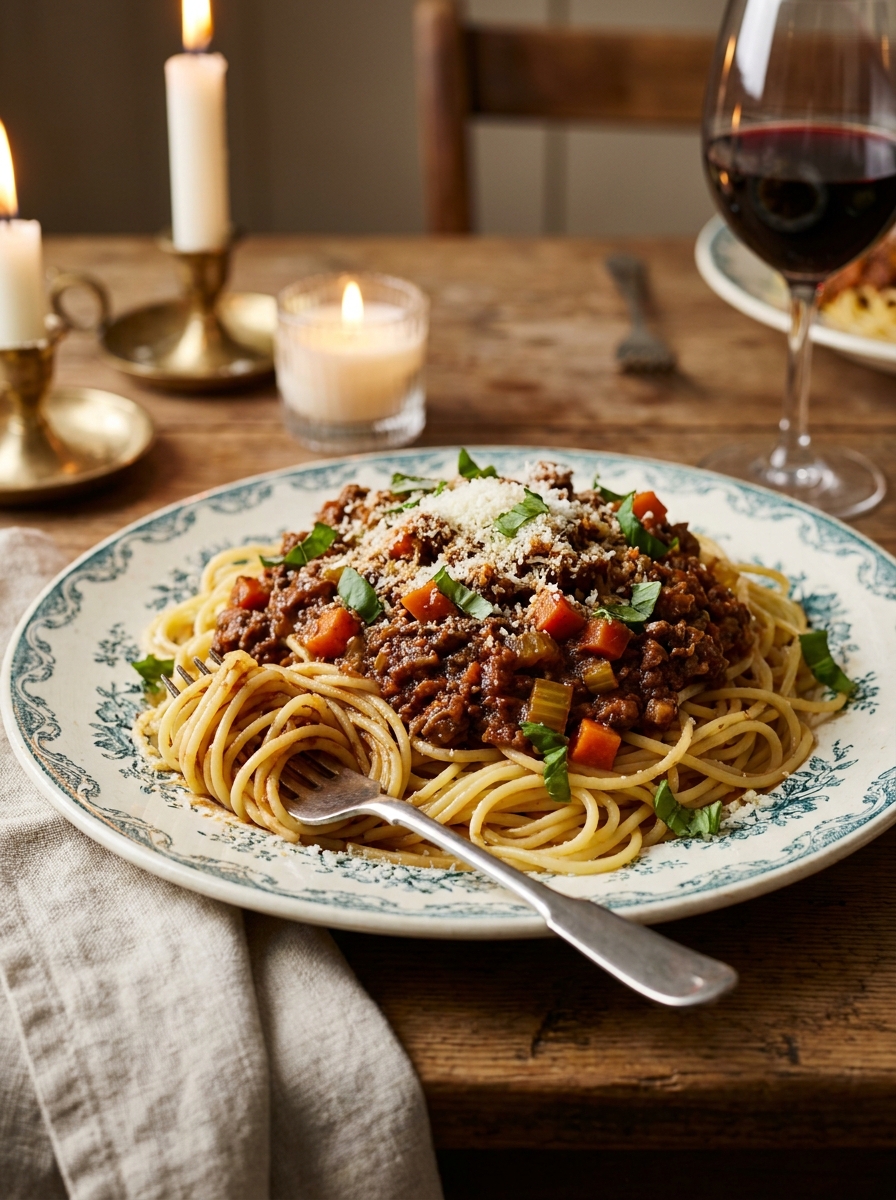
Mary Berry Bolognese Recipe
Ingredients
Method
- Heat oil and butter over medium heat. Cook onion, celery, and carrot 15–18 minutes until completely soft and slightly golden. Add garlic — 2 minutes.
- Increase heat to medium-high. Add beef and pork mince — break up thoroughly. Brown 10–12 minutes until deeply browned and all liquid has evaporated.
- Reduce to medium. Add milk — stir to combine. Cook until completely absorbed — 8–10 minutes.
- Add wine — cook until almost completely evaporated — 8–10 minutes.
- Add tomato purée — 1 minute. Add tinned tomatoes, stock, oregano, and bay leaf. Season. Add nutmeg. Bring to gentle simmer — lowest heat. Cook partially covered 2–3 hours, stirring every 30 minutes. Season assertively.
- Cook pasta to al dente. Toss with bolognese. Serve with Parmesan and olive oil.
Notes
Frequently Asked Questions
Can I use all beef mince?
Yes — all beef gives a slightly more robust, slightly less complex result. Still very good but not quite as layered as the beef and pork combination.
Can I add chicken livers?
Yes — 100g of chicken livers, finely chopped and cooked with the mince, give a deeply savoury, more complex result that is completely traditional in some regional versions of bolognese.
Can I make this in a slow cooker?
Yes — complete steps 1 to 4 on the hob. Transfer to the slow cooker. Cook on LOW for 6 to 8 hours. The result is virtually identical to the hob version and requires no stirring.
Can I use red wine instead of white?
Yes — red wine gives a slightly deeper, more robust character. White wine gives a slightly lighter, more delicate result. Both are correct — it is a matter of personal preference and what is open in the kitchen.















Leave a Reply