
 Anna Louise
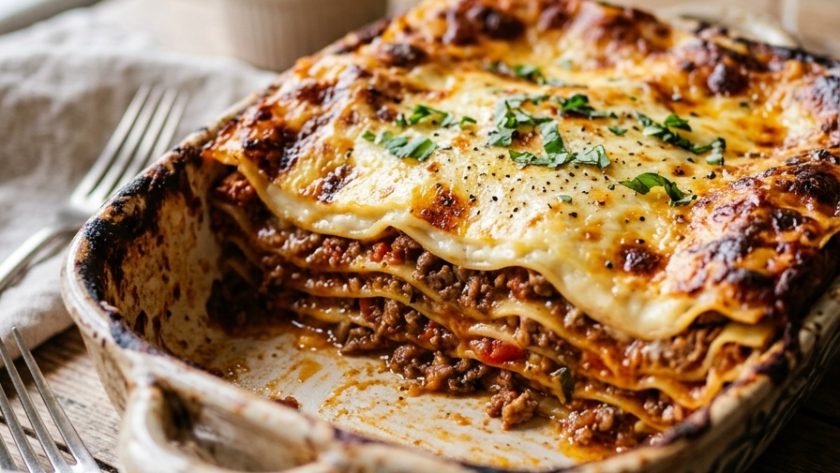
 A great lasagne is one of those dishes that takes a little time and rewards you completely for it. Layers of tender pasta, a rich, deeply flavoured meat ragu that has had time to develop real depth, and a silky béchamel sauce that bakes to a golden, slightly crisp top.
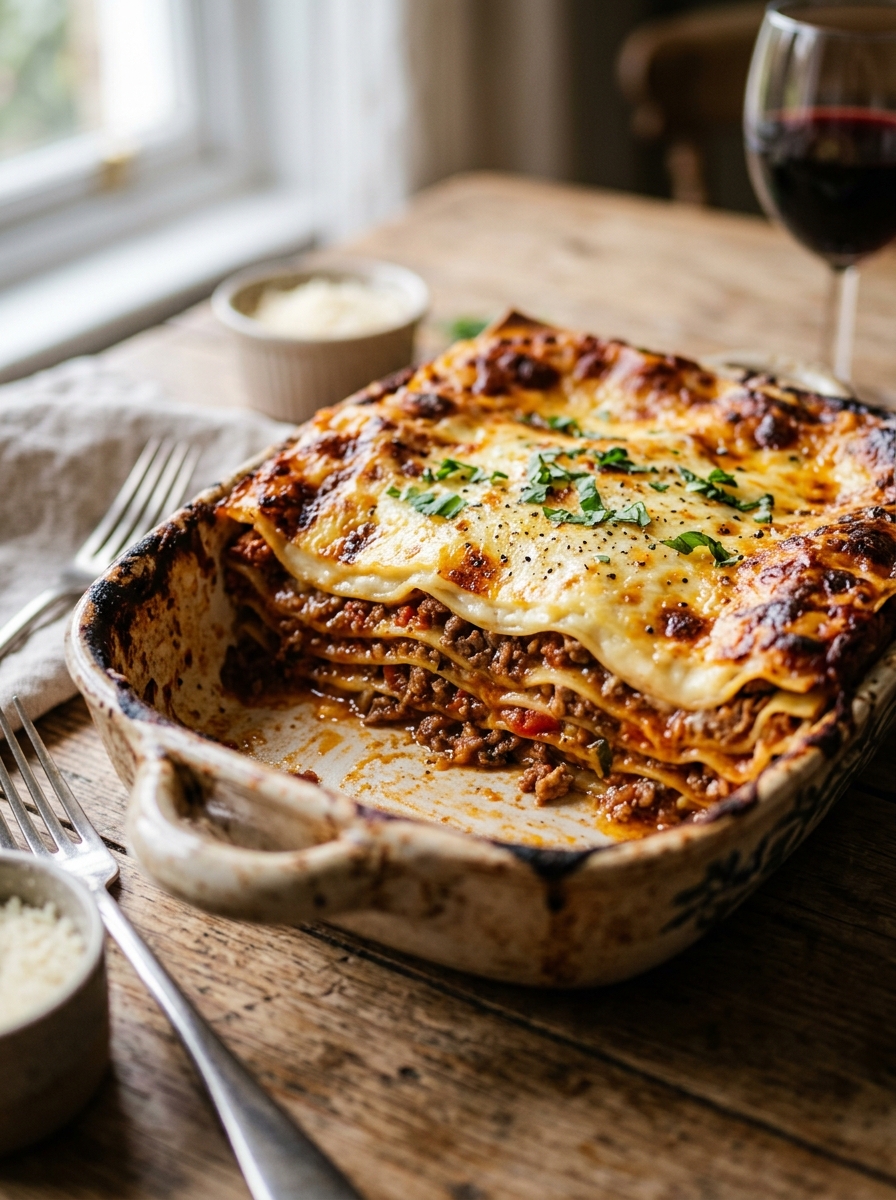
When you cut into it and that first slice holds its shape — distinct layers visible, sauce glistening — there is a particular satisfaction that few other dishes provide.
Mary Berry’s lasagne recipe takes the time this dish deserves. The ragu is built slowly — vegetables softened first, the beef browned properly, red wine and tinned tomatoes added, and then a long, gentle simmer that transforms a simple mince sauce into something rich, complex, and deeply savoury.
The béchamel is made properly — a roux-based white sauce enriched with a little cheese, smooth and pourable, that bakes into something golden and bubbling.
This is the meal I make for a Sunday when I want the house to smell wonderful for hours, and for a table full of people to leave completely satisfied.
What Makes a Great Lasagne?
The ragu needs time. A lasagne ragu that has simmered for an hour or more tastes completely different from one rushed through in 20 minutes. The flavours concentrate, the sauce thickens naturally, and the meat becomes tender and deeply flavoured rather than just cooked through.
The béchamel must be smooth and pourable. A lumpy or overly thick béchamel makes assembly difficult and results in uneven layers. Take your time with the roux and add the milk gradually.
Resting after baking is essential. A lasagne that is cut immediately after coming out of the oven will collapse — the layers have not had time to set. Ten to fifteen minutes of resting transforms a lasagne from a sloppy mess on the plate into clean, distinct slices.
Ingredients for Mary Berry Lasagne
For the Beef Ragu
- 2 tbsp olive oil
- 1 large onion, finely chopped
- 2 carrots, finely diced
- 2 celery sticks, finely diced
- 3 garlic cloves, crushed
- 500g beef mince
- 150g pancetta or smoked bacon lardons
- 150ml red wine
- 2 x 400g tins chopped tomatoes
- 2 tbsp tomato purée
- 1 tsp dried oregano
- 2 bay leaves
- 300ml beef stock
- 1 tsp sugar
- Salt and freshly ground black pepper
For the Béchamel Sauce
- 75g unsalted butter
- 75g plain flour
- 900ml whole milk
- ½ tsp freshly grated nutmeg
- 75g Parmesan, finely grated
- Salt and freshly ground black pepper
To Assemble
- 250g dried lasagne sheets (no pre-cook required)
- 100g mozzarella, torn into pieces
- 50g Parmesan, finely grated
How to Make Mary Berry Lasagne — Step by Step
Step 1 — Soften the Vegetables
Heat the olive oil in a large, heavy-based pan over a medium heat. Add the onion, carrots, and celery and cook gently for 10 minutes, stirring occasionally, until softened. Add the garlic and cook for another minute.
Step 2 — Brown the Meat
Add the pancetta or bacon lardons and cook for 3 to 4 minutes until beginning to colour. Increase the heat slightly, add the beef mince, and cook for 8 to 10 minutes, breaking it up with a wooden spoon, until well browned all over and any liquid has mostly evaporated.
Step 3 — Build the Ragu
Pour in the red wine and let it bubble for a minute, scraping the base of the pan to lift any browned bits. Add the chopped tomatoes, tomato purée, oregano, bay leaves, beef stock, and sugar. Stir well to combine.
Bring to a simmer, then reduce the heat to low. Cover partially and simmer gently for 1 hour to 1 hour 30 minutes, stirring occasionally, until the sauce has thickened significantly and the flavours have deepened. The longer it simmers, the better it will taste — do not rush this stage. Remove the bay leaves and season generously with salt and pepper.
Step 4 — Make the Béchamel
While the ragu simmers, make the béchamel. Melt the butter in a separate saucepan over a medium heat. Add the flour and stir continuously for 1 to 2 minutes to form a smooth paste, cooking out the raw flour taste.
Gradually add the milk, a splash at a time, whisking continuously to prevent lumps. Once all the milk is incorporated, bring to a gentle simmer and cook for 5 to 6 minutes, stirring frequently, until the sauce thickens to a smooth, pourable consistency that coats the back of a spoon.
Remove from the heat and stir in the nutmeg and Parmesan until melted and combined. Season with salt and pepper.
Step 5 — Preheat and Assemble
Preheat your oven to 180°C / 160°C fan / Gas 4. In a large ovenproof dish — approximately 30x23cm and at least 7cm deep — begin layering.
Spread a thin layer of the ragu across the base of the dish. Cover with a single layer of lasagne sheets, breaking them to fit if necessary. Spread a layer of ragu over the pasta, followed by a layer of béchamel. Repeat the layers — pasta, ragu, béchamel — until you have used all the ragu, finishing with a final layer of pasta topped generously with the remaining béchamel.
Scatter the torn mozzarella and grated Parmesan evenly over the top.
Step 6 — Bake
Bake for 40 to 45 minutes until the top is golden brown and bubbling, and the pasta is completely tender when tested with a knife. If the top is browning too quickly before the pasta is tender, cover loosely with foil for the remainder of the cooking time.
Step 7 — Rest and Serve
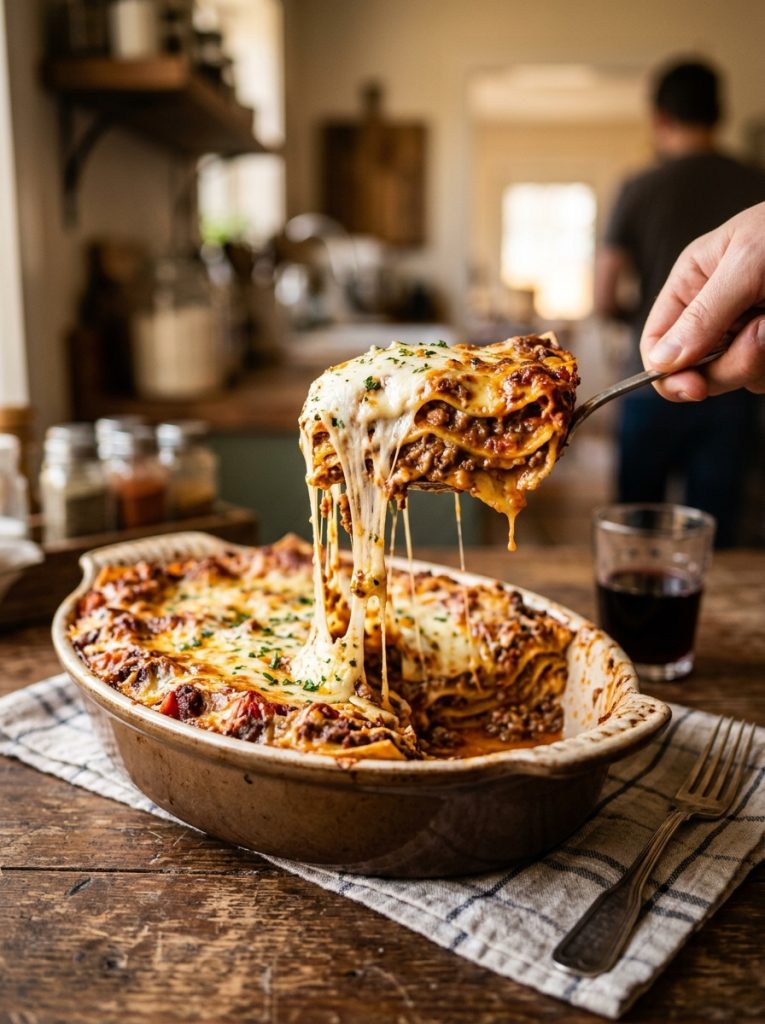
Remove from the oven and leave to rest for 10 to 15 minutes before cutting. This resting time is essential — it allows the layers to set and firm up, so that when you cut into the lasagne, it holds its shape in clean, distinct slices rather than collapsing into a sauce-heavy mess.
My Top Tips for the Best Lasagne
Do not rush the ragu. An hour minimum, an hour and a half if you have the time. This is where almost all of the flavour of a great lasagne comes from. A 20-minute ragu tastes thin and one-dimensional compared to one that has had time to reduce and develop.
Use no-pre-cook lasagne sheets and make sure there is enough sauce. Dried lasagne sheets that do not require pre-cooking absorb moisture from the ragu and béchamel as they bake, softening to perfect tenderness. Make sure every sheet is in contact with sauce — dry edges or corners that are not covered will remain hard and chewy.
Make the béchamel properly — do not skip steps. A good béchamel takes 10 minutes and transforms the texture of the finished lasagne. Adding the milk gradually while whisking is the key to a smooth, lump-free sauce.
Finish with a generous layer of béchamel and cheese on top. This is what gives you that beautiful golden, bubbling top. Do not be stingy with the final layer — it is the most visible part of the finished dish and contributes significantly to both appearance and flavour.
Rest before cutting — always. Ten to fifteen minutes minimum. I know it is tempting to dive straight in, especially when the smell has been filling the kitchen for hours. But resting is what gives you clean slices rather than a sloppy pile on the plate.
Make the ragu a day ahead if you can. Like most slow-cooked sauces, the ragu improves overnight as the flavours continue to meld. Make it the day before, refrigerate, then assemble and bake the lasagne fresh the next day.
Serving Suggestions
With a simple green salad dressed with a sharp vinaigrette — the acidity cuts through the richness of the lasagne beautifully. With garlic bread for something more indulgent. A glass of Chianti or another medium-bodied Italian red is the classic pairing.
How to Store Mary Berry Lasagne
In the fridge: Store covered for up to 3 days. Reheat individual portions in the microwave, or cover the dish with foil and reheat in a 180°C oven for 25 to 30 minutes until piping hot throughout.
In the freezer: Lasagne freezes exceptionally well, both before and after baking. If freezing unbaked, assemble completely, wrap tightly, and freeze for up to 3 months — defrost overnight in the fridge before baking as directed, adding 10 to 15 minutes to the baking time. If freezing after baking, cool completely, portion, and freeze for up to 3 months — defrost and reheat in a 180°C oven until piping hot.
Try These Recipes
Mary Berry Lasagne Recipe
Ingredients
Method
- Cook onion, carrots, and celery in olive oil for 10 minutes until softened. Add garlic, cook 1 minute.
- Add pancetta, cook 3–4 minutes. Add beef mince, brown for 8–10 minutes.
- Add red wine, bubble 1 minute, scraping the pan. Add chopped tomatoes, tomato purée, oregano, bay leaves, stock, and sugar. Simmer covered on low for 1 hour to 1 hour 30 minutes until thick. Remove bay leaves. Season.
- Melt butter, stir in flour to form a roux. Cook 1–2 minutes. Gradually whisk in milk. Simmer 5–6 minutes until smooth and thick. Stir in nutmeg and Parmesan. Season.
- Preheat oven to 180°C / 160°C fan / Gas 4. Layer ragu, lasagne sheets, ragu, béchamel in a large dish, repeating until ingredients are used, finishing with pasta topped with béchamel.
- Scatter mozzarella and Parmesan over the top. Bake 40–45 minutes until golden, bubbling, and pasta is tender.
- Rest 10–15 minutes before cutting and serving.
Notes
Frequently Asked Questions About Mary Berry Lasagne
Can I make lasagne ahead of time?
Yes — this is one of the best make-ahead dishes there is. Assemble the lasagne completely, cover, and refrigerate for up to 24 hours before baking. You may need to add 10 minutes to the baking time if cooking from cold.
Why is my lasagne watery?
Usually because the ragu was not simmered for long enough to reduce and thicken properly, or the béchamel was too thin. Both sauces should be thick enough to hold their shape on a spoon before assembly — if either is too liquid, simmer for longer to reduce.
Can I use a different meat?
Yes — a mixture of beef and pork mince gives a slightly richer, more traditional Italian flavour. Lamb mince also works well and gives a different, slightly gamier character. The method remains exactly the same.
Can I make a vegetarian lasagne with this method?
Yes — replace the meat ragu with a mixture of lentils, mushrooms, and extra vegetables cooked in the same tomato-based sauce for a similar length of time. The béchamel and assembly method remain unchanged.
Why are my pasta sheets still hard after baking?
Either there was not enough sauce in contact with the pasta, or the lasagne needed longer in the oven. Make sure every sheet is fully covered by ragu or béchamel with no dry edges, and check the pasta with a knife before removing from the oven — it should offer no resistance.
Can I add other vegetables to the ragu?
Yes — finely diced mushrooms, courgette, or red pepper can all be added alongside the onion, carrot, and celery at the beginning. They add extra flavour and nutritional variety without changing the method.















Leave a Reply