
 Anna Louise
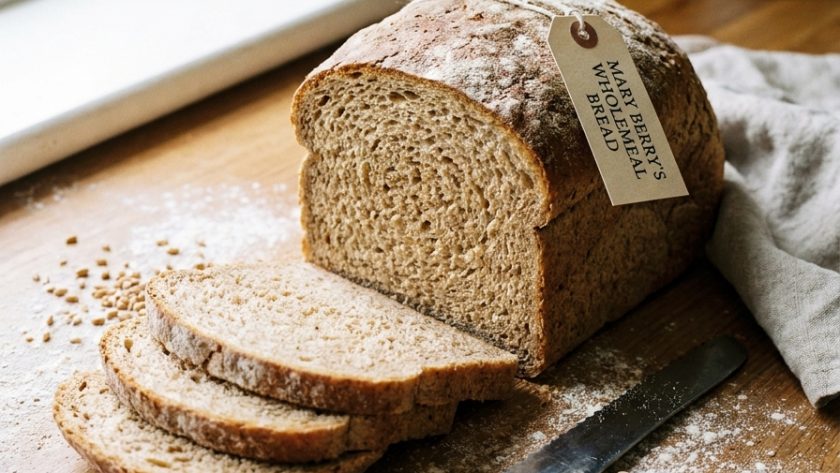
Homemade wholemeal bread is one of those things I always feel good about making. There is something genuinely satisfying about mixing flour, yeast, water, and salt and ending up with a proper loaf — golden on the outside, slightly dense but properly risen inside.
With the nutty, slightly earthy character of wholemeal flour that white bread simply does not have. It makes the best toast I know, and a slice with good butter and honey for breakfast is one of my favourite simple pleasures.
I use a mixture of wholemeal and strong white bread flour here — all-wholemeal bread can be quite dense and heavy. The white flour gives the bread a better rise and a lighter texture while keeping the hearty wholemeal character that is the whole point of making this bread.
I have tried many combinations and 70% wholemeal to 30% white gives the best balance.
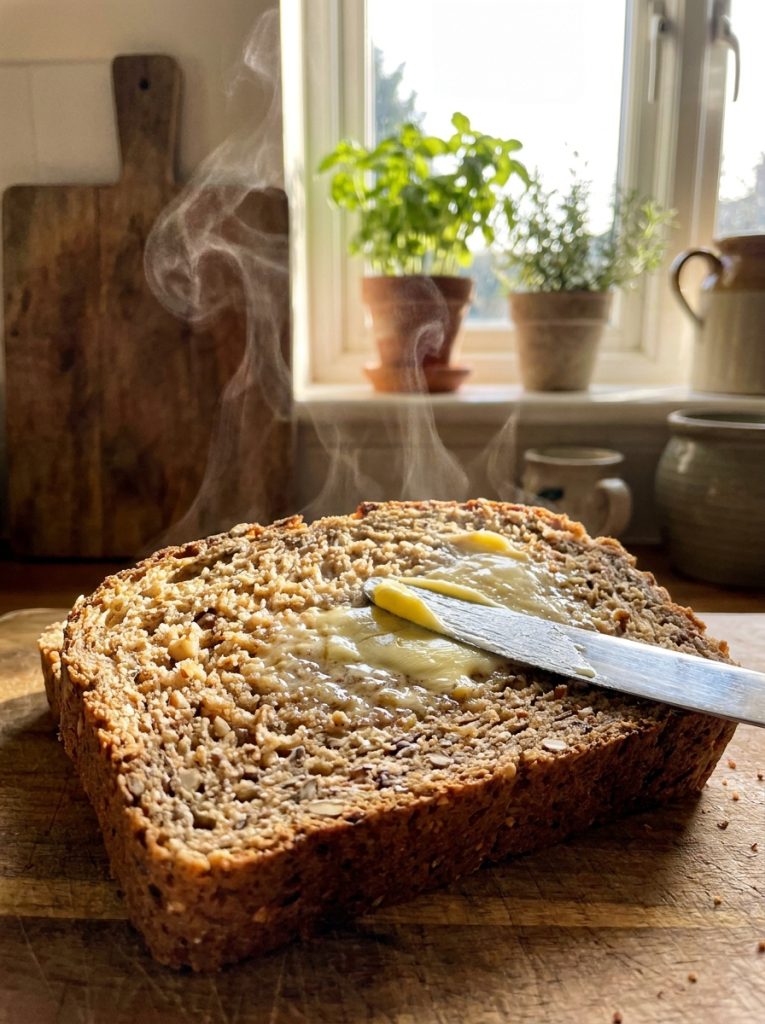
Ingredients for Mary Berry Wholemeal Bread (Makes 1 large loaf)
For the Bread
- 350g strong wholemeal bread flour
- 150g strong white bread flour — plus extra for kneading
- 7g fast-action dried yeast (1 sachet)
- 1½ tsp fine salt
- 1 tsp golden caster sugar — feeds the yeast
- 320ml warm water — the water should feel comfortably warm on your wrist, not hot
- 2 tbsp olive oil — gives a slightly softer crumb and helps the bread stay fresh longer
For the Top
- 1 tbsp whole milk or water — for brushing
- 1 tbsp mixed seeds — sunflower, pumpkin, sesame, or poppy seeds, or a combination
How to Make Mary Berry Wholemeal Bread
Step 1 — Mix the Dough
Put both flours, the yeast, salt, and sugar into a large bowl. Stir briefly to combine. Make a well in the centre.
Pour the warm water and olive oil into the well. Mix with a round-bladed knife until a shaggy dough forms — all the flour should be incorporated. The dough will feel slightly sticky. This is correct for wholemeal bread.
Step 2 — Knead
Turn the dough out onto a lightly floured surface. Knead for eight to ten minutes — pushing the dough away with the heel of your hand, folding it back, turning it a quarter turn, and repeating. After eight to ten minutes the dough should be smooth, slightly elastic, and no longer sticky. If it is sticking badly to the surface, add a little more flour one tablespoon at a time.
Wholemeal dough will never be as smooth or as elastic as white bread dough — the bran in the wholemeal flour cuts through the gluten strands. This is normal. The dough just needs to be smooth and slightly springy.
Step 3 — First Rise
Shape the dough into a ball. Place in a lightly oiled bowl. Cover with a clean damp tea towel or cling film. Leave in a warm place for one hour to one hour thirty minutes until roughly doubled in size.
A warm spot in the kitchen, an airing cupboard, or an oven with just the light on are all good places for the first rise.
Step 4 — Shape and Second Rise
Grease a 900g (2lb) loaf tin. Punch the risen dough down gently — this knocks out the large air bubbles. Shape into an oblong roughly the width of the tin and place inside, seam side down. Press gently to fill the tin.
Cover loosely and leave for 30 to 45 minutes until the dough has risen above the rim of the tin and looks puffy.
Step 5 — Bake
Preheat your oven to 220°C / 200°C fan / Gas 7. Brush the top of the risen dough with milk or water. Scatter seeds generously over the top if using.
Bake for 25 to 30 minutes until the top is deep golden-brown. Remove from the tin and tap the base of the loaf — it should sound hollow. If it sounds dense and dull, return to the oven for five more minutes without the tin.
Cool on a wire rack for at least thirty minutes before slicing. I know it is tempting to cut into it straight away — but a freshly baked loaf needs time to set, and cutting too early gives a slightly doughy, slightly compressed crumb.
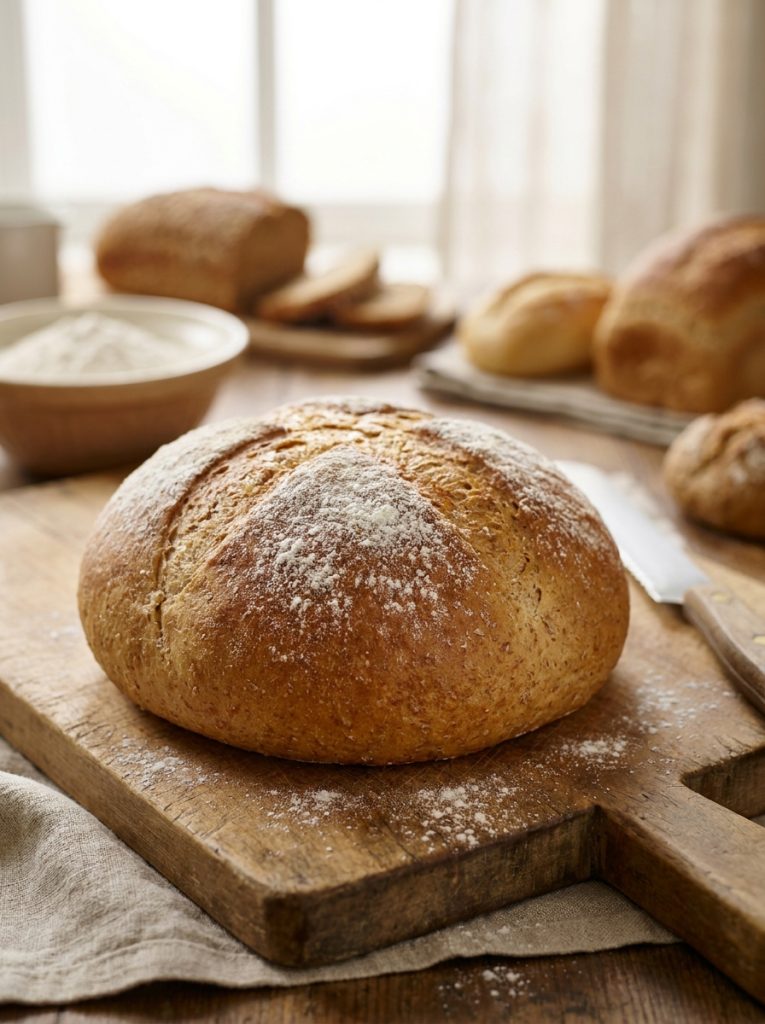
My Top Tips Mary Berry Wholemeal Bread
Mix wholemeal and white flour for the best result. All-wholemeal bread is dense and can be quite heavy. The 30% white flour in this recipe gives a much better rise and a lighter texture while keeping the hearty character of wholemeal. It is the mix I come back to every time.
The water temperature matters. Water that is too hot kills the yeast and the bread will not rise. Water that is too cold makes the yeast sluggish and the rise takes very long. Comfortably warm on the inside of your wrist — like a warm bath — is exactly right. I check this every time, even after years of bread-making.
Knead properly for the full eight to ten minutes. Bread that is under-kneaded has underdeveloped gluten and gives a loaf that does not rise as well and has a slightly crumbly, slightly dense texture. Eight to ten minutes of proper kneading — using the heel of the hand and working the dough energetically — gives the structure the bread needs.
Do not rush the rises. Both rises are important. The first rise gives the bread its flavour — longer first rises give more complex flavour. The second rise gives the loaf its shape and its open crumb. Rushing either gives a dense, flat loaf.
The hollow sound test is the most reliable doneness check. A fully baked loaf sounds hollow when tapped on the base. A dense, dull sound means the centre is still slightly underdone. Return to the oven for five minutes without the tin.
Serving Suggestions
Toasted with cold salted butter and honey for breakfast — the best possible use of this bread. In thick slices with good cheese and chutney. As the bread alongside a bowl of soup. As the base for a genuinely good sandwich.
How to Store Mary Berry Wholemeal Bread
At room temperature: Store in a bread bin or wrapped in a clean tea towel for up to 4 days. Do not store in a plastic bag — it makes the crust soft.
In the freezer: Slice before freezing and freeze for up to 3 months. Toast from frozen for the best result.
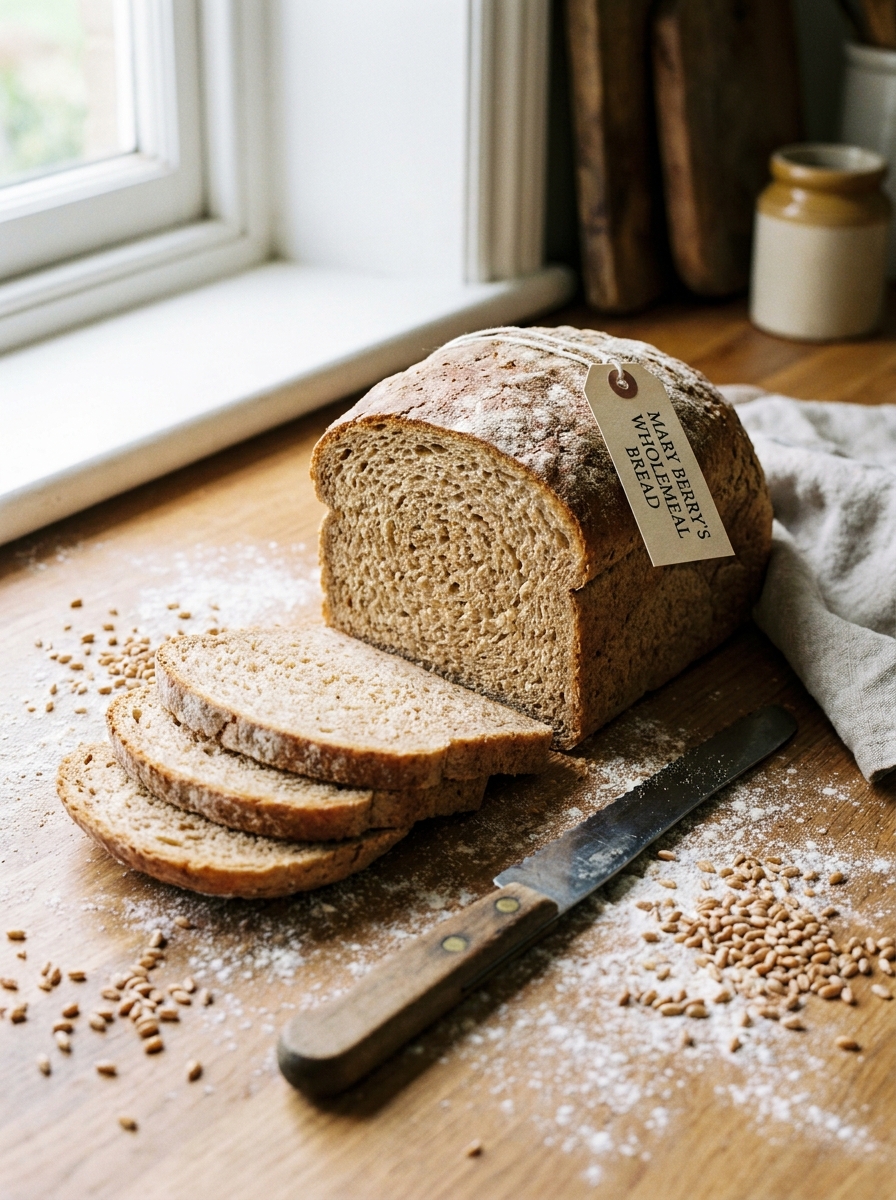
Mary Berry Wholemeal Bread Recipe
Ingredients
Method
- Put both flours, yeast, salt, and sugar into a large bowl. Make a well — add warm water and oil. Mix to a shaggy dough.
- Turn onto a floured surface. Knead 8–10 minutes until smooth and slightly elastic. Shape into a ball. Place in an oiled bowl — cover. Leave in a warm place 1 hour – 1 hour 30 minutes until doubled.
- Punch dough down. Shape into an oblong — place in greased 900g loaf tin, seam down. Cover loosely. Leave 30–45 minutes until risen above the rim.
- Preheat oven to 220°C / 200°C fan / Gas 7. Brush top with milk — scatter seeds. Bake 25–30 minutes until deep golden-brown and hollow when tapped on the base.
- Cool on a wire rack at least 30 minutes before slicing.
Notes
Frequently Asked Questions
Can I use all wholemeal flour?
Yes — use 500g strong wholemeal flour. The loaf will be denser and will not rise as high but will be more intensely wholemeal in character.
Can I make this without a stand mixer?
Yes — this recipe is written for hand kneading. If you have a stand mixer with a dough hook, knead on medium speed for six to eight minutes.
My bread did not rise — what happened?
The most common causes are dead yeast (check the use-by date), water that was too hot or too cold, or a room that was too cold for the rises. Check each of these before trying again.
Can I add seeds to the dough itself?
Yes — 50g of mixed seeds added with the flour give additional texture, flavour, and nutrition throughout the loaf.
















Leave a Reply