
 Anna Louise
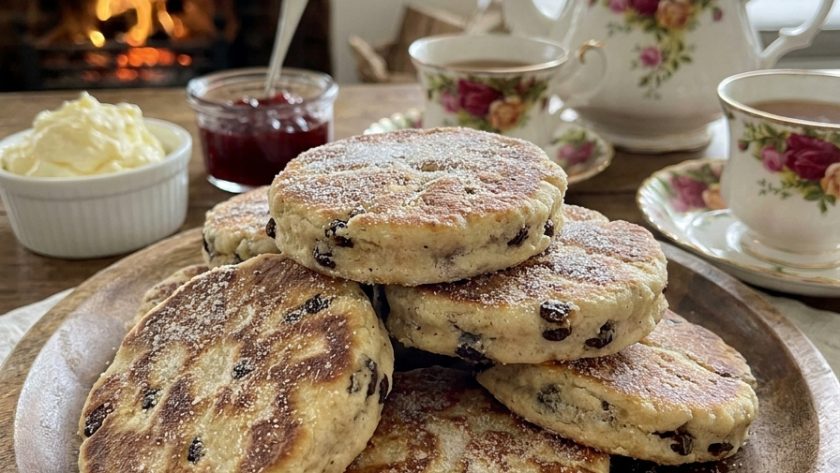
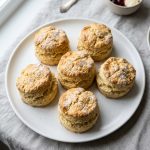
Welsh cakes are one of those regional British bakes that I think every home baker should know how to make. They are cooked on a hot griddle or heavy frying pan rather than in the oven — flattened rounds of spiced, buttery dough studded with currants that cook in minutes and are eaten warm, dusted with caster sugar.
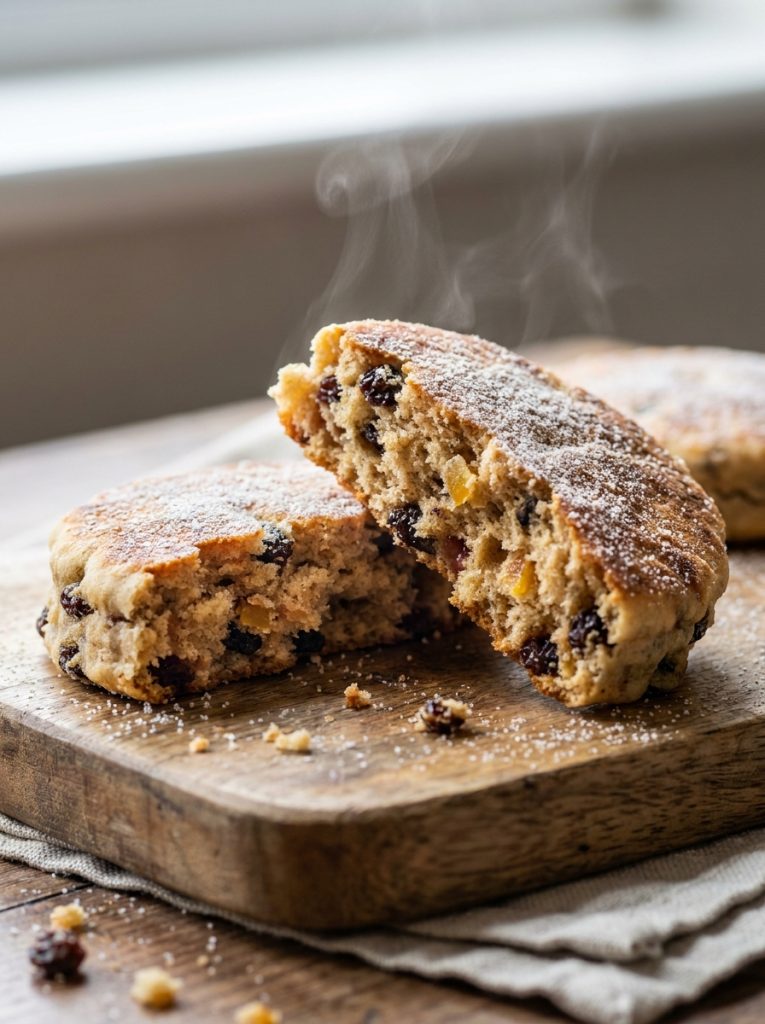
They are somewhere between a scone and a biscuit in texture — firmer than a scone, softer than a biscuit, and specifically and wonderfully their own thing.
I make Welsh cakes whenever I want something quick and genuinely comforting. The whole batch is on the table in thirty minutes from start to finish.
They are best eaten warm — still slightly soft from the griddle, with a scattering of caster sugar on top. Cold Welsh cakes are very good. Warm Welsh cakes are specifically wonderful.
Ingredients for Mary Berry Welsh Cakes (Makes approximately 18)
For the Welsh Cakes
- 225g self-raising flour, sifted
- 100g cold unsalted butter, cubed
- 75g golden caster sugar — plus extra for dusting
- 75g currants
- 1 tsp mixed spice
- ½ tsp ground cinnamon
- Pinch of fine salt
- 1 large egg, beaten
- 2–3 tbsp whole milk — only if needed to bring the dough together
How to Make Mary Berry Welsh Cakes
Step 1 — Make the Dough
Sift the flour, mixed spice, cinnamon, and salt into a large bowl. Add the cold butter. Rub in quickly with cool fingertips until the mixture looks like fine breadcrumbs — the same technique as for shortcrust pastry.
Add the golden caster sugar and currants. Stir through.
Add the beaten egg. Mix with a round-bladed knife, then bring together with your hands into a soft, smooth dough. Add milk one tablespoon at a time only if the dough feels dry — it should be firm enough to roll without sticking.
Step 2 — Roll and Cut
Turn the dough out onto a lightly floured surface. Roll to approximately 8mm thick — Welsh cakes that are too thin cook before the inside has time to become properly soft. Too thick and they do not cook through evenly.
Cut into rounds using a 6cm plain or fluted round cutter. Re-roll the trimmings once and cut again. You should get approximately eighteen rounds.
Step 3 — Cook on the Griddle
Heat a heavy-based frying pan or griddle over a medium-low heat. Do not grease it — Welsh cakes cook in a dry pan and develop their characteristic slightly golden, slightly matte surface without any fat.
Cook the Welsh cakes in batches of four to five — cooking for three to four minutes on the first side until the underneath is a pale golden-brown. Turn and cook for three to four minutes on the second side.
The Welsh cakes should be cooked through completely — no raw doughy centre — and pale golden on both sides. A dark brown surface means the pan is too hot and the inside will be raw. Adjust the heat if needed.
Step 4 — Dust and Serve
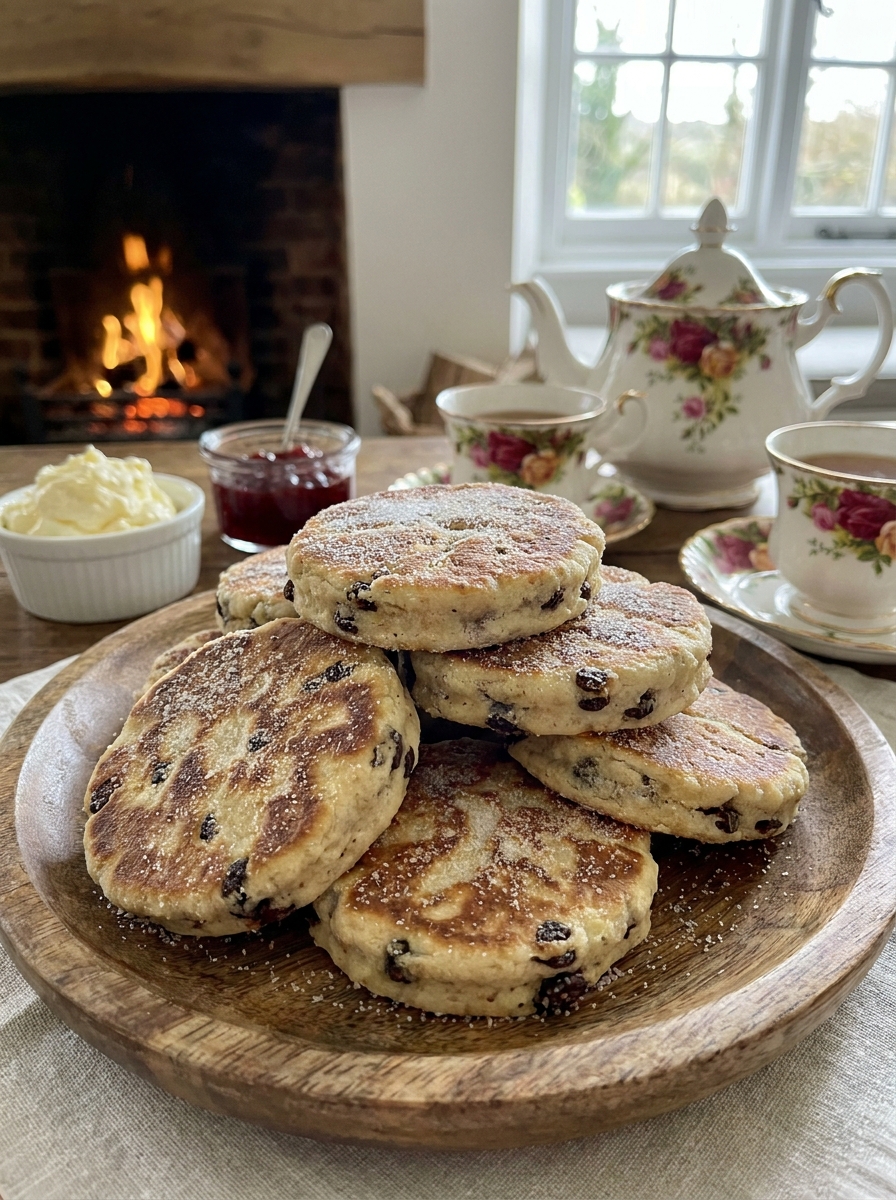
Transfer to a wire rack. Dust generously with caster sugar while still warm. Serve immediately — Welsh cakes at their very best are warm from the griddle.
My Top Tips For Perfect Mary Berry Welsh Cakes
Cook on a medium-low heat — not high. The most common Welsh cake mistake is a pan that is too hot. A very hot pan gives Welsh cakes that are dark brown on the outside and raw in the middle. Medium-low heat gives the pale golden colour and evenly cooked, soft interior that Welsh cakes should have. I always do a test cake first to check the temperature.
Roll to exactly 8mm thick. This is thicker than most biscuits. The 8mm thickness gives a Welsh cake that is cooked through with a slightly soft, yielding interior — specifically the texture that makes them so good. Thinner and they become more biscuit-like and dry.
Keep the butter cold. Welsh cake dough made with cold butter gives a slightly flaky, more tender result. Warm butter gives a slightly denser, slightly tougher cake. Work quickly and keep everything cool.
Dust with caster sugar while warm — not cold. Caster sugar on warm Welsh cakes sticks beautifully and gives the characteristic sweet, slightly sparkly surface. On cold Welsh cakes it simply falls off.
Do not grease the pan. A dry pan is correct for Welsh cakes. Butter or oil in the pan gives an uneven, slightly greasy surface. Dry heat gives the specific matte, slightly golden finish.
Serving Suggestions
Warm from the griddle with a dusting of caster sugar — the traditional and most satisfying way. Split open and spread with cold salted butter and a scraping of jam. With a cup of strong tea alongside. As part of a Welsh afternoon tea spread.
How to Store Mary Berry Welsh Cakes
At room temperature: Store in an airtight tin for up to 4 days. Warm briefly in a dry frying pan over a low heat for 1 to 2 minutes per side to refresh.
In the freezer: Freeze for up to 3 months. Defrost at room temperature and warm in a dry pan before eating.
Mary Berry Welsh Cakes Recipe
Ingredients
Method
- Sift flour, spices, and salt into a bowl. Rub in cold butter to fine crumbs. Add sugar and currants — stir. Add beaten egg — mix with a knife then bring together with hands. Add milk 1 tbsp at a time only if dry. Bring to a soft, smooth dough.
- Roll on a floured surface to 8mm thick. Cut into 6cm rounds — re-roll trimmings once.
- Heat a heavy-based frying pan or griddle over medium-low heat — no grease. Cook in batches of 4–5 — 3–4 minutes per side until pale golden on both sides and cooked through.
- Transfer to a wire rack. Dust generously with caster sugar while warm. Serve immediately.
Notes
Frequently Asked Questions
Can I use sultanas instead of currants?
Yes — sultanas give a slightly sweeter, slightly larger fruit piece. Currants are traditional and give the most authentic Welsh cake character.
Can I add lemon zest?
Yes — the finely grated zest of one unwaxed lemon added with the egg gives a slight citrus brightness that suits the spice and currants very well.
Can I make chocolate chip Welsh cakes?
Yes — replace the currants with 75g of dark chocolate chips. Leave out the mixed spice and cinnamon, or keep them in for a spiced chocolate version.
Why are my Welsh cakes dark on the outside and raw in the middle?
The heat is too high. Reduce to medium-low and give each side the full three to four minutes. A lower temperature and longer cooking time is always the right approach for Welsh cakes.














Leave a Reply