
 Anna Louise
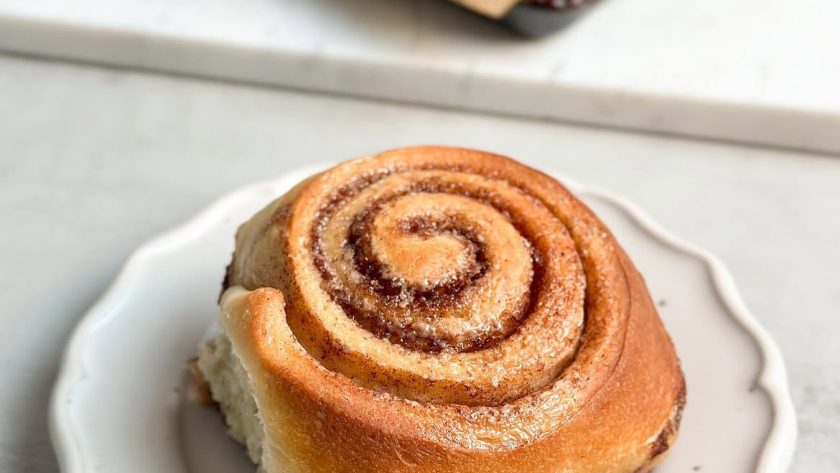
 Cinnamon rolls are one of those bakes that fills a kitchen with a smell so good that people appear from other rooms without being called.
The warm, sweet, buttery cinnamon fragrance as they bake is one of the finest things a domestic oven can produce — and the rolls themselves, pulled apart while still warm, with that soft, pillowy dough and sticky cinnamon filling, are genuinely extraordinary.
Mary Berry’s cinnamon rolls are made with an enriched yeast dough — butter, eggs, and milk making it richer and more tender than a standard bread dough — rolled with a generous buttery cinnamon filling and baked in a deep tin so the rolls rise into each other and stay soft on the sides.
A cream cheese glaze poured over while still warm completes them. They take time — the dough needs two rises — but almost none of that time is active. Most of it is waiting, and the result is absolutely worth it.
What Makes These Cinnamon Rolls So Good?
An enriched dough. Butter, eggs, and warm milk in the dough make it significantly softer, more tender, and more flavourful than a plain bread dough. The enrichment also helps the rolls stay soft for longer after baking.
A generous filling. The filling is not a thin smear — it is a proper, generous layer of softened butter, brown sugar, and cinnamon that caramelises slightly during baking and creates those characteristic sticky, gooey layers when the rolls are pulled apart.
Baked close together in a deep tin. Rolls baked touching each other stay soft on the sides rather than developing a crust. This is the difference between a cinnamon roll that tears apart in soft, fluffy layers and one that is crusty and dry on the outside.
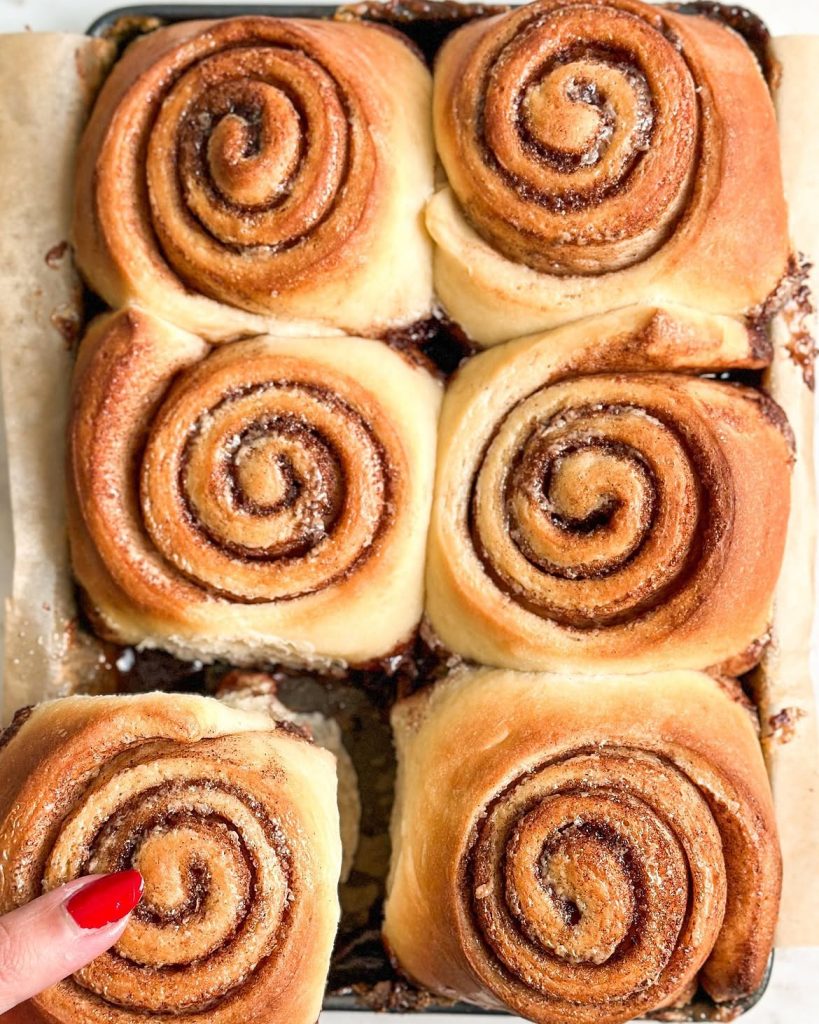
Ingredients for Mary Berry Cinnamon Rolls
For the Enriched Dough
- 500g strong white bread flour, plus extra for dusting
- 7g fast-action dried yeast (1 sachet)
- 1 tsp fine salt
- 50g caster sugar
- 75g unsalted butter, softened and cubed
- 2 large eggs, beaten
- 200ml whole milk, warmed to hand temperature
- 50ml warm water
For the Cinnamon Filling
- 75g unsalted butter, very soft
- 150g soft light brown sugar
- 2 tbsp ground cinnamon
- ½ tsp mixed spice
- Pinch of fine salt
For the Cream Cheese Glaze
- 150g full-fat cream cheese, at room temperature
- 100g icing sugar, sifted
- 2–3 tbsp whole milk
- 1 tsp vanilla extract
How to Make Mary Berry Cinnamon Rolls — Step by Step
Step 1 — Make the Dough
Place the flour, yeast, salt, and caster sugar in a large mixing bowl. Keep the yeast and salt on opposite sides of the bowl — direct contact between yeast and salt before mixing can inhibit the yeast.
Add the softened butter, beaten eggs, warm milk, and warm water. Mix with a wooden spoon until a shaggy dough forms, then turn out onto a lightly floured surface.
Knead for 8 to 10 minutes until the dough is smooth, elastic, and slightly tacky — it should spring back when you press it with your finger. If using a stand mixer with a dough hook, knead on medium speed for 6 to 8 minutes.
The dough will be quite soft and slightly sticky — resist the urge to add too much extra flour. A slightly sticky dough produces softer rolls than a dry one.
Step 2 — First Rise
Shape the kneaded dough into a ball and place in a lightly oiled bowl. Cover with cling film or a damp tea towel and leave in a warm place to rise for 1 to 1.5 hours until doubled in size.
A warm spot is important — near a radiator, in a slightly warm oven (no higher than 30°C), or in a sunny spot. Cold conditions slow the rise significantly.
Step 3 — Make the Filling
While the dough rises, mix the very soft butter, light brown sugar, cinnamon, mixed spice, and salt together in a small bowl until completely combined into a smooth, spreadable paste. The butter must be genuinely soft — not melted, but soft enough to spread easily without tearing the dough.
Step 4 — Roll, Fill, and Cut
Once the dough has doubled, punch it down gently to release the gas. Turn out onto a lightly floured surface.
Roll the dough into a rectangle approximately 40x30cm — aim for an even thickness throughout. The long edge should face you.
Spread the cinnamon filling evenly over the entire surface of the dough, right to the edges. Leave a 1cm border along the far long edge — this helps the roll seal cleanly.
Starting from the long edge closest to you, roll the dough tightly and evenly into a log. Pinch the seam firmly to seal.
Cut the log into 12 equal rolls using a sharp knife or dental floss. Dental floss gives cleaner cuts that do not compress the rolls — slide it under the log, cross the ends over the top, and pull — the roll cuts cleanly without squashing.
Step 5 — Second Rise
Grease a deep 30x23cm baking tin and arrange the rolls cut-side up, spacing them evenly with a small gap between each. They will grow to fill the gaps during the second rise.
Cover loosely with cling film and leave to rise for 45 minutes to 1 hour until the rolls have puffed up and are touching each other.
Step 6 — Bake
Preheat your oven to 190°C / 170°C fan / Gas 5. Bake the risen rolls for 22 to 25 minutes until deep golden brown on top and cooked through. If the tops are browning too quickly, cover loosely with foil after 15 minutes.
Step 7 — Make the Glaze and Finish
While the rolls bake, beat the cream cheese, sifted icing sugar, vanilla, and enough milk together until smooth and pourable — slightly thicker than double cream consistency.
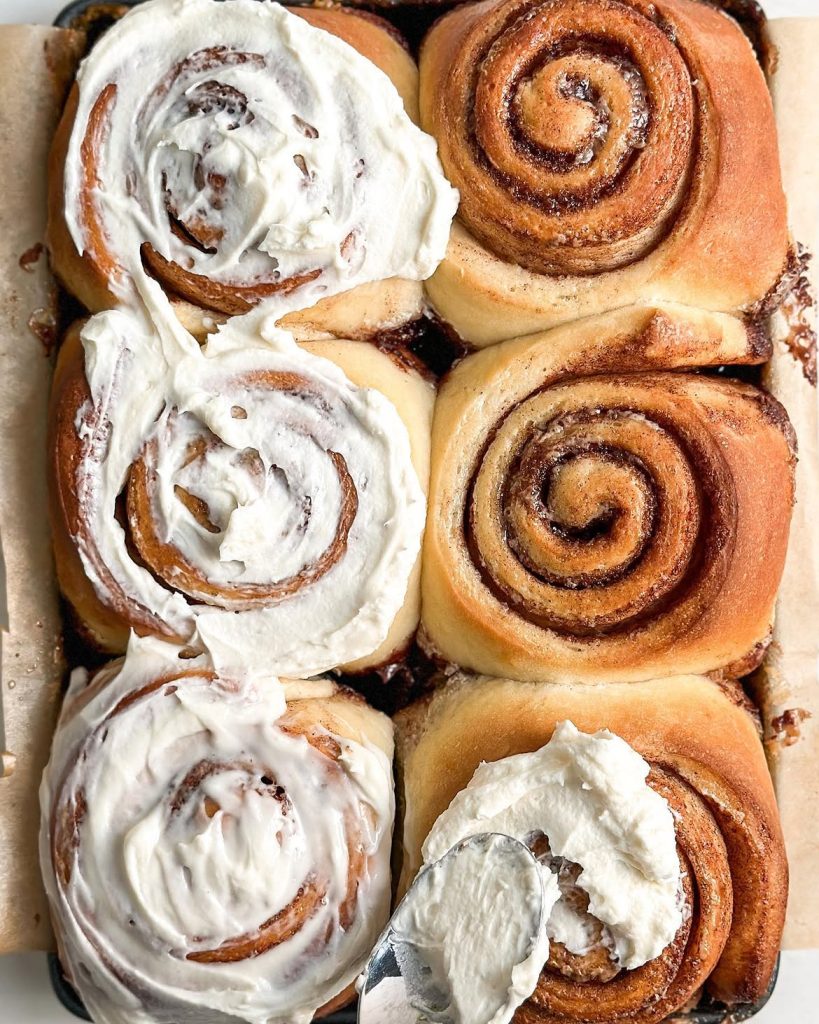
As soon as the rolls come out of the oven, pour the cream cheese glaze generously over the top. It will melt slightly into the warm rolls, seeping into the gaps and coating everything. This is the moment. Serve immediately — warm cinnamon rolls with cream cheese glaze melting over them is one of the finest breakfast experiences British baking produces.
My Top Tips For Mary Berry Cinnamon Rolls
Use warm milk — not hot. The milk should feel comfortable on your wrist — like bath water. Hot milk kills the yeast. Cold milk slows the rise significantly. Hand temperature is the target.
Do not add too much extra flour during kneading. The dough should be slightly tacky — this is what produces soft, fluffy rolls. Adding too much flour makes the dough stiff and the finished rolls dense and dry.
Make the filling very soft. The butter in the filling must be genuinely soft — almost spreadable — so it spreads over the dough without tearing it. If it is too firm, it will drag the dough and create uneven layers.
Use dental floss to cut the rolls. A sharp knife works, but dental floss gives cleaner cuts that do not compress the rolls. Slide it under the log, cross the ends, and pull through in one clean motion.
Pour the glaze on warm. The glaze must go on while the rolls are still warm from the oven so it melts slightly into the layers. Glazed cold rolls are good; glazed warm rolls are exceptional.
Overnight option. After arranging the rolls in the tin for the second rise, cover and refrigerate overnight instead of leaving at room temperature. In the morning, take them out, let them come to room temperature for 30 to 45 minutes, then bake as directed. Fresh warm cinnamon rolls for breakfast with almost no morning effort.
Serving Suggestions
Pulled apart while still warm, glazed generously — this is the only way. With a strong cup of coffee. As a weekend breakfast treat. As a brunch centrepiece.
Made the night before and baked fresh in the morning for genuinely impressive effort-free hosting.
How to Store Mary Berry Cinnamon Rolls
At room temperature: Store in an airtight container for up to 2 days. Warm individual rolls in the microwave for 20 seconds before eating — they come back to life remarkably well.
In the freezer: Freeze baked, unglazed rolls individually wrapped in cling film for up to 3 months. Defrost at room temperature and warm in a 170°C oven for 10 minutes. Add the glaze fresh.
Try These Recipes
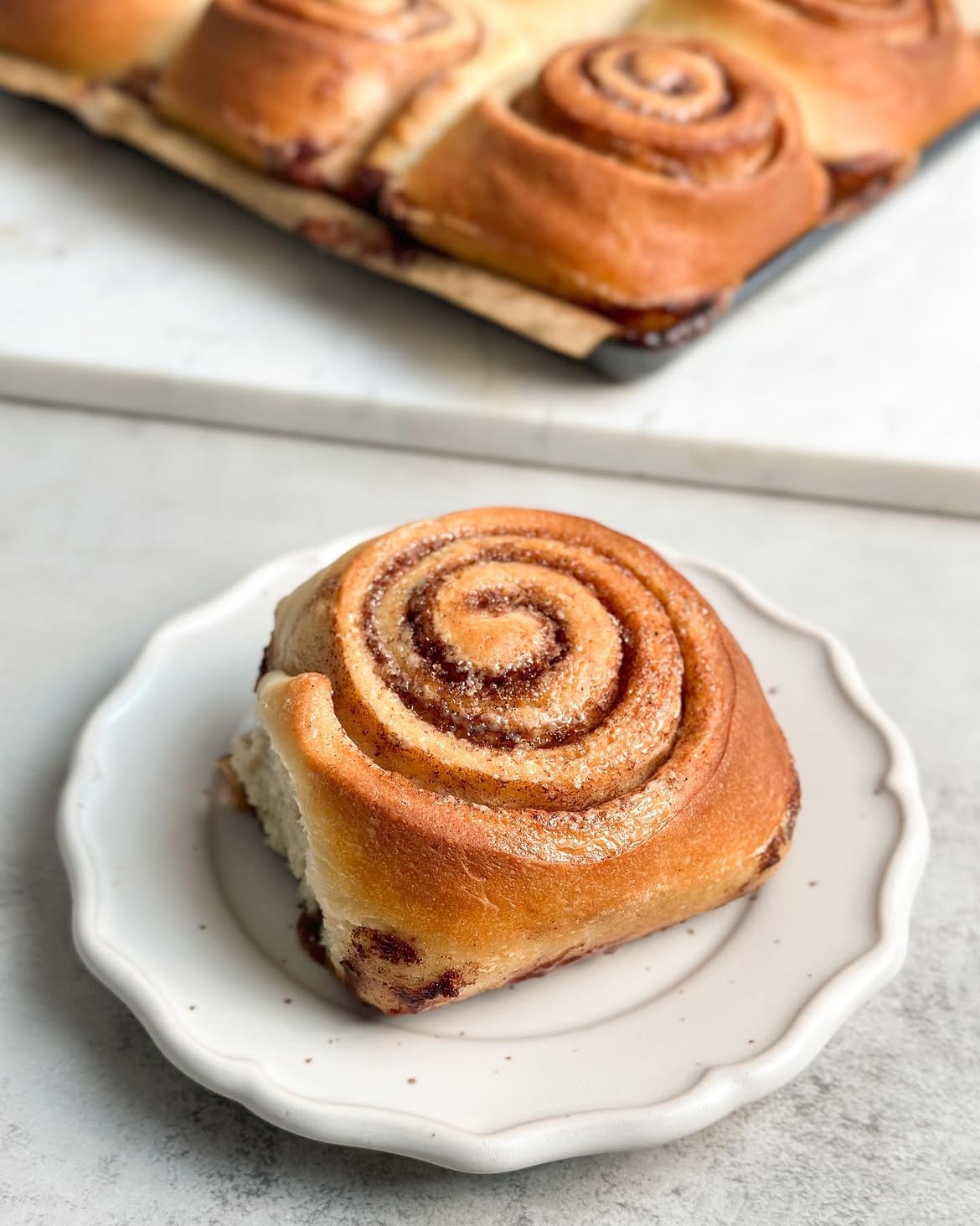
Mary Berry Cinnamon Rolls Recipe
Ingredients
Method
- Combine flour, yeast, salt, and sugar in a large bowl — yeast and salt on opposite sides. Add butter, eggs, warm milk, and water. Mix to a shaggy dough. Knead 8–10 minutes until smooth and elastic. Place in oiled bowl, cover, and leave in a warm place 1–1.5 hours until doubled.
- Mix very soft butter, brown sugar, cinnamon, mixed spice, and salt into a smooth paste. Set aside.
- Punch down risen dough. Roll into a 40x30cm rectangle on a lightly floured surface. Spread filling evenly to the edges, leaving a 1cm border along the far long edge.
- Roll tightly from the long edge closest to you into a log. Pinch seam to seal. Cut into 12 equal rolls using a sharp knife or dental floss.
- Arrange cut-side up in a greased 30x23cm tin. Cover loosely and leave to rise 45 minutes to 1 hour until rolls are puffed and touching.
- Preheat oven to 190°C / 170°C fan / Gas 5. Bake 22–25 minutes until deep golden. Cover with foil if browning too quickly.
- Beat cream cheese, icing sugar, vanilla, and milk until smooth and pourable. Pour immediately over warm rolls. Serve warm.
Notes
Frequently Asked Questions
Can I make these without yeast?
The yeast is what gives cinnamon rolls their characteristic soft, fluffy, layered texture. Without it you can make a scone-based cinnamon roll that is quicker but quite different — denser and more biscuity. For the proper result, yeast is essential.
Why didn’t my dough rise?
The most likely causes are yeast that is past its use-by date, milk that was too hot and killed the yeast, or a room that was too cold. Check the yeast expiry, use hand-temperature milk, and find the warmest spot in your kitchen for the rise.
Can I prepare these the night before?
Yes — this is the best approach for breakfast cinnamon rolls. Complete the recipe up to the second rise, cover the tin tightly, and refrigerate overnight. In the morning, remove from the fridge 30 to 45 minutes before baking and bake as directed.
Why are my cinnamon rolls dry?
Either too much flour was added during kneading, the rolls were overbaked, or they were not stored in an airtight container. The dough should be slightly tacky, the rolls should come out at 22 minutes, and they should be stored well sealed.
Can I use instant yeast instead of fast-action dried yeast?
Fast-action dried yeast and instant yeast are the same thing — both can be added directly to the flour without pre-activating. If you have active dried yeast (not fast-action), dissolve it in the warm milk with a pinch of sugar and leave for 10 minutes until frothy before adding to the flour.
Can I add raisins or nuts to the filling?
Yes — a handful of raisins or roughly chopped pecans scattered over the cinnamon filling before rolling adds wonderful texture and flavour. Toasted pecans with the cinnamon filling is a particularly good combination.














Leave a Reply