
 Anna Louise
 Most people have never eaten quince fresh. This is entirely reasonable — raw quince is hard, astringent, and deeply unpleasant. Cooked quince is something else entirely.
Heat transforms it from inedible to extraordinary — the flesh softens and deepens, the colour shifts from pale yellow to a beautiful deep rose-gold, and a fragrance emerges that is somewhere between apple, pear, and something floral and exotic that has no good comparison. There is nothing quite like it in British fruit growing.
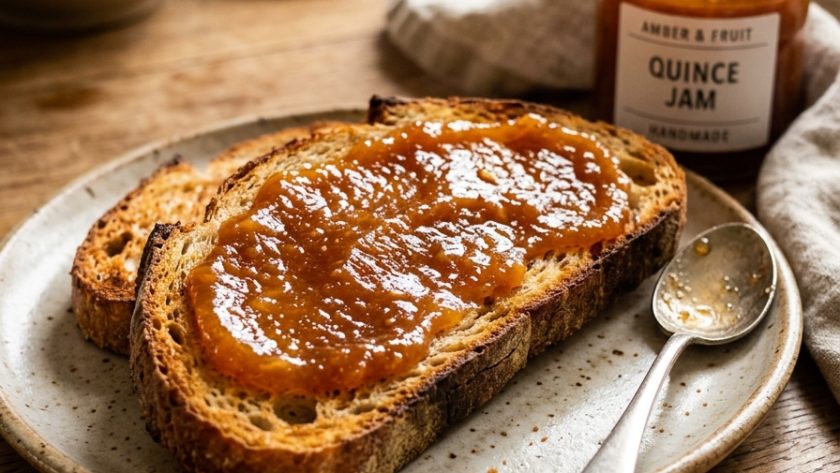
Quince jam captures all of that transformation in a jar. It is deeply fragrant, beautifully coloured — a rich amber-gold — and has a flavour that is complex, slightly floral, and unlike any other fruit preserve. It also sets extremely easily, because quince has one of the highest natural pectin contents of any fruit.
If you see quince at a farm shop, a farmers’ market, or a neighbour’s garden in October, make this jam. You will not regret it.
What Is Quince and Where Do You Find It?
Quince is a fruit related to apple and pear, grown on a small tree that produces large, golden-yellow fruit in autumn — typically October. It is rarely sold in supermarkets but is increasingly available at farm shops, farmers’ markets, and specialist greengrocers in autumn. Many people have quince trees in their gardens and do not use the fruit — if you know someone with a tree, ask.
The key thing to understand about quince is that it is always cooked before eating. Raw quince is hard and astringent. Cooking — particularly with sugar — transforms it completely, producing that characteristic deep rose-gold colour and fragrant sweetness.
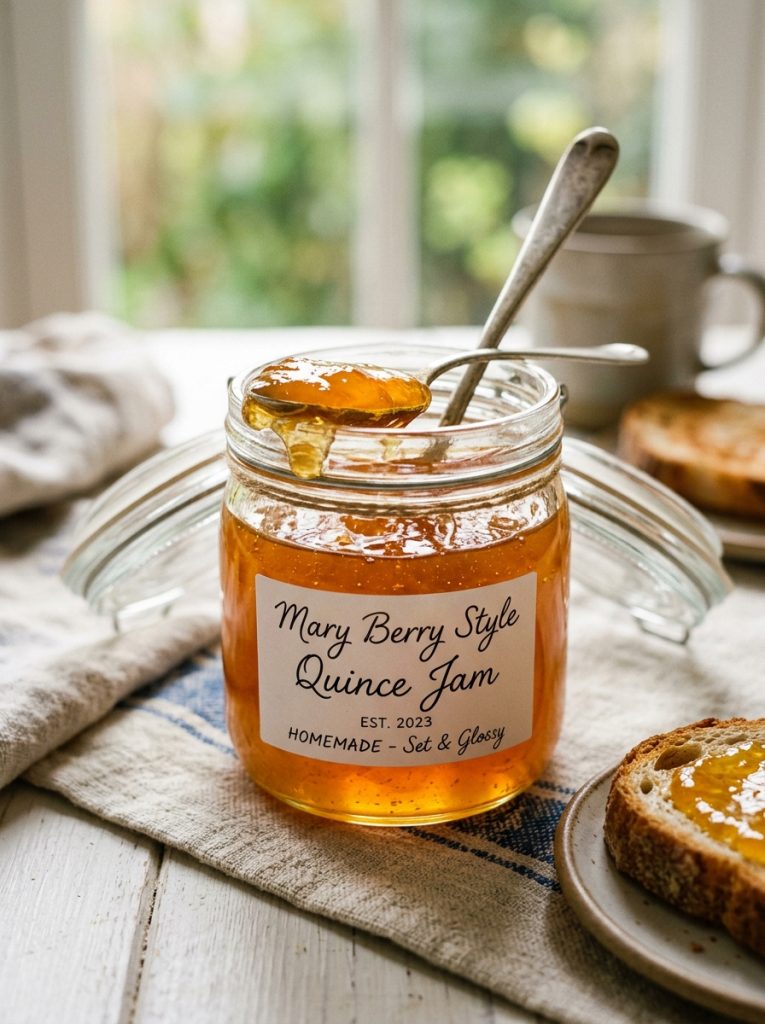
Ingredients for Mary Berry Quince Jam
- 1.5kg ripe quince, washed
- 1.2 litres water
- Juice of 2 lemons
- 1.5kg granulated sugar
Equipment
- Large preserving pan
- Several small saucers in the freezer
- 4 to 5 sterilised glass jars
- Potato masher or food mill
- Jam funnel
How to Make Mary Berry Quince Jam — Step by Step
Step 1 — Sterilise the Jars
Wash jars in hot soapy water, rinse, and place upside down in a 140°C oven for 15 minutes. Leave in the oven until needed.
Step 2 — Prepare the Quince
Do not peel or core the quince at this stage. The skin and core of quince are packed with pectin — more so than the flesh — and cooking them with the fruit and then removing them later gives you a much better setting jam than peeling first.
Quarter the quince and cut out any damaged areas. Place into the preserving pan with the water and lemon juice.
Step 3 — Cook the Quince Until Completely Soft
Bring to the boil, then reduce to a steady simmer. Cook for 45 minutes to 1 hour until the quince is completely soft — the flesh should mash easily when pressed with a spoon and the liquid will have turned a beautiful rose-gold colour.
This long cooking time is why quince jam takes more time than most other fruit jams. The quince needs to be completely broken down before the sugar goes in. The fragrance that fills your kitchen during this stage is remarkable.
Step 4 — Strain or Mash
You have two options here depending on the texture of jam you want.
For a smooth jam: Press the cooked quince through a fine sieve or food mill, discarding the skins and cores. Return the smooth pulp to the pan.
For a textured jam with visible fruit pieces: Simply mash the cooked quince thoroughly with a potato masher, removing the skins and cores by hand as you go. Return the mashed fruit to the pan.
Both are delicious — the smooth version is more elegant, the textured version more rustic and homemade in character.
Step 5 — Add the Sugar
Add the granulated sugar and stir over a low heat until completely dissolved — about 5 to 8 minutes. The liquid should look clear when you lift the spoon. Do not let the jam boil before the sugar is dissolved.
Step 6 — Bring to a Rolling Boil and Test
Increase the heat to high and bring to a rapid rolling boil. Boil hard for 10 to 15 minutes, then test on a cold saucer. Drop a teaspoon of jam onto the cold saucer, leave one minute, then push with your fingertip — if it wrinkles, setting point is reached. Quince has very high pectin so it sets readily.
Step 7 — Pot and Seal
Skim any foam from the surface. Leave to stand for five minutes. Ladle into hot sterilised jars using a jam funnel. Seal immediately. Label with the date.
My Top Tips For Mary Berry Quince Jam
Do not peel or core before cooking. The skin and core of quince contain significantly more pectin than the flesh. Cooking them whole and removing them after gives you a better set and a richer, more complex flavour.
The colour change is the magic. When you first start cooking quince the liquid is pale yellow. After 45 minutes it deepens to amber and then rose-gold. This colour transformation is caused by the oxidation of the fruit’s natural compounds during cooking — and it is one of the most beautiful things in jam making. The longer you cook before adding sugar, the deeper and more beautiful the colour.
Add lemon juice for brightness. Quince has enough natural pectin to set without help but the lemon juice adds an acidity that lifts and brightens what might otherwise be a very sweet, slightly one-dimensional flavour. Always include it.
This jam improves over weeks. Freshly made quince jam is good. After three to four weeks in the jar the fragrance has deepened and the flavour has become more complex and rounded. Make it in October and open it at Christmas.
Quince jam makes an extraordinary glaze. Warmed and sieved, quince jam makes the most beautiful glaze for tarts, pastries, and roast meats — particularly pork and duck. It is one of the most versatile preserves in the kitchen.
Serving Suggestions
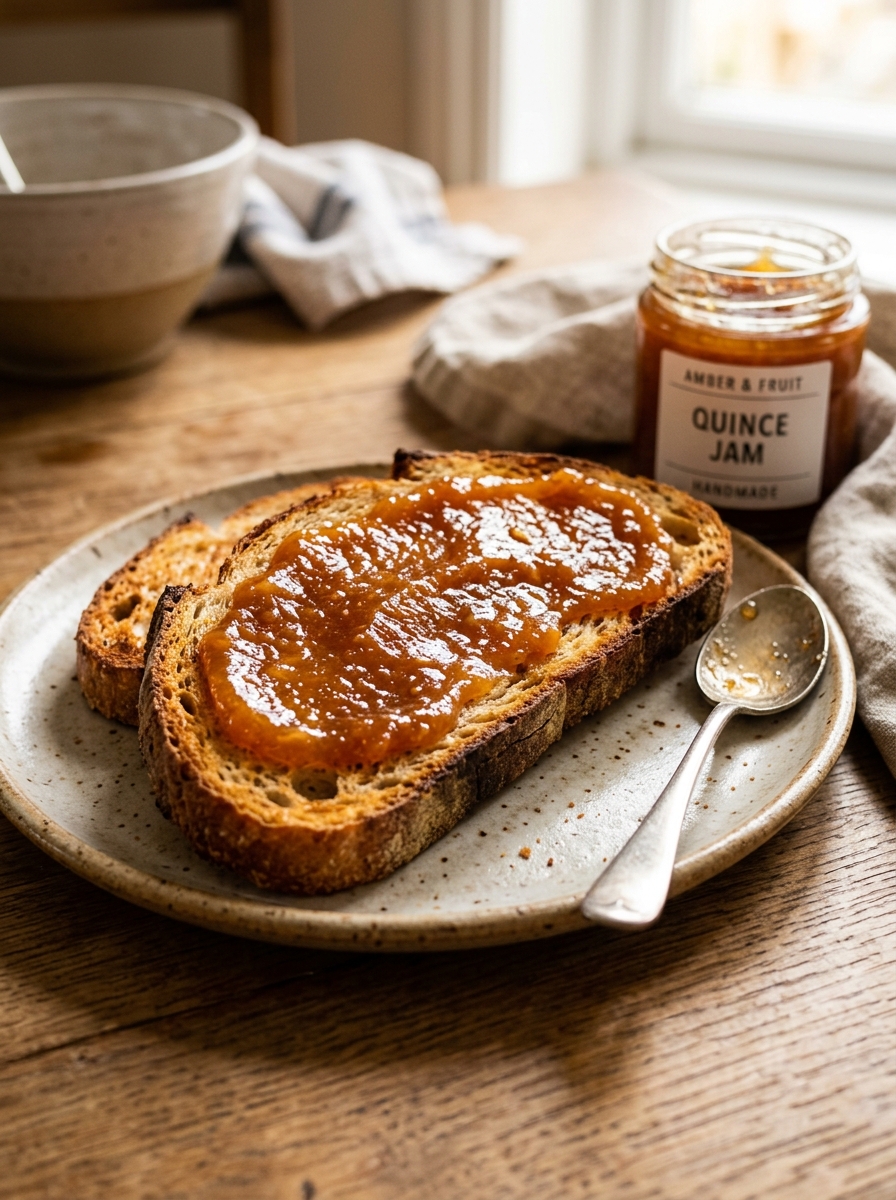
On toast with good butter — the fragrance of quince jam on warm toast is genuinely one of the great breakfast pleasures. As a filling for tarts and pastries — particularly wonderful with almond cream in a frangipane tart.
As a glaze for roast pork or duck — warmed and brushed over in the final 20 minutes of roasting. With a cheese board — quince paste, known as membrillo in Spain, is the classic pairing with manchego cheese, and this jam serves a similar purpose.
How to Store Mary Berry Quince Jam
Unopened: Cool, dark place for up to 1 year. The flavour deepens and improves over the first month.
Once opened: Refrigerate and use within 6 to 8 weeks.
Try These Recipes
- Mary Berry Seville Orange Marmalade
- Mary Berry Blackcurrant Jam
- Mary Berry Tomato Chutney
- Mary Berry Damson Jam
Mary Berry Quince Jam Recipe
Ingredients
Method
- Sterilise jars in a 140°C oven for 15 minutes.
- Place quartered quince, water, and lemon juice in a large preserving pan. Bring to the boil then simmer for 45 minutes to 1 hour until completely soft and liquid is rose-gold.
- Strain through a sieve or food mill for smooth jam, or mash and remove skins by hand for a textured jam. Return pulp to pan.
- Add sugar. Stir over low heat for 5–8 minutes until completely dissolved.
- Increase heat to high. Bring to a rapid rolling boil. Boil hard for 10–15 minutes. Test on a cold saucer — wrinkle test. If it wrinkles, done. If not, boil 2 more minutes and test again.
- Skim foam. Stand 5 minutes. Ladle into hot jars. Seal immediately. Label.
Notes
Frequently Asked Questions
Where can I buy quince?
Farm shops and farmers’ markets in October are the best sources. Some specialist greengrocers stock them. Online fruit suppliers also carry quince in season. They are not widely available in supermarkets — this is a seasonal, artisan fruit that rewards a little effort to find.
Can I use quince paste (membrillo) as a substitute?
Quince paste is much thicker and more concentrated than this jam. They are different products made from the same fruit, used in different ways. This jam is a spreadable preserve; membrillo is a firm paste served with cheese.
My jam is very firm — almost solid. What went wrong?
It was boiled too long past setting point. Quince has very high pectin and over-boiling produces an extremely firm, almost rubbery set. Next time test from 10 minutes and pot the moment you get a wrinkle. The jam is still usable — warm briefly in a microwave to soften for spreading.
Can I freeze quince to make jam later?
Yes — cut quince into pieces (skin on) and freeze. Defrost and use in the same quantities. The pectin content is slightly reduced after freezing but the jam will still set reliably.
Can I make quince jelly instead of jam?
Yes — after cooking the quince, strain the liquid through a jelly bag or muslin overnight without pressing. Use the clear liquid as the base for jelly rather than the pulp. The result is a beautiful clear amber jelly that is even more fragrant than the jam.
Why does my quince turn dark brown rather than rose-gold?
The colour depends partly on the variety of quince and partly on cooking time and temperature. A long, gentle cook gives the most beautiful deep rose-gold. A high-heat cook can produce a darker, less attractive colour. Reduce the heat and take more time.













Leave a Reply