
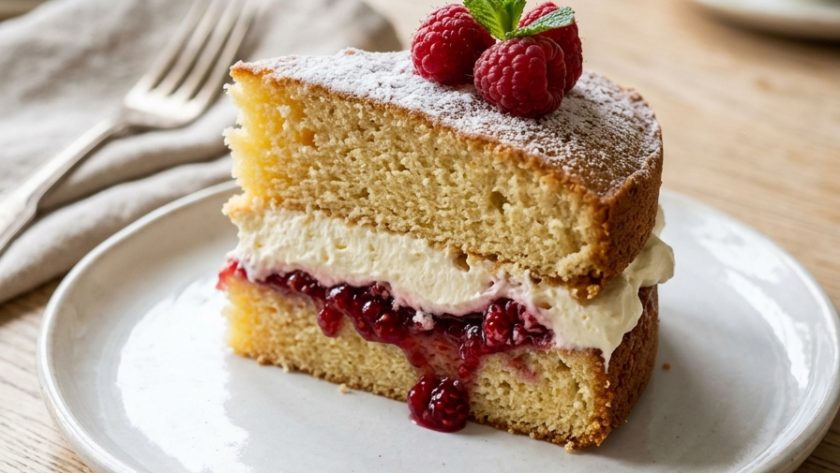
 Anna Louise
 The standard Victoria sponge recipe on this site uses four eggs and serves ten to twelve people. That is a wonderful cake for a celebration or a gathering. But for a Tuesday afternoon with two people and a pot of tea? You do not need twelve slices of Victoria sponge.
The three-egg version solves this beautifully. It is the same recipe, same method, same all-in-one technique — just scaled down for an 18cm tin rather than a 20cm one.
The result is a slightly smaller, slightly lighter cake that is completely proportionate and genuinely perfect for a smaller household. No waste, no leftover cake going dry in a tin by day four.
I make the three-egg version more often than the four-egg version because there are usually just two or three of us and this is exactly the right amount of cake. It also bakes slightly faster, which I appreciate.
Everything You Need to Know About Scaling Victoria Sponge
Victoria sponge is one of those cakes that scales beautifully. The ratio of butter to sugar to eggs to flour is always the same — equal weights of everything, with the eggs as the guide. The more eggs you use, the larger the cake.
The standard rule: weigh your eggs in their shells. Use the same weight of butter, caster sugar, and self-raising flour. So if three large eggs weigh 180g together, you use 180g of each of the other ingredients.
For most recipes I measure slightly differently — I give you the exact quantities because large eggs vary slightly — but the principle is always the same.
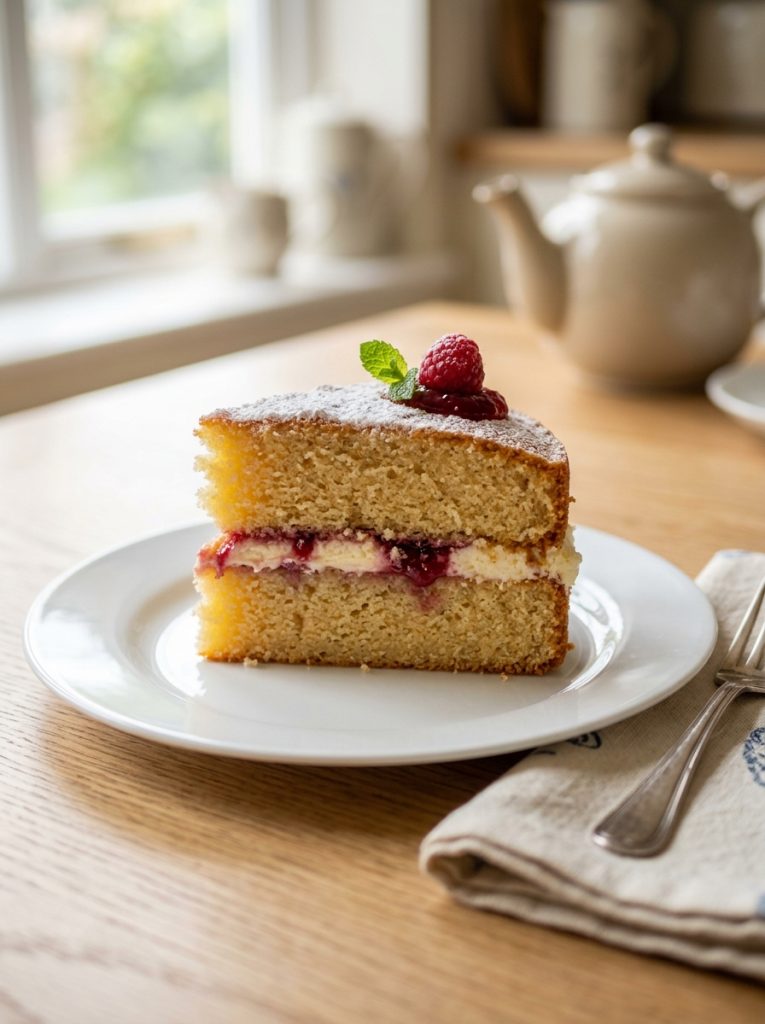
Ingredients for Mary Berry 3 Egg Victoria Sponge
For the Sponge
- 175g unsalted butter, softened
- 175g caster sugar
- 3 large eggs, at room temperature
- 175g self-raising flour, sifted
- 1½ tsp baking powder
- 2 tbsp whole milk
- 1 tsp vanilla extract
For the Filling
- 3 tbsp good quality strawberry jam
- 200ml double cream, cold
- 1 tbsp icing sugar, sifted
- 1 tsp vanilla extract
To Finish
- Icing sugar for dusting
How to Make Mary Berry 3 Egg Victoria Sponge
Step 1 — Preheat and Prepare
Preheat your oven to 180°C / 160°C fan / Gas 4. Grease two 18cm round sandwich tins and line the bases with circles of baking parchment.
Step 2 — Make the Batter
Place all the sponge ingredients into a large mixing bowl — butter, sugar, eggs, flour, baking powder, milk, and vanilla. Beat with an electric hand whisk for two to three minutes until the batter is smooth, pale, and well combined. Scrape down the sides once halfway through.
The batter should be smooth and drop off the beaters in thick, even ribbons. If it seems a little stiff, add an extra tablespoon of milk.
Step 3 — Bake
Divide the batter equally between the two prepared tins. I weigh the batter to get two perfectly even layers — it takes an extra thirty seconds and is completely worth it for cakes that look properly level.
Smooth the tops. Bake on the middle shelf for 20 to 24 minutes — slightly less time than the four-egg version because the tins are smaller and the depth of batter is slightly less. Check at 20 minutes. The cake is ready when it is golden, springy when pressed lightly in the centre, and a skewer comes out clean.
Cool in the tins for five minutes. Turn out onto a wire rack and cool completely before filling — at least 45 minutes.
Step 4 — Make the Filling
Whip the cold double cream, icing sugar, and vanilla extract to soft, pillowy peaks. The cream should hold its shape but still look light and generous.
Step 5 — Assemble
Place one sponge upside down on a serving plate — the flat bottom becomes the top of the bottom layer, giving you a perfectly flat surface for the jam. Spread the jam generously right to the edges.
Spoon or spread the whipped cream generously over the jam. Place the second sponge on top, right-side up. Press down gently.
Dust generously with icing sugar. Serve immediately or refrigerate for up to one hour before serving.
My Top Tips For Mary Berry 3 Egg Victoria Sponge
18cm tins — not 20cm. A three-egg batter in a 20cm tin gives a flatter, slightly thin cake. In an 18cm tin it rises properly and has the right depth. Always use the right tin size for the quantity of batter.
Weigh the batter between tins. Two perfectly even layers look significantly more impressive than two unequal ones. Thirty seconds on a scale gives you a beautifully level finished cake every time.
Cool completely before filling. Warm sponge melts whipped cream immediately. Forty-five minutes on a wire rack is the minimum. Do not be tempted to rush this step.
Turn the base sponge upside down for a flat surface. The bottom of a baked sponge is always perfectly flat. If you place it top-side down, you get a flat surface for the jam that looks neater and makes spreading easier.
Be generous with both jam and cream. A Victoria sponge with a thin filling is a disappointment. Spread the jam to the very edges. Pile the cream generously. The filling is half the cake.
Serving Suggestions
With a proper cup of tea — this is the quintessential British afternoon tea combination. On a cake stand at a small gathering. As a birthday cake for someone who loves a classic. Cut into generous wedges and eaten without apology.
How to Store Mary Berry 3 Egg Victoria Sponge
At room temperature: Best eaten on the day. Store in an airtight container for up to 2 days — the cream softens the sponge slightly over time but it is still delicious.
In the freezer: Freeze the unfilled sponge layers for up to 3 months. Fill fresh when needed.
Try These Recipes
- Mary Berry Traditional Uk Rice Pudding
- Mary Berry Carrot Cake Tray Bake
- Mary Berry Blackberry And Apple Crumble
- Mary Berry Lemon Posset
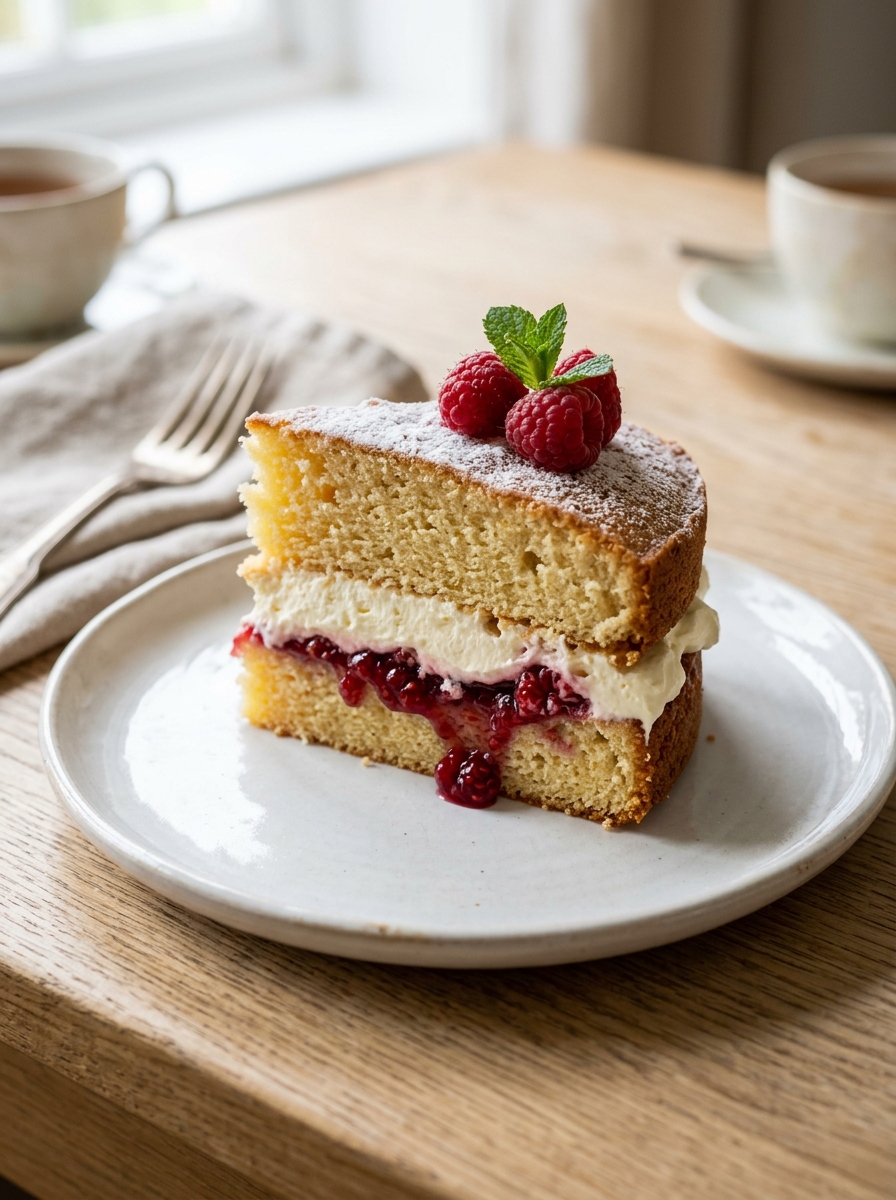
Mary Berry 3 Egg Victoria Sponge Recipe
Ingredients
Method
- Preheat oven to 180°C / 160°C fan / Gas 4. Grease and line two 18cm sandwich tins.
- Place all sponge ingredients in a large bowl. Beat with electric whisk 2–3 minutes until smooth and pale. Scrape down halfway.
- Divide equally between tins — weigh for even layers. Smooth tops. Bake 20–24 minutes until golden, springy, and a skewer comes out clean.
- Cool in tins 5 minutes. Turn out. Cool completely — at least 45 minutes.
- Whip cream, icing sugar, and vanilla to soft peaks.
- Place one sponge upside down on a serving plate. Spread jam generously to the edges. Spread cream generously over jam. Top with second sponge right-side up. Press gently. Dust with icing sugar.
Notes
Frequently Asked Questions
Can I use buttercream instead of whipped cream?
Yes — vanilla buttercream is more stable and does not require refrigeration. Many people prefer it. See the vanilla cupcakes recipe for the buttercream method. Use about half the quantity stated there for this smaller cake.
What if I only have 20cm tins?
The cake will be slightly shallower and may need one to two minutes less baking time. It will still be delicious — just slightly flatter than ideal.
Can I use raspberry jam instead of strawberry?
Yes — raspberry is sharper and some people prefer it. Any good quality jam works. Seedless jam gives the neatest finish.
Can I make this as a single deeper cake?
You can bake the whole batter in one deep 18cm tin for about 35 to 40 minutes. Split it in half horizontally once completely cool. The result is slightly denser than two separately baked layers.
Why is my sponge sinking slightly in the middle?
Either the oven door was opened too early, the batter was overmixed, or there was too much baking powder. Do not open the door before 18 minutes and measure the baking powder accurately.















Leave a Reply