
 Anna Louise
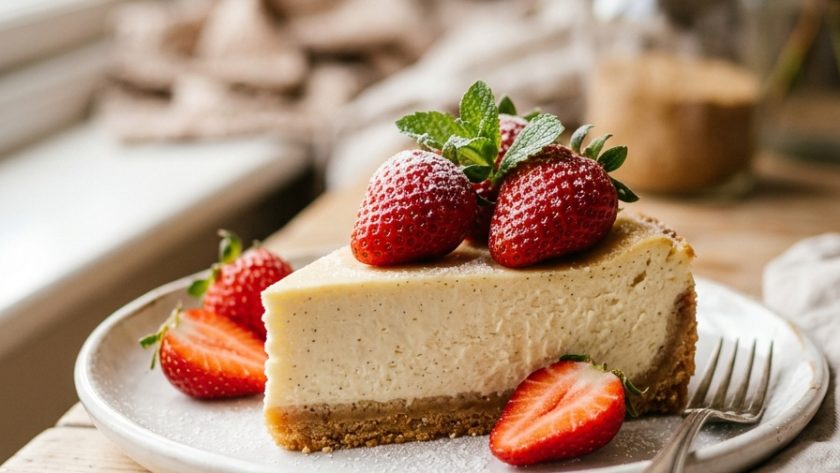
 A great cheesecake is one of the most satisfying things you can make — and one of the most frequently got wrong. Too dense, too sweet, too runny, a base that crumbles the moment you try to slice it. Mary Berry’s cheesecake recipe avoids every one of those pitfalls with characteristic precision.
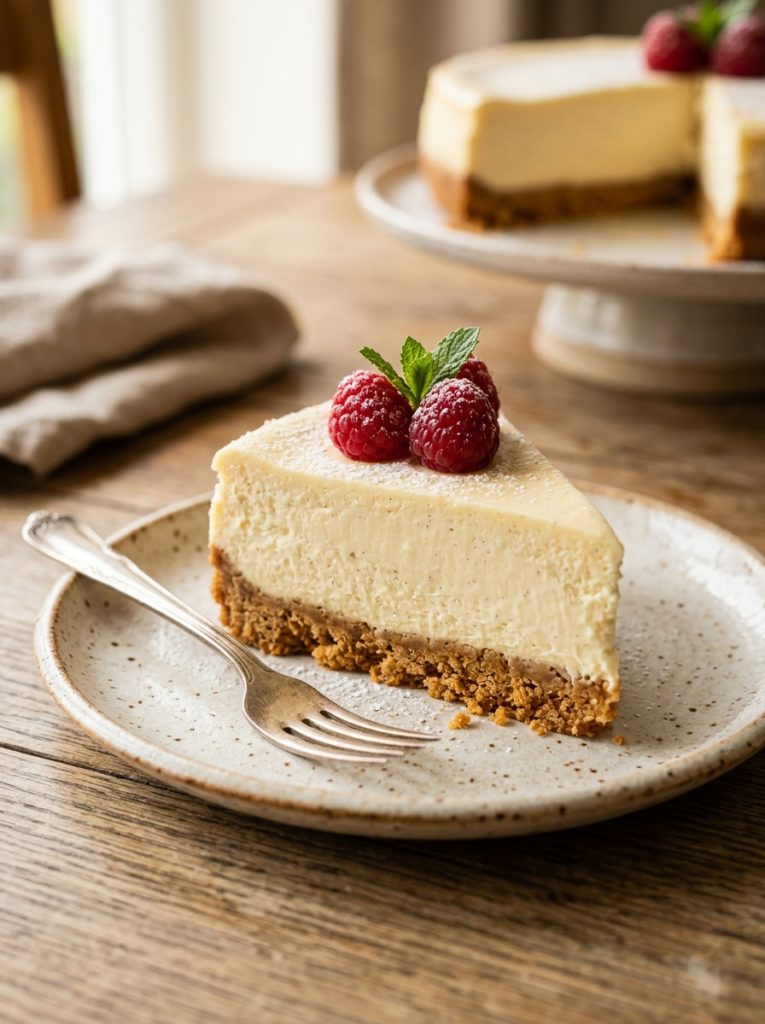
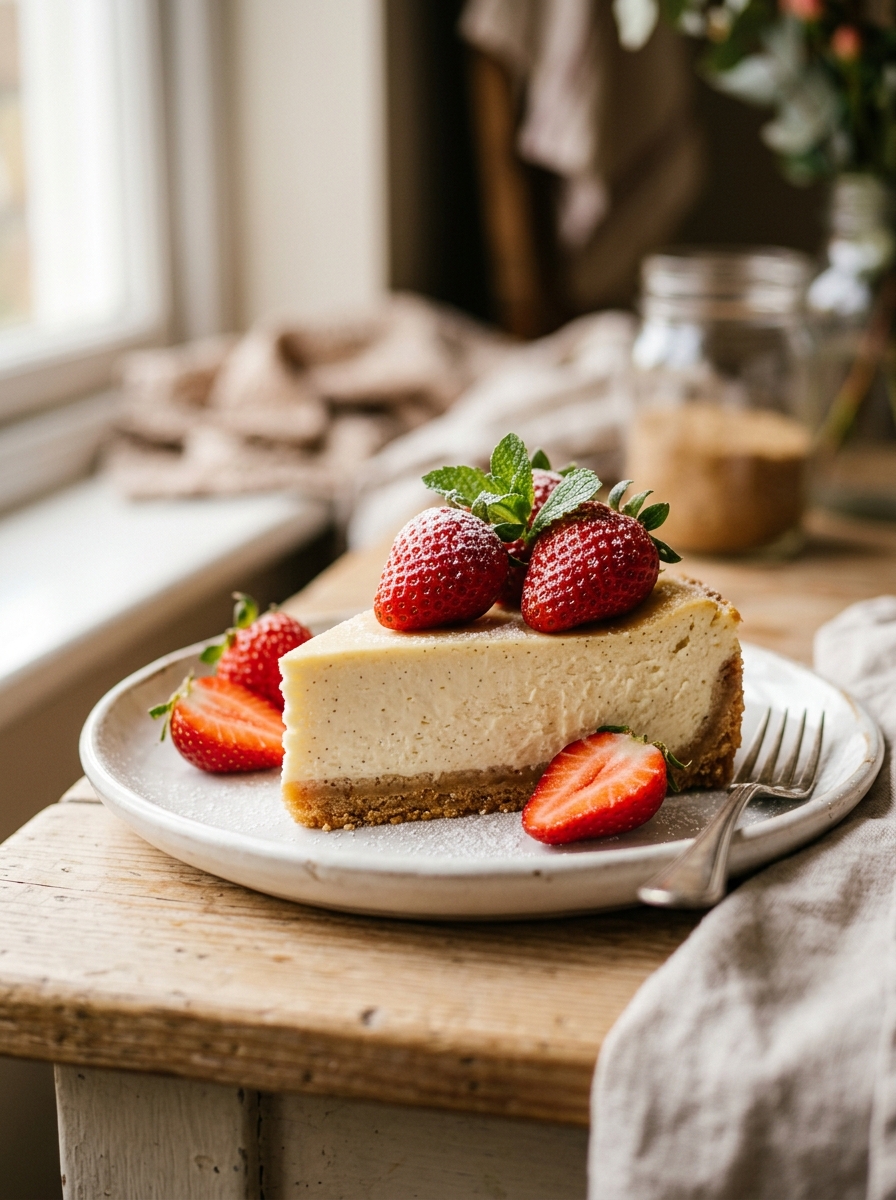
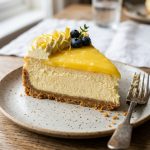
This is a no-bake cheesecake — the classic British style that sets in the fridge rather than the oven. The base is a buttery digestive biscuit crust, pressed firmly into the tin and chilled until it holds together with a satisfying crunch.
The filling is a cream cheese, double cream, and lemon combination that sets to a beautifully smooth, sliceable consistency that is light and creamy rather than dense and heavy.
The fruit topping — fresh strawberries, a glossy berry compote, or simply fresh raspberries scattered across the top — makes it look completely spectacular.
This is the dessert I make for summer dinner parties, for birthdays, for any occasion where I want something that looks professionally made but takes less than 30 minutes of active work.
No-Bake Versus Baked Cheesecake
This recipe is a no-bake cheesecake — and it is worth understanding why that is a deliberate choice rather than a shortcut.
No-bake cheesecake has a lighter, creamier texture than its baked counterpart — more like a set mousse than the dense, slightly grainy texture of a New York-style baked cheesecake. It is the style most commonly found in British home baking and the style that Mary Berry herself favours — straightforward, reliable, and completely delicious.
The key to a great no-bake cheesecake is getting the cream cheese mixture to the right consistency before it goes into the tin. It must be thick enough to hold its shape when set — not pourable, not stiff, but somewhere in the middle that produces a smooth, sliceable filling once cold.
Ingredients for Mary Berry Cheesecake
For the Biscuit Base
- 300g digestive biscuits
- 150g unsalted butter, melted
- 1 tbsp golden caster sugar
- Pinch of fine sea salt
For the Cream Cheese Filling
- 600g full-fat cream cheese, at room temperature
- 150g icing sugar, sifted
- 300ml double cream, cold
- Zest and juice of 1 large unwaxed lemon
- 1 tsp vanilla extract
For the Fruit Topping
- 400g fresh strawberries, hulled and halved
- 200g fresh raspberries
- 2 tbsp icing sugar
- 1 tbsp lemon juice
Optional Glaze
- 3 tbsp good quality strawberry or raspberry jam, warmed and sieved
How to Make Mary Berry Cheesecake — Step by Step
Step 1 — Make the Biscuit Base
Place the digestive biscuits in a food processor and blitz to fine crumbs. Alternatively, place in a sealed freezer bag and crush with a rolling pin — a thoroughly satisfying process. The crumbs should be fine and even — no large chunks.
Combine the biscuit crumbs with the melted butter, caster sugar, and salt. Mix until every crumb is coated in butter — the mixture should look like damp sand and hold together when you press a small amount between your fingers.
Tip into a 23cm round loose-bottomed springform tin. Press the mixture down firmly and evenly across the base — use the base of a flat glass to compact it properly. Press the edges particularly firmly as these are the most likely to crumble.
Refrigerate for at least 30 minutes until completely firm. The base must be cold and set before the filling goes on — a warm base will not support the filling and will crumble when sliced.
Step 2 — Make the Cream Cheese Filling
Beat the cream cheese and sifted icing sugar together with an electric hand whisk until smooth — about two minutes. Add the lemon zest, lemon juice, and vanilla extract. Beat briefly to combine.
In a separate bowl, whip the cold double cream until it holds soft peaks — not stiff, just softly holding its shape.
Fold the whipped cream into the cream cheese mixture in two additions, using a large spatula and gentle folding motions. Fold until just combined and no white streaks remain. Do not overmix — you want to keep the lightness from the whipped cream.
The finished mixture should be thick, smooth, and hold its shape when you lift the spatula — it should mound rather than flow.
Step 3 — Fill and Set
Spoon the cream cheese filling onto the chilled biscuit base. Spread evenly with a palette knife, smoothing the top as much as possible. For a very smooth, professional finish, dip the palette knife in hot water, wipe dry, and use the warm knife to smooth the surface.
Cover loosely with cling film — do not press it onto the surface — and refrigerate for at least 4 hours. Overnight is better. The cheesecake needs this time to set firm enough to slice cleanly.
Step 4 — Prepare the Fruit Topping
Mix the fresh strawberries and raspberries with the icing sugar and lemon juice. Leave to macerate for 15 minutes — the sugar draws out the juices and creates a natural syrup that is wonderful spooned over each slice.
If using the optional glaze, brush the warm sieved jam over the top of the set cheesecake before arranging the fruit — it gives a beautiful glossy finish and helps the fruit adhere.
Step 5 — Remove From the Tin and Decorate
Run a thin palette knife carefully around the edge of the cheesecake, between the filling and the tin, before releasing the springform. This prevents the filling from tearing as the tin opens. Release the springform sides slowly and carefully.
Arrange the macerated fruit generously over the top of the cheesecake. Spoon any syrup that has accumulated from the macerating fruit over the top as well.
Serve immediately, or refrigerate for up to an hour before serving.
My Top Tips for a Perfect No-Bake Cheesecake
Use full-fat cream cheese — always. Low-fat cream cheese has too much water in it to set properly. The cheesecake will be soft, runny, and will not hold its shape when sliced. Full-fat Philadelphia is what I use every single time and I will not be moved on this.
Make sure the cream cheese is at room temperature. Cold cream cheese does not beat smoothly — it stays lumpy, and no amount of beating will fully smooth it out once it has gone lumpy. Take it out of the fridge at least an hour before you start.
Whip the double cream cold. The cream should come straight from the fridge. Cold cream whips faster and to a more stable consistency than cream that has been sitting at room temperature.
Do not overmix once the cream is added. The whipped cream provides the lightness in the filling. Every fold after the cream goes in reduces that lightness slightly. Fold gently and stop the moment no white streaks remain.
Refrigerate overnight if possible. Four hours is the minimum but overnight gives a significantly firmer, more cleanly sliceable cheesecake. The difference in texture between a four-hour set and an overnight set is noticeable.
Press the biscuit base very firmly. The base needs to be compacted hard enough to slice cleanly without crumbling. Use a flat glass and press with genuine force — particularly at the edges where crumbling is most likely.
Serving Suggestions
Cold from the fridge, sliced at the table and served with the macerated fruit spooned over each piece. A drizzle of the fruit syrup over the top makes it look very elegant. For something more indulgent, a small pour of double cream alongside each slice is wonderful.
How to Store Mary Berry Cheesecake
In the fridge: Store covered in the tin or in an airtight container for up to 3 days. The filling stays smooth and the base stays crisp for the first two days — by day three the base begins to soften slightly but the flavour remains excellent.
In the freezer: The cheesecake without the fruit topping freezes well for up to 2 months. Freeze in the tin, covered tightly with cling film and foil. Defrost overnight in the fridge. Add the fruit topping fresh before serving.
Try These Recipes
Mary Berry Cheesecake Recipe
Ingredients
Method
- Blitz digestive biscuits to fine crumbs. Mix with melted butter, caster sugar, and salt until it resembles damp sand. Press firmly and evenly into a 23cm springform tin using a flat glass. Refrigerate for at least 30 minutes.
- Beat cream cheese and icing sugar together until smooth. Add lemon zest, lemon juice, and vanilla. Beat briefly.
- In a separate bowl, whip cold double cream to soft peaks.
- Fold whipped cream into cream cheese mixture in two additions until just combined. No overmixing.
- Spoon filling onto chilled base. Smooth top with a palette knife dipped in hot water. Cover loosely with cling film. Refrigerate for at least 4 hours — overnight is better.
- Mix strawberries and raspberries with icing sugar and lemon juice. Leave to macerate for 15 minutes.
- Run a palette knife around the edge of the cheesecake. Release springform sides carefully. Brush top with warm sieved jam if using. Arrange macerated fruit on top. Serve immediately or refrigerate for up to 1 hour.
Notes
Frequently Asked Questions About Mary Berry Cheesecake
Why did my cheesecake not set properly?
Almost always because low-fat cream cheese was used, the cream was overwhipped before folding, or the cheesecake was not given enough time in the fridge. Use full-fat cream cheese, fold gently, and refrigerate overnight for the most reliable result.
Why is my biscuit base crumbling when I slice it?
It was not pressed firmly enough before chilling, or the butter quantity was too low. Use the base of a flat glass to press it down with genuine force, and make sure the butter is fully coating all the crumbs.
Can I use a different biscuit for the base?
Yes — ginger nut biscuits give a wonderful spiced base that works particularly well with a lemon or mango topping. Oreos (with the filling removed) give a chocolate base that is brilliant with a chocolate or berry topping. Hobnobs work well for a slightly more textured, oaty base.
Can I add chocolate to the cheesecake filling?
Yes — melt 150g of dark or white chocolate, cool to room temperature, and fold through the cream cheese mixture before adding the whipped cream. It gives a beautiful, rich chocolate cheesecake that is wonderful topped with fresh raspberries.
Can I make individual cheesecakes?
Yes — press the base mixture into individual loose-bottomed tartlet tins or use a muffin tin lined with cling film. Fill with the cream cheese mixture and refrigerate as directed. Individual cheesecakes look very elegant and set faster than a large one.
How do I get a perfectly smooth top?
Use a palette knife dipped in hot water and wiped dry. The warm knife glides over the surface and smooths any imperfections. Work with long, confident strokes rather than short, fussy ones.













Leave a Reply