
 Anna Louise
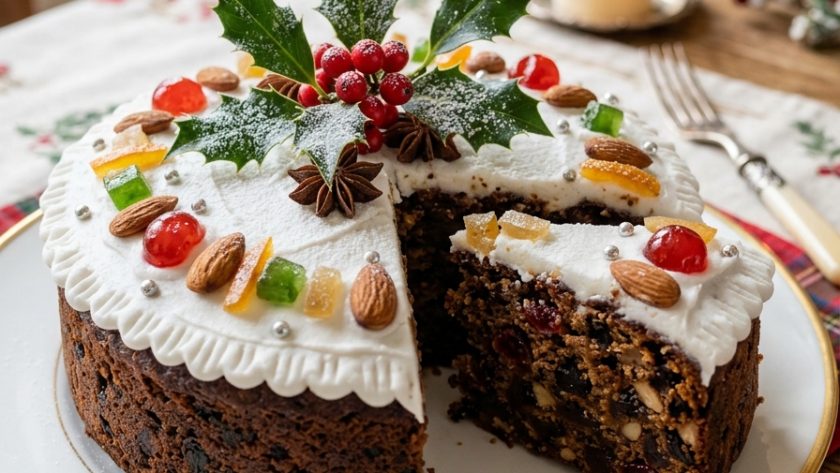
 There is something completely different about a Victorian Christmas cake compared to the standard Christmas cake recipe elsewhere on this site. Both are wonderful but they are not the same thing. The Victorian version is darker, denser, more intensely spiced, and steeped in significantly more brandy.
It is the cake that was made weeks or even months before Christmas and fed with brandy every week until Christmas Day — and by the time it was sliced, it tasted like something that had been maturing in a cellar rather than a tin on a kitchen shelf.
I started making this version about five years ago and I cannot go back to the other one. The black treacle gives it a darkness and a bitterness that the standard fruit cake does not have.
The combination of spices — more assertive than a standard Christmas cake — gives it a depth that fills the kitchen when it bakes. And the brandy feeding, done properly over several weeks, gives a moisture and a complexity that no amount of baking can replicate.
Make this in October if you can. November at the very latest. Give it time to do what it is supposed to do.
Why the Victorian Version Is Different
Black treacle. The Victorian Christmas cake uses a tablespoon of black treacle alongside the muscovado sugar. This gives the cake its characteristic deep mahogany colour and a slightly bitter, molasses-like depth that makes it taste genuinely old-fashioned in the best possible way.
More spice. Nutmeg, mace, allspice, and cloves alongside the cinnamon and mixed spice give a more complex, more assertive spice profile than a modern fruit cake.
Brandy from the start. The dried fruit is soaked in brandy overnight before baking — and the cake is fed with brandy through the base every week for as long as you have before Christmas. Feeding means the cake becomes more moist, more complex, and more alcoholic with every passing week.
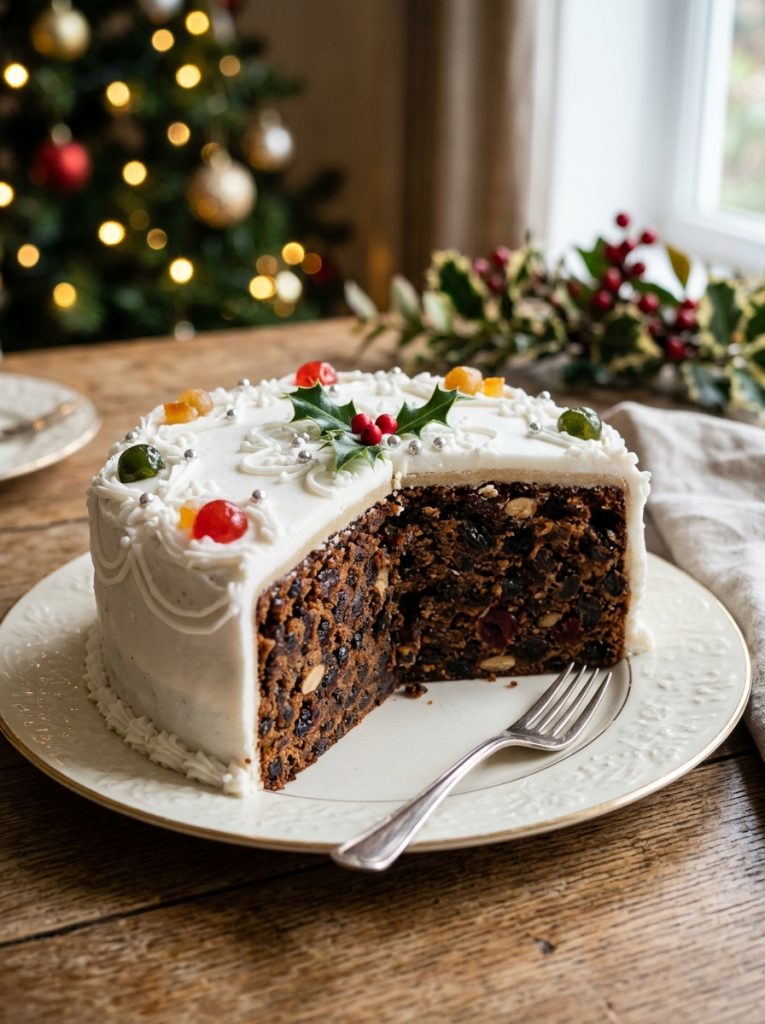
Ingredients for Mary Berry Victorian Christmas Cake
For the Fruit Soak (Night Before)
- 1kg mixed dried fruit (sultanas, currants, raisins)
- 100g dried cranberries or sour cherries
- 100g mixed peel
- 100g glacé cherries, halved and rinsed
- 150ml brandy or dark rum — plus more for feeding
For the Cake
- 250g unsalted butter, softened
- 250g dark muscovado sugar
- 1 tbsp black treacle
- 5 large eggs, at room temperature, beaten
- 250g plain flour, sifted
- 1 tsp ground cinnamon
- 1 tsp mixed spice
- ½ tsp ground ginger
- ½ tsp ground nutmeg
- ¼ tsp ground mace
- ¼ tsp ground cloves
- ¼ tsp ground allspice
- ½ tsp bicarbonate of soda
- 50g ground almonds
- 75g blanched almonds, roughly chopped
- Zest of 1 unwaxed orange
- Zest of 1 unwaxed lemon
How to Make Mary Berry Victorian Christmas Cake
Step 1 — Soak the Fruit the Night Before
Place all the dried fruit, cranberries, mixed peel, and glacé cherries in a very large bowl. Pour over the brandy and stir well. Cover tightly and leave overnight — or for up to 24 hours. The fruit will absorb most of the brandy and become plump, fragrant, and deeply flavoured.
Step 2 — Preheat and Prepare
Preheat your oven to 140°C / 120°C fan / Gas 1. Line a deep 23cm round cake tin with a double layer of baking parchment on the base and sides. Wrap the outside of the tin with a double layer of brown paper or newspaper secured with string — this insulates the outside of the cake and prevents the edges from overbaking during the very long cooking time.
Step 3 — Cream Butter, Sugar, and Treacle
Beat the softened butter, dark muscovado sugar, and black treacle together with an electric hand whisk for four to five minutes until well combined. The mixture will be dark and slightly grainy from the muscovado — this is correct.
Step 4 — Add the Eggs
Add the beaten eggs a little at a time, beating well after each addition. If the mixture looks as though it is about to curdle, add a tablespoon of the measured flour and continue.
Step 5 — Add the Dry Ingredients
Sift the flour, all the spices, and bicarbonate of soda into the bowl. Add the ground almonds, chopped blanched almonds, orange zest, and lemon zest. Fold gently until just combined.
Step 6 — Add the Soaked Fruit
Add all the soaked fruit and every drop of the remaining brandy soaking liquid. Fold through carefully until evenly distributed throughout the batter. The batter will be very dark, very dense, and very fragrant.
Step 7 — Fill and Bake
Spoon the batter into the prepared tin. Smooth the top. Make a slight hollow in the centre — this counteracts the tendency of the cake to dome during the long bake and gives a flatter top.
Bake for 3 hours 30 minutes to 4 hours. Check at 3 hours 30 minutes — a skewer inserted into the very centre should come out clean. If it is still wet, bake for another 30 minutes and check again.
Leave to cool completely in the tin.
Step 8 — Feed the Cake
Once completely cool, remove from the tin but keep the parchment wrapping in place. Using a fine skewer, make 15 to 20 holes all over the base of the cake. Spoon or brush one to two tablespoons of brandy over the base, letting it soak in through the holes.
Wrap tightly in several layers of cling film and then foil. Store in a cool, dark place.
Repeat the feeding — base only, through holes — every week until Christmas.
My Top Tips For Mary Berry Victorian Christmas Cake
Soak the fruit overnight in brandy — at minimum. A full 24 hours gives an even better result. The fruit absorbs the brandy completely and carries it into the cake during baking. This is not a step you can rush.
The brown paper wrapping around the outside of the tin is important. A Victorian Christmas cake bakes for nearly four hours. Without insulation around the outside of the tin, the edges overcook and go dry before the centre is done. Wrap the outside of the tin with double brown paper or newspaper.
Make a hollow in the top before baking. Use the back of a wet spoon to create a slight dip in the centre of the batter before it goes in the oven. This counteracts the rising in the middle and gives a flat top — essential if you are covering it with marzipan and icing.
Feed from the base, not the top. Brandy poured over the top of a fruit cake runs off the surface. Poured through holes in the base, it travels through the cake by gravity and distributes more evenly.
Give it time. A Victorian Christmas cake made in October and fed weekly until Christmas is a different thing from one made a week before. The brandy has time to penetrate every part of the cake. The spices meld and deepen. It becomes genuinely extraordinary.
Serving Suggestions
With a thick layer of marzipan and royal icing — the classic and completely beautiful finish. With just marzipan if you prefer a less sweet cake. Sliced thinly and served with a small glass of brandy or port alongside. As the centrepiece of the Christmas table in a way that a shop-bought cake never can be.
How to Store Mary Berry Victorian Christmas Cake
Wrapped and stored: The cake keeps for up to 4 months when properly wrapped and fed regularly. The brandy is both flavour and preservative.
In the freezer: Freeze the un-iced, unfed cake for up to 6 months if you want to make it even further ahead. Defrost overnight at room temperature and begin the feeding process once defrosted.
Try These Recipes
- Mary Berry Chocolate Chip Banana Bread
- Mary Berry White Chocolate Cheesecake
- Mary Berry Chocolate Loaf Cake
- Mary Berry Best Apple Cake
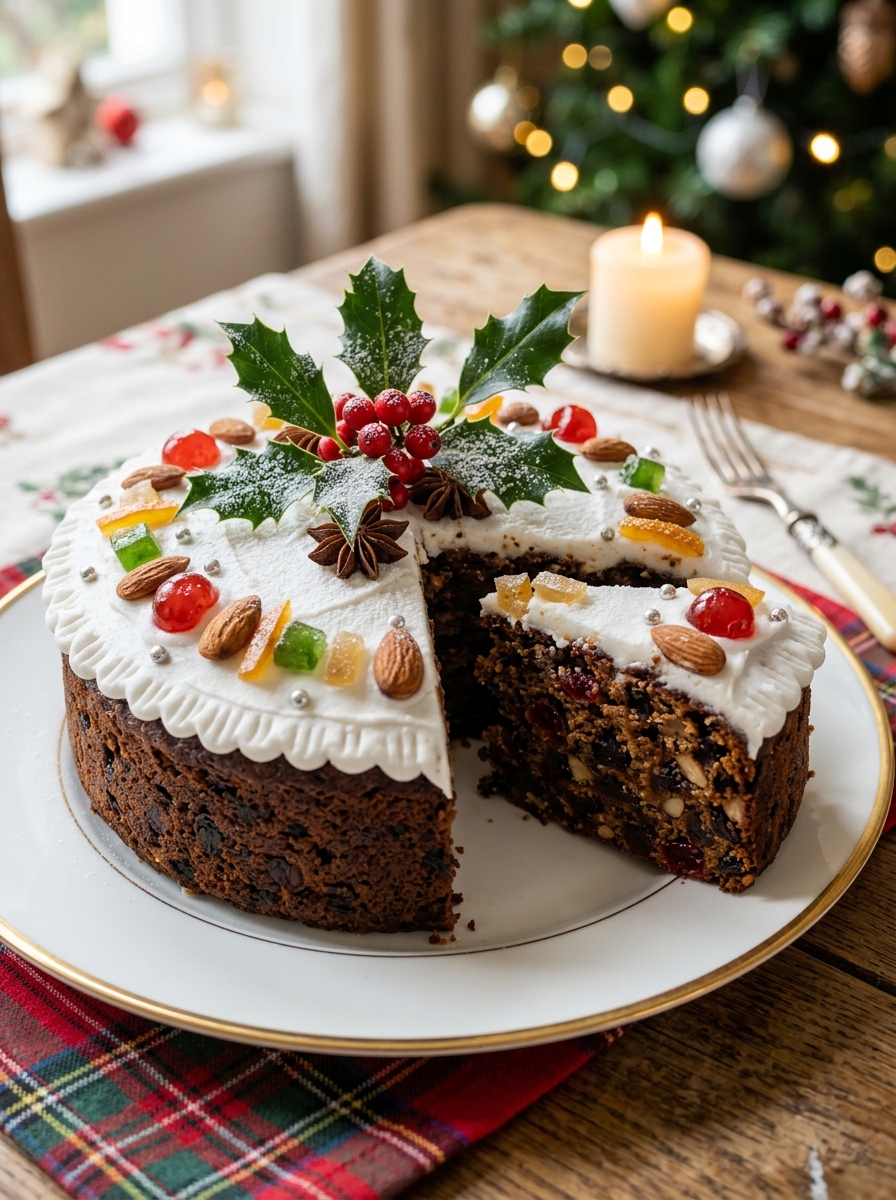
Mary Berry Victorian Christmas Cake Recipe
Ingredients
Method
- Soak all fruit in brandy overnight. Cover tightly.
- Preheat oven to 140°C / 120°C fan / Gas 1. Line tin with double parchment. Wrap outside with double brown paper.
- Beat butter, muscovado, and treacle 4–5 minutes.
- Add beaten eggs gradually — add a tbsp flour if it looks like curdling.
- Sift in flour, spices, and bicarbonate of soda. Add ground almonds, chopped almonds, and citrus zests. Fold gently.
- Add all soaked fruit and remaining liquid. Fold through completely.
- Spoon into tin. Smooth — make a slight hollow in the centre. Bake 3 hours 30 minutes to 4 hours until a skewer comes out clean.
- Cool completely in tin. Remove — keep parchment on. Pierce base 15 to 20 times. Feed with 1 to 2 tbsp brandy. Wrap tightly in cling film then foil. Feed weekly until Christmas.
Notes
Frequently Asked Questions
Can I use rum instead of brandy?
Yes — dark rum gives a slightly sweeter, more molasses-rich result that suits the dark muscovado and black treacle beautifully. It is a wonderful alternative.
Can I skip the feeding?
The cake will still be good — the overnight fruit soak gives a lot of moisture and flavour. But the weekly feeding is what transforms a good Christmas cake into an exceptional one. If you have made it ahead, feed it. Even three or four feeds make a noticeable difference.
How do I know if the cake is done?
The skewer test — it must come out completely clean from the very centre. Given the density and depth of this cake, a wet skewer after three and a half hours means it genuinely needs more time.
Can I make this in a smaller tin?
Yes — for a 20cm tin, use approximately three-quarters of the quantities and reduce the baking time to 2 hours 45 minutes to 3 hours 15 minutes.
Can I leave out the black treacle?
You can — the cake will be lighter in colour and slightly less bitter. Replace with an extra tablespoon of dark muscovado sugar. But the black treacle is what gives the Victorian character — try it once before leaving it out.














Leave a Reply