
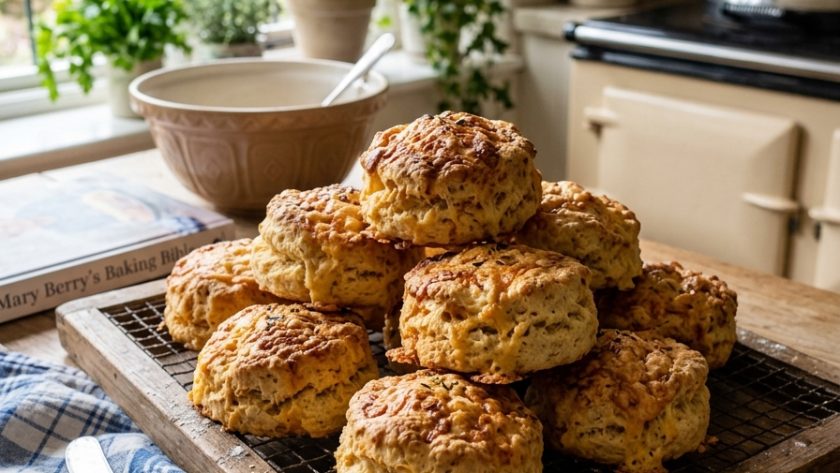
 Anna Louise
 Cheese scones without butter are something I was initially sceptical about and that completely changed my mind when I made them. The reason people search for a butter-free scone recipe is varied — dairy sensitivity, an empty butter dish when the scones are already planned, a preference for a lighter, softer texture — but whatever the reason, the result is genuinely good and deserves to be in this collection.
The technique here replaces the cold butter with a combination of good quality olive oil and a small amount of natural yoghurt. The olive oil gives richness and moisture.
The yoghurt gives the slight acidity that reacts with the baking powder and bicarbonate of soda to give a particularly good rise. The result is a scone that is lighter and slightly softer in texture than the classic butter version — not the same, but genuinely wonderful in its own way.
These scones are also quicker to make than the classic version — no rubbing in of cold butter, no risk of warming the fat with your hands. The liquid and dry ingredients are combined separately and brought together with a few swift strokes. They can be in the oven within ten minutes of starting.
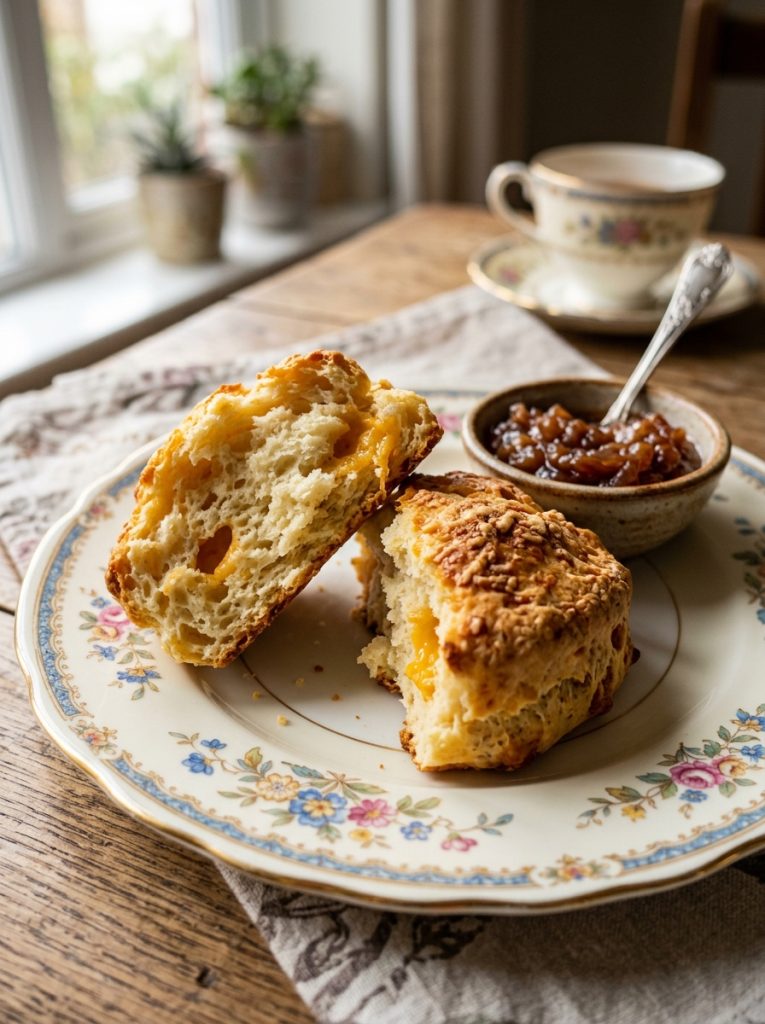
Ingredients for Mary Berry Cheese Scones Without Butter
For the Scones (Makes about 10)
- 450g self-raising flour, sifted — plus extra for dusting
- 2 tsp baking powder
- ½ tsp bicarbonate of soda — adds additional lift and reacts with the yoghurt
- 1 tsp mustard powder
- ½ tsp cayenne pepper
- ½ tsp fine salt
- 175g mature Cheddar, coarsely grated — 150g for the dough, 25g for the tops
- 3 tbsp fresh chives, finely snipped (optional)
- 75ml good quality olive oil — not extra virgin, which can give a slightly bitter note; a mild, refined olive oil
- 200ml natural full-fat yoghurt
- 2 large eggs, beaten
- 2–3 tbsp whole milk — added only if the dough seems dry
How to Make Mary Berry Cheese Scones Without Butter
Step 1 — Preheat and Prepare
Preheat your oven to 220°C / 200°C fan / Gas 7. Line a large baking tray with baking parchment.
Step 2 — Combine the Dry Ingredients
Sift the flour, baking powder, bicarbonate of soda, mustard powder, cayenne, and salt into a large bowl. Add 150g of the grated Cheddar and the snipped chives if using. Toss with a fork to distribute evenly through the flour.
Step 3 — Combine the Wet Ingredients
In a separate jug or bowl, whisk together the olive oil, natural yoghurt, and beaten eggs until combined.
Step 4 — Bring Together
Make a well in the centre of the dry ingredients. Pour in the wet ingredients. Mix quickly with a round-bladed knife in short cutting strokes until a soft, slightly sticky dough just comes together. If the dough seems dry, add milk one tablespoon at a time.
Do not overwork. Stop the moment the dough coheres. The mixing technique for a butter-free scone is even more important than for the standard version — there is no fat structure to protect the gluten from overdevelopment, and overworking gives a noticeably tougher texture.
Step 5 — Pat and Cut
Turn the dough out onto a lightly floured surface. Pat — not roll — to a thickness of 3cm.
Dip a 6cm round straight-sided cutter in flour. Press straight down and lift straight up — never twist. Place on the prepared tray with a little space between each. Gather the trimmings gently once, pat together, and cut again.
Step 6 — Glaze and Bake
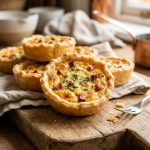
Brush the tops of the scones lightly with a little beaten egg mixed with milk — or just milk if you prefer. Scatter the reserved 25g of Cheddar over each top.
Bake for 12 to 14 minutes until well risen and deeply golden from both the egg wash and the melted Cheddar.
Transfer to a wire rack. Serve warm — ideally within thirty minutes.
My Top Tips For Best Cheese Scones Without Butter
Use full-fat natural yoghurt — not low-fat. Low-fat yoghurt has too much water content and not enough fat to give the right dough texture. Full-fat yoghurt gives a richer, more cohesive dough and a more tender scone.
Use a mild, refined olive oil — not extra virgin. Extra virgin olive oil has a strong, sometimes slightly bitter flavour that can come through in the finished scone. A mild, refined olive oil gives the richness and moisture without the flavour. Sunflower oil works as a neutral alternative.
The bicarbonate of soda reacts with the yoghurt for an exceptional rise. The combination of baking powder and bicarbonate of soda reacting with the acidic yoghurt gives a particularly light, particularly well-risen scone — noticeably better than baking powder alone.
Work even more quickly than with a butter scone. Without cold butter creating a protective fat structure around the flour particles, the dough develops gluten more quickly when worked. Bring it together in the minimum number of strokes and stop immediately.
These scones are lighter and softer than the classic butter version. They are not the same as a butter scone — the texture is slightly different, slightly softer, slightly less flaky. This is not a failing. It is simply a different but equally good texture.
Serving Suggestions
Split and spread with a little olive oil and a scraping of cream cheese — the dairy-lighter alternative to butter. With soup. At a picnic where something savoury is needed and butter is inconvenient.
How to Store Cheese Scones Without Butter
At room temperature: Best eaten within two hours of baking. Store in an airtight container for up to 2 days — refresh in a 170°C oven for five minutes.
In the freezer: Freeze raw cut scones for up to 3 months. Bake from frozen at 220°C for 16 to 18 minutes.
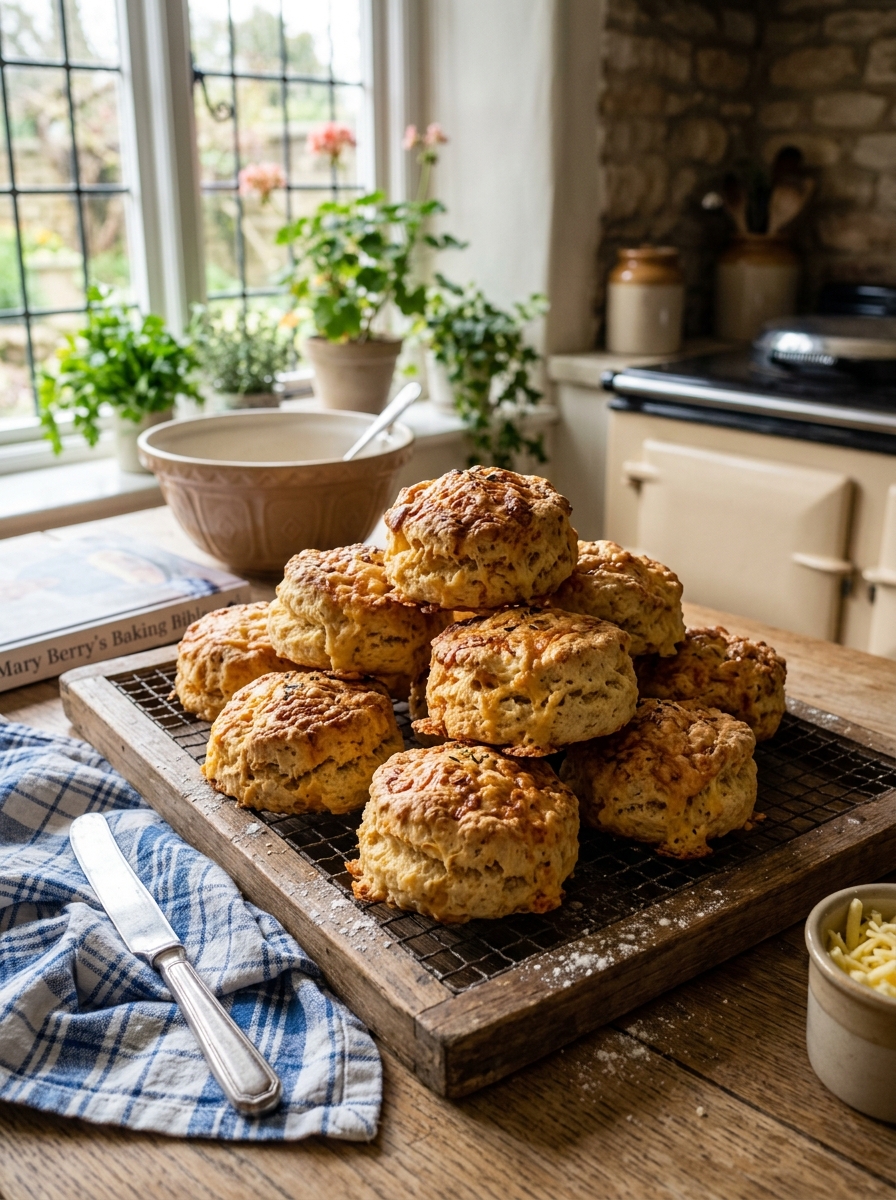
Mary Berry Cheese Scones Without Butter Recipe
Ingredients
Method
- Preheat oven to 220°C / 200°C fan / Gas 7. Line a large tray with parchment.
- Sift flour, baking powder, bicarbonate of soda, mustard powder, cayenne, and salt into a large bowl. Add 150g Cheddar and chives — toss to distribute.
- Whisk olive oil, yoghurt, and beaten eggs together in a jug.
- Make a well in dry ingredients. Pour in wet ingredients — mix quickly with a round-bladed knife until just combined. Add milk 1 tbsp at a time only if dry. Do not overwork.
- Pat gently on floured surface to 3cm. Dip 6cm cutter in flour — press straight down, never twist. Gather once — pat and cut again.
- Place on tray. Brush tops lightly with beaten egg and milk. Scatter 25g Cheddar over each top. Bake 12–14 minutes until well risen and deeply golden. Serve warm.
Notes
Frequently Asked Questions
Can I use dairy free yoghurt?
Yes — unsweetened coconut yoghurt or soy yoghurt give a completely dairy free version. The texture varies slightly between different dairy free yoghurts but all give an acceptable result.
Can I use plain flour instead of self-raising?
Yes — replace the self-raising flour with 450g plain flour and increase the baking powder to 4 teaspoons. Check the baking powder is fresh.
Are these scones genuinely dairy free?
As written, no — the Cheddar contains dairy. For a dairy-free version, use a good quality dairy-free Cheddar-style cheese and dairy-free yoghurt. The result is very good.
Why are my butter-free scones flat?
Either the baking powder was past its use-by date, the dough was overworked, or the oven was not sufficiently preheated. All three give flatter scones — check each one before making again.













Leave a Reply