
 Anna Louise
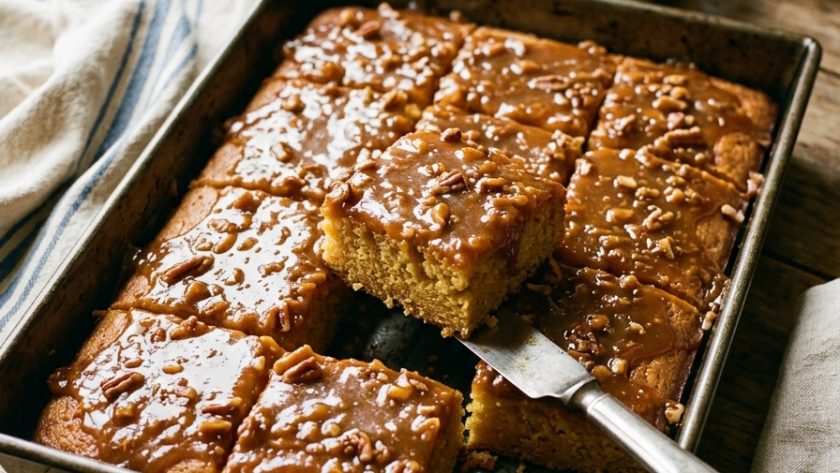
 Butterscotch is one of the most underused flavours in British baking. It sits in the same family as caramel and toffee but has its own distinct character — darker and more complex than plain caramel, with a slightly bitter edge from the brown sugar and butter that white sugar caramel does not have.
The butterscotch flavour here comes from two places — soft light brown sugar in the sponge, which gives a subtle, slightly molasses-flavoured crumb, and a proper butterscotch frosting made by cooking butter and dark brown sugar together until they reach a deep, glossy caramel before adding cream.
This frosting is something genuinely extraordinary — sticky, deeply flavoured, slightly fudge-like when set, and completely irresistible. This is the traybake to make when you want something that people eat and immediately ask what it is.
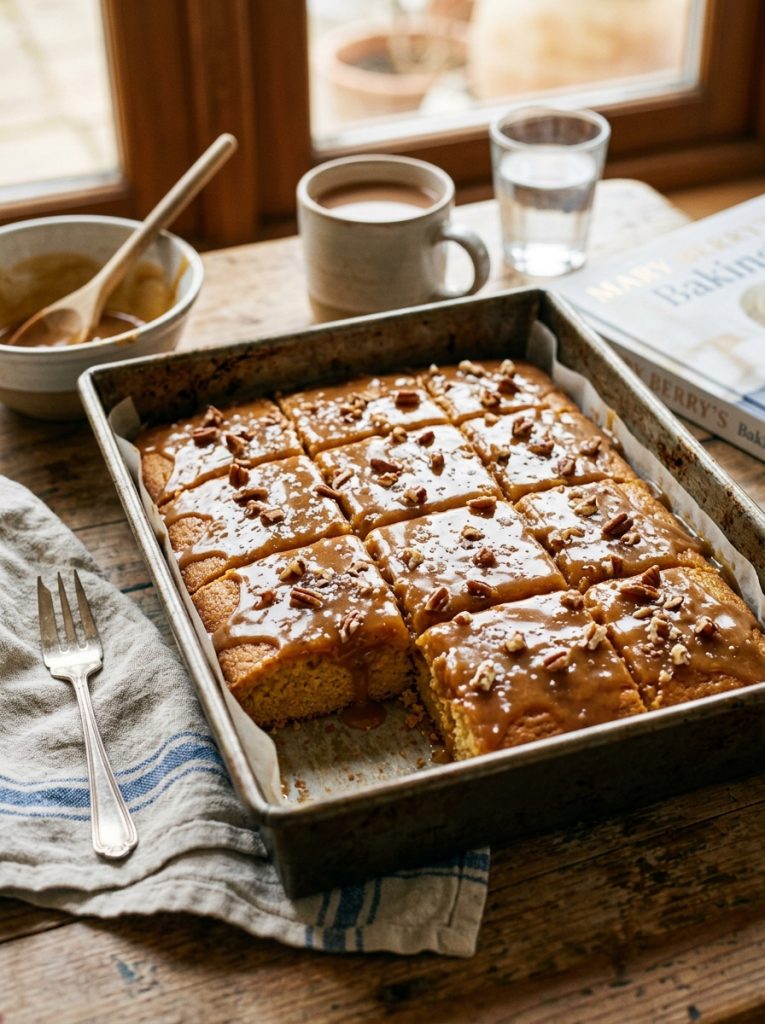
Ingredients for Mary Berry Butterscotch Traybake
For the Brown Sugar Sponge
- 300g unsalted butter, softened
- 300g soft light brown sugar
- 5 large eggs, at room temperature
- 300g self-raising flour, sifted
- 2½ tsp baking powder
- 4 tbsp whole milk
- 2 tsp vanilla extract
- ½ tsp fine salt
For the Butterscotch Frosting
- 100g unsalted butter
- 175g dark muscovado sugar
- 100ml double cream
- 200g icing sugar, sifted
- 1 tsp vanilla extract
- Pinch of fine salt
To Decorate
- 50g pecans or walnuts, roughly chopped and toasted — scattered over the frosting
- Sea salt flakes (optional — the salted butterscotch combination is exceptional)
- A drizzle of extra butterscotch sauce if desired
How to Make Mary Berry Butterscotch Traybake
Step 1 — Preheat and Prepare
Preheat your oven to 180°C / 160°C fan / Gas 4. Grease a 33x23cm traybake tin and line with baking parchment, leaving overhang at both long sides.
Step 2 — Make the Sponge
Beat the softened butter and soft light brown sugar together for four to five minutes until pale and well combined — brown sugar never becomes as pale as white caster sugar but the mixture should lighten significantly and become fluffy.
Add the eggs one at a time, beating well after each. Add the vanilla extract.
Sift the flour, baking powder, and salt directly into the bowl. Add the milk. Fold gently until just combined.
Pour the batter into the prepared tin and spread evenly to the corners.
Step 3 — Bake
Bake for 30 to 35 minutes until deep golden, springy when pressed in the centre, and a skewer inserted into the very centre comes out clean.
Leave to cool completely in the tin — at least one hour.
Step 4 — Make the Butterscotch Frosting
Place the butter and dark muscovado sugar in a medium, heavy-based saucepan over a medium heat. Stir constantly until the butter has melted and the sugar has completely dissolved. Increase the heat slightly and let the mixture bubble — stirring constantly — for two to three minutes until it darkens slightly and smells deeply of caramel.
Remove from the heat. Carefully pour in the double cream — it will bubble dramatically. Stir vigorously until smooth. Return to a low heat for one minute, stirring. Remove and leave to cool for fifteen minutes until slightly warm but no longer hot.
Add the sifted icing sugar, vanilla extract, and salt to the cooled butterscotch mixture. Beat with an electric hand whisk for two to three minutes until smooth, glossy, and slightly thickened. The frosting will be softer than a standard buttercream — this is correct. It firms as it sets.
Step 5 — Frost and Decorate
Lift the completely cooled sponge from the tin using the parchment overhang. Place on a board.
Pour the butterscotch frosting over the sponge and spread quickly and evenly with a palette knife — it sets as it cools so work with confidence and speed. Go right to the edges.
Scatter the toasted pecans or walnuts over the frosting immediately. Add sea salt flakes if using.
Leave to set at room temperature for thirty minutes until the frosting has firmed to a slightly fudgy, glossy finish. Cut into twenty to twenty-four squares.
My Top Tips For Perfect Butterscotch Traybake
Work quickly when spreading the butterscotch frosting. Unlike a standard buttercream, butterscotch frosting begins to firm as it cools. Have the sponge ready and the decorations within reach before you pour the frosting on. Once spread, it sets quickly and cannot be repositioned without tearing.
Cook the butter and muscovado until properly caramelised. Two to three minutes of bubbling after the sugar dissolves gives the deep, complex butterscotch flavour. Insufficient cooking gives a sweet but flat result. The mixture should be noticeably darker and more fragrant at the end of the cooking time.
Cool the butterscotch base before adding icing sugar. If the icing sugar goes into a hot butterscotch base it melts immediately and the frosting will be too thin. Fifteen minutes of cooling gives the right temperature — warm but not hot.
The frosting should be softer than standard buttercream. The muscovado and cream give a frosting that spreads more like a ganache than a buttercream and sets to a slightly fudgy finish. This is the correct texture — not a spreadability problem.
Toasted pecans on top are worth the five minutes. The slight bitterness of the toasted nut against the intensely sweet butterscotch is exactly the balance the traybake needs. Toast in a dry pan over a medium heat for three to four minutes until fragrant. Watch them — nuts burn quickly.
Serving Suggestions
At a coffee morning — butterscotch is the perfect coffee companion. At a bake sale where you want the most interesting offering on the table. As a birthday traybake for someone who loves caramel and toffee flavours.
How to Store
At room temperature: Store in an airtight container for up to 4 days. The frosting firms further on storing and becomes even more fudge-like.
In the freezer: Freeze unfrosted squares individually for up to 3 months. Make the butterscotch frosting fresh when serving.
Try These Recipes
- Mary Berry Old School Traybake
- Mary Berry Coffee And Walnut Traybake
- Mary Berry Apple Cake Traybake
- Mary Berry Bakewell Traybake
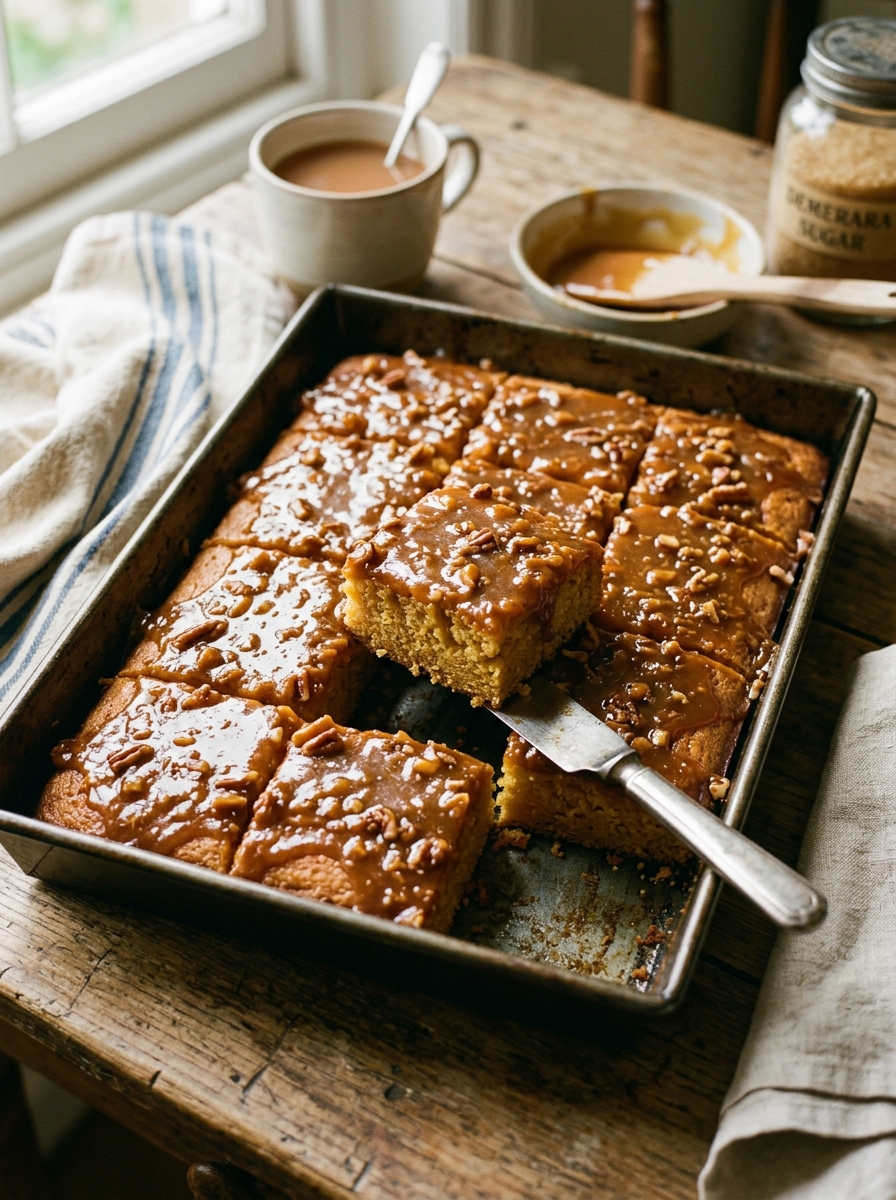
Mary Berry Butterscotch Traybake Recipe
Ingredients
Method
- Preheat oven to 180°C / 160°C fan / Gas 4. Grease and line a 33x23cm tin.
- Beat butter and brown sugar 4–5 minutes. Add eggs one at a time. Add vanilla. Sift in flour, baking powder, and salt. Add milk — fold gently. Pour into tin — spread evenly.
- Bake 30–35 minutes until golden and skewer comes out clean. Cool completely — at least 1 hour.
- Melt butter and muscovado in a heavy saucepan over medium heat — stir until dissolved. Bubble 2–3 minutes stirring constantly until darkened and deeply fragrant. Remove from heat — carefully add cream, stir vigorously. Return to low heat 1 minute. Cool 15 minutes.
- Add icing sugar, vanilla, and salt to cooled butterscotch. Beat 2–3 minutes until smooth and glossy.
- Lift sponge from tin. Pour frosting over — spread quickly and evenly before it sets. Scatter toasted nuts and sea salt flakes immediately. Leave to set 30 minutes. Cut into 20–24 squares.
Notes
Frequently Asked Questions
Can I use all dark muscovado sugar in the sponge?
You can but it gives a very dense, very dark crumb. Soft light brown sugar in the sponge and dark muscovado in the frosting gives the right balance — a subtly flavoured sponge and an intensely flavoured topping.
Can I make the frosting without icing sugar?
The butterscotch base alone — butter, muscovado, and cream — gives a sauce rather than a frosting. The icing sugar gives body and spreadability. It is not optional for this application.
Can I add a layer of salted caramel sauce between the sponge and frosting?
Yes — a thin layer of good quality salted caramel sauce spread over the cooled sponge before the butterscotch frosting goes on gives an extra layer of flavour that is completely extraordinary.
Why has my frosting turned grainy?
The muscovado sugar did not fully dissolve before the cream was added, or the frosting was beaten while too hot. Ensure the sugar is fully dissolved and the mixture is properly cooled before adding the icing sugar.















Leave a Reply