
 Anna Louise
A yoghurt cake is one of the most forgiving, most reliable, and most consistently good cakes I make — and I say this as someone who has been baking for decades and who has a considerable number of reliable cake recipes in this collection.
The yoghurt gives a specific quality to the crumb — slightly tangy, noticeably moist, with a tenderness that butter-based cakes do not quite replicate — and the method is the simplest possible: whisk the wet ingredients, fold in the dry, bake.
This is the cake I recommend to anyone who tells me they are not confident about baking. It does not require creaming butter and sugar for five minutes. It does not require careful folding of egg whites.
It does not require a water bath or a specific tin or any technique that requires practice. It requires a bowl, a whisk, and a loaf tin — and it gives something genuinely wonderful.
Ingredients for Mary Berry Yoghurt Cake
For the Yoghurt Cake
- 200g full-fat natural yoghurt — at room temperature
- 200g golden caster sugar
- 3 large eggs, at room temperature
- 150ml sunflower oil — gives a lighter, moister crumb than butter
- 250g plain flour, sifted
- 2 tsp baking powder
- ½ tsp bicarbonate of soda
- ½ tsp fine salt
- Finely grated zest of 2 large unwaxed lemons
- 2 tbsp fresh lemon juice
- 1 tsp vanilla extract
For the Lemon Glaze
- 125g icing sugar, sifted
- 2–3 tbsp fresh lemon juice — enough to give a thick but flowing glaze
- Finely grated zest of 1 unwaxed lemon — scattered over the wet glaze
How to Make Mary Berry Yoghurt Cake
Step 1 — Preheat and Prepare
Preheat your oven to 170°C / 150°C fan / Gas 3. Grease a 900g (2lb) loaf tin generously and line with baking parchment, leaving overhang at both long sides.
Step 2 — Mix the Wet Ingredients
In a large bowl, whisk together the room-temperature natural yoghurt, golden caster sugar, eggs, sunflower oil, lemon zest, lemon juice, and vanilla extract until smooth and well combined — approximately one minute of whisking.
Step 3 — Add the Dry Ingredients
Sift the plain flour, baking powder, bicarbonate of soda, and salt directly into the wet ingredients. Fold gently with a large spatula until just combined — the batter will be smooth and slightly liquid. Do not overwork.
Step 4 — Bake
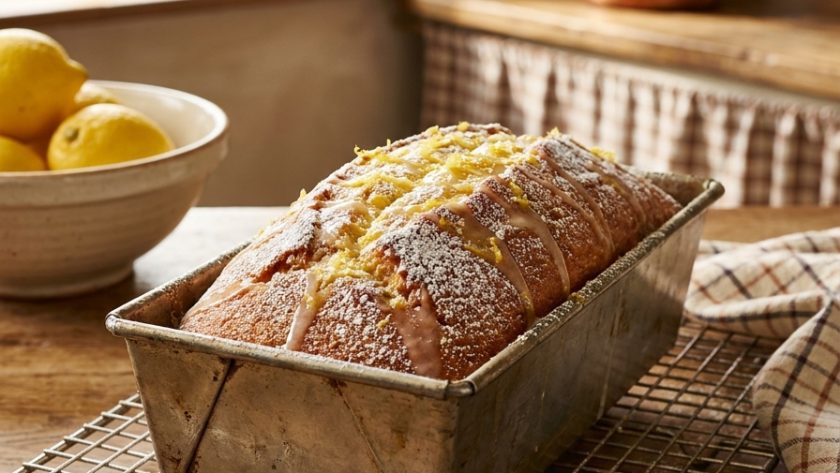
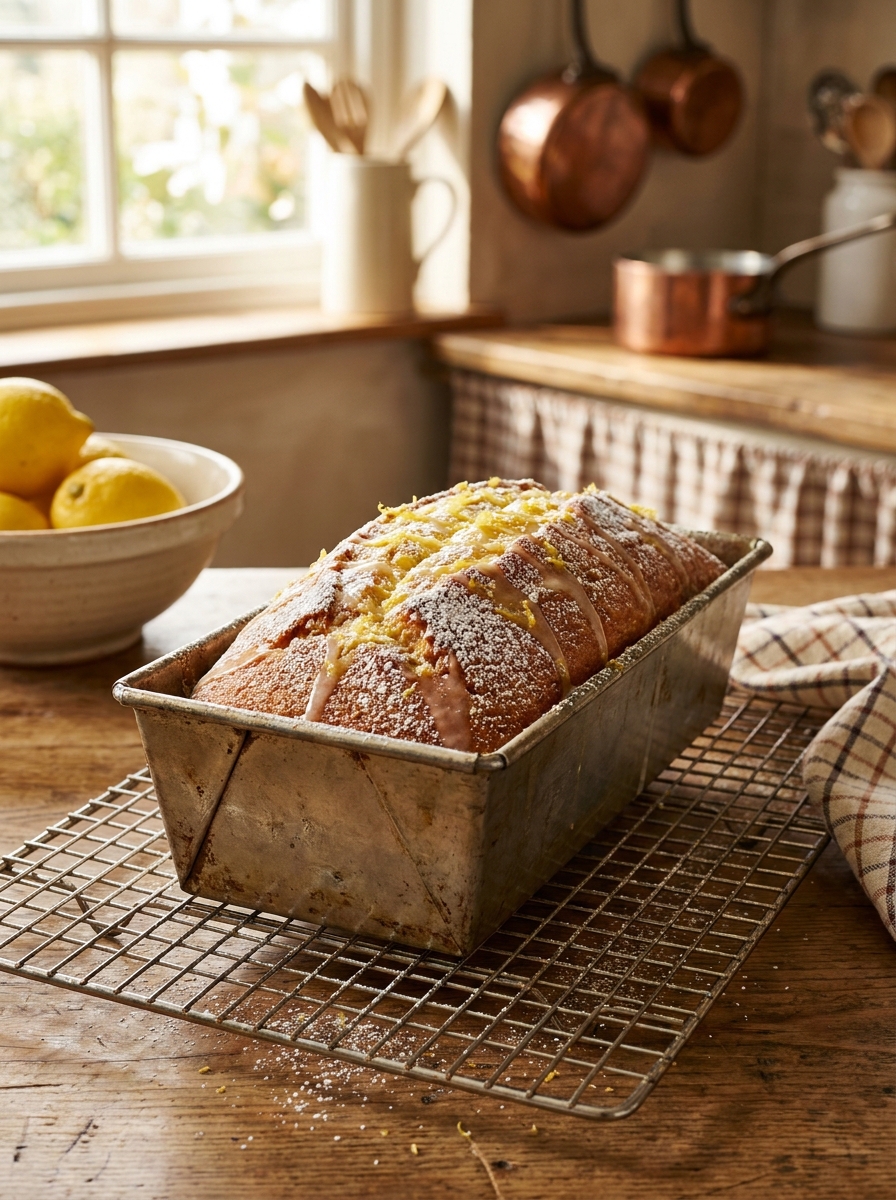
Pour the batter into the prepared tin. Bake for 50 to 60 minutes until the cake is golden, has developed its characteristic crack along the centre, and a skewer inserted into the very centre comes out clean.
If the top is darkening too quickly — cover loosely with baking parchment after 35 minutes.
Cool in the tin for fifteen minutes. Lift out using the parchment overhang. Cool on a wire rack for a further thirty minutes before glazing.
Step 5 — Make the Lemon Glaze and Finish
Mix the sifted icing sugar with the lemon juice one tablespoon at a time until a thick, flowing glaze forms — it should fall from the spoon in a steady ribbon.
Pour over the slightly warm cake — letting it run naturally down the sides. Scatter the extra lemon zest over the wet glaze. Leave to set for twenty minutes.
My Top Tips For Perfect Mary Berry Yoghurt Cake
Use full-fat natural yoghurt — not low-fat or Greek-style. Full-fat natural yoghurt gives the right moisture content and the right tangy quality that defines a yoghurt cake. Low-fat yoghurt has too much water and too little fat — the cake can be slightly wet. Greek-style yoghurt is too thick and gives a denser, less tender result. Full-fat natural yoghurt is the correct choice.
Oil rather than butter gives the specifically moist, tender crumb. This is a cake where oil is unambiguously the better choice. The combination of yoghurt and oil gives a crumb that stays moist for four to five days — considerably longer than a butter-based sponge — and that has a specific lightness that is the characteristic quality of a well-made yoghurt cake.
Do not overwork the batter. Fold the dry ingredients into the wet until just combined — a few remaining flour streaks are acceptable; they will incorporate as the batter is poured into the tin. Overworked batter develops gluten and gives a slightly tough, slightly rubbery crumb. This is an even lower-effort instruction than in most cakes — because with yoghurt and oil the batter is genuinely forgiving.
The glaze on a slightly warm cake gives a semi-absorbed finish. Glaze applied to a hot cake runs completely off and gives no coverage. Glaze applied to a completely cold cake sits entirely on the surface. Glaze applied to a slightly warm cake — thirty minutes out of the oven — is partially absorbed and partially set, giving a glossy, professional finish that is specifically good.
This cake improves over two days. The yoghurt and oil give a crumb that deepens slightly in flavour as it rests. Day one is very good. Day two is genuinely excellent. Wrap in baking parchment and store at room temperature.
Serving Suggestions
At room temperature as an afternoon tea cake with a cup of Earl Grey. As a breakfast or mid-morning cake — it is light enough to feel appropriate at any time of day. As a gift — it keeps well and travels beautifully.
How to Store Mary Berry Yoghurt Cake
At room temperature: Wrap in baking parchment and store for up to 5 days. The crumb stays moist throughout.
In the freezer: Freeze without the glaze for up to 3 months. Apply the lemon glaze fresh after defrosting.
Mary Berry Yoghurt Cake Recipe
Ingredients
Method
- Preheat oven to 170°C / 150°C fan / Gas 3. Grease and line a 900g loaf tin with parchment overhang.
- Whisk yoghurt, sugar, eggs, oil, lemon zest, lemon juice, and vanilla together until smooth — 1 minute.
- Sift flour, baking powder, bicarbonate of soda, and salt directly into wet ingredients — fold gently until just combined.
- Pour into tin. Bake 50–60 minutes until golden, cracked, and skewer comes out clean. Cover loosely after 35 minutes if darkening. Cool in tin 15 minutes — lift out. Cool on rack 30 minutes.
- Mix icing sugar with lemon juice to a thick flowing glaze. Pour over slightly warm cake — let it run naturally. Scatter lemon zest. Set 20 minutes. Slice.
Notes
Frequently Asked Questions
Can I use Greek yoghurt?
Full-fat Greek yoghurt can be used — thin it slightly with one tablespoon of whole milk before adding. It gives a slightly denser result than standard natural yoghurt but still very good.
Can I add poppy seeds?
Yes — two tablespoons of poppy seeds folded through the batter give a pleasant texture and a visual interest that suits the lemon character of the cake very well.
Can I make this as a round cake rather than a loaf?
Yes — bake in a deep 20cm round springform tin at the same temperature for 40 to 45 minutes. The round cake has a slightly different visual character but is equally good.
Can I use orange instead of lemon?
Yes — the finely grated zest and juice of two large unwaxed oranges gives a slightly sweeter, slightly less sharp version. Orange yoghurt cake is completely wonderful and slightly more unusual than the lemon version.















Leave a Reply