
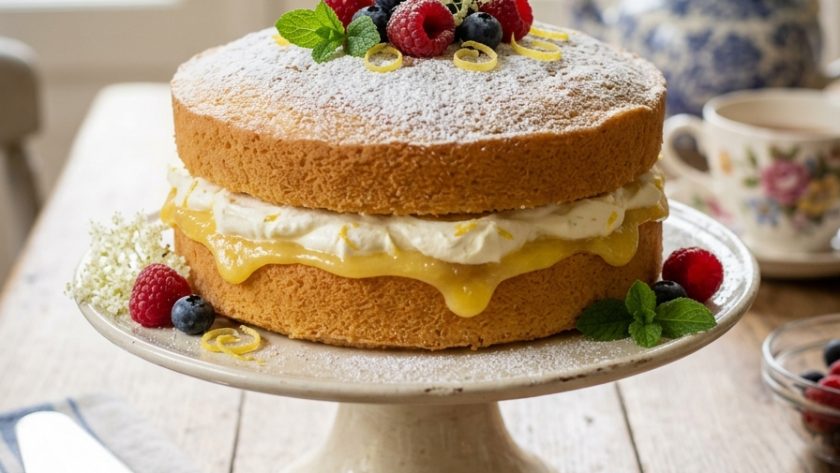
 Anna Louise
 The lemon Victoria sponge is the version I make when I want the familiar comfort of a Victoria sponge but with something brighter and more interesting happening in the flavour. The sponge itself is scented with lemon zest — just enough to give every bite a vivid citrus fragrance without being assertive.
The filling combines lemon curd with lightly whipped cream — sharp and rich together. The result is a cake that is unmistakably a Victoria sponge in character and texture but with a flavour that is considerably more interesting than the classic vanilla version.
This is the cake for lemon lovers. The lemon is present in the sponge, present in the filling, and present in the lemon glacé icing drizzled over the top.
Every component contributes to a cake that tastes consistently, clearly, and beautifully of lemon from the first bite to the last.
Ingredients for Mary Berry Lemon Victoria Sponge
For the Lemon Sponge
- 225g unsalted butter, softened
- 225g caster sugar
- 4 large eggs, at room temperature
- 225g self-raising flour, sifted
- 2 tsp baking powder
- 2 tbsp whole milk
- Finely grated zest of 2 large unwaxed lemons
- 1 tbsp fresh lemon juice
For the Lemon Cream Filling
- 150g good quality lemon curd
- 200ml double cream, cold
- 1 tbsp icing sugar
For the Lemon Glacé Icing
- 150g icing sugar, sifted
- 2–3 tbsp fresh lemon juice — enough to make a smooth, slightly runny icing
- Zest of ½ unwaxed lemon
To Finish
- A few thin slices of unwaxed lemon
- A light dusting of icing sugar
How to Make Mary Berry Lemon Victoria Sponge
Step 1 — Make the Lemon Sponge
Preheat your oven to 180°C / 160°C fan / Gas 4. Grease two 20cm round sandwich tins and line the bases with baking parchment.
Beat the softened butter and caster sugar together for four to five minutes until pale and very fluffy. Add the eggs one at a time, beating well after each. Add the lemon zest and lemon juice.
Sift the flour and baking powder into the bowl. Add the milk. Fold gently until just combined.
Divide equally between the two tins — weigh the batter for even layers. Bake for 22 to 26 minutes until golden, springy, and a skewer comes out clean. Cool in the tins for five minutes. Turn out onto a wire rack and cool completely.
Step 2 — Make the Lemon Cream Filling
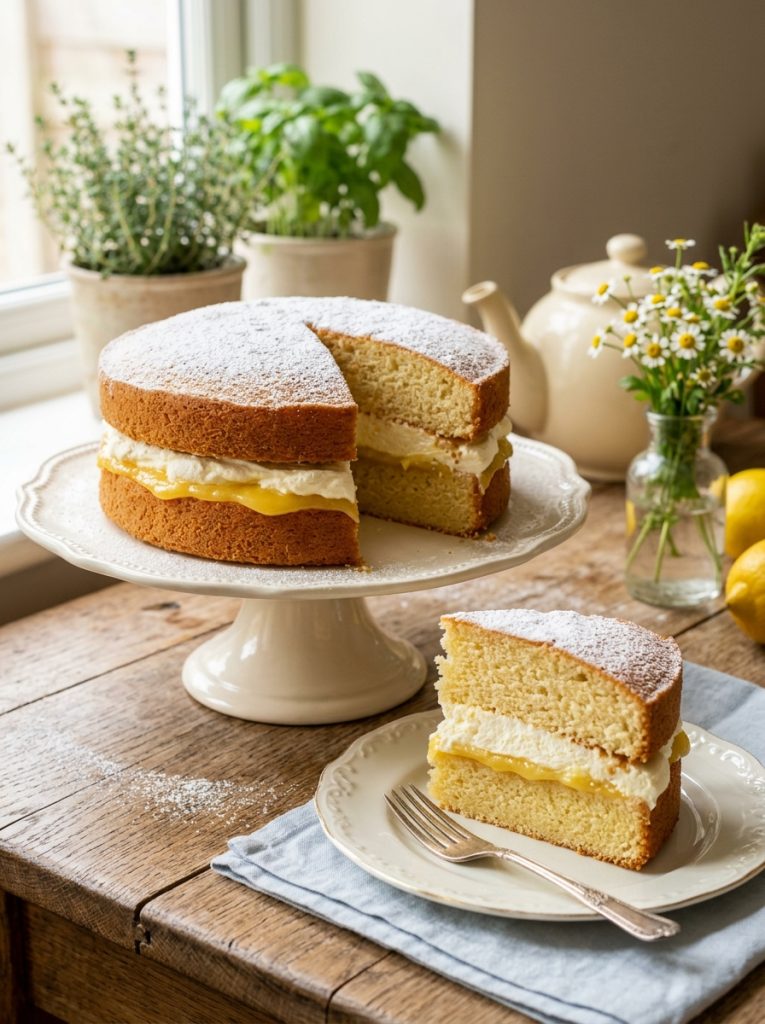
Whip the cold double cream and icing sugar together to soft peaks — billowy and holding their shape. Fold through the lemon curd in three or four broad sweeping strokes — you want swirls of curd through the cream rather than a uniformly mixed filling. The pale cream with vivid yellow lemon curd swirls looks beautiful when the cake is sliced.
Step 3 — Assemble the Cake
Place one sponge upside down on a serving plate — the flat base gives a level surface for the filling. Spread the lemon cream filling generously and evenly, right to the edges.
Place the second sponge on top, right-side up. Press down gently.
Step 4 — Make and Apply the Lemon Glacé Icing
Mix the sifted icing sugar with enough lemon juice to make a smooth, slightly runny glacé icing — it should flow off the spoon in a steady ribbon. Stir in the lemon zest.
Pour the icing over the top of the cake and use a palette knife to spread it gently to the edges — letting it drip slightly and naturally over the sides for an attractive, informal finish. Do not try to achieve a perfectly smooth, contained top — the slight drips over the edge are part of the charm.
Arrange thin lemon slices on top. Leave the icing to set — about fifteen minutes — before slicing.
Step 5 — Serve
Dust very lightly with icing sugar around the lemon slices. Slice at the table and reveal the lemon curd swirl in the filling.
My Top Tips For Perfect Lemon Victoria Sponge
Use unwaxed lemons for the zest — always. The zest of waxed lemons can give a slightly flat, slightly waxy flavour. Unwaxed lemons give vivid, clean, fragrant zest that makes an immediate difference in the sponge.
Fold lemon curd through the cream rather than mixing completely. The swirled effect — pale cream with vivid yellow lemon curd — looks beautiful when the filled cake is sliced. It also gives alternating bites of pure cream and concentrated lemon curd, which is more interesting than a uniformly blended filling.
Allow the glacé icing to drip slightly over the edges. A contained, perfectly smooth glacé icing on a Victoria sponge looks slightly rigid. A drip or two over the edges looks relaxed and appetising.
Weigh the batter between tins. Even layers, consistently. It takes thirty seconds and always produces a more professional-looking finished cake.
The lemon must be present in all three components. Zest in the sponge, lemon curd in the filling, lemon juice in the glacé icing. This is what gives the cake its consistent, vivid lemon character throughout every bite.
Serving Suggestions
As an afternoon tea centrepiece. As a birthday cake for a lemon lover. With a pot of Earl Grey — the bergamot in the tea echoes the lemon beautifully.
How to Store
At room temperature: Best eaten on the day. Store in an airtight container for up to 2 days — the cream filling softens the sponge slightly over time but the cake remains delicious.
In the freezer: Freeze the unfilled, un-iced sponge layers for up to 3 months. Assemble fresh when needed.
Try These Recipes
- Mary Berry Baileys Cheesecake
- Mary Berry Carrot Cake Cupcakes
- Mary Berry Lemon And Coconut Cake
- Mary Berry Malteser Cheesecake
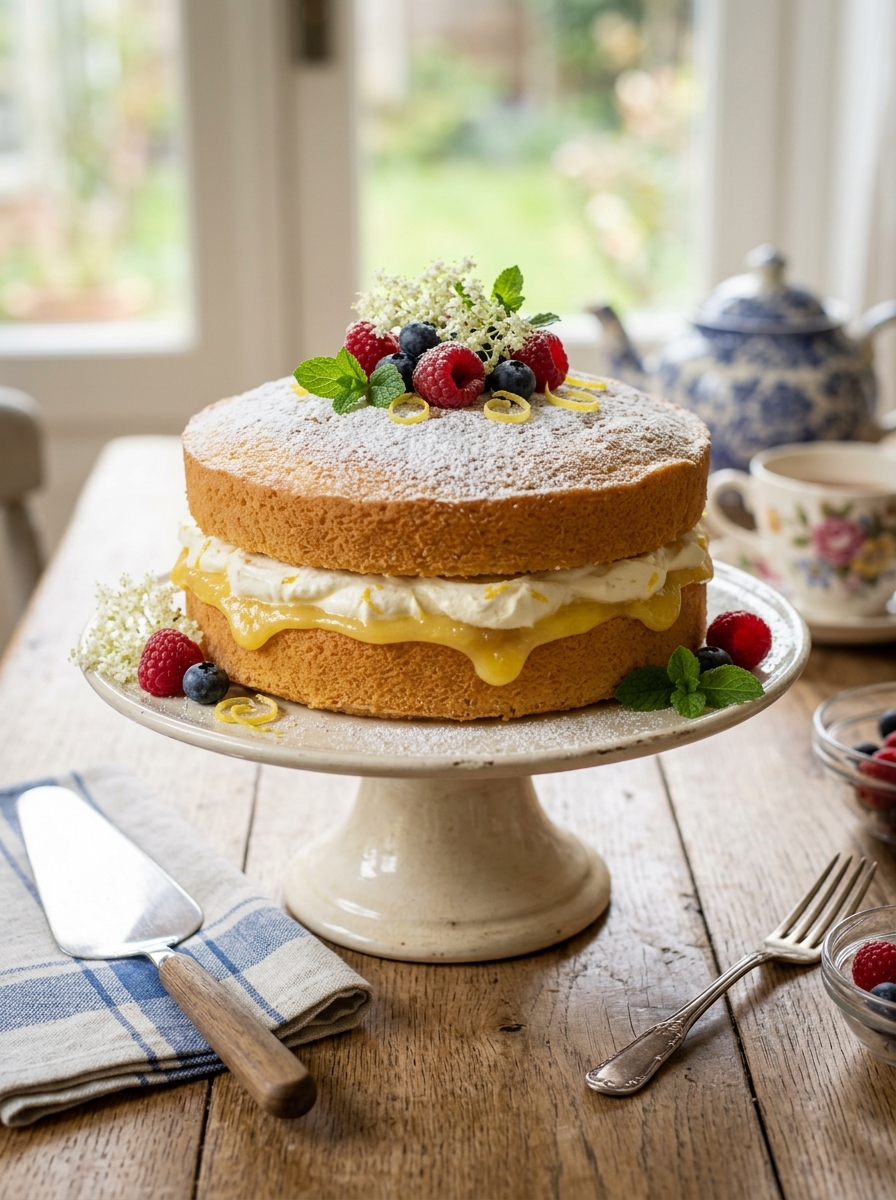
Mary Berry Lemon Victoria Sponge Recipe
Ingredients
Method
- Preheat oven to 180°C / 160°C fan / Gas 4. Grease and line two 20cm tins. Beat butter and sugar 4–5 minutes until pale and fluffy. Add eggs one at a time. Add lemon zest and juice. Sift in flour and baking powder. Add milk — fold gently.
- Divide between tins — weigh for even layers. Bake 22–26 minutes until golden and skewer comes out clean. Cool completely.
- Whip cold cream and icing sugar to soft peaks. Fold lemon curd through in 3–4 broad strokes — swirled, not fully mixed.
- Place one sponge upside down on plate. Spread lemon cream filling generously. Top with second sponge.
- Mix icing sugar with lemon juice to a smooth, flowing icing. Stir in zest. Pour over top — spread gently, allowing slight drips over the edge. Arrange lemon slices. Leave 15 minutes to set. Dust lightly with icing sugar.
Notes
Frequently Asked Questions
Can I use lime instead of lemon?
Yes — lime zest in the sponge and lime curd in the filling give a more fragrant, slightly more tropical version. Use the same quantities.
Can I use buttercream instead of whipped cream?
Yes — the lemon buttercream from the lemon cupcakes recipe on this site works beautifully as a filling and top layer instead of the cream and glacé icing combination.
Can I make this as a traybake?
Yes — pour the batter into a greased and lined 30x23cm traybake tin. Bake at the same temperature for 30 to 35 minutes. Spread lemon curd over the cooled sponge and top with lemon glacé icing.
Why is my glacé icing too runny?
Add more sifted icing sugar a tablespoon at a time until the right consistency is reached. It should flow off the spoon in a steady ribbon — not pour freely like water.














Leave a Reply