
 Anna Louise
 I want to be clear about what this lemon cake is, because there are several lemon cakes on this site and they each have a distinct identity. The lemon drizzle is a loaf cake — intense, with a crunchy crystallised drizzle top. The lemon meringue roulade is a dessert — meringue and lemon curd. The air fryer lemon drizzle is the quick loaf version.
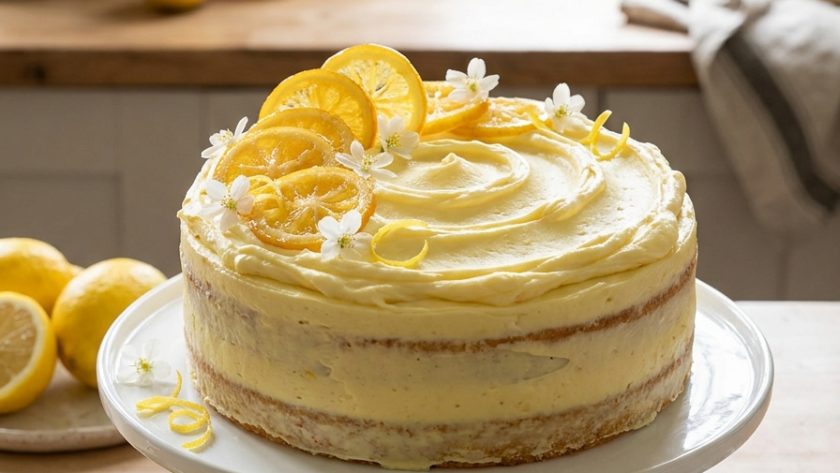
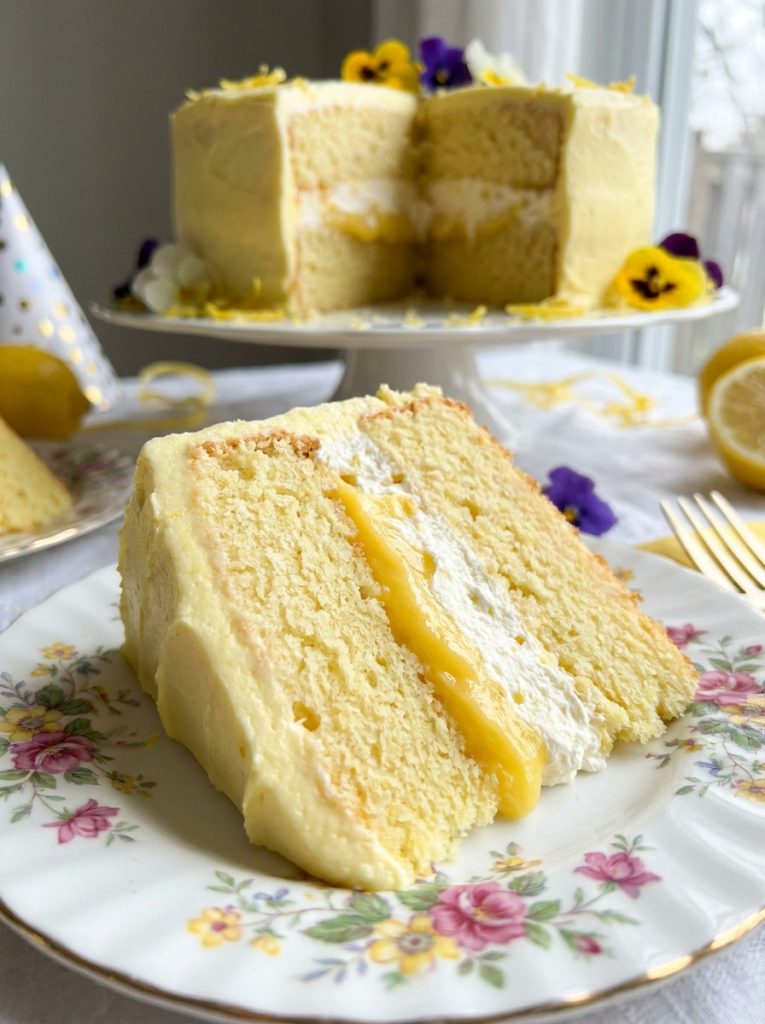
This lemon cake is the celebration layer cake version — two light, vivid lemon sponge layers, filled with a combination of lemon curd and whipped cream, covered in a lemon-forward buttercream, and decorated simply and beautifully. It is the lemon cake for a birthday, for a celebration, for any occasion where something genuinely spectacular and specifically lemon is wanted.
The lemon character here is built from three sources — zest in the sponge batter, lemon curd in the filling, and lemon juice in the buttercream.
Each contributes a different aspect of the lemon flavour: zest gives fragrance, curd gives intensity and slight tartness, juice in the buttercream gives brightness and prevents it from being too sweet. Together they give a cake where the lemon is vivid, layered, and unmistakably present in every bite.
Ingredients for Mary Berry Lemon Cake
For the Lemon Sponge
- 225g unsalted butter, softened
- 225g golden caster sugar
- 4 large eggs, at room temperature
- 225g self-raising flour, sifted
- 2 tsp baking powder
- 2 tbsp whole milk
- Finely grated zest of 3 large unwaxed lemons
- 1 tsp vanilla extract
For the Lemon Curd and Cream Filling
- 4 tbsp good quality lemon curd — shop-bought is excellent, or use the homemade version from this site
- 200ml double cream, cold
- 1 tbsp icing sugar
- ½ tsp vanilla extract
For the Lemon Buttercream
- 200g unsalted butter, softened
- 400g icing sugar, sifted twice
- Juice of 2 large unwaxed lemons — about 6 tbsp
- Finely grated zest of 1 large unwaxed lemon
- 1–2 tbsp whole milk — if needed to reach the right consistency
- Pinch of fine salt
To Decorate
- Thin slices of unwaxed lemon — halved
- Crystallised lemon peel or edible flowers (optional)
- A very light dusting of icing sugar around the edges
How to Make Mary Berry Lemon Cake
Step 1 — Make the Lemon Sponge
Preheat your oven to 180°C / 160°C fan / Gas 4. Grease two 20cm round sandwich tins and line the bases with baking parchment.
Beat the softened butter and golden caster sugar together for four to five minutes until pale and genuinely fluffy. Add the eggs one at a time, beating well after each. Add the vanilla extract and lemon zest — the batter will smell completely wonderful from this point.
Sift the flour and baking powder into the bowl. Add the milk. Fold gently until just combined.
Divide equally between the two tins — I always weigh the batter for even layers. Bake for 20 to 24 minutes until golden, springy, and a skewer comes out clean. Cool completely on wire racks — at least one hour.
Step 2 — Make the Lemon Buttercream
Beat the softened butter alone for four full minutes until very pale and genuinely fluffy. Add the double-sifted icing sugar in three batches, beating well after each. Add the lemon juice, lemon zest, and salt. Beat for two more minutes until smooth and silky. Add milk one tablespoon at a time if needed to reach a smooth, spreadable consistency.
Taste — the buttercream should be clearly, assertively lemony and well-balanced. The salt is important — it prevents the buttercream from tasting flat and one-dimensionally sweet.
Step 3 — Make the Lemon Curd and Cream Filling
Whip the cold double cream, icing sugar, and vanilla to soft peaks. Fold the lemon curd through the whipped cream with two or three gentle strokes — giving a swirled lemon curd cream rather than a uniformly yellow cream. The swirl gives a more interesting visual when the cake is sliced and a more layered flavour.
Step 4 — Assemble the Cake
Place the first sponge upside down on a serving plate — the flat base gives a level surface for the filling.
Spread the lemon curd cream generously over the surface. Place the second sponge on top — right-side up. Press down very gently.
Apply a thin crumb coat of buttercream all over the cake — covering the top and sides in a thin, even layer. Refrigerate for fifteen minutes until the crumb coat is firm.
Apply a generous second coat of buttercream — smooth with a large palette knife dipped in hot water for the most professional finish, or give the sides a slightly textured finish with a cake scraper.
Step 5 — Decorate
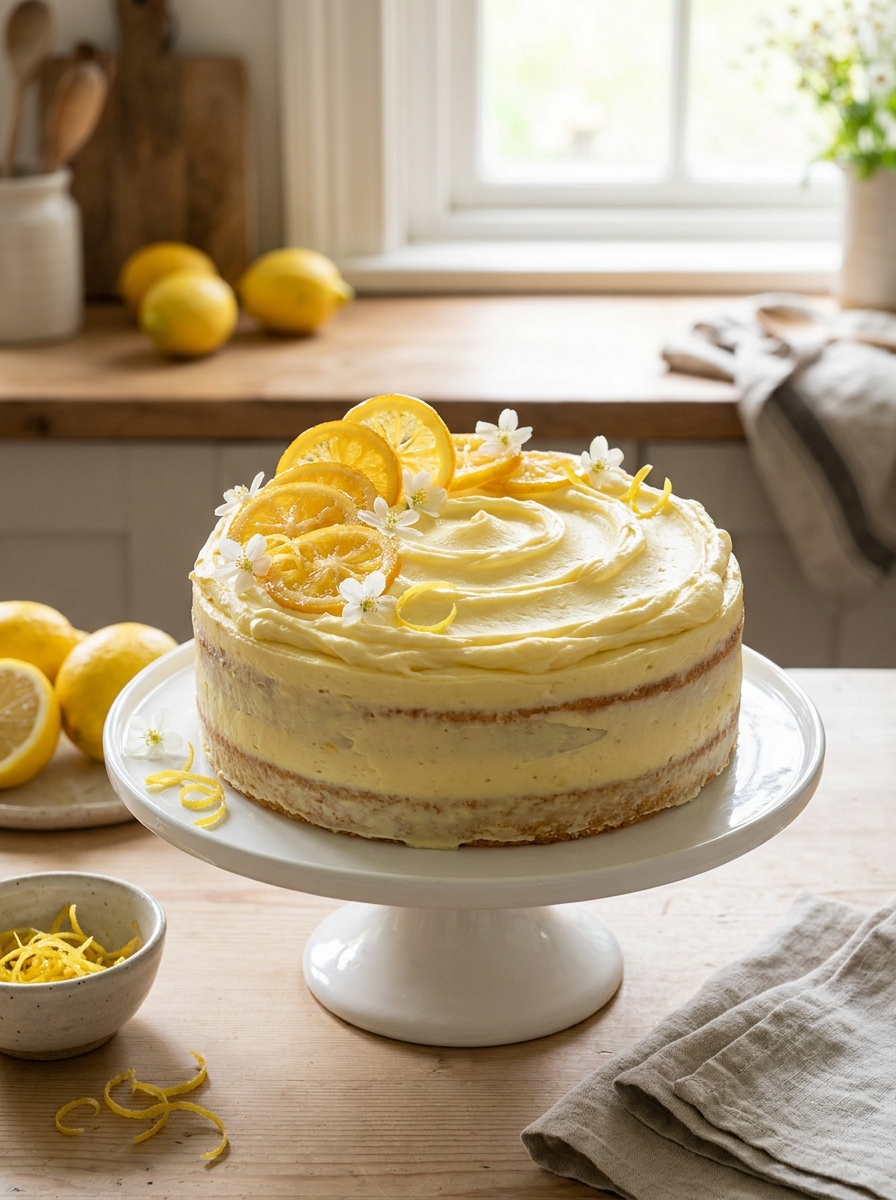
Arrange thin halved lemon slices around the top edge of the cake. Add crystallised lemon peel or edible flowers if using. Dust the very edges lightly with icing sugar.
Refrigerate for thirty minutes before slicing — the buttercream firms and the cake cuts cleanly.
My Top Tips For Perfect Mary Berry Lemon Cake
Zest of three lemons in the sponge — not one or two. The lemon zest is the fragrance of the cake — the essential oil that gives each bite its vivid, specifically lemon character. One lemon gives a pleasant but mild lemon flavour. Three lemons gives a sponge that smells and tastes unmistakably, beautifully of lemon. Do not reduce the quantity.
Lemon juice in the buttercream brightens everything. Most lemon buttercream recipes use lemon extract or a small amount of juice. This recipe uses the juice of two whole lemons — six tablespoons — which gives a buttercream with a clear, vivid lemon flavour and a slight sharpness that prevents it from being too sweet. The juice also gives the buttercream a slightly softer, more spreadable consistency.
The crumb coat is the technique that gives a professional finish. A thin first coat of buttercream — refrigerated until firm — seals in any loose crumbs and gives the second coat a clean, crumb-free surface to adhere to. It takes fifteen minutes and transforms the appearance of the finished cake.
Swirl the lemon curd through the cream — do not mix uniformly. Two or three gentle folds of lemon curd through whipped cream gives a swirled filling with pockets of intense lemon curd against the milder cream. Fully mixing gives a uniformly pale yellow cream that is less interesting and less vivid.
Beat butter alone for four minutes before adding icing sugar. This instruction appears in every buttercream recipe on this site — because it matters every time. Four minutes gives the pale, fluffy, aerated base that makes the difference between a silky, light lemon buttercream and a dense, slightly heavy one.
Serving Suggestions
On a cake stand as a birthday or celebration cake — it looks genuinely stunning with the lemon decorations. As an afternoon tea centrepiece in spring or summer. With a cup of Earl Grey tea — the bergamot in Earl Grey and the lemon in the cake is a combination that is completely natural.
How to Store Mary Berry Lemon Cake
In the fridge: Store covered for up to 3 days. The lemon flavour deepens slightly on the second day. Bring to room temperature for twenty minutes before serving.
In the freezer: Freeze the unfilled, unfrosted sponge layers for up to 3 months. Make the filling and buttercream fresh when assembling.
Mary Berry Lemon Cake Recipe
Ingredients
Method
- Preheat oven to 180°C / 160°C fan / Gas 4. Grease and line two 20cm tins. Beat butter and sugar 4–5 minutes. Add eggs one at a time. Add vanilla and lemon zest. Sift in flour and baking powder. Add milk — fold gently. Divide between tins — weigh for even layers. Bake 20–24 minutes. Cool completely.
- Beat butter alone 4 minutes. Add icing sugar in 3 batches. Add lemon juice, zest, and salt — beat 2 more minutes. Add milk if needed.
- Whip cold cream, icing sugar, and vanilla to soft peaks. Fold lemon curd through with 2–3 strokes — swirled, not uniform.
- Place first sponge upside down on plate. Spread lemon curd cream. Top with second sponge.
- Apply thin crumb coat — refrigerate 15 minutes. Apply generous second coat — smooth with hot palette knife or textured with scraper.
- Arrange lemon slices around top edge. Dust edges lightly with icing sugar. Refrigerate 30 minutes. Slice.
Notes
Frequently Asked Questions
Can I add lemon curd between the buttercream and the sponge on the outside?
Yes — a thin layer of lemon curd spread over the crumb coat before the final buttercream coat gives an additional lemon layer and a slightly sticky base for the buttercream to adhere to. This is a technique used in professional bakeries and gives an even more intensely lemony result.
Can I use lime instead of lemon?
Yes — lime gives a more fragrant, slightly more tropical result. Use the same quantities. The cake is slightly less classic in character but completely wonderful.
Can I make this as a traybake?
Yes — pour the batter into a greased and lined 33x23cm traybake tin. Bake at the same temperature for 28 to 32 minutes. Spread the buttercream over the cooled sponge and scatter lemon zest.
Can I use lemon extract instead of fresh lemon juice in the buttercream?
Fresh lemon juice gives a vivid, natural lemon flavour and a slight sharpness. Lemon extract gives a more concentrated but slightly artificial character. Fresh juice is always the better choice for this recipe.















Leave a Reply