
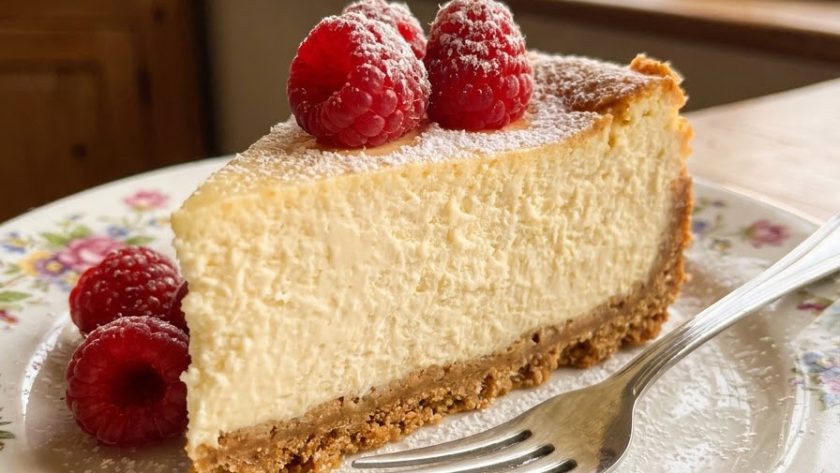
 Anna Louise
 A baked cheesecake is a different thing entirely from the no-bake version — and I say this having written the no-bake cheesecake recipe for this site with genuine enthusiasm. The no-bake cheesecake is lighter, silkier, and considerably less demanding.
The baked cheesecake is denser, richer, more intensely flavoured, and gives a custard-like interior that no amount of refrigeration can replicate. They are both wonderful. They are not interchangeable.
The baked cheesecake I make is the New York style — full-fat cream cheese, soured cream, eggs, vanilla, and a small amount of flour to stabilise the filling during baking.
It is cooked in a water bath — a roasting tin of hot water in which the springform tin sits during baking — which gives the gentle, even heat that prevents cracking and gives the silky, custard-like interior that distinguishes a properly made baked cheesecake from one that is slightly rubbery and slightly dry.
I know the water bath intimidates people. I want to take that anxiety away completely. A water bath is simply a roasting tin filled with boiling water from the kettle, placed in the oven, with the cheesecake tin sitting inside it.
It takes two minutes to set up and it makes the difference between a cracked, slightly over-cooked cheesecake and one that is silky, smooth, and professional in its appearance and texture.
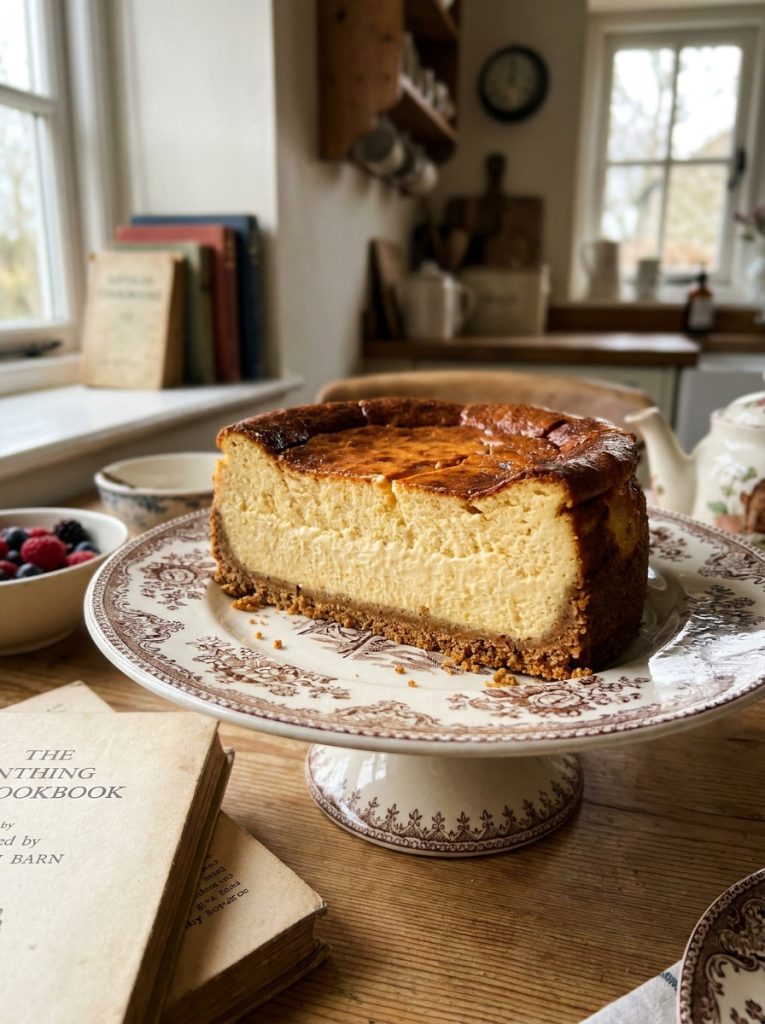
Ingredients for Mary Berry Baked Cheesecake
For the Biscuit Base
- 250g digestive biscuits, crushed to fine crumbs
- 125g unsalted butter, melted
- 1 tbsp golden caster sugar
For the Baked Cheesecake Filling
- 900g full-fat cream cheese, at room temperature — this is not negotiable
- 250g golden caster sugar
- 4 large eggs plus 2 large egg yolks, at room temperature
- 300ml soured cream, at room temperature
- 2 tsp vanilla extract
- Finely grated zest of 1 unwaxed lemon
- 2 tbsp plain flour — stabilises the filling and prevents cracking
- Pinch of fine salt
For the Soured Cream Topping (Optional but beautiful)
- 200ml soured cream
- 1 tbsp golden caster sugar
- 1 tsp vanilla extract
How to Make Mary Berry Baked Cheesecake
Step 1 — Make the Biscuit Base
Combine the crushed digestive biscuits, melted butter, and caster sugar. Press very firmly and evenly into the base of a deep 23cm springform tin — using the flat base of a glass to compact it. The base should be completely even and firmly compacted.
Refrigerate for 30 minutes while the oven preheats.
Step 2 — Preheat and Prepare the Water Bath
Preheat your oven to 170°C / 150°C fan / Gas 3. Wrap the outside of the springform tin in two layers of heavy-duty foil — completely waterproofing the base and sides. This prevents the water bath from leaking into the tin.
Place a large roasting tin in the oven. Boil a full kettle.
Step 3 — Make the Cheesecake Filling
Beat the room-temperature cream cheese on its own for two minutes until completely smooth — no lumps whatsoever. Add the golden caster sugar and beat for two more minutes.
Add the eggs and egg yolks one at a time — beating briefly after each, just until incorporated. Do not over-beat the eggs. Excessive beating incorporates air which causes the cheesecake to rise dramatically in the oven and then crack as it falls.
Add the soured cream, vanilla extract, lemon zest, flour, and salt. Beat very briefly — just until smooth and combined. The filling should look like thick, smooth cream.
Step 4 — Fill and Bake
Pour the filling over the chilled biscuit base. Tap the tin gently on the work surface twice to release any air bubbles.
Place the foil-wrapped tin in the hot roasting tin in the oven. Pour boiling water from the kettle into the roasting tin to come approximately 3cm up the sides of the springform tin.
Bake for 55 to 65 minutes until the cheesecake is set around the edges with a distinct wobble in the centre — approximately a 10cm circle that moves as one when the tin is gently shaken. The wobble is correct. The cheesecake will continue to set as it cools.
Step 5 — Optional Soured Cream Topping
Mix the soured cream, sugar, and vanilla. Remove the cheesecake from the oven at the 55-minute point if adding this topping. Spread the soured cream mixture gently over the surface. Return to the oven for ten minutes. The topping sets to a slightly tangy, slightly glossy finish.
Step 6 — Cool and Set
Turn off the oven. Leave the cheesecake inside the oven with the door slightly ajar — propped open with a wooden spoon — for one hour. This gradual cooling prevents the dramatic temperature change that causes cracking.
Remove from the oven and water bath. Cool completely at room temperature — at least two hours. Refrigerate for at least six hours — overnight is considerably better.
Run a thin palette knife around the inside of the tin before releasing the springform.
My Top Tips For Perfect Mary Berry Baked Cheesecake
Every ingredient must be at room temperature. Cold cream cheese gives lumps that cannot be beaten out once the eggs and soured cream are added. Cold eggs cause the filling to seize slightly. Room temperature ingredients give a completely smooth, homogeneous filling that bakes evenly and sets silkily.
Do not over-beat the eggs. The most common cause of a cracked baked cheesecake is too much air beaten into the filling. Add each egg and beat just until incorporated — no more. The filling should look smooth and slightly dense rather than airy and mousse-like.
The water bath is not optional for a silky, uncracked result. The water bath provides the gentle, moist heat environment that gives a baked cheesecake its custard-like interior. Without it, the oven’s dry heat cooks the outside faster than the inside, causing the surface to crack as the centre tries to set. Two layers of foil, boiling water, and confidence — and the water bath is not intimidating at all.
The wobble in the centre is correct. A baked cheesecake that is set completely solid in the oven will be over-cooked, slightly rubbery, and possibly cracked when cooled. A distinct central wobble — moving as one piece when shaken — gives a cheesecake that finishes setting during cooling and gives the silky, rich, custard-like interior that makes this recipe magnificent.
Cool gradually — oven off, door ajar, one hour. The crack that appears across the top of a baked cheesecake is almost always caused by a dramatic temperature change during cooling. The gradual cooling with the oven door ajar gives the cheesecake time to contract slowly and evenly — no crack.
Serving Suggestions
Plain — the simplest and most elegant presentation for a cheesecake this rich and this good. With fresh raspberries or strawberries and a drizzle of good berry coulis. With a compote of summer fruits. Cold from the fridge, sliced cleanly with a hot knife wiped between each cut.
How to Store Mary Berry Baked Cheesecake
In the fridge: Store covered for up to 4 days. The flavour deepens slightly on the second day.
In the freezer: Freeze without the soured cream topping for up to 2 months. Defrost overnight in the fridge.
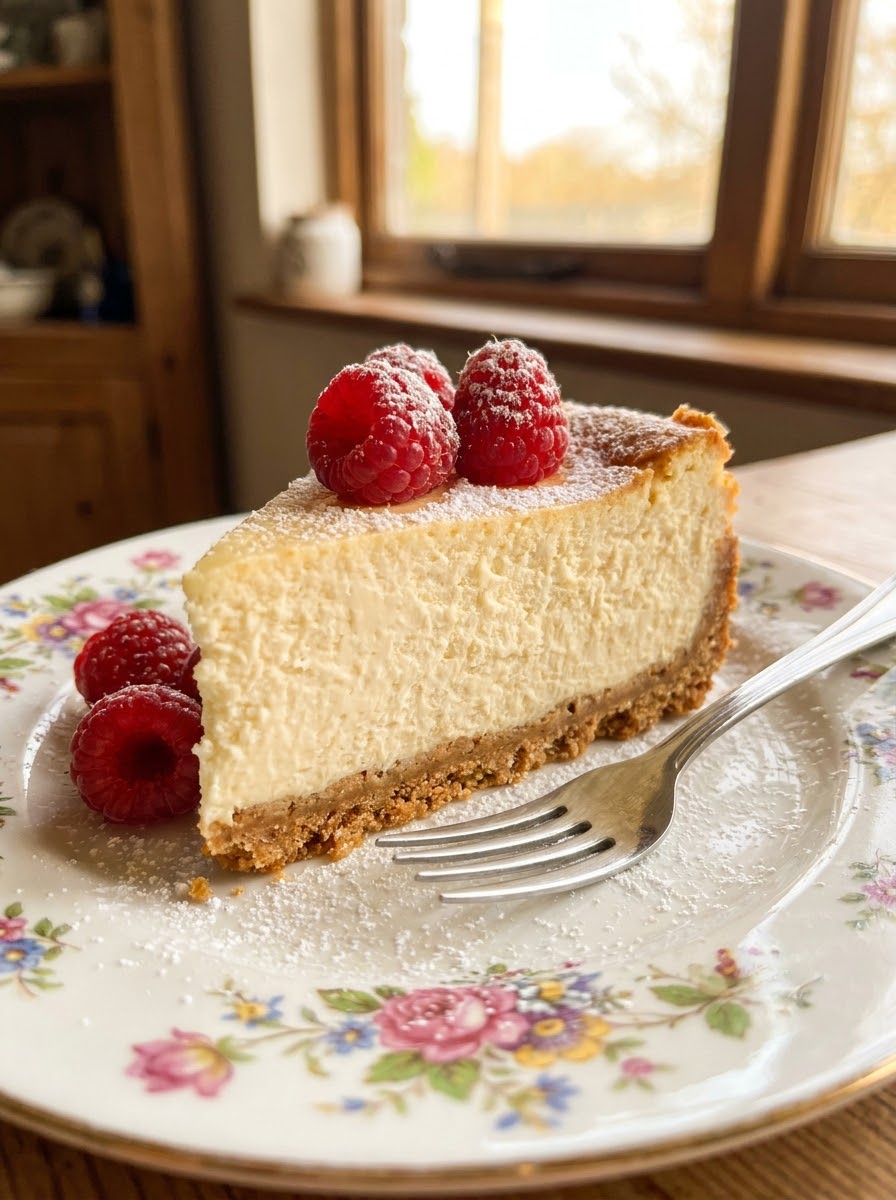
Mary Berry Baked Cheesecake Recipe
Ingredients
Method
- Combine biscuit crumbs, melted butter, and sugar. Press firmly into base of deep 23cm springform tin. Refrigerate 30 minutes.
- Preheat oven to 170°C / 150°C fan / Gas 3. Wrap tin in 2 layers of heavy foil. Place large roasting tin in oven. Boil kettle.
- Beat cream cheese alone 2 minutes until smooth. Add sugar — beat 2 minutes. Add eggs and yolks one at a time — beat briefly after each. Add soured cream, vanilla, lemon zest, flour, and salt — beat until just smooth.
- Pour over chilled base. Tap tin twice. Place in hot roasting tin. Pour boiling water 3cm up the sides.
- Bake 55–65 minutes until set at edges with a distinct 10cm wobble in the centre. If adding topping: at 55 minutes spread soured cream mixture over surface — return 10 minutes.
- Turn off oven. Door ajar — cool 1 hour inside. Remove and cool at room temperature 2 hours. Refrigerate 6 hours minimum — overnight ideal. Run palette knife around edge — release springform.
Notes
Frequently Asked Questions
Why did my cheesecake crack?
The most common causes are: over-beaten eggs incorporating too much air, too high an oven temperature, no water bath, or too rapid cooling. Address all four and cracking becomes very unlikely.
Can I flavour the cheesecake?
Yes — add the finely grated zest of 3 lemons for a lemon baked cheesecake. Fold 200g of melted dark chocolate into the filling for a chocolate version. Add 2 tbsp of good quality raspberry jam for a raspberry swirl.
Can I use mascarpone instead of cream cheese?
Mascarpone gives a slightly richer, slightly less tangy result. Use 600g mascarpone and 300g cream cheese together for the best balance of richness and tang.
Do I need the soured cream topping?
No — the cheesecake is completely wonderful without it. The topping gives a slightly tangy, slightly glossy finish that looks professional and adds an additional flavour layer. It is optional but I always include it.













Leave a Reply