
 Anna Louise
 Madeleines are the small, shell-shaped French sponge cakes that Proust made famous in À la Recherche du Temps Perdu — the first bite of a madeleine dipped in lime blossom tea triggering the vast rush of memory that gives the novel its structure.
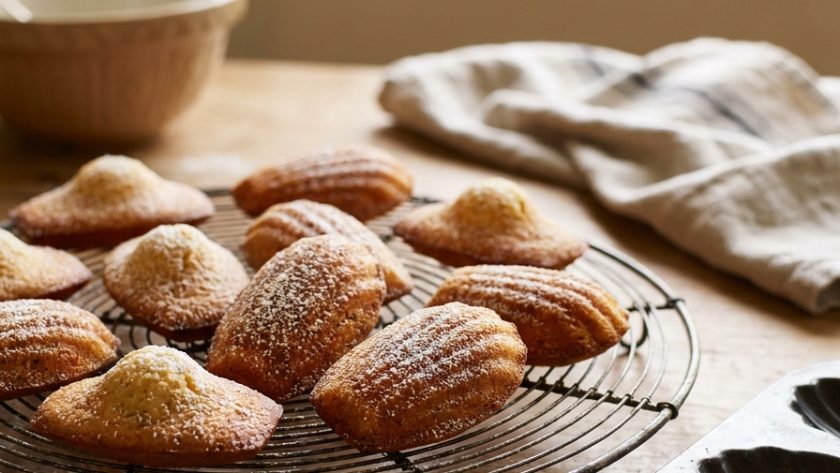
Whether or not you have read the novel, eating a properly made madeleine is a genuinely memorable experience — the golden shell-shaped surface, the slight resistance of the crust giving way to a butter-soft, slightly airy interior that is warm and fragrant and completely unlike any other small cake.
The technique has two specific details that give a madeleine its characteristic qualities. The first is the beurre noisette — butter cooked until it turns brown and smells of hazelnuts, which gives madeleines their specific golden colour and their slightly nutty, deeply buttery flavour.
The second is the resting of the batter in the fridge — the cold batter going into a hot mould gives the characteristic hump on the back of the madeleine, which is the sign of a properly made one.
I make these with a madeleine tin — the specific shell-shaped tin that cannot be replaced by any other tin. They are available from most kitchenware shops and online, and they are worth buying if you intend to make madeleines, because nothing else gives the shape.
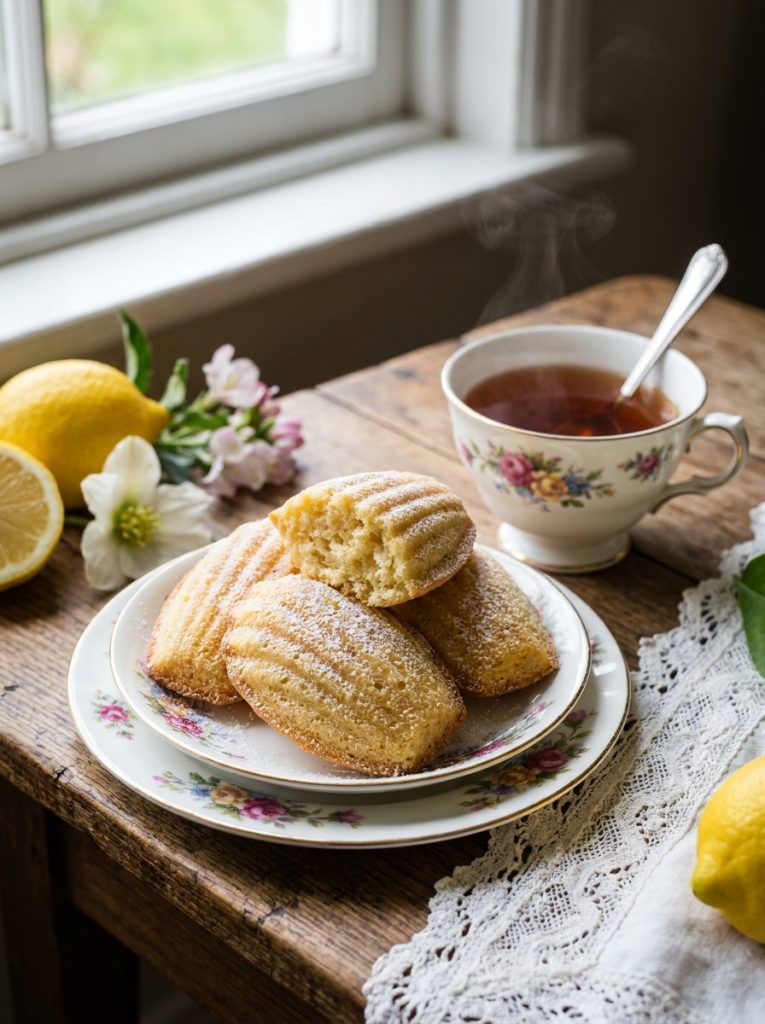
Ingredients for Mary Berry Madeleines (Makes approximately 24)
For the Madeleines
- 150g unsalted butter — cooked to beurre noisette (brown butter), then cooled
- 150g golden caster sugar
- 3 large eggs, at room temperature
- 150g plain flour, sifted
- 1½ tsp baking powder
- Finely grated zest of 2 unwaxed lemons
- 1 tbsp fresh lemon juice
- 1 tsp vanilla extract
- Pinch of fine salt
To Finish
- Icing sugar — dusted generously over the warm madeleines
- Melted dark chocolate — for dipping one end (optional but wonderful)
How to Make Mary Berry Madeleines
Step 1 — Make the Beurre Noisette
Place the butter in a small saucepan over a medium heat. Cook, stirring occasionally, until the butter melts, then foams, then the foam subsides and the milk solids at the base of the pan turn from white to golden to a deep amber-brown — and the butter smells specifically, unmistakably of hazelnuts. This takes five to seven minutes.
Pour immediately into a cold bowl — including all the browned solids at the base, which carry the most flavour. Leave to cool to room temperature.
Step 2 — Make the Batter
Whisk the eggs and golden caster sugar together with an electric hand whisk for four to five minutes until the mixture is very pale, thick, and has trebled in volume — the mixture should fall from the whisk in thick ribbons that hold for three seconds.
Sift the flour and baking powder over the egg mixture. Add the lemon zest, lemon juice, vanilla, and salt. Fold gently with a large metal spoon — eight to ten gentle folds — until just combined.
Pour the cooled brown butter around the edge of the bowl. Fold in gently with four to five strokes until completely incorporated.
Cover the batter and refrigerate for at least one hour — two hours is better, overnight is best. The cold rest is the step that gives the characteristic hump.
Step 3 — Preheat and Prepare the Tin
Preheat your oven to 200°C / 180°C fan / Gas 6. Brush the madeleine tin generously with melted butter using a pastry brush — reaching every part of the shell-shaped mould. Dust with flour — tapping out any excess. The butter and flour give the madeleines their slightly golden, slightly crispy shell surface and prevent sticking.
Step 4 — Fill and Bake
Spoon the cold batter into the prepared moulds — filling each mould approximately three-quarters full. Do not spread or smooth the batter — the batter’s surface will spread naturally during baking.
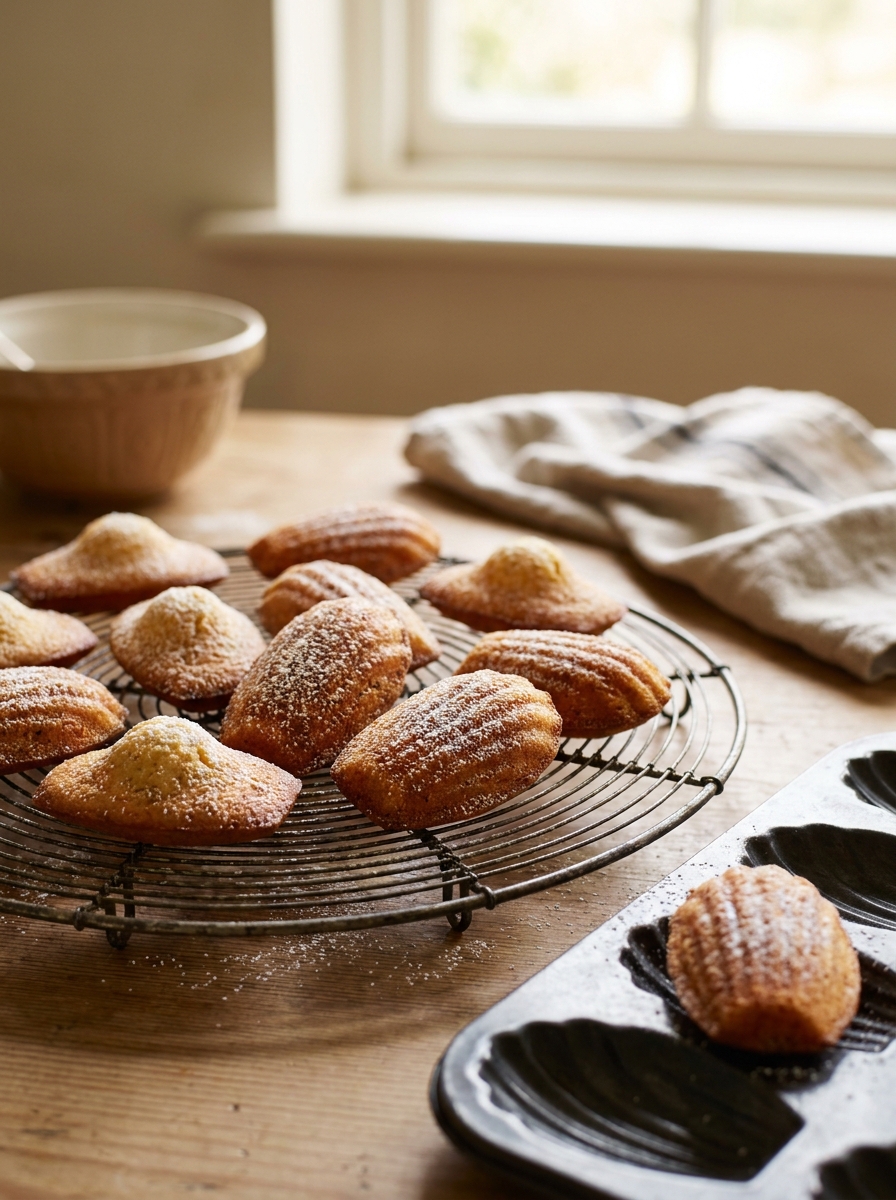
Bake for 11 to 13 minutes until the characteristic hump has formed on the back of each madeleine, the shell surface is golden, and the edges are slightly golden.
Remove from the tin immediately — inverting the tin onto a wire rack. The madeleines should release cleanly.
Step 5 — Finish and Serve
Dust with icing sugar while warm. Serve immediately — madeleines are at their absolute best within thirty minutes of baking. They are still very good at room temperature but the warm, slightly yielding, golden interior is specifically and completely wonderful when fresh.
My Top Tips For Perfect Mary Berry Madeleine
The beurre noisette is the flavour of a madeleine. Plain melted butter gives a perfectly pleasant madeleine. Brown butter — cooked until the milk solids turn amber and the whole thing smells of hazelnuts — gives the characteristic, specifically madeleine flavour that makes these little cakes unforgettable. Do not substitute plain melted butter.
Rest the batter for at least one hour — overnight is significantly better. The cold batter going into a hot mould creates a thermal shock that causes the characteristic hump to form on the back of the madeleine. This is the specific visual signature of a properly made madeleine and it only forms when the batter is cold and the oven and tin are hot. Rest the batter overnight for the most dramatic, most beautiful humps.
Butter and flour the tin generously — every part of every mould. Madeleines stuck in their moulds are a small kitchen disaster — they break when removed, losing the shell pattern that is their most beautiful characteristic. A generous butter and flour coating gives clean, perfect release every time.
Bake at a high temperature. Two hundred degrees gives the rapid initial rise that forms the hump before the batter has time to spread flat. Lower temperatures give flatter, less pronounced humps and less golden shells.
Serve within thirty minutes of baking. Madeleines are specifically and most wonderfully eaten warm. They are still good at room temperature and still perfectly good the following day — but the experience of a warm madeleine, slightly golden on the shell surface, yielding and fragrant inside, is specifically one of the finest things a small cake can be.
Serving Suggestions
Warm from the oven with a cup of Earl Grey tea — the most Proustian serving. Dusted with icing sugar and arranged on a plate for afternoon tea. Dipped in dark chocolate for a slightly more indulgent occasion. As a gift — six in a small box with a ribbon is a thoughtful and elegant present.
How to Store Mary Berry Madeleine
At room temperature: Store in an airtight container for up to 2 days. They lose their crisp shell surface within a few hours but remain delicious.
In the freezer: Freeze unbaked batter in the greased tin for up to 1 month — bake directly from frozen, adding two to three minutes to the baking time.
Mary Berry Madeleine Recipe
Ingredients
Method
- Cook butter in a small saucepan over medium heat until deep amber-brown and smelling of hazelnuts — 5–7 minutes. Pour into a cold bowl including all browned solids. Cool to room temperature.
- Whisk eggs and sugar 4–5 minutes until very pale, thick, and ribbon-like. Sift flour and baking powder over — add lemon zest, juice, vanilla, and salt. Fold gently 8–10 strokes.
- Pour cooled brown butter around the edge — fold in with 4–5 gentle strokes. Cover and refrigerate 1 hour minimum — overnight ideal.
- Preheat oven to 200°C / 180°C fan / Gas 6. Brush madeleine tin generously with melted butter — dust with flour, tap out excess.
- Spoon cold batter into moulds — three-quarters full. Do not spread. Bake 11–13 minutes until humps have formed, shells are golden, and edges slightly golden.
- Invert immediately onto wire rack. Dust with icing sugar while warm. Serve within 30 minutes.
Notes
Frequently Asked Questions
Can I make madeleines without a madeleine tin?
The shell shape is the visual signature of madeleines — without the tin they become small round cakes rather than madeleines. A mini muffin tin gives a reasonable alternative for the flavour if the tin is unavailable.
Can I add other flavourings?
Yes — the finely grated zest of two oranges in place of the lemons gives an orange madeleine. One tablespoon of good quality honey in place of some of the sugar gives a honey madeleine. Two teaspoons of matcha powder sifted with the flour gives a matcha madeleine.
Why do my madeleines not have a hump?
The batter was not cold enough when it went into the oven, the oven was not hot enough, or the tin was not preheated. Ensure the batter is refrigerated for the full hour, the oven is fully preheated to 200°C, and — if desired — the filled tin can be placed in the fridge for ten minutes before baking.
Can I dip them in chocolate?
Yes — melt 100g of good quality dark chocolate. Dip one end of each cooled madeleine and place on baking parchment to set. The shell surface looks completely beautiful half-dipped.
















Leave a Reply